Chebakia: Sesame Flower Biscuits in Honey
Morocco's Ramadan biscuit, fried, spiced and drowned in honey
Contents
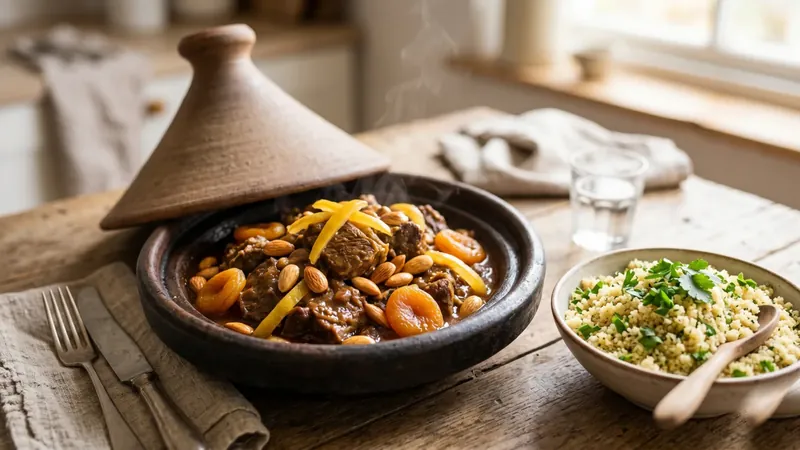
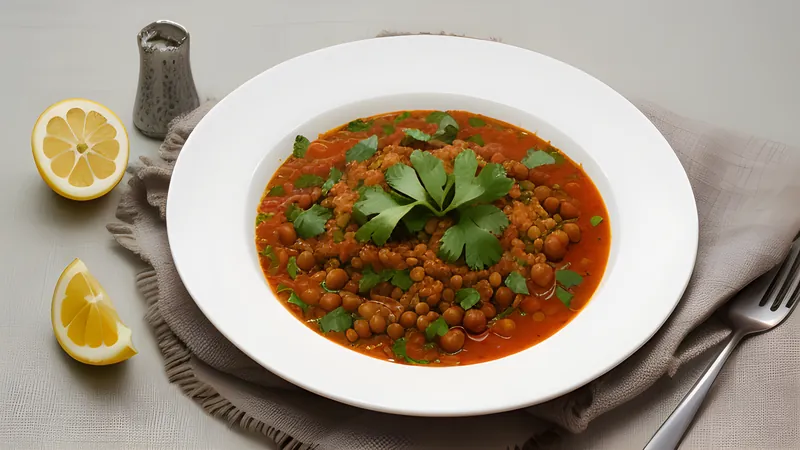
↓ Jump to recipeChebakia announces Ramadan the way certain smells announce certain seasons: saffron and orange blossom in hot oil, then the particular sweetness of honey reducing on the stove. In Morocco, the biscuit is inseparable from the month of fasting — it’s the standard partner to harira soup at iftar, the meal that breaks the day’s fast, where the soup’s savoury depth is answered immediately by chebakia’s honeyed crunch. Making a batch is a household event, not a quick bake; most Moroccan families produce chebakia in enormous quantities in the weeks before Ramadan starts, storing it for the entire month, because nobody wants to be hand-braiding dough strips at five in the afternoon on a fasting stomach.
Chebakia: Sesame Flower Biscuits in Honey
Ingredients
- 500g plain flour
- 1 tsp baking powder
- 1/2 tsp saffron threads, crushed
- 1/2 tsp ground cinnamon
- 1/4 tsp ground aniseed
- 1/4 tsp ground mahleb (optional)
- 1 egg
- 60ml vegetable oil, plus extra for frying
- 30g unsalted butter, melted
- 1 tbsp white vinegar
- 1 tsp active dry yeast dissolved in 2 tbsp warm water
- 50g toasted sesame seeds, plus extra for finishing
- 1/2 tsp orange blossom water, for the dough
- Water, as needed to bind
- 500g runny honey
- 3 tbsp orange blossom water, for the syrup
Method
- In a large bowl, mix the flour, baking powder, saffron, cinnamon, aniseed and mahleb.
- Whisk the egg with the oil, melted butter, vinegar, dissolved yeast and orange blossom water, then pour into the flour.
- Add the toasted sesame seeds and bring the dough together, adding water a tablespoon at a time until it forms a soft, pliable dough.
- Knead for 8-10 minutes until smooth and elastic, then cover and rest for 1 hour at room temperature.
- Divide the dough into portions and roll each out to about 3mm thick.
- Cut into rectangles roughly 8cm by 5cm, then slash 5 parallel lines lengthways through the centre of each, leaving the edges intact.
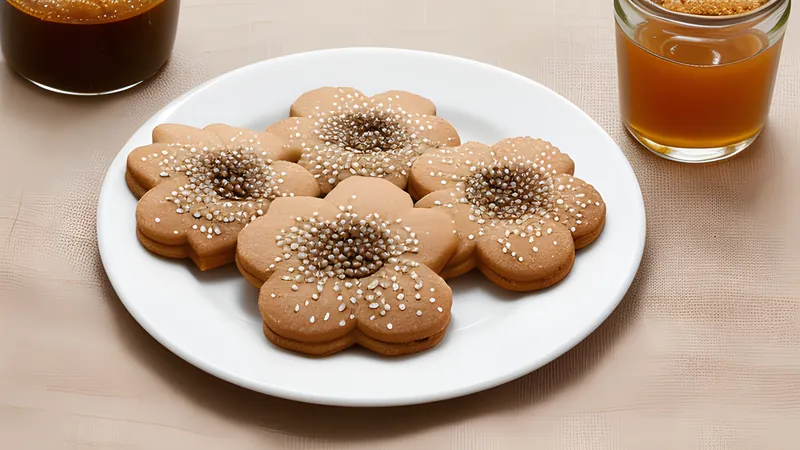
- Thread the fingers through alternating slits and gently pull to open the strip into a woven flower or ribbon shape.
- Heat the honey with the orange blossom water in a wide pan until warm and runny, then keep it at a low simmer.
- Heat oil for deep-frying to 170C and fry the shaped biscuits in batches, 2-3 minutes, until deep golden and crisp.
- Lift the hot biscuits straight from the oil into the warm honey and let them soak for 1-2 minutes.
- Remove with a slotted spoon, drain briefly, and scatter with extra toasted sesame seeds while still wet.
- Cool completely on a wire rack before storing; the biscuits crisp further as they cool.
The shape is not decoration
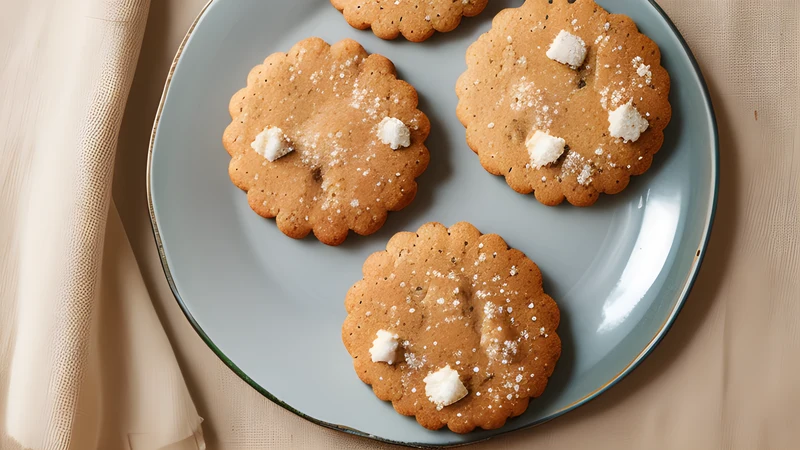
The flower or rose shape chebakia is known for isn’t cosmetic. Slashing the dough into parallel strips and threading fingers through the gaps to open it into a lattice massively increases the surface area exposed to both the frying oil and, more importantly, the honey afterwards. A flat, unslashed biscuit would fry evenly enough but absorb syrup only from its exterior surfaces; the woven chebakia soaks honey into every fold and gap, which is why the finished biscuit tastes saturated with honey right through rather than merely glazed on the outside. The shape is functional first, decorative second — although after a few dozen repetitions, most cooks get fast enough that the two stop feeling separate.
Getting comfortable with the fold takes a few attempts. Five slits down the centre of a rectangle, leaving both short ends intact, then alternating fingers pulled through every other gap and gently stretched — first attempts often tear or come out lopsided, and that’s normal. Torn pieces still fry and taste fine; they just won’t hold the traditional rosette shape. Keep a damp cloth over the cut, unshaped strips while you work through a batch, since the thin dough dries out and cracks quickly at room temperature.
Spice blend and why saffron earns its place
The dough itself carries the spicing — cinnamon, aniseed, and often a pinch of mahleb, the ground kernel from a species of cherry stone that lends a faint marzipan-and-cherry note common in Levantine and Maghrebi baking. Saffron isn’t essential for flavour in the quantity used here, but its colour matters: chebakia should have a warm amber tint to the dough before it even meets the honey, and saffron is the traditional way to get there without artificial colouring. If saffron isn’t available, a small pinch of ground turmeric gives colour without the cost, though you lose saffron’s faint floral note.
The vinegar in the dough is a textural trick rather than a flavour one — a small acid addition relaxes the gluten just enough to make the dough easier to roll thin without springing back, the same logic behind vinegar in pie pastry. Skipping it makes the dough noticeably harder to work.
Frying and honey-soaking, back to back
Chebakia needs the oil at a genuine 170°C, checked with a thermometer if you have one; too cool and the biscuits absorb oil and turn greasy rather than crisp, too hot and the thin strips burn before the interior sets. Fry in small batches so the oil temperature doesn’t crash, and don’t crowd the pan — the shaped dough needs room to hold its open lattice while it fries rather than folding back on itself.
The honey bath is the step that separates chebakia from a plain fried biscuit. The honey needs to be warm and thin, not boiling — a gentle simmer with the orange blossom water stirred through, low enough that the biscuits don’t scorch or turn bitter the moment they hit it. Submerge the hot fried biscuits straight from the oil while both are still hot; the temperature contrast helps the syrup penetrate the lattice rather than just coating the surface. A minute or two of soaking is enough — longer risks a soggy biscuit rather than a crisp one glazed in honey.
Storage: this is a keep-for-weeks biscuit
Chebakia is designed to last. Once fully cooled and dry to the touch, store it in an airtight container at room temperature, where it keeps for two to three weeks without losing its crunch — the honey coating acts as a natural preservative, sealing the biscuit against moisture. This shelf life is precisely why families make such large batches before Ramadan begins: a single afternoon’s work covers a month of iftar tables. Refrigeration isn’t necessary and can actually dull the texture, making the honey coating crystallise slightly.
Substitutions and variations
Sesame seeds are traditional both inside the dough and scattered on top after the honey soak, but toasted crushed almonds make a reasonable substitute or addition for anyone wanting extra texture. Some regional versions swap a portion of the honey for a mix of honey and sugar syrup, which stretches the coating further and produces a slightly less expensive, marginally less complex-tasting biscuit — common in large-batch commercial production but less common in home kitchens, where full honey is considered worth the cost.
For anyone without a deep-fryer, a heavy pot with 5cm of oil works fine, provided you can maintain a steady temperature — a thermometer clipped to the pot removes the guesswork. Baking chebakia instead of frying is sometimes suggested as a lighter alternative, but it changes the texture fundamentally: the biscuit turns dry and biscuit-like rather than achieving the crisp-shell, honey-soaked interior that defines the dish, so it’s better understood as a different biscuit entirely rather than a faithful substitute.
What to serve alongside
Chebakia’s natural partner is a bowl of dates and a glass of hot mint tea, the classic close to a Ramadan iftar after the main soup and mains. For a dessert table beyond Ramadan, it sits comfortably next to makroud, another fried-and-syrup-soaked Maghrebi sweet, offering a textural contrast — makroud’s semolina shell against chebakia’s thin, crisp, woven dough — that makes for a genuinely varied plate of North African sweets rather than two versions of the same thing.
Where the recipe comes from
Chebakia’s roots sit in the wider Maghrebi and Andalusian tradition of honey-soaked fried dough, a family of sweets that spread across North Africa alongside sesame oil, saffron and orange blossom water as trade goods moving through Fez and Marrakech centuries ago. The name itself is thought to derive from an Arabic root related to a net or lattice, a direct reference to the woven shape. Regional variations exist across Morocco: in Fez, chebakia tends to be smaller and more tightly woven; in the south, some households make a looser, larger version fried in slightly less oil and finished with a heavier hand on the sesame seeds.
What stays consistent everywhere is the timing. Chebakia belongs to Ramadan specifically, not to Eid or other celebrations, and the reason is practical as much as symbolic — the biscuit’s dense sweetness and honey coating deliver a fast sugar and calorie hit after a full day without food or water, exactly what a body needs at the moment the fast breaks. Its heaviness, which might seem excessive on an ordinary day, makes precise sense in that specific context.
Working the dough without overworking it
The kneading stage matters more than it looks. Ten minutes of proper kneading develops just enough gluten structure to let the dough hold its woven shape through frying without collapsing back into a flat strip, but overworking it past that point makes the dough tough and difficult to roll thin. The one-hour rest afterwards is not optional — skipping it produces a dough that fights back when rolled, shrinking and springing at the edges rather than holding a clean 3mm sheet.
Roll on a lightly floured surface and keep the thickness even across the whole sheet; a rolling pin with adjustable rings, if you have one, removes the guesswork. Uneven thickness means uneven frying — thin patches burn while thick ones stay underdone at the centre, a mismatch that’s hard to correct once the biscuits are already in the honey.
A note on the orange blossom water
Orange blossom water shows up twice in this recipe — once worked into the dough, once stirred into the warm honey — and the two additions do different jobs. In the dough, it’s a background aromatic, barely perceptible once fried but contributing to the overall perfumed quality Moroccan sweets are known for. In the honey, it’s far more prominent, since the biscuit absorbs the syrup directly and carries that floral note straight through to the finished bite. Buy a genuine culinary orange blossom water rather than a cosmetic one — the difference in quality is significant and cheap orange blossom water can taste soapy rather than floral.
Troubleshooting a stubborn batch
If the shaped strips won’t hold their woven form and keep flattening back out before frying, the dough was rested too briefly or rolled too thick — a 3mm sheet with a full hour’s rest gives enough give to open cleanly without snapping back. If biscuits come out pale rather than deep gold, the oil wasn’t hot enough; check the temperature between batches, since it drops each time cold dough goes in and needs a minute or two to recover. And if the honey coating tastes bitter rather than sweet, the syrup was overheated or held at a rolling boil for too long — keep it at a bare simmer throughout, never higher.
Related Content