Charred-Lemon Hummus with Cumin Brown Butter
Silky, smoky and moreish
Contents
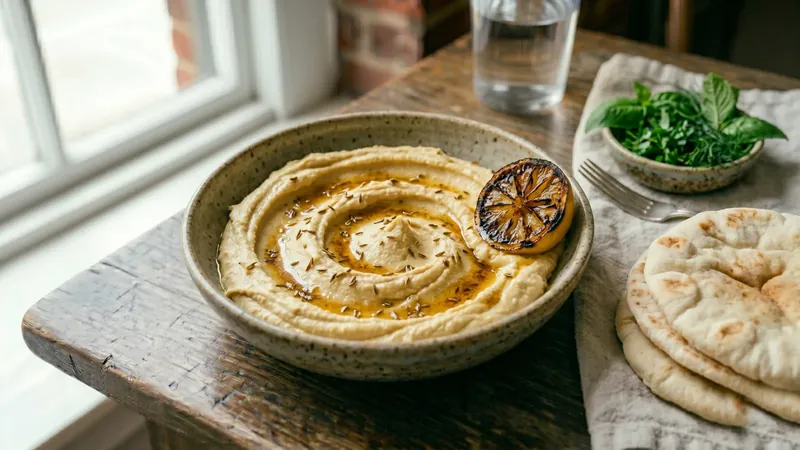
↓ Jump to recipeShop-bought hummus is fine in the way that beige is a colour, and for years I made mine no better: tinned chickpeas, a slug of tahini, whatever the food processor could do in thirty seconds. Then two small changes turned it into the dip I now make on repeat. The first is charring the lemon cut-side down in a dry pan until it blisters black in patches, which rounds off the harsh edge of raw juice and threads a faint smokiness through the whole bowl. The second is a spoonful of cumin brown butter poured over the top just before serving, warm and nutty against the cool purée. Cooked with a pinch of bicarbonate of soda so the chickpeas surrender completely, the result is pale, silky and quietly luxurious, and it disappears faster than anything else I put on a table.
Charred-Lemon Hummus with Cumin Brown Butter
Ingredients
- 1 lemon, halved
- 2 x 400g tins chickpeas
- 1/2 tsp bicarbonate of soda
- 120g light tahini
- 1 garlic clove, crushed
- 4 tbsp ice-cold water
- 1/2 tsp ground cumin
- 50g unsalted butter
- 1 tsp cumin seeds
- Olive oil, to serve
- Salt
Method
- Heat a dry frying pan until very hot and char the lemon halves cut-side down for 3-4 minutes until blackened in patches. Set aside to cool, then squeeze out the juice and discard the pips.
- Drain the chickpeas, then put them in a saucepan with the bicarbonate of soda, cover with water and simmer for 12-15 minutes until very soft and the skins are loosening. Drain and rinse briefly.
- Tip the warm chickpeas into a food processor, reserving a few to garnish, and blitz to a paste.
- Add the tahini, crushed garlic, ground cumin, the charred lemon juice and a good pinch of salt, and blend again.
- With the motor running, trickle in the ice-cold water a spoonful at a time until the hummus turns pale and silky.
- Taste and adjust with more salt or charred lemon juice, then spread onto a plate, making a shallow well with the back of a spoon.
- For the brown butter, melt the butter in a small pan with the cumin seeds and cook gently, swirling, until the butter smells nutty and turns golden-brown.
- Spoon the warm cumin brown butter over the hummus, scatter with the reserved chickpeas, add a drizzle of olive oil and serve with warm flatbread.
Where it comes from
Hummus bi tahina, to give it its full name, means simply “chickpeas with tahini”, and it belongs to the eastern Mediterranean and the Levant: Lebanon, Syria, the Palestinian territories, Jordan, Israel and beyond, each corner insistent that its own version is the right one. The earliest surviving recipes that resemble it appear in Arabic cookbooks from thirteenth-century Cairo and Damascus, though those medieval versions were cold chickpea pastes seasoned with vinegar, herbs and nuts rather than the tahini-heavy purée we recognise now. The dish as it stands today, built on sesame paste and lemon, took its modern shape over the following centuries in the kitchens of the Levant.
At heart it is a handful of ingredients: cooked chickpeas, sesame tahini, lemon, garlic and salt. What separates a great bowl from a mediocre one is never some secret addition but texture, the patient pursuit of an impossibly smooth, light purée. Get that right and the seasoning almost sorts itself out.
The chickpea does the heavy lifting. It has been grown and eaten across the Middle East and the Mediterranean since the earliest days of farming, cheap and nourishing and forgiving. For hummus the goal is to cook it until it is almost collapsing, and this is where bicarbonate of soda earns its place: the alkaline water speeds the softening and loosens the papery skins, which are the single biggest cause of a grainy, gritty dip. If you have the patience to slip those skins off entirely you will be rewarded, but simmering with bicarb and blending the chickpeas while still warm gets you most of the way there. The same alkaline trick softens pulses fast in my red lentil and coconut dal, where the aim is a broken-down, creamy pot rather than distinct grains.
Tahini supplies the other half of the character. Ground sesame paste brings richness and a faint, welcome bitterness that stands up to the lemon, and it should taste generously present rather than shyly stirred through. The trick of whipping in ice-cold water at the very end is the one most home cooks miss: it emulsifies the tahini, lightens both the colour and the texture, and gives you that pale, airy purée that holds a soft peak. Add it a spoonful at a time and you will see the hummus seize, go stiff and pale, then loosen into something silky. Do not rush it.
The two twists here are gentle ones. Charring the lemon over a fierce heat caramelises its sugars and lends a whisper of smoke while blunting the sharp corner of raw juice, so the acidity reads rounder and deeper rather than sour. The cumin brown butter borrows from a habit found right across the region, of finishing a dish with a spiced fat spooned over at the table. Cooking butter past melting until its milk solids toast gives that unmistakable hazelnut aroma; I lean on the same technique everywhere from brown butter chocolate chip cookies to a warm slick over roasted vegetables. Warming whole cumin seeds in it as it browns releases their earthy, slightly citrusy fragrance. Pooled over the cool purée and mopped up with warm flatbread, it turns a humble dip into the thing everyone remembers.
Getting it right, and what goes wrong
The two failures worth naming are grittiness and blandness. Grittiness almost always means undercooked chickpeas or their skins left in; simmer longer than feels necessary, and do not trust a tin’s “ready to eat” promise for this. Blandness usually means too little salt or too little acid, so taste before you serve and add more charred lemon juice or a pinch of salt until it goes from flat to bright. A hummus that tastes slightly under-seasoned in the bowl will taste of nothing on bread.
If your brown butter tastes acrid rather than nutty, you took it a shade too far; the sweet spot is deep golden with a few brown flecks, and it colours fast once it starts, so pull it off the heat the moment it smells toasty. A pale, cold-looking pool on top is a missed opportunity, so spoon it over while it is still warm and loose enough to run into the well you make in the hummus.
Swaps, storage and make-ahead
Dried chickpeas soaked overnight and simmered from scratch give the best texture of all, but good tins with bicarb are honestly excellent and far quicker. No tahini? A dark tahini works but tastes more bitter, so add a touch more lemon. For a nut-free finish, skip the tahini and lean harder on olive oil, though you lose some of the signature richness.
The hummus keeps for up to four days covered in the fridge; bring it back to room temperature and give it a stir before serving, as it firms up when cold. Make the brown butter fresh each time, since reheating browned butter tips it towards bitter, and it takes only three minutes. For a fuller spread, serve it alongside warm flatbreads and something sharp to cut the richness, the way I would with Turkish eggs. Beyond cumin, try the brown butter with Aleppo pepper, smoked paprika or a scatter of dukkah, and finish with a handful of toasted pine nuts if you want to make more of an occasion of it.
Serving it well
Temperature matters more than people expect. This hummus is best just warm or at room temperature, never fridge-cold, because chilling mutes the tahini and dulls the smoke from the lemon. If you have made it ahead, take it out a good half hour before serving. Spread it across a wide, shallow plate rather than heaping it in a bowl, and use the back of a spoon to swirl a broad, curling well that will catch the brown butter and hold a pool of olive oil at the edges.
The flatbread is not an afterthought. Warm pittas or flatbreads through in a dry pan or over a gas flame until they puff and blister, then tear rather than cut them, so the torn edges scoop up more. If you want to turn this into a mezze spread, sit it next to olives, quick-pickled radishes, a chopped tomato and cucumber salad dressed with lemon, and something warm and charred; the cool, rich hummus wants sharp, bright things around it. A final scatter of chopped parsley or a pinch of Aleppo pepper over the brown butter adds colour and a fresh, grassy lift against all that nuttiness, and it is the sort of finishing touch that makes a plain bowl look considered.
Related Content