Char Siu: Honey Five-Spice Roast Pork
Sticky, lacquered Chinese barbecue pork
Contents
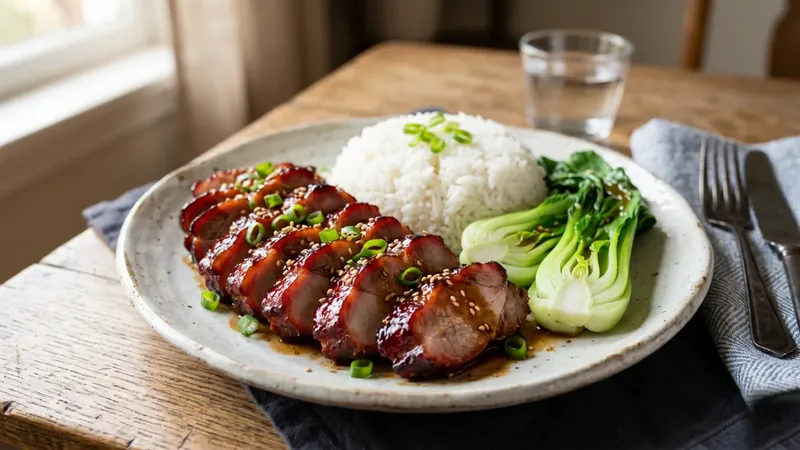
↓ Jump to recipeChar siu is the glossy, mahogany-red roast pork that hangs in Cantonese shop windows, sweet and savoury at once. The twist here keeps the soul of it — a honey and five-spice glaze — while swapping fiddly skewers and a special oven for an ordinary roasting tray and grill. A tray of water below keeps the meat juicy, and a final brush of warmed honey gives that signature sticky lacquer and charred edges. Serve sliced over rice, in steamed buns, or chopped through noodles.
The result is not quite identical to the version in a Hong Kong roast-meat shop, which comes off vertical charcoal ovens most home kitchens will never own, but it is genuinely close, and it is the sort of thing that makes a Tuesday feel like a treat. Most of the work is walking away: ten minutes to mix the marinade, then the fridge and the oven do the rest.
Char Siu: Honey Five-Spice Roast Pork
Ingredients
- 800g pork shoulder, cut into long strips about 5cm thick
- 3 tbsp honey
- 2 tbsp hoisin sauce
- 2 tbsp light soy sauce
- 1 tbsp dark soy sauce
- 2 tbsp Shaoxing rice wine
- 1 tbsp caster sugar
- 1 tsp Chinese five-spice
- 3 garlic cloves, crushed
- 1 tbsp grated fresh ginger
- 1 tbsp toasted sesame oil
- 0.25 tsp red food colouring (optional)
Method
- Whisk together the hoisin, both soys, Shaoxing wine, sugar, five-spice, garlic, ginger, sesame oil, food colouring if using, and 2 tbsp of the honey.
- Pour over the pork strips in a dish, turn to coat, and marinate covered in the fridge for at least 4 hours or overnight.
- Heat the oven to 200C fan and line a deep tray with foil; sit a wire rack on top and pour a cupful of water into the tray below.
- Lift the pork onto the rack, reserving the marinade, and roast for 20 minutes.
- Meanwhile, simmer the reserved marinade in a small pan for 3-4 minutes until slightly thickened.
- Turn the pork, brush generously with the simmered marinade, and roast for another 15 minutes.
- Warm the remaining 1 tbsp honey and brush over the pork, then grill or roast hot for 3-5 minutes until the edges char and lacquer.
- Rest for 10 minutes, then slice across the grain and spoon over any tray juices.
The Story
The name char siu translates roughly as “fork roast”, from the Cantonese practice of skewering strips of marinated pork on long forks and cooking them over or beside a fire. It belongs to a family of Cantonese roasted meats known as siu mei, the glistening rows of pork, duck and chicken that define a good barbecue-meat shop in Hong Kong, Guangzhou and Chinatowns the world over.
Traditionally the cut of choice is pork shoulder or the fattier pork neck, prized because the marbling keeps the meat succulent through a fierce roast. Lean cuts such as loin dry out; the gentle threads of fat in shoulder baste the meat from within and caramelise at the edges. Cutting the meat into long strips rather than roasting a whole joint vastly increases the surface area that can take on glaze and char, which is the whole point.
That glaze is where the character lives. Hoisin and the soy sauces bring salt and umami, Shaoxing wine adds fragrance, and Chinese five-spice — typically star anise, fennel, cloves, cinnamon and Sichuan pepper or ginger — gives the warm, slightly liquorice-like backbone. Five-spice is worth understanding rather than just tipping in: the blend is built loosely around the five traditional Chinese flavour categories, and star anise is the dominant note, so a little goes a long way. A teaspoon across 800g of pork is plenty; double it and the anise flattens everything else. Honey and sugar do the heavy lifting on sweetness and, crucially, on the lacquered finish: as the sugars heat they caramelise into the sticky, blistered crust that distinguishes char siu from a plain roast. Maltose, the malt sugar Cantonese shops brush on, gives an even glossier finish and is worth seeking out from a Chinese grocer if you want the true shop-window shine, though honey does a fine job and is easier to spread.
Hoisin itself is worth a word, since it does more than sweeten. It is a fermented soybean paste thickened with sugar and seasoned with garlic and spice, and it brings a savoury depth and body to the glaze that soy alone cannot; it is also what helps the marinade cling to the meat rather than running straight off. The Shaoxing wine, an amber Chinese rice wine, adds an aromatic lift much as a splash of sherry might in a Western braise. If you cannot get it, a dry sherry is the closest substitute; avoid the salted “cooking wine” sold in some shops, which throws the seasoning out.
The striking red colour traditionally comes from fermented red bean curd or, in many modern recipes, a little red food colouring. It is cosmetic rather than essential, and the pork tastes just as good a natural ruddy brown if you leave it out.
Cooking it well at home comes down to managing heat and moisture. Authentic shops use upright charcoal or gas ovens that roast and char in one go. The domestic fix used here — a wire rack over a tray of water — lets the meat roast evenly while the steam below stops it drying, before a blast of high heat at the end delivers the caramelised edges. Slicing across the grain keeps each piece tender.
Why the method works
Three details do the heavy lifting. The first is the long marinade. Four hours is the minimum and overnight is better, because the salt in the soy and hoisin needs time to penetrate the strips and season the meat all the way through, not just coat the surface; it also begins to break down the muscle proteins so the finished pork is more tender. The second is the water tray. A dish of water beneath the rack keeps the oven humid and, just as importantly, catches the sugary drips before they hit hot metal and turn to acrid smoke; without it you get a scorched tray and a bitter edge to the meat. The third is the order of the glazing. The reserved marinade is simmered first, both to reduce it to a syrup that clings and to make it safe after contact with raw pork, and the final brush of plain warmed honey goes on only for the last few minutes under fierce heat, where its sugars caramelise into that blistered, lacquered crust rather than burning early.
What can go wrong
The commonest mistake is glazing too soon and too hard. Sugar burns, so if you brush the honey on at the start of a hot roast you get black, bitter edges long before the inside is cooked. Build the colour in stages, and keep the very hot honey step to the end, watching it constantly, because it can go from glossy to charred in a minute under a grill. The second mistake is using a lean cut. Pork loin will roast to something dry and stringy; you want shoulder or neck, where the marbling bastes the meat from within. And if the pork feels tough, it was likely undercooked in the collagen sense rather than over: shoulder needs its fat and connective tissue to soften, so give it the full time and let it rest for a full ten minutes so the juices redistribute before you slice.
Serving, substitutions and storage
Char siu is built to be shared out across other dishes. Pile it into soft pork belly bao buns with pickled daikon in place of the belly for a lighter filling, or slice it thin and toss it through a plate of Singapore noodles, where the sweet, spiced pork is right at home among the curry-scented vermicelli. Over plain steamed rice with some blanched greens and a spoonful of the tray juices, it needs nothing else.
If you avoid pork, the same marinade works well on chicken thighs (roast for around 25 minutes) or on firm tofu pressed and roasted until the edges crisp. For the red colour, fermented red bean curd (nam yu) is the traditional and more flavourful route than food dye; mash a cube into the marinade. Leftover char siu keeps in the fridge for up to four days and freezes for three months. It reheats best sliced and warmed briefly in a hot pan to revive the sticky edges, and cold char siu chopped into fried rice or an omelette the next morning is one of the quiet pleasures of making a batch.
To scale the recipe up for a crowd, double the marinade and cook the strips on two racks, swapping the trays halfway through so both colour evenly; keep the water tray topped up, as it dries out over a longer roast. If you own a meat thermometer, the shoulder is ready at an internal 70C, though a few degrees over does no harm with a fatty cut and helps the collagen soften. And do save every scrap of the glaze and tray juices: reduced by a minute or two in a small pan, they make a dark, sticky sauce to spoon over rice that is far too good to pour away.
Related Content