Chapli Kebab: Peshawar's Flattened Beef Patty
A wide, thin, tomato-flecked patty fried until the edges turn lacy and brown
Contents
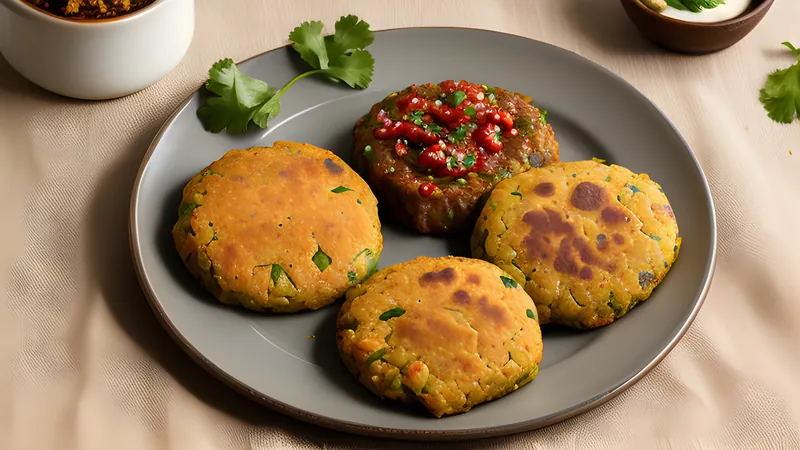
↓ Jump to recipeChapli kebab is named for its shape, not its ingredients — chapli is a word for slipper or sandal in the region, and the kebab is pressed out wide and thin, the same proportions as the sole of a shoe, rather than formed into the compact cylinder most people picture when they hear “kebab.” It comes from Peshawar, in Khyber Pakhtunkhwa on the Pakistani side of the old Pashtun heartland, and it’s built to be fried in a wide pan of oil until the surface turns crisp and lacy while the inside stays loose and juicy — a texture no other kebab quite matches.
Chapli Kebab: Peshawar's Flattened Beef Patty
Ingredients
- 600g minced beef, 20% fat
- 2 tomatoes, deseeded and finely chopped
- 1 large onion, finely chopped
- 3 green chillies, finely chopped
- 4 garlic cloves, crushed
- 2cm ginger, grated
- 2 tbsp coriander seed, coarsely crushed (not ground)
- 1 tbsp cumin seed, coarsely crushed
- 1 tsp dried pomegranate seeds (anardana), crushed
- 1 egg
- 3 tbsp gram flour (besan)
- 1 tsp red chilli flakes
- 1 tsp ground black pepper
- handful fresh coriander, chopped
- 1 tsp salt
- vegetable oil, for shallow frying
- sliced tomato, onion rings and lemon wedges to serve
Method
- Put the minced beef in a large bowl with the chopped tomato, onion, green chillies, garlic and ginger. Mix by hand until evenly combined but don't overwork it.
- Add the crushed coriander seed, cumin seed, anardana, chilli flakes, black pepper, salt and fresh coriander. Mix again.
- Beat in the egg and gram flour until the mixture holds together loosely — it should feel wetter and looser than a standard burger mix.
- Rest the mixture in the fridge for at least 20 minutes; this lets the gram flour absorb moisture and firm the patty just enough to handle.
- Divide into 8 portions. With wet hands, press each portion out into a thin, wide patty about 1cm thick and 12cm across — much wider and flatter than a standard burger.
- Heat 5mm of oil in a wide frying pan over medium-high heat. Fry the patties in batches, 4 minutes per side, pressing gently with a spatula, until the edges are dark, crisp and lacy and the centre is cooked through.
- Drain briefly on kitchen paper and serve immediately with sliced tomato, raw onion rings and lemon wedges.
Peshawar’s street-food signature
Peshawar’s food culture runs almost entirely on grilled and fried meat — tikka, seekh kebabs, karahi — and chapli kebab is the dish most closely associated with the city specifically, sold from roadside stalls with the patties fried to order in enormous flat pans of bubbling oil, often two feet across, over open wood fires. Street vendors typically use a coarser, fattier mince than most home cooks would choose, and the fat content matters: a lean mince fries dry and crumbly, while a properly fatty mix bastes itself as it cooks, producing the crisp-edged, tender-centred result the dish is known for.
The tomato and onion mixed directly into the raw meat, rather than served as a garnish, is one of the details that separates chapli kebab from a seekh kebab or a standard burger. As the patty fries, the tomato releases moisture that keeps the centre from drying out even as the wide, thin shape means more surface area is exposed to the hot oil than in a thicker patty. That’s a genuinely clever piece of engineering: the shape that maximises crisp surface also happens to need the built-in moisture reservoir the tomato provides, or the whole thing would dry out before the centre finished cooking.
Why the wide shape isn’t just presentation
There’s a functional reason chapli kebab is flattened so aggressively rather than left as a thicker patty. A thin, wide shape cooks through in the four minutes per side the recipe calls for, without needing the low-and-slow approach a thicker burger patty would require to cook through without burning the outside. Street vendors selling to a queue of hungry customers need a kebab that goes from raw mince to plated food in under ten minutes total, and the shape is engineered for exactly that turnaround. At home, the same logic applies in miniature: you get a fully cooked centre and a well-browned crust without needing to finish the kebab in an oven, the way you might with a thicker burger.
The shape also maximises the ratio of crisp surface to soft interior, which is really the entire point of the dish. Where a burger is judged partly on its juicy, uniform interior, a chapli kebab is judged on the contrast between the crackling, dark-edged exterior and the loose, tomato-flecked centre — more surface area relative to volume means more of that contrast in every bite.
Anardana and the sour edge
Dried pomegranate seed, ground or lightly crushed, is the ingredient most home cooks skip and shouldn’t. It adds a background tartness that cuts through the fattiness of the beef in the same way tamarind or lime might in other cuisines, but with a fruitier, less sharp profile that suits the coarse, rustic character of the kebab. If you can’t find anardana, a squeeze of lemon juice mixed directly into the meat is a reasonable substitute, though it won’t carry quite the same dried-fruit note. Don’t substitute pomegranate molasses — it’s far too concentrated and sweet, and will throw off the balance of the whole mixture.
The coriander and cumin seed are crushed coarsely rather than ground to a fine powder, which is worth insisting on. Whole or lightly cracked seed gives the finished kebab little pockets of concentrated spice flavour and a slight crunch against the tender meat, whereas fine ground spice disappears into the mixture and reads as background seasoning rather than a defining texture. A mortar and pestle, used with restraint, gets this right; a spice grinder tends to go too fine unless you pulse it carefully.
A note on the mince
Ready-ground beef mince from a supermarket, at around 20% fat, works fine, but if you can get your butcher to mince a piece of chuck or shin coarsely — through the large die on a mincer rather than the fine one — the texture improves noticeably. A coarser grind holds the tomato and onion in loose pockets rather than blending everything into a uniform paste, which is closer to how the kebab is made on the street, where the meat is often chopped rather than minced in a machine at all. If your mince already comes very fine, pulsing it briefly with a knife on a board, just enough to rough up the texture, gets you part of the way there without extra equipment.
Getting the shape and the fry right
The patty needs to be pressed out much wider and thinner than instinct suggests — about 12cm across and only a centimetre thick, roughly double the diameter of a standard burger patty at half the height. Wet hands make this far easier, since the mixture is looser than a burger mix and will stick to dry palms. A folded sheet of greaseproof paper between each shaped patty makes stacking and transferring them to the pan far less messy, since the loose mixture sticks readily to bare hands and countertops alike. Resist the urge to compact the mixture tightly as you shape it; a slightly loose, open patty fries up with better texture at the edges than one packed hard.
Frying in a generous depth of oil, rather than a thin film, is what produces the lacy, deep-brown edge that defines a good chapli kebab. Street stalls use several centimetres of oil and effectively shallow-fry rather than pan-fry; at home, five millimetres in a wide pan gets you most of the way there, but don’t skimp further than that or the edges will steam rather than crisp. Press the patty gently with a spatula partway through cooking, just enough to encourage even contact with the hot pan, since the loose mixture can dome slightly as it cooks.
Green chilli quantity is worth adjusting to your own tolerance rather than following the recipe rigidly — Peshawari versions are often considerably hotter than most home cooks outside the region would choose, since the raw chilli is meant to be a genuine presence against the fatty beef rather than a background note. Start with the quantity given and taste a small fried test patty before committing the rest of the mixture; it’s much easier to add another chopped chilli to the bowl than to cool down an already-mixed batch that’s turned out hotter than intended.
Common mistakes
Overmixing the meat is the first fault — chapli kebab should have a rustic, slightly coarse texture, not the smooth, bouncy consistency of a well-worked burger or meatball mixture. Mix just until everything is evenly distributed and stop. The second common fault is frying at too low a temperature, which lets the patty release its moisture slowly and steam rather than fry, producing a grey, soft surface instead of the dark, crisp crust the dish depends on. The oil should be visibly shimmering and a small piece of the mixture should sizzle immediately on contact before you add a full patty. A cast-iron pan holds heat more evenly across a wide patty than a thin non-stick one, which tends to cool sharply the moment cold mince hits the surface, leaving the centre of the patty pale and underdone by the time the edges have coloured.
Serving
Chapli kebab is street food, and it’s eaten street-food style — wrapped in naan or roti with raw onion, sliced tomato and a squeeze of lemon, sometimes with a green chutney. It doesn’t need an elaborate side; the point is the contrast between the crisp fried edge and the raw, sharp vegetables piled on top. If you’re building out a wider Pashtun or Punjabi spread, keema matar makes a good pairing on the same table, offering the same minced-beef base in a completely different, saucy form, while garlic butter naan is the natural bread to wrap the kebab in if you want something more substantial than a roti.
Variations
Lamb mince is a legitimate substitute for beef and produces a slightly richer kebab, though beef is the more traditional Peshawari choice given the region’s larger cattle-herding population compared with much of the rest of Pakistan. Some cooks add a beaten egg to the exterior of the patty just before frying, brushed on rather than mixed in, for an extra-crisp shell — a modern stall trick rather than an old tradition, but a good one if you want maximum crunch. A version with grated raw potato mixed into the meat, common in some Peshawari households, gives a softer, more tender interior and is worth trying if you find the classic version too dense.
Storage and make-ahead
The raw, shaped patties freeze well between sheets of greaseproof paper for up to two months and can be fried directly from frozen with a couple of extra minutes per side. Cooked kebabs keep for two days in the fridge and reheat reasonably in a dry pan, though they won’t regain quite the same crisp edge as fresh from the fryer — a quick blast in a hot oven helps more than a microwave. If you’re planning a larger gathering, shaping the patties a day ahead and resting them covered in the fridge actually improves the texture, since the gram flour has longer to bind the looser mixture before it hits the hot oil.
Related Content