Chana Masala with Amchur
Tangy, spiced chickpeas
Contents
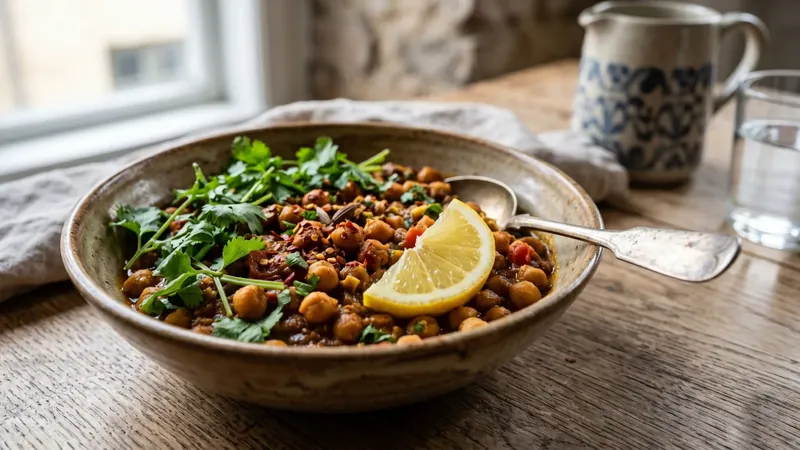
↓ Jump to recipeChana masala is the chickpea curry that proves a humble store-cupboard tin can carry a whole dinner. The twist here is amchur — dried green-mango powder — stirred in at the end for a sharp, fruity tang that brightens the deep, spiced tomato base without watering it down. Toasted cumin seeds open the dish, a little mashing thickens the sauce naturally, and the whole thing comes together from two tins of chickpeas in about half an hour.
It is the kind of cooking I lean on hardest: nothing to chop but an onion and a chilli, no special shopping trip, and a result that tastes far more considered than the effort suggests. Get the base right and it will happily feed four for very little money, reheat better the next day, and stretch to more if you tip in a second tin.
Chana Masala with Amchur
Ingredients
- 2 x 400g tins chickpeas, drained and rinsed
- 3 tbsp vegetable oil
- 1 large onion, finely chopped
- 2 garlic cloves, finely chopped
- 1 tbsp grated fresh ginger
- 1 green chilli, finely chopped
- 400g tin chopped tomatoes
- 1 tsp ground cumin
- 1 tsp ground coriander
- 0.5 tsp ground turmeric
- 1 tsp garam masala
- 0.5 tsp chilli powder
- 1.5 tsp amchur (dried mango powder)
- 1 tsp cumin seeds
- Salt, to taste
- Fresh coriander, to serve
Method
- Heat the oil in a wide pan and fry the cumin seeds for 20 seconds until they sizzle and smell toasty.
- Add the onion and cook for 8-10 minutes until soft and golden.
- Stir in the garlic, ginger and green chilli and cook for 2 minutes.
- Add the ground cumin, coriander, turmeric and chilli powder and toast for 30 seconds.
- Tip in the chopped tomatoes and cook down for 8-10 minutes until thick and the oil starts to separate.
- Add the chickpeas and around 150ml water, then simmer gently for 10 minutes, lightly mashing some chickpeas against the pan to thicken.
- Stir through the garam masala and amchur, season with salt, and simmer for a final 2 minutes.
- Scatter with fresh coriander and serve with rice or warm flatbread.
The Story
Chana masala — also called chole — is one of the great everyday dishes of northern India, especially the Punjab, and a staple of street stalls, home kitchens and railway-platform vendors alike. Chana is the chickpea; masala is the spice blend that defines the sauce. Paired with fried bhatura bread it becomes chole bhature, a beloved breakfast and brunch dish; spooned over rice it is dependable weeknight food.
The chickpea itself is an ancient crop, domesticated in the Fertile Crescent around 10,000 years ago and cultivated across the Middle East, the Mediterranean and the Indian subcontinent ever since; India today grows the greater part of the world’s crop. Two main types are eaten: the larger, paler kabuli chickpea familiar from tins, and the smaller, darker desi or kala chana, which has a nuttier flavour, a thicker skin and is also milled to make gram (besan) flour, the base of everything from pakora batter to socca. Tinned chickpeas make this recipe fast, but cooking dried ones from scratch, soaked overnight and simmered until tender, is traditional; a piece of dried amla (Indian gooseberry) or a black tea bag added to the pot deepens the colour toward the dark, almost inky brown of a really good roadside chole. If you do cook them dry, a pinch of bicarbonate of soda in the soaking water softens the skins and speeds things along.
What gives chana masala its signature character is the balance of warm spice and bright sourness. The warmth comes from cumin, coriander and garam masala built on a slow-cooked onion and tomato base; the sourness is the crucial counterpoint that stops the dish feeling heavy. Different cooks reach for different acids — tamarind, lemon juice, pomegranate seeds, or, as here, amchur.
Amchur is made by drying unripe green mangoes and grinding them to a pale, tan powder. It carries a tart, faintly resinous fruitiness quite unlike lemon, and because it is a dry ingredient it sharpens a dish without thinning the sauce. It is widely used across northern Indian cooking as a souring agent, in everything from chutneys and marinades to spice rubs and, of course, chickpea curries.
A final small technique worth keeping: mashing a portion of the chickpeas against the side of the pan releases their starch and thickens the gravy so it clings, while leaving the rest whole for texture. With good seasoning, a confident hand on the spice, and that hit of amchur at the close, a couple of tins become something genuinely worth eating.
The order of the spices
The reason this tastes deep rather than raw comes down to when each spice goes in, not just which spices you use. The cumin seeds are fried whole in hot oil at the very start, a step called tadka or tempering, which blooms their aroma in fat and carries it through the whole dish; you want to hear them crackle and smell them toast within twenty seconds, and if they blacken the oil was too hot. The ground spices go in after the onions and aromatics, toasted for just half a minute so they lose their dusty edge, but no longer, because ground spices scorch and turn bitter in seconds on a dry pan. And the garam masala and amchur go in right at the end. Garam masala is a finishing blend, its volatile aromatics meant to perfume the dish rather than cook out; boil it hard for ten minutes and you lose exactly the fragrance you added it for.
The tomatoes want patience too. Cook them down until the mixture darkens and you see oil beading at the edges of the pan, the visual cue Indian cooks call the masala “leaving the oil”. That is the point at which the raw, sharp taste of tinned tomato has cooked off and the base has concentrated into something jammy and savoury. Rush this and the sauce tastes thin and acidic no matter how much spice you add.
The onion deserves the same respect. Eight to ten minutes over a medium heat is not a rounding-up of two: it is the time the onion needs to lose its raw bite, soften completely and turn golden at the edges, which is where a good part of the dish’s sweetness and body comes from. A wide pan helps here, giving the onion room to colour rather than stew in its own steam, and it gives you the surface area to cook the tomatoes down quickly afterwards. If your onion is browning too fast and catching before it has softened, drop the heat and add a splash of water to loosen the crust from the base of the pan; that fond is pure flavour and you want it stirred back in, not burnt on.
What can go wrong
The two usual failures are a watery sauce and a flat, one-note flavour. Wateriness is nearly always impatience: either the tomatoes were not cooked down far enough, or too much water went in with the chickpeas. Fix it by simmering uncovered for a few more minutes and mashing a few more chickpeas to release their starch. Flatness is almost always a lack of acid or salt. Chana masala needs to taste bright, and if it is dull the answer is usually a touch more amchur or a squeeze of lemon, then salt, tasted and adjusted rather than guessed. If you have overdone the chilli, a spoonful of yoghurt stirred in off the heat, or served alongside, will calm it, and a little sugar or a knob of butter softens a sauce that has come out sharper than you intended. Taste as you go rather than only at the end: chickpeas are bland on their own and soak up seasoning, so a dish that tasted balanced before they went in often needs another pinch of salt and a further shake of amchur once they have simmered and absorbed the sauce.
Serving, substitutions and storage
Chana masala is at its best mopped up with bread. A stack of warm garlic butter naan is the natural partner, tearing off pieces to scoop the sauce, though rice does the job just as well for a simpler supper. It sits comfortably on a table beside a richer, creamier curry such as chicken tikka masala, the sharp fruitiness of the amchur cutting against the tomato-cream richness of the other.
If you cannot find amchur, use a tablespoon of lemon juice or a little tamarind paste at the end instead; both bring the sourness, though amchur alone keeps the sauce thick. To make it more substantial, add a couple of handfuls of spinach in the last few minutes until wilted, or a diced boiled potato for chana aloo. The curry keeps in the fridge for up to four days and genuinely improves overnight as the spices settle and marry; it also freezes well for up to three months. Reheat gently with a splash of water to loosen the sauce, and check the seasoning again before serving, because chilled food always tastes a little flatter than hot.
Related Content