Chakhchoukha: Torn Rougag in Red Sauce
Algeria's shredded flatbread drowned in a slow lamb sauce
Contents
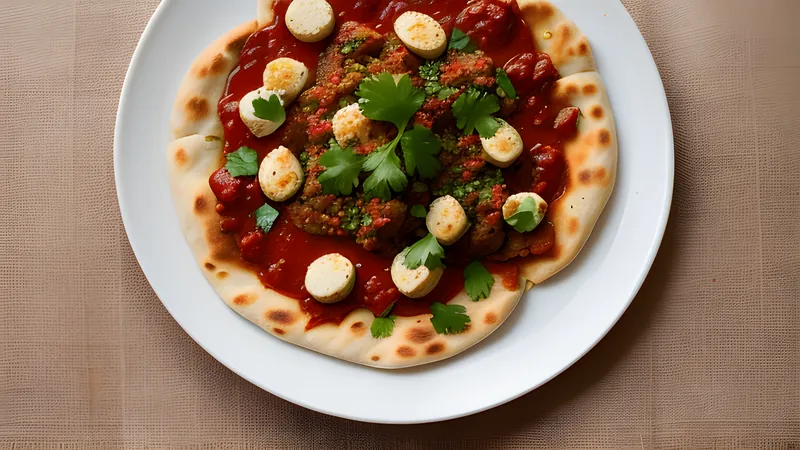
↓ Jump to recipeChakhchoukha is most closely tied to Biskra, the Algerian city on the edge of the Sahara, though versions of it turn up across the country’s east and south under slight regional variation. The dish’s defining move is textural: a thin, griddle-cooked flatbread called rougag, torn by hand into irregular pieces and then drowned in a thick, well-spiced tomato and lamb sauce until the bread softens just enough to eat with a spoon while still holding some bite. It’s not soup, and it isn’t a stew with bread on the side — the bread is fully integrated, functioning almost like a rustic pasta.
Chakhchoukha: Torn Rougag in Red Sauce
Ingredients
- 400g plain flour, plus extra for dusting
- 1 tsp fine salt
- 220ml lukewarm water
- 2 tbsp olive oil, plus extra for cooking the bread
- 800g lamb shoulder, cut into large chunks
- 2 onions, finely chopped
- 4 garlic cloves, crushed
- 3 tbsp tomato puree
- 400g tin chopped tomatoes
- 1 tsp ground cumin
- 1 tsp sweet paprika
- 1/2 tsp ground caraway
- 1/4 tsp cayenne pepper
- 2 bay leaves
- 1 litre water or lamb stock
- 2 tbsp harissa, plus extra to serve
- Salt and black pepper, to taste
- 2 hard-boiled eggs, halved, to serve
- Chopped parsley or coriander, to finish
Method
- Make the rougag dough: mix the flour and salt, then work in the lukewarm water and 1 tbsp oil to a soft, smooth dough. Knead for 8 minutes, cover, and rest for 30 minutes.
- Divide the dough into 6-8 balls and roll each out very thin into a large round, about 2-3mm thick.
- Cook each round on a dry, hot griddle or wide flat pan for 1-2 minutes a side, until lightly speckled with brown and just cooked through, not crisp.
- Stack the cooked rounds and tear each into irregular 3-4cm pieces once cool enough to handle. Set aside.
- Heat the remaining oil in a large pot and brown the lamb chunks on all sides, then remove.
- Soften the onion in the same pot for 6-7 minutes, then add the garlic and cook for 1 minute.
- Stir in the tomato puree and cook for 2 minutes, then add the chopped tomatoes, cumin, paprika, caraway, cayenne and bay leaves.
- Return the lamb to the pot, add the water or stock, bring to a boil, then reduce to a simmer, cover, and cook for 60-75 minutes until the lamb is very tender.
- Stir the harissa into the sauce and season with salt and pepper, adjusting to taste.
- In a wide serving dish, toss the torn bread pieces with a generous ladle or two of the hot sauce until well coated and slightly softened.
- Arrange the lamb chunks over the sauced bread, spoon over more sauce, and top with halved hard-boiled eggs and a scatter of parsley or coriander.
- Serve immediately with extra harissa on the side.
Rougag: thin, dry-cooked, and torn by hand
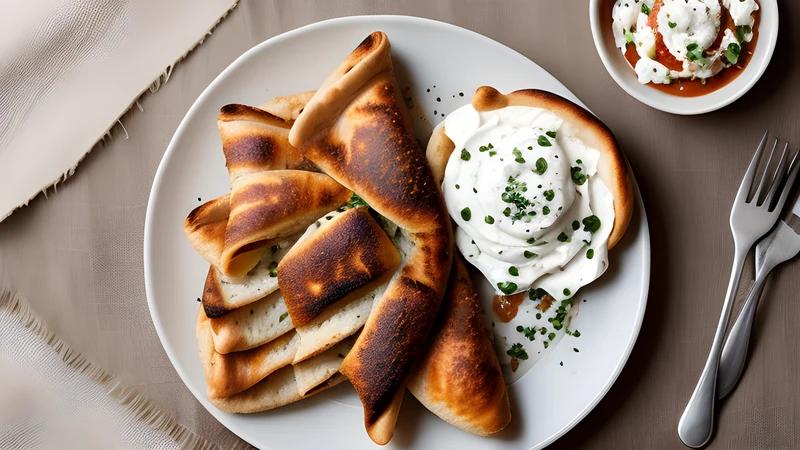
Rougag is a plain, unleavened flatbread rolled thin and cooked dry on a hot griddle, closer in method to a tortilla or a chapati than to a yeasted bread. It’s cooked only until just set, with light brown speckling rather than deep colour or crispness — the goal is a pliable bread that will tear cleanly and then absorb sauce readily, not a crisp cracker that would shatter rather than soften.
The tearing step is done by hand once the bread has cooled enough to handle, and the pieces are meant to be irregular rather than uniformly cut. This matters for texture: uneven torn edges create more surface area and rougher surfaces for the sauce to cling to than a clean knife cut would, so the final dish has bread pieces at varying degrees of sauce-soaked softness rather than a uniformly mushy texture throughout.
The sauce is where the real cooking happens
While the bread technique gives chakhchoukha its name and its texture, the sauce is what makes the dish worth returning to. It’s built the way many Algerian lamb dishes are — meat browned hard first, a generous base of softened onion and garlic, tomato cooked down until it darkens and concentrates, then a specific spice mix (cumin, paprika, caraway, a touch of cayenne) that gives the sauce real depth rather than simple tomato-forward heat.
Harissa stirred in near the end, rather than at the start, keeps its flavour brighter and more distinct — cooking harissa for the full simmer time mutes its character, while adding it in the last stretch preserves the specific chilli-and-spice punch that makes it recognisable rather than folding it entirely into the background. Serving extra harissa on the side lets each diner adjust heat individually, which matters in a dish this rich, since not everyone wants the same intensity.
Assembling it properly
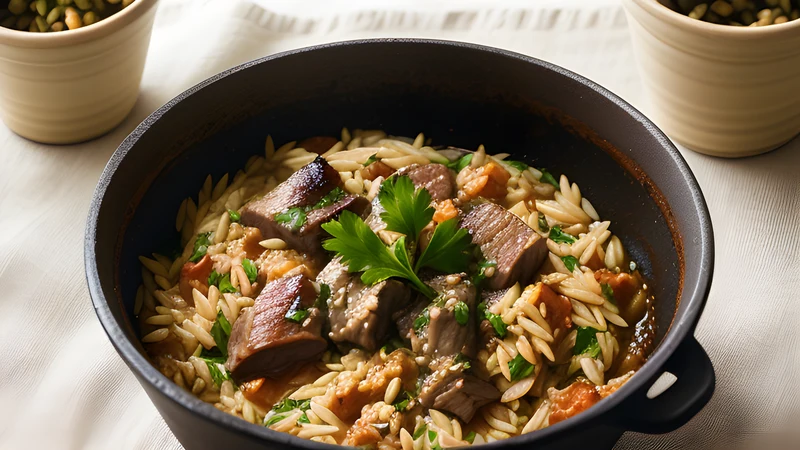
The torn bread goes into the serving dish first, tossed with hot sauce until it softens and takes on colour, and only then is the lamb arranged on top with more sauce spooned over. Doing it in this order, rather than mixing everything together in the cooking pot, keeps some textural contrast between bread pieces that have soaked longest at the bottom of the dish and those tossed more recently near the top. The halved hard-boiled egg on top is a traditional garnish across much of Algerian and Tunisian cooking, adding a mild, creamy element that offsets the sauce’s spice and acidity.
Substitutions and variations
Lamb shoulder gives the richest result thanks to its fat content, which enriches the sauce as it slowly renders during the long simmer, but chicken thighs work as a lighter, faster alternative — reduce the simmer to about 35 minutes once the chicken goes back in. A vegetarian version is possible by building the same spiced tomato sauce with chickpeas in place of lamb, though the sauce will lack the depth that slow-rendered lamb fat provides, so consider finishing with a little extra olive oil to compensate for richness.
Some households make chakhchoukha with a different bread entirely — a slightly thicker, more bread-like version called rougag khchen — giving a chewier bite once torn and soaked. Either version is legitimate; the thinner rougag in this recipe is the more common approach and the easier one to get right on a first attempt.
Storage and reheating
Chakhchoukha doesn’t store especially well once fully assembled, since the bread continues absorbing sauce and softens further with time, eventually losing the textural contrast that makes the dish interesting. If you’re planning ahead, store the sauce and the torn, cooked bread separately, refrigerated for up to three days, and combine them fresh when reheating. Reheat the sauce on the stove until it’s properly hot, then toss with the bread just before serving rather than reheating the two together, which risks turning the bread to mush.
The dish also freezes reasonably well in its separated state — sauce alone freezes for up to two months, while the cooked rougag freezes less well and is better made fresh, since it’s a quick step relative to the sauce anyway.
Chakhchoukha pairs naturally with other Algerian staples on a fuller table. Chorba frik makes a lighter starter before a rich main like this one, while rechta offers a useful point of comparison — both dishes build on the idea of a wheat-based element steamed or torn into a savoury broth, but rechta stays pale and delicate where chakhchoukha goes for tomato-forward richness and real heat.
A dish tied to a specific place
Chakhchoukha is Biskra’s signature dish in the way that a handful of cities across Algeria each claim ownership of a particular preparation — Biskra, the gateway to the Sahara often called the “queen of the Zibans” for its date palm oases, treats chakhchoukha as close to a civic dish, served at weddings, religious celebrations and Friday family lunches with a regularity that marks it as more than an occasional treat. The dish’s association with a specific region rather than the whole of Algeria is part of what distinguishes Algerian home cooking more broadly: a huge number of dishes carry strong regional identities, and locals are often precise about which city or area a given recipe “belongs” to, even when versions of it have long since spread nationwide.
The dish is closely associated with celebratory eating specifically because of the labour involved — rolling and cooking six to eight individual rounds of rougag by hand, then building a proper slow-cooked lamb sauce alongside, is not a fifteen-minute weeknight proposition. Many households now buy pre-made rougag from local bakeries or markets specifically to make chakhchoukha more accessible on a regular basis, reserving the fully from-scratch version, bread included, for occasions that justify the extra time.
Rolling rougag: what actually separates a good round from a mediocre one
The thinness of the rougag matters more than almost any other variable in this recipe. Rolled too thick, the bread stays doughy at the centre even after cooking and tears unevenly, giving chunky, gummy pieces that don’t absorb sauce properly. Rolled properly thin — genuinely closer to a large tortilla than to a standard flatbread — the rougag cooks through quickly and tears into the kind of ragged, sauce-absorbent pieces the dish depends on.
Work on a well-floured surface and don’t be afraid to use a thin rolling pin or even a wine bottle if that’s what’s on hand; the traditional tool in many Algerian kitchens is a simple, narrow wooden pin specifically because it makes rolling dough this thin easier than a standard Western rolling pin, which tends to be too thick and heavy for the job. Cook each round on a dry surface with no oil in the pan itself — a light film of oil brushed onto the dough before it hits the griddle is enough, and adding oil to the pan risks frying rather than dry-cooking the bread, which changes the texture from pliable to crisp in a way that works against tearing cleanly.
The spice mix, and why caraway earns its place here
Caraway is less commonly used in Western kitchens than cumin, but it’s a defining note in a lot of Algerian and broader Maghrebi spicing, distinct from the anise-like flavour of fennel or the earthier warmth of cumin. In chakhchoukha’s sauce, caraway contributes a slightly peppery, faintly citrusy undertone that keeps the sauce from tasting one-dimensionally like a generic tomato-cumin base. If caraway genuinely isn’t available, ground coriander seed is the closest reasonable substitute, though the flavour profile shifts slightly warmer and less sharp.
Cayenne is kept modest in the base sauce specifically because harissa, stirred in separately near the end, is where the dish’s real heat comes from — building too much chilli into the simmering sauce from the start removes the ability to control the final heat level at the table, which is precisely the flexibility harissa-on-the-side is meant to preserve.
What can go wrong
The most common problem is soggy, disintegrated bread rather than the intended tender-but-intact pieces — this happens when the rougag sits in hot sauce too long before serving, or when it’s rolled too thin and cooked too briefly to develop enough structure to survive tossing with sauce. Aim to combine bread and sauce as close to serving time as reasonably possible, and don’t skip the light initial cooking that sets the dough’s structure before it ever meets the sauce.
If the sauce tastes thin despite the long simmer, it’s usually under-reduced rather than under-seasoned — chakhchoukha’s sauce should be notably thick, closer to a ragù than a soup, so if it’s still loose after 75 minutes, remove the lid for the final 15 minutes and let it reduce properly rather than reaching for more spice to compensate.
Related Content