Chairman Mao's Red-Braised Pork
Hunanese caramel-red pork belly, braised low and slow with rock sugar
Contents
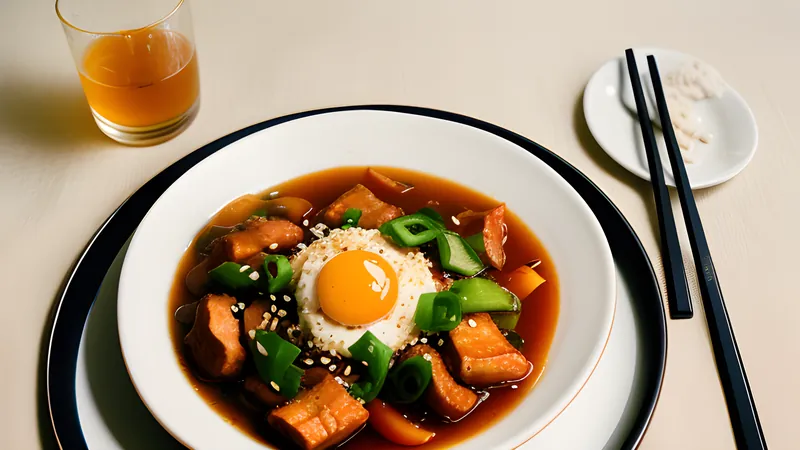
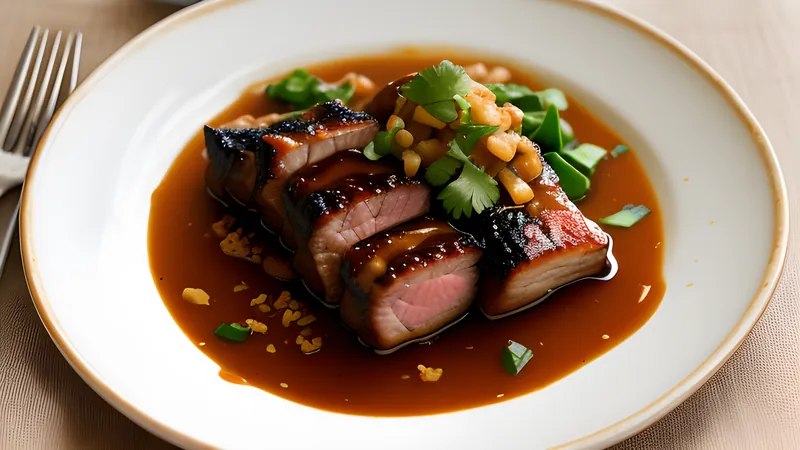
↓ Jump to recipeThere’s a specific shade of dark, glossy red-brown that shows up across Chinese braising traditions, and hong shao rou — red-braised pork — is where it’s most concentrated. Hunan’s version, thicker on chilli and deeper in colour than its Shanghainese cousin, carries a political footnote most other braised pork dishes don’t: it’s widely described as Mao Zedong’s favourite food, eaten regularly at Communist Party gatherings and reportedly a fixture of his own table well into old age. Whatever you make of the politics, the dish earns its reputation on its own terms — a slow caramel braise that turns cheap, fatty pork belly into something genuinely luxurious.
Chairman Mao's Red-Braised Pork
Ingredients
- 900g pork belly, skin on, cut into 3cm cubes
- 2 tbsp vegetable oil
- 50g rock sugar, crushed (or granulated sugar)
- 3 slices fresh ginger
- 3 garlic cloves, smashed
- 3 spring onions, cut into 5cm lengths
- 2 dried red chillies
- 2 star anise
- 1 cinnamon stick
- 2 bay leaves
- 3 tbsp Shaoxing wine
- 2 tbsp light soy sauce
- 1 tbsp dark soy sauce
- 500ml hot water, or as needed
- 1 tsp salt, to taste
- 1 spring onion, green part only, finely sliced, to finish
Method
- Bring a pot of water to the boil and blanch the pork belly cubes for 2 minutes to remove surface impurities, then drain and pat dry thoroughly.
- Heat the oil in a heavy pot or wok over medium-low heat. Add the crushed rock sugar and stir slowly and constantly until it melts and turns a deep amber colour, about 3-4 minutes. Watch closely, as it can burn quickly past this point.
- Add the pork belly immediately and toss briskly to coat every piece in the caramel before it hardens, cooking for 2-3 minutes until the pork is glossy and lightly browned at the edges.
- Add the ginger, garlic, spring onion, dried chillies, star anise, cinnamon stick and bay leaves, and stir for a minute until fragrant.
- Pour in the Shaoxing wine and let it bubble off for 30 seconds, then add both soy sauces and stir to coat.
- Add enough hot water to just cover the pork, bring to a boil, then reduce to a gentle simmer, cover, and cook for 1 hour, stirring occasionally.
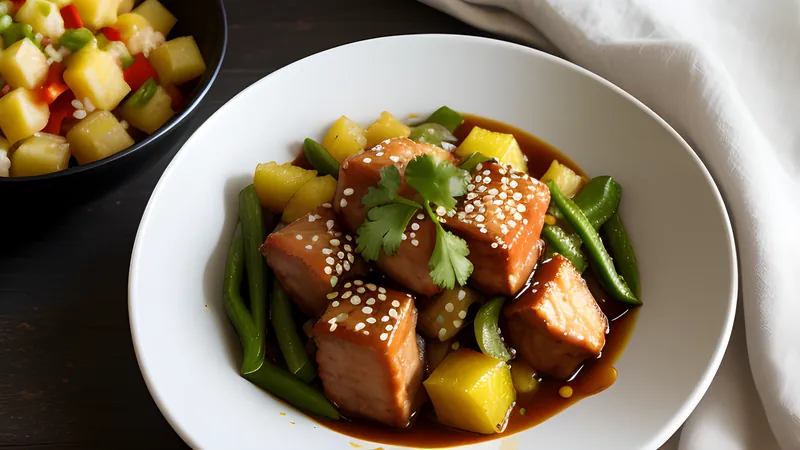
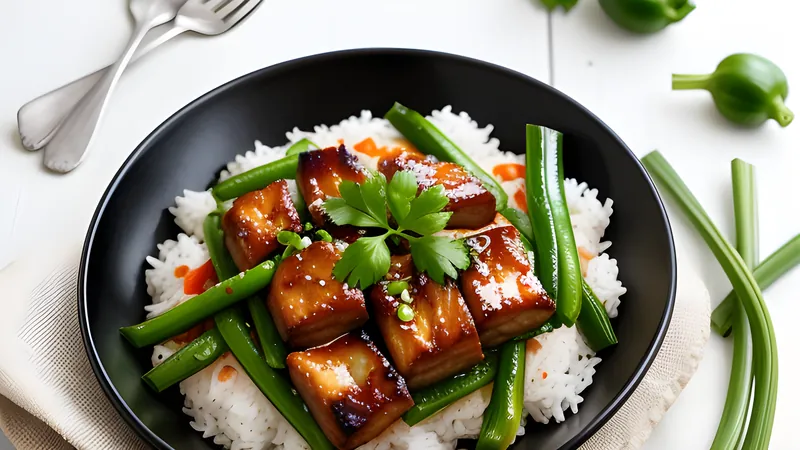
- Uncover and simmer a further 20-30 minutes, until the liquid has reduced to a thick, glossy sauce that coats the pork, and the meat is tender enough to yield easily but still holds its cube shape.
- Season to taste with salt if needed, remove the whole spices if you like a cleaner presentation, and scatter with sliced spring onion before serving.
A dish claimed by a province and a chairman
Red-braised pork belly exists in versions across huge stretches of China, and there’s no single point of origin to point to — it’s one of those dishes, like a good stew, that likely developed independently in multiple regional kitchens working from the same basic logic of sugar, soy and slow heat. Hunan’s claim to a specific, named version rests heavily on Mao, who was born in Shaoshan, Hunan, and whose reported fondness for the dish turned it into something close to a symbol of Hunanese cuisine on the national stage during and after his rule. Restaurants across China still market a “Mao family style” or “Chairman Mao’s braised pork” specifically to trade on that association, and the dish’s chilli-forward, deeply savoury profile lines up with Hunan cuisine’s broader reputation for aggressive, direct spicing compared with the more delicate, sweeter Shanghainese hong shao rou most Western diners encounter first.
Political mythology aside, the dish reflects something real about Hunanese cooking more broadly: a willingness to lean hard into fat, chilli and deep colour rather than restraint, and a preference for pork belly specifically, prized in Hunan for the way its fat renders down during a long braise into something silken rather than merely greasy.
Rock sugar caramel, not soy sauce, gives the colour
The single most common mistake in home versions of this dish is reaching for extra dark soy sauce to deepen the colour, when the real engine of that deep mahogany-red is a proper sugar caramel built at the start of cooking. Rock sugar — the pale, irregular crystals sold in Chinese grocers, less refined and less aggressively sweet than granulated sugar — melts more slowly and evenly, giving you a longer window to control the caramelisation before it tips into burnt bitterness. Granulated sugar works if rock sugar isn’t available, but watch it even more closely, since it caramelises faster and less predictably.
The process itself rewards patience and a steady hand rather than high heat. Low to medium-low, melting the sugar slowly, stirring more or less constantly once it starts to liquefy at the edges. You’re watching for a specific shift from pale gold to a deep amber, close to the colour of strong tea — push it any further and the sugar turns acrid rather than complex, and there’s no saving a burnt caramel except starting again. The moment it hits that amber stage, the pork needs to go in immediately; a few extra seconds of empty pan time between caramel and pork is enough for the sugar to seize and harden into a hard toffee rather than coating the meat evenly.
Blanching first, browning second
Blanching the pork belly briefly before it goes anywhere near the caramel isn’t a step to skip. Raw pork belly carries surface blood and impurities that, left in, cloud the braising liquid and leave a slightly metallic edge in the finished sauce. A two-minute blanch in boiling water, then a thorough pat-dry, clears that away and also firms the surface of the meat slightly, which helps it hold together better through the caramelising and long simmer that follow. Dry the pork properly before it hits the caramel — wet pork dropped into hot sugar syrup will spit fiercely and can cause the caramel to seize unevenly.
Tossing the pork in the caramel immediately after it melts, and doing so briskly, coats every surface before the sugar has a chance to fully harden into a brittle shell. This step is where the eventual glossy, mahogany finish of the dish actually gets built — everything that happens afterward, the soy sauces and the long simmer, deepens and seasons that base colour rather than creating it from scratch.
The long simmer and the reduction that follows
An hour of gentle, covered simmering is what breaks down the belly’s connective tissue and fat into that yielding, almost custardy texture the dish is known for — pork belly cooked hard and fast stays tough and chewy no matter how long you leave it, since the collagen needs time at a gentle temperature to convert properly rather than seizing under high heat. Keep the heat low enough that the liquid barely bubbles rather than rolling; a hard boil toughens the outside of the meat before the inside has had time to tenderise.
The final uncovered simmer, reducing the braising liquid down to a thick, clinging sauce, is just as important as the initial cook and is the step most home cooks rush. A watery hong shao rou, pork sitting in a thin brown liquid rather than coated in a glossy reduction, hasn’t been given enough time at this final stage. Twenty to thirty minutes uncovered, stirring occasionally so the sauce doesn’t catch at the bottom of the pot, should take you from a full pool of braising liquid to a sauce that clings visibly to the back of a spoon and coats each cube of pork in a thin, shiny lacquer.
Balancing chilli, spice and sweetness
Hunan’s version leans harder into dried chilli than the Shanghainese original, and the two dried chillies here are a moderate starting point rather than a fixed ceiling — Hunanese cooks partial to real heat will double or triple that without hesitation. Star anise, cinnamon and bay contribute background warmth rather than a dominant flavour of their own; none should be identifiable individually in the finished dish, and if the cinnamon or star anise tastes sharp and distinct rather than blended into the whole, it usually means the braise didn’t run long enough for the whole spices to properly integrate.
Balance is the real skill here: enough sugar for genuine caramel depth and a rounded sweetness, enough soy for salt and colour, enough chilli for real Hunanese heat, and a long enough braise that none of those elements taste separate from one another by the time the dish is done. Taste and adjust salt only at the very end, once the sauce has reduced — reducing concentrates the existing salt considerably, and a dish seasoned to taste at the start of the simmer will often turn out oversalted by the time the liquid has cooked down.
Choosing the right cut and why belly is non-negotiable
Pork belly’s layered structure — meat, fat, meat, fat, skin on top — is not incidental to this dish, it’s the entire reason it works. Leaner cuts like loin or shoulder dry out and turn stringy under an hour-plus braise; belly’s generous fat marbling is what renders down slowly into the silken texture the dish is famous for, basting the meat from within rather than relying on the braising liquid to do all the work. Buy belly with the skin still attached if your butcher can supply it — the skin itself turns meltingly soft and slightly sticky through the long simmer, adding a textural element that skinless belly simply can’t replicate. Ask for a piece with a good ratio of fat to lean, roughly even bands of each running through the cut; belly that’s almost entirely fat renders down to very little substance, and belly that’s mostly lean loses the tenderising benefit the fat provides.
Cutting the belly into even cubes before cooking, rather than braising it whole and portioning afterward, matters for two reasons: even cubes cook at the same rate, so you’re not left with some pieces overdone and others under, and the increased surface area lets more of the caramel and braising liquid actually contact and season the meat directly. Three centimetres is a reasonable middle ground — large enough that the pork doesn’t disintegrate over the long cook, small enough that the seasoning penetrates properly.
A note on regional variation within Hunan itself
Even within Hunan, hong shao rou isn’t a single fixed recipe. Some households and restaurants add a splash of doubanjiang (fermented broad bean chilli paste) alongside the dried chillies for a deeper, more savoury heat closer to Sichuan cooking’s influence on neighbouring provinces; others keep the chilli purely dried and whole, favouring a cleaner, more separable heat that doesn’t muddy the sauce’s colour. Some versions include a small amount of fermented black beans for extra umami depth, stirred in alongside the aromatics. None of these variations are more authentic than another — they reflect the same reality as most home-cooked regional dishes, that “the” version is really a spread of closely related versions shaped by whichever household or restaurant you happen to be eating at. If you want to experiment once you’ve made the base recipe a couple of times, a small spoonful of doubanjiang added with the aromatics is the easiest single addition to try, deepening the savoury base without overwhelming the sugar-and-soy backbone.
Serving
Red-braised pork belly wants nothing more complicated alongside it than plain steamed rice, which exists mainly to soak up the reduced sauce, and a simple stir-fried or blanched green vegetable to cut through the richness — choy sum or pak choi both work well. It reheats beautifully, arguably improves on the second day as the flavours settle further into the meat, and keeps in the fridge for up to four days in an airtight container. Skim any excess set fat off the top before reheating if you’d like a slightly lighter dish, though plenty of cooks consider that fat, gently rendered and saturated with the braising liquid, one of the best parts.
For other slow-braised pork dishes, try char siu pork, built on a similar soy-and-sugar glaze logic, and guo bao rou, Dongbei sweet and sour pork, which shows a very different regional Chinese approach to pork belly’s sweeter side. Char siu bao steamed BBQ pork buns is a good way to use up leftover braised pork in a different format entirely.
Related Content