Cepelinai: The Lithuanian Potato Zeppelin
Grey potato dumplings the size of an airship, stuffed with pork and bathed in bacon
Contents
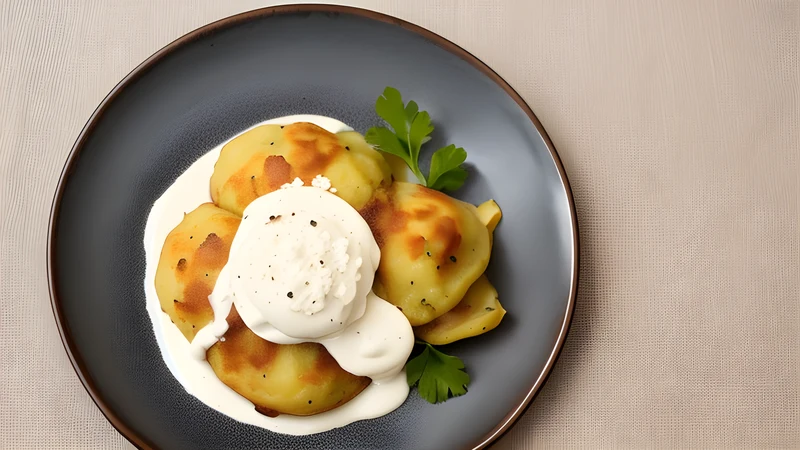
↓ Jump to recipeCepelinai are named after the Zeppelin airships, and once you have seen a tray of them you will never call them anything else. Each one is a fat, grey, torpedo-shaped potato dumpling the length of your hand, stuffed with seasoned pork, boiled until it turns springy and slightly translucent, then drowned in a hot sauce of crisped bacon, fried onion and soured cream. It is the most Lithuanian thing on any Lithuanian table, and it is a genuine project. I make them on a cold Sunday when I want the kitchen to smell of frying bacon for hours.
Cepelinai: The Lithuanian Potato Zeppelin
Ingredients
- 1.5kg floury potatoes (Maris Piper or similar), for grating raw
- 500g floury potatoes, for boiling
- 1 tbsp potato starch, plus extra if needed
- 1 tsp fine salt for the dough, plus more for the water
- 400g minced pork (roughly 20% fat)
- 1 small onion, finely diced
- 1 garlic clove, crushed
- 1 tsp fine salt for the filling
- ½ tsp ground black pepper
- ½ tsp dried marjoram
- 200g smoked streaky bacon or pork belly, diced
- 1 large onion, diced, for the sauce
- 200g soured cream, plus extra to serve
- 1 tbsp plain flour (optional, to thicken the sauce)
Method
- Make the filling first: fry the diced small onion in a little of the bacon fat until soft, cool, then mix into the pork with the garlic, salt, pepper and marjoram. Chill while you make the dough.
- Boil the 500g of potatoes whole until tender, drain well and mash smoothly with no added liquid. Leave to cool completely.
- Peel and finely grate the 1.5kg raw potatoes. Working in batches, wring the grated potato hard in a clean cloth over a bowl to squeeze out as much liquid as possible.
- Let the squeezed-out liquid stand for 10 minutes so the white starch sinks to the bottom. Pour off the water and scrape the thick starch back into the grated potato.
- Combine the grated potato, cooled mash, potato starch and salt into a smooth, tacky dough that holds together. If it feels wet, add another spoon of potato starch.
- With wet hands, take a handful of dough (about 150g), flatten it into a disc, place a heaped tablespoon of pork filling in the centre, and seal the dough around it into a smooth zeppelin shape with pointed ends. Repeat for 8 dumplings.
- Bring a very large, wide pan of well-salted water to a gentle boil. Lower in the cepelinai a few at a time so the water never fully stops simmering.
- Simmer gently, uncovered, for 25–30 minutes. They will float and turn slightly translucent and grey. Do not let the water boil hard or they may burst.
- For the sauce, fry the diced bacon until the fat renders and it crisps, add the large diced onion and cook until golden, then stir in the soured cream (and flour if thickening) and warm through without boiling.
- Lift the dumplings out with a slotted spoon, drain well, and serve each under a generous ladle of the bacon-onion sauce with an extra spoon of soured cream.
Airships, potatoes and a young national dish
The name is a twentieth-century joke. Count Ferdinand von Zeppelin’s rigid airships were in the news in the early 1900s, drifting over Europe like silver whales, and someone looked at these enormous elongated dumplings and made the obvious connection. So although Lithuanians had been making stuffed potato dumplings — under the older name didžkukuliai, “big dumplings” — for far longer, the airship nickname stuck and became the everyday word.
The dish itself depends on a crop that only became central to Lithuanian cooking relatively late. The potato arrived in the Baltic in force during the eighteenth and nineteenth centuries and transformed peasant eating, exactly as it did across northern and eastern Europe. Once potatoes were everywhere, cooks developed a whole grammar of potato cookery, and cepelinai are its high point: a way of turning cheap, filling tubers into something substantial enough to be a Sunday centrepiece.
You can see the same potato obsession all over the neighbourhood. The crisp Belarusian pancakes draniki use the identical trick of grating raw potato and wringing it dry, and the hot-and-cold logic of serving something rich with soured cream turns up again in the neon-pink summer soup šaltibarščiai. Cepelinai are what happens when that potato tradition decides to show off.
The dough is the whole battle
Here is the honest truth: cepelinai are not difficult so much as demanding, and the entire dish lives or dies on the dough. Get it right and you have a smooth, elastic dumpling that holds its filling and cooks to a satisfying chew. Get it wrong and you have a grey slick of raw potato disintegrating in your pan.
The dough is a mixture of two potatoes: raw grated potato and cooked mashed potato. The raw potato gives that characteristic dense, slightly glassy texture; the cooked potato binds it and stops it falling apart. The ratio is usually around three parts raw to one part cooked, but potatoes vary wildly in starch and water content, so treat the numbers as a starting point and read the dough.
The crucial, non-negotiable step is squeezing the grated raw potato bone-dry. Wring it hard in a cloth until you have removed as much water as you physically can. Then — and this is the part people skip — let that squeezed-out liquid stand for ten minutes so the potato starch settles into a chalky white layer at the bottom, pour off the water, and scrape the starch back into your dough. That reclaimed starch is what makes the dumpling cohere. Throw it away and you have thrown away your glue.
The other enemy is oxidation. Grated raw potato turns pink, then grey, then unappealingly dark within minutes as it hits the air. This is normal and harmless; the finished dumplings are meant to be grey anyway. But work quickly, and if you are grating a large batch, keep it moving.
Which potatoes, and why it matters
The variety of potato you use is no detail to wave away, because cepelinai depend on starch. You want a floury, high-starch main-crop potato, a Maris Piper, King Edward, or a dedicated baking variety, rather than a waxy salad potato, which holds too much water and too little binding starch and gives you a slack, weepy dough. Older potatoes, a few weeks out of the ground, are drier and starchier than new-season ones and behave better here. The same logic explains why the reclaimed starch step matters so much: you are topping up the natural starch that the wringing removed along with the water. If your potatoes are on the waxy or watery side, lean harder on the added potato starch and on a slightly higher proportion of cooked mash, both of which shore up a weak dough. And grate finely: a coarse grating leaves shreds that never quite bind, while a fine grate closer to a purée gives the smooth, dense, faintly glassy texture that marks a proper cepelinas.
Shaping and the fear of bursting
Take a fistful of dough with wet hands, flatten it into a thick disc, sit a heaped spoon of the pork filling in the middle, and gently gather the dough up and over until the filling is fully sealed inside. Smooth it into that pointed torpedo shape, checking there are no cracks — a crack is where water gets in and the dumpling bursts. Wet hands are essential; the dough is tacky and will glue itself to dry fingers.
Then comes the moment of faith: cooking. Use your biggest, widest pan and plenty of well-salted water, and keep it at a gentle simmer, never a rolling boil. A hard boil batters the dumplings against each other and blows them open. Lower them in a few at a time so the water never stops moving, and let them poach for 25 to 30 minutes. They will sink, then rise, then float with a faint translucency — that is how you know the raw potato has cooked through.
If you are nervous, boil one test dumpling first. If it holds, your dough is right. If it collapses, work a little more potato starch into the remaining dough before shaping the rest.
That test dumpling is the best insurance you have, and I never skip it. Potatoes vary so much from bag to bag that no written ratio can be trusted blindly, and it is far better to learn your dough is too wet from one sacrificial dumpling than from a whole pan of them unravelling into grey soup. If the tester holds its shape and cuts to a dense, cooked-through centre after its full simmer, you are clear to shape the rest with confidence. If it swells and splits, work in more potato starch a spoonful at a time and test again. Five minutes spent here saves the entire afternoon’s work.
The sauce that makes it Lithuanian
A cepelinas on its own is filling but plain. The sauce is what makes people fall in love. Fry diced smoked bacon or pork belly until the fat renders and the pieces crisp, add a heap of diced onion and cook it slow and golden in that rendered fat, then loosen with soured cream and warm it through gently. This sauce — called spirgučiai when it is mostly bacon and onion — gets spooned hot and glistening over the dumplings, with a further dollop of cold soured cream on top for good measure.
Stuffed potato dumplings are a shared northern inheritance, and cepelinai have relatives in every direction. Poland has its pyzy and the potato-dough kartacze of the north-east, effectively the same airship dumpling under a different name. Belarusians and western Ukrainians make close kin, and the whole idea rhymes with the grated-potato tradition behind the crisp draniki. What gives the Lithuanian version its identity is the scale, these are genuinely large, and the spirgučiai sauce of rendered smoked pork and onion that crowns them. Within Lithuania itself you will find regional and family differences: some cooks add a little egg or semolina to steady the dough, some use only raw potato and no mash at all, and the filling shifts between pork, a mix of pork and beef, curd cheese, or even mushrooms in autumn. Treat the recipe here as a dependable middle path and adjust once you have made it once and can feel how your own potatoes behave.
Do not let the soured cream boil once it goes in, or it will split. You are warming it through, never simmering it.
Tips, make-ahead and troubleshooting
They keep bursting. Either the dough is too wet (add potato starch), the seal has a crack (smooth it more carefully), or the water is boiling too hard (drop it to a gentle simmer).
The dough feels sloppy. You did not squeeze the raw potato hard enough, or you skipped reclaiming the settled starch. Both matter.
Make-ahead. Shaped raw cepelinai do not sit well because the potato greys and weeps, so shape and cook them in one go. Cooked ones reheat surprisingly well: warm them gently in a covered pan with a splash of water, or in fresh sauce.
Vegetarian filling. Curd cheese (varškė) mixed with a little egg and dill is a genuine traditional alternative to the pork, and lighter for it.
Serving size. Two per person is standard and generous — these are heavy. One as a taster alongside soup is plenty for a smaller appetite.
What to drink and serve alongside. Cepelinai are heavy, celebratory food, and they want something sharp to cut them. A cold lager is the traditional partner, since Lithuania is a serious beer country, and a spoon of tart soured cream and a few pickled cucumbers or a shred of sauerkraut on the side do the same brightening job. A light soup to start and no dessert to speak of is the honest way to serve them, because two of these dumplings and their bacon sauce make a complete and frankly ambitious dinner. Cook them when the weather is cold and you have people around the table with an afternoon to spare and an appetite to match.
Cepelinai are the definition of food worth the effort: cheap ingredients, an afternoon of work, and a result that feels like an occasion. Make them when it is cold outside and you have someone to help you grate the potatoes, pour the beers, and argue about whose seal is neatest.
Related Content