Cardamom and White Chocolate Snickerdoodles
Soft, spiced and rolled in fragrant sugar
Contents
↓ Jump to recipeA snickerdoodle is, at heart, a sugar cookie that decided to be more interesting, rolled in cinnamon sugar and given a distinctive tang. They are soft, pillowy and faintly chewy, with a crackled top and a flavour that is comforting and a little nostalgic. I love the original, but I wanted to take the spice somewhere less expected, so I swapped the cinnamon for cardamom and folded chunks of white chocolate through the dough. The result is gently exotic and quietly grown-up: floral, citrusy cardamom in place of warm cinnamon, with pockets of melting white chocolate that lean into the spice’s natural sweetness. They still crackle, they still pull apart soft in the middle, but they taste like nothing else in the biscuit tin.
Cardamom and White Chocolate Snickerdoodles
Ingredients
- 150g unsalted butter, softened
- 200g caster sugar
- 1 large egg, plus 1 yolk
- 1 tsp vanilla extract
- 275g plain flour
- 1 1/2 tsp cream of tartar
- 3/4 tsp bicarbonate of soda
- 1/2 tsp fine sea salt
- 1 tsp ground cardamom
- 120g white chocolate, chopped into chunks
- 50g caster sugar (for rolling)
- 1 tsp ground cardamom (for rolling)
Method
- Beat the softened butter and 200g sugar together until pale and fluffy, about 3 minutes.
- Beat in the egg, yolk and vanilla until smooth and combined.
- Whisk the flour, cream of tartar, bicarbonate of soda, salt and 1 tsp ground cardamom together, then fold into the wet mixture until just combined.
- Fold through the white chocolate chunks, then cover and chill the dough for 30 minutes.
- Preheat the oven to 170C fan and line two baking trays with parchment.
- Stir together the 50g sugar and 1 tsp cardamom in a small bowl for rolling.
- Roll the dough into 40g balls, then roll each generously in the cardamom sugar to coat.
- Space well apart on the trays and bake for 10 to 11 minutes until puffed and just set at the edges but still pale and soft in the centre.
- Let them sink and crackle on the tray for 5 minutes, then transfer to a wire rack to cool.
What makes a snickerdoodle a snickerdoodle
The cookie has German-American roots, most likely from immigrant baking traditions in New England and Pennsylvania, and the strange name has spawned countless folk etymologies, none of them conclusive. Some trace it to the German Schneckennudel, a snail-shaped cinnamon pastry; others to the nonsense-word tradition of nineteenth-century New England, where “snickerdoodle” sits alongside kitchen names like graham cracker and doughnut. The earliest printed recipes appear in American cookbooks around the 1890s. Whatever the origin, what sets the cookie apart from an ordinary sugar cookie is two things: the cinnamon sugar coating, and cream of tartar in the dough. That second one is the secret that people skip at their peril. Cream of tartar is potassium bitartrate, an acid left behind in wine barrels, and it does two jobs here. It reacts with the bicarbonate of soda to give a particular soft, slightly cakey lift, and it lends the cookie its signature subtle tang, a faint sourness that keeps the sweetness in check. It also inhibits the sugar from crystallising, which is part of why the finished cookie stays chewy rather than turning hard. Leave it out and you have just made a sugar cookie; it is the defining ingredient.
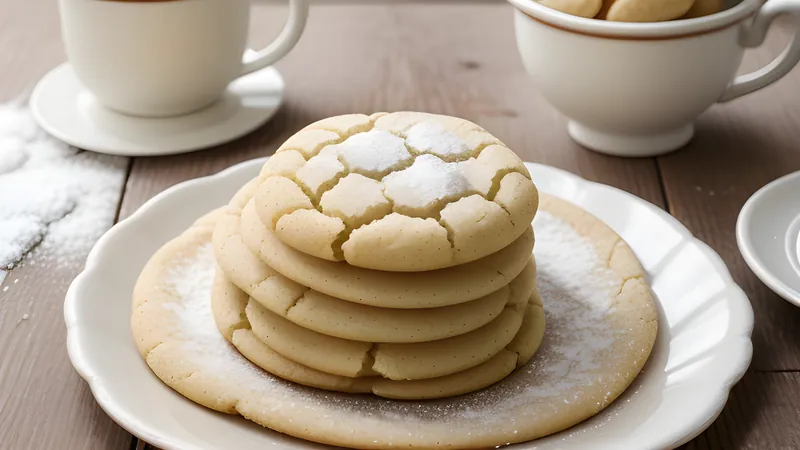
The texture you are aiming for is soft and chewy with a crackled, slightly crisp top. You get there by pulling them from the oven while the centres still look underdone and pale. They carry on cooking on the hot tray and settle into that perfect tender middle as they cool. This is worth stating plainly because it feels wrong the first time: a snickerdoodle that looks properly baked in the oven will be a hard biscuit by the time it is cool. Trust the carry-over. The residual heat of the tray finishes the middle gently while the edges are already set, and the five minutes of resting before you move them to a rack is not optional.
There is also a small piece of chemistry behind the pale, matte look. Snickerdoodles are deliberately not browned, which is why they bake at a moderate temperature and come out the colour of pale sand rather than golden. Cream of tartar, being acidic, slows the Maillard browning that would otherwise darken the surface, which keeps the tops light and lets the crackled sugar crust show. It is a cookie that trades the toasty flavour of a browned edge for tang and tenderness, and that trade is the whole point.
The clever twist: cardamom instead of cinnamon
Cardamom is one of my favourite spices to bake with, and it is criminally underused in this part of the world outside of Scandinavian buns and Indian sweets. It has a complex, almost perfumed character, citrusy and piney with a cooling, eucalyptus-like edge, and it works in a snickerdoodle precisely because it occupies the same warm-spice role as cinnamon while tasting completely different. Where cinnamon is cosy and familiar, cardamom is fragrant and slightly mysterious, the sort of flavour that makes people pause and ask what is in it.
It goes in twice: once in the dough, so the spice runs all the way through, and once in the rolling sugar, so the outside delivers a concentrated, fragrant hit as you bite in. For the best flavour, grind your own from green cardamom pods. Crack the pods, tip out the little black seeds, and grind them in a pestle and mortar or a spice grinder; the difference between freshly ground and the dusty pre-ground jars is enormous, because cardamom’s aromatic oils fade fast. If you only have pre-ground, buy a small fresh jar and use it generously. Once you have a bag of pods open it is worth putting them to work elsewhere: they are the making of proper cardamom cinnamon rolls, and cardamom folds beautifully into a batch of maple, olive oil and cardamom granola for the mornings after.
Why white chocolate, of all things
White chocolate gets a bad reputation, often deserved, because the cheap stuff is little more than sweetened vegetable fat. But good white chocolate, made with real cocoa butter, is creamy, milky and softly vanilla-ish, and it is a genuinely brilliant partner for cardamom. The spice’s floral, citrusy notes cut through the richness, and the chocolate rounds off cardamom’s slightly medicinal edge, so each makes the other more appealing. As the cookies bake, the chunks melt into smooth, sweet pockets that contrast with the tender, spiced crumb. Chop a bar into rough chunks rather than using chips, which contain stabilisers and stay stubbornly intact; you want the chocolate to melt and merge.
Technique notes that matter
Chilling the dough for half an hour firms the butter so the cookies do not spread into thin discs and keeps that thick, soft profile. Do not skip it; a warm, greasy dough will run flat on the tray before the structure has a chance to set. When you roll the balls in cardamom sugar, be generous, pressing the coating on so it forms a proper crust; this is where a lot of the flavour and the pretty crackled finish come from. Keep the balls well spaced, roughly 5cm apart, because they puff and spread, and resist opening the oven early. They are done when the edges are just set but the tops are still pale and look slightly underbaked, with the first cracks appearing.
The crackle itself, that spiderweb of fissures across the top, is not decoration for its own sake. It happens because the surface sugar and the leavening set the outside of the cookie before the inside has finished rising; the interior keeps expanding and splits the crust. Bicarbonate of soda, being alkaline, encourages exactly this by weakening the gluten and letting the surface crack rather than stretch. If your cookies come out smooth-topped, the likely culprits are too little bicarb, a dough that was too cold and stiff, or an oven that was not hot enough to set the surface quickly.
Substitutions and troubleshooting
No cream of tartar? You can substitute the cream of tartar and bicarbonate of soda with 2 teaspoons of baking powder, though you lose a little of the characteristic tang. For a nuttier depth, brown the butter first and let it cool to a soft solid before creaming, which gives a caramel note that suits the cardamom well; the same trick lifts a batch of rye chocolate chip cookies with smoked salt. If your cookies spread too much, your butter was too soft or the dough too warm, so chill for longer; if they stay domed and cakey, you may have overmeasured the flour, so spoon and level it rather than scooping.
Serving and keeping
These are at their absolute best a few hours out of the oven, when the crumb is soft and the chocolate has set to a creamy fudge. They keep well in an airtight tin for three or four days, staying tender thanks to the high sugar content; slip a slice of bread into the tin and it will help hold the moisture. The unbaked dough balls freeze beautifully: open-freeze them on a tray, bag them up, and bake straight from frozen with an extra minute or two, so you always have fresh cookies to hand. If you want to push the flavour even further, a tiny grating of orange zest in the dough plays beautifully with both the cardamom and the white chocolate. But honestly, they need very little. A warm cookie, a good cup of tea, and that surprising hit of cardamom is plenty.
If you are baking a batch to share, these travel and keep better than most soft cookies, which makes them a good choice for a tin taken to someone’s house or a lunchbox treat. And if you find yourself with cardamom pods to use up and a sweet tooth to satisfy, the spice is happy to wander well beyond the biscuit tin: it is glorious in a milky, spiced drink, folded into an enriched dough, or dusted over roasted fruit. The whole appeal of a snickerdoodle is that it takes a plain, familiar cookie and gives it just enough of a twist to make people ask what is in it, and cardamom answers that question more interestingly than cinnamon ever could.
Related Content