Focaccia with Caramelised Onion, Thyme, and Flaky Salt
Dimpled, oily, gold-topped Italian comfort
Contents
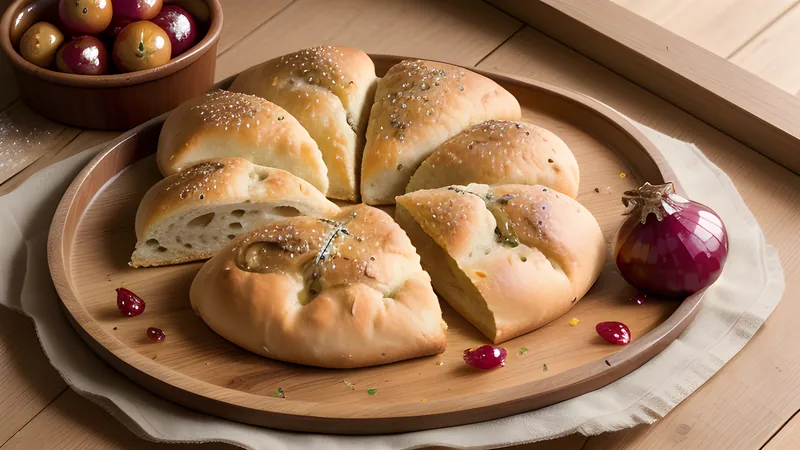
↓ Jump to recipeFocaccia was the bread that taught me wet doughs are not to be feared. For years I thought soft, oily, dimpled focaccia was a bakery thing, something that required equipment or instinct I did not possess. Then I made it once, almost by accident, and discovered it is among the most forgiving breads there is. The dough is so wet it practically makes itself, the only real technique is dimpling it with your fingers like you are annoyed at it, and the reward is a tray of golden, salty, oil-glossed bread that disappears within the hour.
The twist that makes this version sing is the onions. Plain focaccia with rosemary and salt is a fine thing, but a slow tangle of caramelised onions pressed into the dimples turns it into something you serve to people you are trying to impress. Cooking the onions down properly — low and slow, until they collapse into sweet, jammy gold — is the only part that takes patience, and it is worth every minute. A splash of balsamic at the end gives them a faint sharp edge that cuts through all the richness beneath. If you love this method, the plainer rosemary focaccia is the base template to master first, and the same slow-onion technique underpins any number of savoury bakes.
Focaccia with Caramelised Onion, Thyme, and Flaky Salt
Ingredients
- 500g strong white bread flour
- 400ml water, lukewarm
- 7g instant dried yeast
- 10g fine sea salt
- 1 tsp caster sugar
- 6 tbsp extra virgin olive oil, plus more for the tin
- 3 large onions, halved and thinly sliced
- 1 tbsp butter
- 1 tsp balsamic vinegar
- Leaves from 6 sprigs of fresh thyme
- Flaky sea salt, for the top
Method
- Whisk the yeast and sugar into the lukewarm water and leave for 5 minutes until frothy.
- Mix in the flour and fine salt to a very wet, sticky dough. Add 2 tbsp of the olive oil and mix again.
- Cover and leave at room temperature for 1 hour, giving the dough one set of stretch-and-folds in the bowl after 30 minutes.
- Meanwhile, cook the onions slowly in the butter and 1 tbsp oil over a low heat for 30-40 minutes, stirring often, until soft, deep gold and sweet. Stir in the balsamic and cool.
- Oil a large baking tray generously. Tip in the dough, drizzle with 2 tbsp oil, and stretch it gently to fill the tin. If it springs back, rest 10 minutes and stretch again.
- Cover loosely and leave to rise for 45 minutes until pillowy and risen.
- Heat the oven to 220C. Dimple the dough all over with oiled fingertips, pressing right down to the tin.
- Scatter over the caramelised onions and thyme, drizzle with the last tablespoon of oil, and sprinkle generously with flaky salt.
- Bake for 22-25 minutes until deep golden and crisp at the edges. Lift onto a rack and let it cool a little before cutting.
A bread shaped by oil
Focaccia comes from Liguria, the slip of Italian coast curving around Genoa, where it is eaten at all hours: split for breakfast, torn alongside lunch, snatched as a mid-morning spuntino. The most famous local version, focaccia genovese, is thin, intensely oily and dimpled, brushed with a brine of oil, water and salt before baking. Further along the coast the town of Recco makes a paper-thin unleavened version filled with soft cheese, proof of how far a single idea can travel within one small region. The name traces back to the Latin panis focacius, meaning bread baked on the hearth, on the focus, which was the fireplace at the heart of a Roman home; the Romans in turn likely inherited the flatbread idea from the Etruscans and Greeks before them. It is one of the oldest styles of bread in the Mediterranean, and it has barely needed to change, which is part of its quiet appeal: a bread that has been getting people through the day for the better part of two thousand years.
What sets it apart is the sheer quantity of good olive oil. Oil goes into the dough, under it in the tin, over the top before baking, and often again the moment it comes out of the oven. That oil is not incidental; it fries the base to a crisp shell, keeps the crumb tender and rich, and carries the flavour of the salt and herbs into every bite. Skimping on it is the one mistake that will let a focaccia down, so be generous and unembarrassed about it.
The art of the dimple
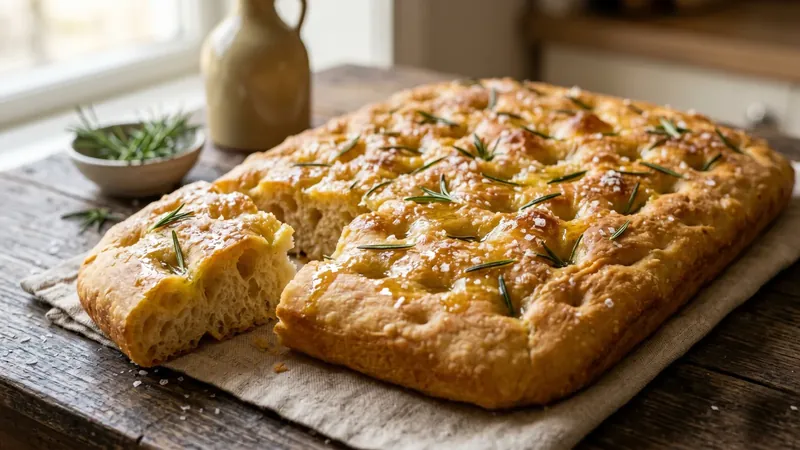
Dimpling is the signature move and the most satisfying part of the whole process. With oiled fingertips you press firmly all over the risen dough, pushing right down to the bottom of the tin to leave deep little wells across the surface. This is not just for looks, though the pockmarked landscape it creates is undeniably handsome.
Those dimples are reservoirs. They catch and hold the oil, the salt and, here, the sweet onions, so that nothing rolls off the top during baking. Press right down to the base of the tin with straight fingers, not fingertips alone, and do not worry about deflating the dough; the pockets you leave will spring back a little in the oven but never fully close. As the bread rises in the oven the wells stay lower than the puffed ridges around them, and the oil pooling in them fries those spots to a slightly crisper, more caramelised finish. The contrast between the crisp dimples and the soft pillowy ridges is the whole pleasure of good focaccia.
Getting the texture right
The key to that open, airy, slightly chewy crumb is hydration — keeping the dough genuinely wet. This recipe runs at 80 per cent hydration, meaning 400 ml of water to 500 g of flour, which is far wetter than a standard loaf and is precisely what gives focaccia its big, irregular holes. It will feel alarmingly loose and sticky, and your instinct will be to add flour. Resist it. A drier dough makes a denser, more bread-roll-like focaccia, pleasant but not the cloud you are after. Wet hands and an oiled surface make the stickiness manageable; the dough firms up as it proves and bakes. Strong bread flour matters here, too, because its higher protein content builds the gluten network that traps all that gas and holds the wet dough together; plain flour will give you a slacker, flatter result.
Rather than kneading, this dough is developed with a set of stretch-and-folds in the bowl. With a wet hand you reach under one side of the dough, lift it up and fold it over onto itself, then rotate the bowl and repeat three or four times. This gently aligns and strengthens the gluten without knocking the air out or turning a sticky mass into a wrestling match. One round after 30 minutes of the first rise is enough to give the dough structure and spring.
A slow first rise builds flavour, and you can stretch this further if you like. Mix the dough the night before, leave it covered in the fridge overnight, then bring it to room temperature, transfer to the tin, and carry on. The long cold ferment deepens the taste considerably and spreads the work across two days. During that slow, cool fermentation the yeast works gently while enzymes and bacteria in the dough produce acids and aromatic compounds, which is why an overnight focaccia tastes noticeably more complex and faintly tangy than one rushed through in a warm kitchen in a couple of hours.
Getting the onions properly caramelised
The onions are the part that rewards patience and punishes impatience. Real caramelisation is a slow chemistry: as onions cook, their cell walls break down and release water and natural sugars, and once that water has cooked off the sugars begin to brown through the Maillard reaction and gentle caramelisation, deepening from pale to amber to a dark, jammy bronze. This cannot be rushed. Turn the heat too high and you get onions that are scorched at the edges and raw and acrid in the middle, tasting bitter rather than sweet. Keep the pan low, stir every few minutes, and give it a genuine 30 to 40 minutes for three large onions. If they start to catch, add a tablespoon of water to lift the browned residue off the base and carry on. A tiny pinch of salt early on helps draw the water out and speeds things along. The balsamic goes in only at the very end, off the heat, so its sharpness stays bright rather than cooking away.
What can go wrong
Two mistakes account for most disappointing focaccia. The first is adding flour to tame the sticky dough, which gives you something denser and more like a bread roll than the airy, open crumb you want; trust the wetness and use oiled hands instead. The second is underbaking, which leaves the base pale and soggy under all that oil rather than crisp; bake until the top is a genuine deep gold and the edges have pulled slightly from the tin, 22 to 25 minutes at 220°C, and do not be shy about giving it the full time. If the top browns before the base has crisped, move the tray to a lower shelf for the last few minutes. Finally, do not skip the second prove after dimpling; the dough needs that final relaxation to bake light rather than tight.
Serving, storage and variations
Focaccia is at its peak warm, within an hour or two of baking, when the base still crackles and the top is glossy. Tear rather than slice if you can; it feels right. It wants almost nothing alongside it, though a saucer of more olive oil for dipping never goes amiss. It keeps for a day or two wrapped at room temperature and revives well with five minutes in a hot oven, and it freezes for up to a month; refresh frozen pieces straight from the freezer in a 180°C oven for around 10 minutes.
Once you have the base method, the toppings are yours. Halved cherry tomatoes pressed into the dimples blister beautifully; thin slices of potato with rosemary make a famous Ligurian version; olives, garlic, or a scatter of grated parmesan all belong here. If you enjoy working with soft, enriched or oil-rich doughs, the cardamom cinnamon rolls are a sweeter next project in the same forgiving spirit. But the caramelised onion and thyme combination is the one I come back to, generous with the flaky salt, every single time.
Related Content