Cao Lau: Hoi An's Noodles With Well Water
Thick, chewy noodles that only taste right when the water and ash come from one town
Contents
↓ Jump to recipeCao Lau: Hoi An's Noodles With Well Water
Ingredients
- 500g thick fresh rice noodles (or dried rice noodles, cooked and cooled)
- 600g pork shoulder, in one piece
- 3 tbsp fish sauce, divided
- 2 tbsp dark soy sauce
- 1 tbsp sugar
- 1 tsp five-spice powder
- 3 star anise
- 4 cloves garlic, minced, divided
- 2 shallots, sliced
- 500ml water or light pork stock
- 150g pork skin or pork crackling, thinly sliced (optional, for the crisp topping)
- 3 tbsp vegetable oil
- 100g bean sprouts
- handful mustard greens or Asian basil, sliced
- coriander and mint leaves, to serve
- lime wedges, to serve
- chilli, sliced, to serve
Method
- Marinate the pork shoulder with 2 tbsp fish sauce, the dark soy sauce, sugar, five-spice, half the minced garlic, and a good grind of black pepper. Rest for at least 1 hour, or overnight in the fridge.
- Heat 1 tbsp oil in a pot. Sear the pork on all sides until browned, then add the star anise, shallots and remaining garlic. Add the water or stock.
- Cover and braise on low heat for 45 minutes to an hour, until the pork is tender but still sliceable, not falling apart. Remove the pork and let it rest, then slice thinly against the grain.
- Reduce the braising liquid over medium heat for 5-10 minutes until slightly concentrated. Strain and season with the remaining fish sauce to taste.
- If using pork skin, fry the thin slices in the remaining oil until deeply golden and crisp, then drain on kitchen paper and break into shards once cool.
- Divide the noodles between bowls. Top with sliced pork, crisp pork crackling shards, bean sprouts and mustard greens or basil.
- Spoon a small amount of the reduced braising liquid over each bowl — cao lau is meant to be nearly dry, not a soup, so use it sparingly.
- Serve with coriander, mint, lime wedges and sliced chilli on the side.
A dish that’s supposed to be impossible to replicate
Ask anyone from Hoi An about cao lau and they’ll tell you, usually within the first sentence, that it can’t really be made properly anywhere else — the noodles, the story goes, depend on water drawn from a specific ancient well in town, Ba Le well, and on ash from a particular type of tree grown in the Cham Islands nearby, both used in soaking and processing the rice before it’s made into noodles. Whether that’s strictly, chemically true or partly civic folklore that’s calcified into culinary law over generations, it’s taken seriously enough that cao lau made outside Hoi An is often described by locals as a different, lesser thing wearing the same name — a claim that’s part legend, part genuine regional pride, and worth knowing before you attempt a home version and expect it to taste identical to a bowl eaten in an Old Town alleyway.
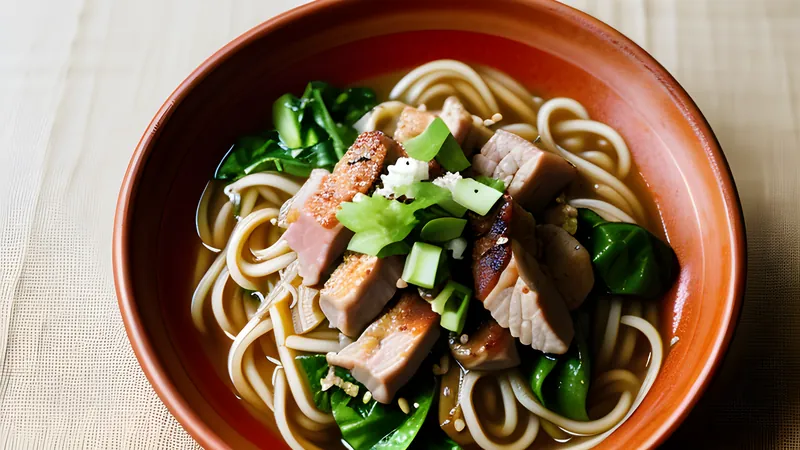
What you can replicate at home is the dish’s structure and its actual flavour logic, even without access to that specific well: thick, chewy rice noodles, distinct from the thin vermicelli used in pho or bun, topped with slices of five-spice pork, crisp shards of pork crackling, a small handful of raw greens, and only the barest amount of a concentrated, dark, faintly sweet sauce — never enough liquid to call it a soup. Cao lau is deliberately, almost stubbornly, a dry noodle dish, closer in spirit to a good bowl of noodles tossed lightly in a sauce than to anything brothy.
Where the dish sits historically
Hoi An was a major trading port for centuries, and cao lau’s ingredient list reads like a small history of who passed through: the char siu-adjacent five-spice pork nods toward Chinese trading communities who settled in the town, the noodle’s thickness and chew have been compared by some food historians to Japanese udon, pointing to the Japanese merchants who also had a settlement in Hoi An in the sixteenth and seventeenth centuries, and the overall dry-noodles-with-crackling-and-herbs structure is distinctly Vietnamese. Whether every claimed influence is historically precise or partly retrofitted narrative built around a well-loved dish, cao lau is genuinely a product of Hoi An’s specific position as a crossroads port town, in a way that few other single dishes so neatly encapsulate.
Getting noodles close to the real texture
Fresh cao lau noodles, made from rice soaked in ash-alkalised water before being rolled and cut thick, have a distinctive chew closer to a good udon than to the soft, slippery texture of most Vietnamese rice noodles — that alkalinity is part of what gives them their particular bite and slightly yellow-grey tinge. Outside Hoi An, and often outside Vietnam entirely, sourcing true cao lau noodles is difficult to impossible, so thick fresh rice noodles (sometimes labelled “flat rice noodle” or a thick banh pho style) are the standard substitute, giving a reasonably close chew even without the specific ash treatment. Dried noodles of a similar thickness work in a pinch, cooked until just tender and then rinsed in cold water to firm them up and stop them turning mushy under the warm toppings.
The pork: braised, not just roasted
Cao lau’s pork sits closer to a Vietnamese take on char siu than to a plain roast, marinated in fish sauce, dark soy, sugar and five-spice before being seared and then braised gently rather than dry-roasted. The braise keeps the meat considerably more tender and moist than a purely oven-roasted char siu would manage, while the initial sear still builds a proper caramelised crust on the surface before the braising liquid goes in. Slicing thinly against the grain once the pork has rested for ten minutes or so — never straight off the heat — keeps each slice tender rather than tough and stringy.
The crackling shards are not a garnish
The crisp pork skin or crackling scattered over the top isn’t decorative; it’s one of the dish’s core textural elements, providing a genuine crunch against the chewy noodles and tender pork that nothing else in the bowl replicates. Fry thin slices of pork skin hard, in a reasonably hot pan, until they’re deeply golden and audibly crisp rather than just lightly browned — a pale, barely-cooked piece of pork skin turns leathery rather than shattering the way it should. Break the fried skin into rough shards by hand once it’s cooled slightly, rather than slicing it neatly, since the irregular edges catch and hold onto the sauce better than a clean-cut piece would.
Why the sauce stays minimal
The instinct, especially for anyone used to brothier Vietnamese noodle dishes, is to ladle on more of the braising liquid than the dish actually wants. Resist it — cao lau is defined partly by its dryness, a small spoonful of concentrated, dark sauce coating the noodles rather than pooling at the bottom of the bowl. Reducing the braising liquid properly beforehand, so it’s noticeably thicker and more intensely flavoured than a standard broth, means a little goes further and the dish keeps its intended texture: noodles you toss and coat, not noodles you swim in liquid to eat.
Serving and the vegetables that belong on top
Raw or lightly blanched mustard greens, or Vietnamese basil where mustard greens aren’t available, along with a modest handful of bean sprouts, are the standard vegetable components, added just before serving so they retain some bite against the warm noodles and pork. Coriander, mint, lime and chilli go on the side for diners to add individually, following the same self-assembly logic found across most Vietnamese noodle dishes — the bowl arrives complete, but the final balance of herb and acid is left to the person eating it.
Make-ahead and storage
The braised pork and its reduced sauce keep well refrigerated for up to three days, and the flavour if anything improves slightly by the second day as the five-spice and garlic settle further into the meat. Store the pork, sauce, noodles and crackling separately, and assemble only when serving — noodles left sitting with warm pork and sauce on top turn soft and stick together within the hour, losing the individual chew that makes the dish worth the effort. The fried crackling shards are best made fresh or, at most, a few hours ahead, kept uncovered rather than sealed so residual steam doesn’t soften their crunch.
For more of central Vietnam’s distinct noodle traditions, bun bo hue shows the same region’s love of a bold, specific noodle dish a short distance up the coast in Hue, while mi quang is Hoi An’s other famous near-dry noodle dish, sharing cao lau’s instinct for keeping the sauce minimal rather than brothy. A bowl of chicken pho makes a useful point of comparison if you want to taste how differently Vietnamese noodle dishes can be built around broth versus dryness.
The well itself, and how seriously to take the legend
Ba Le well, tucked down a narrow lane in Hoi An’s Old Town, is centuries old and still in active use by a handful of noodle makers who insist on drawing their water from it specifically for cao lau production, rather than switching to municipal supply even though it would be far more convenient. Local accounts describe a faintly mineral, slightly sweet quality to the well water that’s credited with giving the noodles their particular texture and the ash-soaking liquid its correct alkalinity — though independent verification of exactly what makes that water different from any other well nearby is thin on the ground, and much of the claim rests on generations of noodle makers’ direct experience rather than published analysis. What isn’t in dispute is that a genuine cao lau industry has grown up around defending that specific water source, with some sellers advertising noodles made specifically from Ba Le well water as a point of distinction and pride, in a way few other noodle dishes anywhere bother to claim about their water supply.
The ash comes traditionally from burning wood from trees on the Cham Islands, a short boat trip off the coast from Hoi An, and is used to make the lye-like soaking liquid the rice sits in before being ground and steamed into noodles — a process broadly similar in principle to the alkaline treatment used in ramen or in Chinese egg noodles, which is part of why food writers reaching for a comparison so often land on udon or ramen despite cao lau being a rice noodle rather than a wheat one. Whether or not the specific tree species matters as much as local tradition insists, the alkaline treatment itself is a real, technically sound reason the noodles end up firmer and chewier than an untreated rice noodle would.
A note on five-spice powder
Five-spice blends vary considerably by brand and by region, typically built from some combination of star anise, cloves, Chinese cinnamon, Sichuan pepper and fennel seed, and the ratio between those components shifts the marinade’s character more than most home cooks expect. A blend heavy on star anise and cinnamon leans sweeter and more aromatic; one with a stronger showing of Sichuan pepper introduces a faint numbing quality that’s less traditional here but not unwelcome if that’s the bottle in your cupboard. Taste a pinch of whichever five-spice you’re using on its own before committing it to the marinade, and scale the quantity to your own sense of how strong it is — some blends are considerably more potent than others, and a blend that tastes assertive on its own will need less of it in the marinade than one that tastes mild.
Why the dish resists mass-market export
Unlike pho or banh mi, which have travelled globally and adapted comfortably to whatever ingredients are locally available, cao lau has stayed relatively contained to Hoi An and its immediate reputation as a place worth visiting specifically to eat it. Part of that is the well-water legend itself, which discourages the idea that a “real” version can be made elsewhere and so dampens the incentive to try exporting it commercially the way pho was. Part of it is simply that the dish’s charm is subtle rather than immediately showy — a quiet, dry, chewy bowl of noodles rather than a dramatic broth or a portable sandwich — which travels less naturally onto a foreign menu built around dishes that photograph or explain themselves quickly. Making it at home, even an approximation without the specific well water, is a reasonable way to understand what the fuss is actually about, rather than waiting for a version to show up on a nearby menu.
Related Content