Caldeirada de Peixe: Portugal's Layered Fisherman's Pot
Build it cold, never stir it, and let the pot do the arranging
Contents
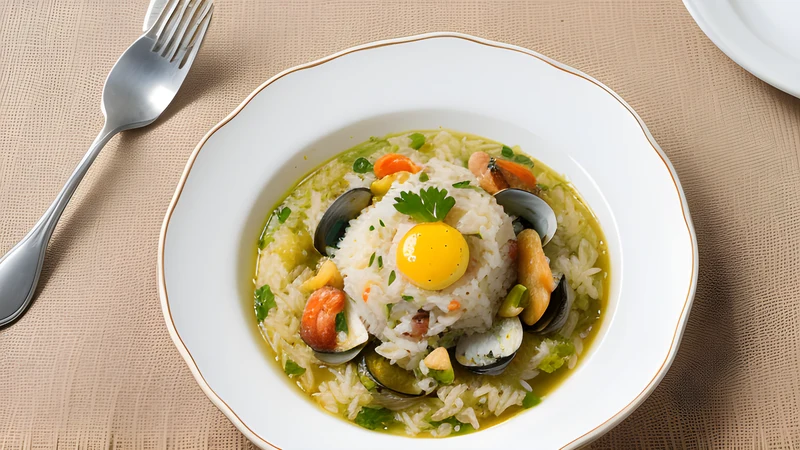
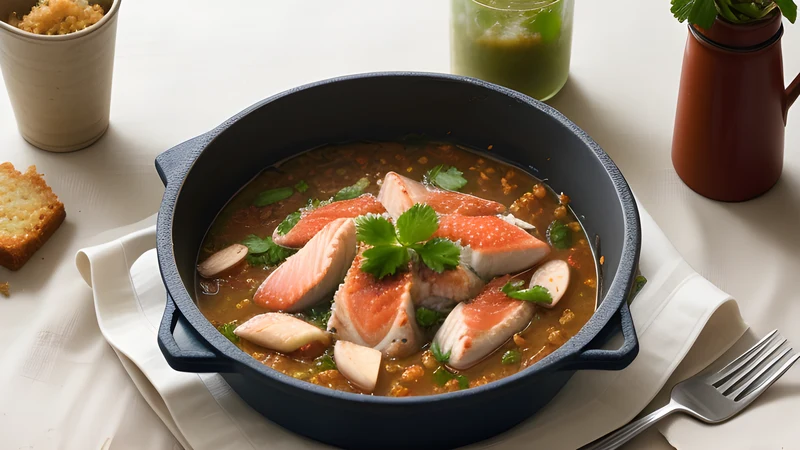
↓ Jump to recipeThere is a spoon rule in this dish and it is absolute: the spoon comes out at the end, to serve, and at no point before. A caldeirada is built cold in layers, brought to a simmer, and then left entirely alone for half an hour. If it needs moving, you pick the pot up and shake it. Stirring turns a fisherman’s pot into fish soup with lumps in it, and the difference is everything.
This is Portugal’s coastal one-pot, the thing that got cooked on a boat with whatever came up in the net that was too small, too ugly or too various to sell. It is deliberately promiscuous about species and absolutely rigid about method.
Caldeirada de Peixe: Portugal's Layered Fisherman's Pot
Ingredients
- 100 ml extra virgin olive oil
- 3 medium onions (about 450 g), sliced 4 mm thick
- 4 garlic cloves, sliced
- 1 green pepper (about 150 g), sliced into rings
- 1 red pepper (about 150 g), sliced into rings
- 700 g waxy potatoes, peeled and sliced 6 mm thick
- 500 g ripe tomatoes, sliced 5 mm thick, or 400 g tinned plum tomatoes, drained and torn
- 2 dried bay leaves
- 1 strip of orange peel, about 8 cm long, pared with a peeler, no white pith
- 1 tsp smoked sweet pimenton
- 400 g firm white fish (monkfish, hake or huss), cut into 4 cm chunks
- 400 g soft white fish (skin-on sea bass, bream or pollack fillets), cut into 4 cm pieces
- 200 g mussels or clams, scrubbed, any open ones discarded
- 150 ml dry white wine
- 150 ml water
- 2 tsp fine sea salt
- 3 tbsp chopped flat-leaf parsley
- 1 tbsp red wine vinegar
- Crusty bread, to serve
Method
- Take a wide, heavy pot about 26 to 28 cm across. Pour in half the olive oil. Everything is built cold, from the bottom up, in the order that follows.
- Layer 1: half the onions, then half the garlic, in an even bed. Season with a pinch of the salt.
- Layer 2: all the potato slices, overlapping like roof tiles. Season with 0.5 tsp of the salt.
- Layer 3: all the pepper rings, then the remaining onions and garlic. Tuck the bay leaves and the strip of orange peel down the side of the pot so they sit in the middle of the stack.
- Layer 4: the firm fish, in a single layer. Season with 0.5 tsp salt and dust with the pimenton.
- Layer 5: the tomato slices, covering the fish completely.
- Pour over the wine, the water and the remaining olive oil. Season with the last of the salt.
- Set over a medium heat, uncovered, until it comes to a bare simmer — about 10 minutes. Do not stir. Now and forever, do not stir.
- Cover, lower the heat to the barest simmer, and cook for 25 minutes, until the potatoes give to the tip of a knife. To move things around, grip the handles and shake the whole pot in a circle. Never a spoon.
- Lay the soft fish on top, skin side up, and scatter the mussels or clams over it. Cover and cook for a further 8 to 10 minutes, until the fish flakes and every shell has opened. Discard any that stay shut.
- Take off the heat. Sprinkle over the parsley and the vinegar, cover, and rest for 5 minutes. Serve straight from the pot, digging down through the layers with a spoon so each bowl gets all of them, with bread.
The pot came before the recipe
The name gives the game away. A caldeira is a cauldron or kettle, and caldeirada means what happened in it — the dish is named after its equipment, in the same way that a casserole is. It belongs to the fishing communities of the Atlantic coast, and it is claimed most loudly by Setúbal, south of Lisbon, and by Nazaré, where the boats were dragged up the beach by oxen until the 1970s.
The economics are the ones that produce this dish everywhere. A fisherman sells the good fish and eats the rest, and the rest is a mixed handful of whatever the net brought: a bit of monkfish tail, a scad, a small conger, a few clams from the sand. You cannot cook that assortment to a single doneness by any method except one that separates them in space, which is exactly what the layering does. It is a technical solution to a commercial problem, arrived at by people with no interest in technique for its own sake.
Every fishing coast has its version and they converge remarkably. Provence has bouillabaisse, which was the same rubbish-fish stew before Marseille turned it into a luxury with an official charter. San Francisco has cioppino, invented by Genoese immigrants doing exactly this on the Wharf. Galicia has caldeirada galega just over the Portuguese border, nearly identical and argued about fiercely. Norway takes it in a dairy direction with fiskesuppe. The Portuguese version distinguishes itself by using no stock at all — the liquid is wine, a little water, and everything the vegetables and fish give up as they cook.
That is why it cannot be stirred. A caldeirada makes its own broth in situ, and the broth is a gradient: oniony and sweet at the bottom, tomatoey at the top, fishy through the middle. Stir it and you homogenise the one thing that took forty minutes to build.
Orange peel and bay, buried in the middle
The twist is a strip of orange peel and two bay leaves pushed down the side of the pot so they sit at the centre of the stack rather than floating on top.
Portuguese caldeirada usually stops at bay. Orange is a Provençal move — it is standard in bouillabaisse — and it belongs here for a specific chemical reason. Oily and white fish both release amines as they cook, and the volatile compounds that read as fishy are basic. Citrus terpenes, particularly the limonene in the peel oil, cut across them, and the peel’s bitterness gives the sweet onion base something to push against. Half an hour under a lid, at a bare simmer, is enough to extract the oils from the flavedo without touching the pith.
Position is the point. Aromatics on top of a pot flavour the top of the pot; steam rises and takes very little downward. Bury them at the midpoint of a stack and their oils dissolve into the liquid that is condensing and running back down through everything, which distributes them through all five layers. It is a small thing and you can taste it — the difference is a low bitter-bright note behind the fish rather than an orangey smell at the surface.
Pare the peel with a vegetable peeler and check the underside. Any white pith and you get astringency instead of perfume, and thirty minutes is long enough for that to become the dominant flavour.
Why the order is the order
Read the layers bottom to top and each one is earning its place.
Onion and garlic go on the floor because they are the only things that want direct contact with hot metal. They half-fry in the olive oil for the first ten minutes before enough liquid arrives to stop it, and that brief fry is the base note of the entire dish.
Potatoes next, and they must be waxy — Charlotte, Cyprus, anything labelled salad potato. A floury Maris Piper will disintegrate at twenty-five minutes and thicken your broth into gravy, which is a different and lesser dish. Slice them 6 mm: thicker and they will not cook through in the time the fish allows, thinner and they collapse. Overlapping them like tiles makes a raft that physically holds the fish above the base and stops it catching.
Peppers and the second lot of onion go above the potatoes as an insulating mattress. Firm fish sits on that, in the middle, where the heat is gentlest and most humid. Tomato goes over the fish as a lid, releasing acid and water downwards as it collapses, which is what keeps the fish from drying.
And the soft fish and shellfish go on at the very end, on top, for eight minutes, because a sea bass fillet needs about a fifth of the cooking time a potato does. Trying to cook them together is the single reason most home fish stews are bad.
Buying and handling the shellfish
Mussels and clams are the part people get nervous about, and the rules are short. Buy them alive, on the day, from a counter that keeps them on ice under a damp cloth rather than sealed in a bag of water — they need air and they drown in fresh water.
At home, tip them into a colander and scrub under a cold tap. Pull the beards off mussels by tugging them towards the hinge, which is the direction they grow; pulling towards the pointed end tears the flesh. Then sort them. Any shell that is open should close when you tap it firmly on the worktop or give it a squeeze; if it stays gaping after ten seconds, the animal is dead and it goes in the bin. Any shell that is cracked goes too. After cooking the rule inverts: anything that has not opened stays shut for a reason, and you throw it away rather than levering it open.
Clams want half an hour in cold salted water — about 30 g of salt per litre, roughly seawater — to spit out their sand. Fresh water kills them and they will not purge. Lift them out of the water rather than pouring, so the grit stays behind in the bowl.
If you cannot get either, the dish is perfectly good without. Add 200 g more of the soft fish and carry on.
The broth, and the bread
The liquid at the bottom of the pot is the reason to make this rather than grill some fish, and there is less of it than you expect: 300 ml of wine and water goes in, and perhaps 500 ml comes out, the difference being everything the onions, tomatoes and fish gave up. It is thin, orange, oily on top, and extraordinarily savoury.
Portugal deals with it with bread, and specifically with bread that is a day old, torn rather than sliced, and used as a tool. You put a piece in the bottom of the bowl before the stew goes in and it becomes a sponge. This is the same instinct that produces açorda and every other bread-thickened dish on the peninsula, and it is why nobody in Setúbal would serve this with rice.
Do not be tempted to skim the oil off. A hundred millilitres of olive oil sounds like a lot for four people and most of it ends up emulsified into the broth by the movement of the simmer, carrying the fat-soluble flavours — the pimentón, the orange terpenes, the bay — that would otherwise stay in the solids. The oil is the sauce.
If you want the broth thicker, mash three or four of the potato slices against the side of the pot with a fork at the end and shake it through. The starch does the job in thirty seconds. Never add flour or cornflour to a caldeirada; the whole point is that it thickens with itself.
Faults and shopping
The fatal error is a hard boil. Fish protein contracts and squeezes out its moisture above about 65°C, and a rolling boil will also physically knock the layers apart. The surface should barely move — a bubble every second or two. If your smallest ring is too fierce, use a diffuser or move the pot half off the flame.
The second error is a pot that is too small and too tall. This wants width: a wide pot means shallow layers, and shallow layers mean the top of the stack is close enough to the heat to actually cook. A tall narrow casserole gives you raw fish sitting on boiling potatoes.
Buy the fish on the day and let the counter dictate the species. Firm and soft is the only distinction that matters — anything dense that holds a chunk goes in the middle layer, anything flaky goes on top. Monkfish is ideal below because it is practically shellfish in texture. Skate, huss and conger all work. Avoid salmon, which bullies everything else, and avoid anything pre-frozen and thawed, which will shed water into your carefully judged liquid.
The vinegar at the end is not optional. A tablespoon into a pot that has been sealed for half an hour resets the whole thing, and it goes in off the heat so it stays sharp instead of cooking away. Portugal often uses a spoonful of the local vinho verde instead.
It reheats badly, which is the one real weakness. The potatoes are fine and the fish is not; overnight in the fridge and then reheated, the fish goes cottony. Cook what you will eat. If you do have leftovers, flake the fish out, mash it into the potatoes and vegetables, and fry the lot as cakes — which is broadly what plokkfiskur does with the same problem, and it is far better than reheating.
Variations worth making
Caldeirada à moda da Nazaré adds a layer of sliced chouriço under the potatoes, which pushes smoked paprika fat up through the whole pot and turns it into a much heavier autumn dish. Use 100 g, sliced thin, and drop the olive oil to 70 ml because the sausage brings its own.
Some Setúbal versions add a splash of piri-piri or a whole dried chilli buried with the bay. If you go that way, one small chilli for the pot is plenty — you want warmth behind the fish rather than heat in front of it.
The Algarve moves it towards a cataplana, cooked in a hinged copper clam-shell that seals completely and steams under its own pressure. Same layers, same rule about stirring, less liquid, twenty minutes. A heavy casserole with a tight lid does approximately the same thing.
The version I make most often in winter drops the shellfish, uses salt cod soaked for 24 hours with three changes of water, and doubles the potato. That is barely a caldeirada any more and it is very good on a Tuesday.
What none of them change is the shape of the thing: cold pot, layers bottom to top in order of toughness, one gentle simmer, no spoon.
Related Content