Caesar Salad with a Lighter Yoghurt-Anchovy Dressing
All the punch, a fraction of the heaviness
Contents
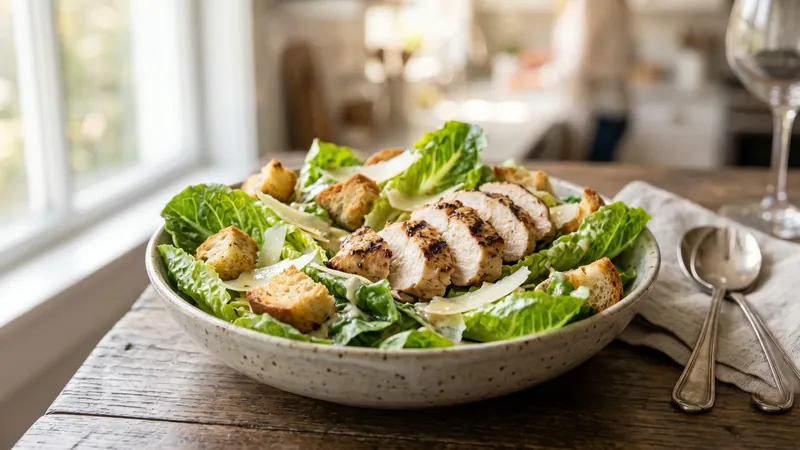
↓ Jump to recipeThe classic Caesar dressing leans on egg yolk and a slick of oil, which is wonderful but undeniably rich. Here Greek yoghurt does the heavy lifting instead, keeping all the salty depth of anchovy, garlic and Parmesan while feeling far lighter on the fork. Craggy sourdough croutons, rubbed with garlic and baked until shattering, replace the usual soft cubes. Add some pan-fried chicken and you have a generous main-course salad that tastes indulgent without weighing you down.
Caesar Salad with a Lighter Yoghurt-Anchovy Dressing
Ingredients
- 2 boneless chicken breasts
- 1 tbsp olive oil, plus extra for the croutons
- 200g sourdough, torn into rough chunks
- 2 garlic cloves, 1 crushed and 1 halved
- 200g Greek yoghurt
- 6 anchovy fillets in oil, finely chopped
- 1 tbsp Dijon mustard
- 1 tbsp lemon juice
- 1 tsp Worcestershire sauce
- 40g Parmesan-style hard cheese, finely grated, plus extra to serve
- 2 romaine lettuces
- Salt and black pepper
Method
- Heat the oven to 200C fan. Toss the sourdough chunks with a little olive oil and the halved garlic clove, season, and bake for 12-15 minutes until golden and crisp.
- Season the chicken breasts. Heat 1 tbsp olive oil in a frying pan and cook for 6-7 minutes a side until cooked through. Rest, then slice.
- For the dressing, whisk together the yoghurt, chopped anchovies, crushed garlic, Dijon mustard, lemon juice and Worcestershire sauce.
- Stir in the grated Parmesan and loosen with a splash of cold water until it just coats the back of a spoon. Season with black pepper and a little salt.
- Separate the romaine leaves, wash and dry them well, then tear the larger ones in half.
- Toss the leaves with most of the dressing until lightly coated.
- Pile the salad onto plates and top with the sliced chicken and croutons.
- Drizzle over the remaining dressing, scatter with extra Parmesan and grind over more black pepper.
The Story
The Caesar salad is one of those dishes whose origin is genuinely traceable, even if the details have grown polished with retelling. It is widely credited to Caesar Cardini, an Italian-born restaurateur working in Tijuana, Mexico, in the 1920s, during the years when American visitors crossed the border to dine and drink freely. The story usually told is that the salad was improvised from whatever was to hand on a busy night, assembled and tossed at the table for a touch of theatre. Whatever the exact circumstances, the salad spread quickly into the United States through the 1930s and 1940s, carried north by Hollywood diners who had eaten it in Tijuana, and by the middle of the century it had become a fixture of American restaurant menus.
The original was strikingly simple: romaine, croutons, a coddled egg, lemon, oil, Worcestershire sauce, garlic and grated cheese, the leaves left whole to be picked up by hand and eaten like a canapé, spear by spear. That tableside theatre, the tossing and the flourish, was as much a part of the dish’s appeal as its taste, and it is why the Caesar became a restaurant showpiece before it ever settled into home kitchens. Anchovies, now considered essential by most cooks, may not have featured in the very first versions, their savoury note arriving instead through the Worcestershire sauce, which itself contains fermented anchovy. Over time the chopped fillets crept directly into the dressing, deepening its character, and the salad acquired the creamy, almost mayonnaise-like consistency most modern diners now expect. Cardini’s own family long insisted that anchovies were never in the original and that the savoury depth came from the Worcestershire alone; the truth is probably that the two traditions blurred as the recipe travelled and cooks reached for whatever gave the biggest hit of umami.
That richness is exactly what this version reconsiders. Greek yoghurt, thick and tangy from straining, stands in for the emulsion of egg and oil. It brings its own gentle acidity, which works neatly alongside the lemon, and it carries the anchovy, garlic and cheese just as faithfully as the classic base, only with a fresher, lighter finish. A spoonful of Dijon helps it cling to the leaves and adds a faint mustard warmth that echoes the sharpness of the cheese. The aim is not to reinvent the flavour but to lighten its texture, so the dressing still tastes unmistakably of Caesar.
The lettuce matters as much as the dressing, and this is where corners are so often cut. Romaine, sometimes sold as cos, is the traditional and correct choice for good reason: its long, sturdy ribs stay crunchy under a heavy dressing where a softer leaf would wilt into sadness within minutes. Use the paler inner hearts if you can, keep the leaves whole or torn into large pieces rather than shredded, and wash and dry them properly. A salad spinner earns its cupboard space here, because even a film of water left clinging to the leaves dilutes the dressing and stops it sticking, and the difference between a Caesar that clings and one that slides off is almost entirely down to how dry the romaine is. Chill the washed leaves for half an hour before assembling and they crisp up further.
The croutons earn their place too. Sourdough, torn rather than diced, bakes into irregular pieces with plenty of craggy edges that crisp deeply, and rubbing the bread with raw garlic before it goes into the oven perfumes every bite. Adding chicken is an entirely modern habit, unknown to Cardini but now so common that many diners assume it was always part of the recipe; it turns a starter into a satisfying lunch or supper.
Why yoghurt works where mayonnaise usually rules
A classic Caesar dressing is essentially a thin emulsified sauce: raw or coddled egg yolk whisked with oil until it thickens, in the same way a mayonnaise does. It is delicious but heavy, and it can turn claggy on the leaves. Greek yoghurt sidesteps all of that. Because it is strained of its whey, it is already thick and stable, so it needs no emulsifying and will not split. Its lactic tang stands in for some of the lemon, and it carries fat-soluble flavours, the anchovy, the garlic, the Parmesan, just as capably as an oil-based dressing while feeling markedly lighter. The one thing to watch is heat and salt drawing water out of the yoghurt over time, so dress the leaves only at the last moment and loosen the dressing with cold water rather than more oil if it thickens in the bowl.
Anchovies are non-negotiable in my kitchen, and it is worth understanding why they disappear so completely into the finished dressing. Anchovy fillets are cured in salt, which breaks down their flesh and concentrates glutamates, the compounds behind savoury depth. Mashed or finely chopped into the dressing they dissolve entirely, leaving no fishy taste but a profound, moreish saltiness that is the true signature of a Caesar. If you genuinely cannot abide them, a teaspoon of good fish sauce or a little extra Worcestershire gets you part of the way, but the real thing is better.
Getting the chicken and croutons right
For the chicken, pat the breasts dry, season them well, and give them a hot pan so they take on colour; six to seven minutes a side over a medium-high heat should bring a thicker breast to 74°C at the centre. Rest them for at least five minutes before slicing so the juices settle back into the meat rather than running out onto the board. If your breasts are very thick, butterfly them or bash them to an even thickness first so the outside does not overcook while the middle catches up.
The croutons want a genuinely stale, sturdy loaf; fresh soft bread steams rather than crisps. Tear the sourdough into rough 3 cm pieces, toss with a little olive oil and the halved garlic clove, spread them in a single layer so they toast rather than sweat, and bake until deep gold and crisp right through, 12 to 15 minutes at 200°C fan. They should shatter, not bend.
Substitutions, make-ahead and serving
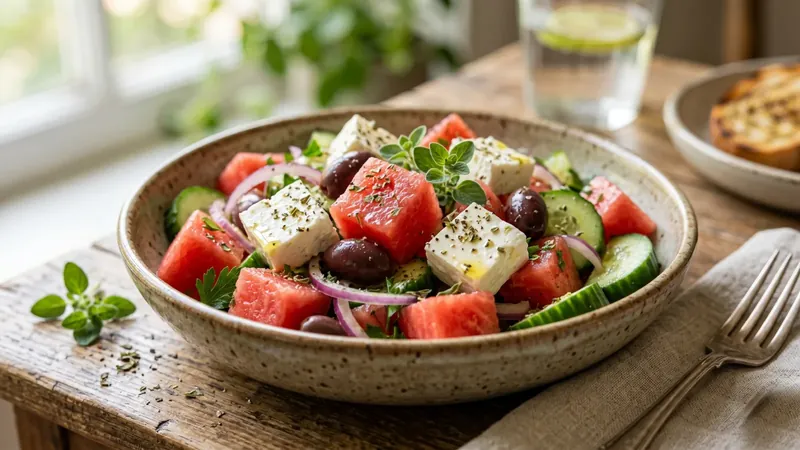
The dressing can be made a day ahead and kept covered in the fridge; it will thicken, so loosen with a spoonful of cold water before using. Croutons keep for a couple of days in an airtight tin and can be crisped for a few minutes in a warm oven if they soften. Swap the chicken for a tin of good tuna, some crisped bacon or pan-fried halloumi, or leave it out entirely for a lighter side salad. Season as you go, dry the leaves thoroughly so the dressing grips, and dress the salad only just before serving to keep that essential crunch. For more of this bright, yoghurt-forward style of cooking, try a watermelon and feta Greek salad or the silky, garlicky Turkish eggs with chilli butter and yoghurt, both of which show how much strained yoghurt can carry.
Related Content