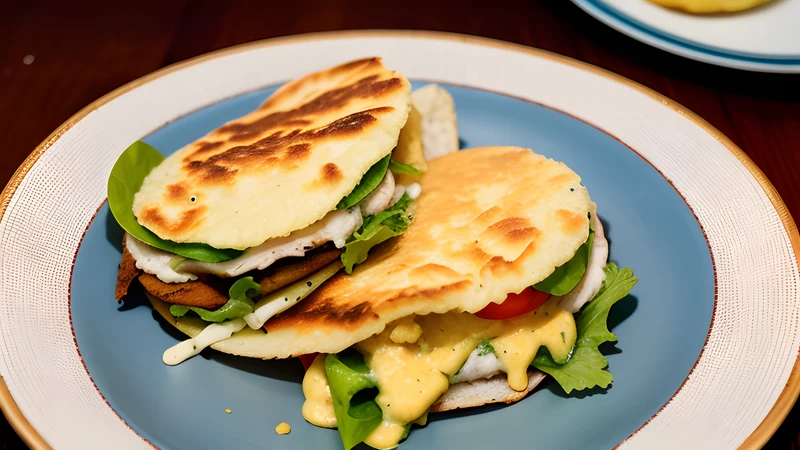
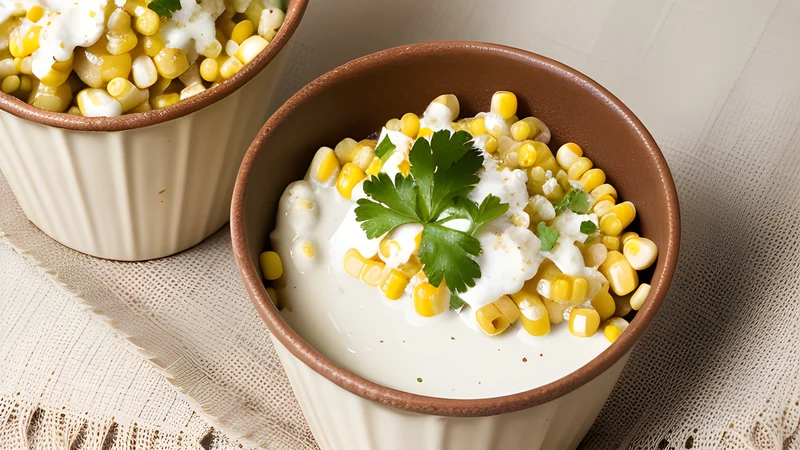
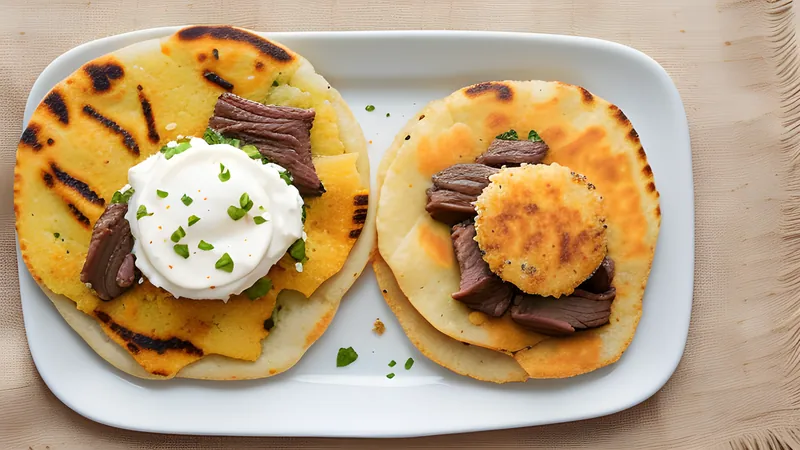
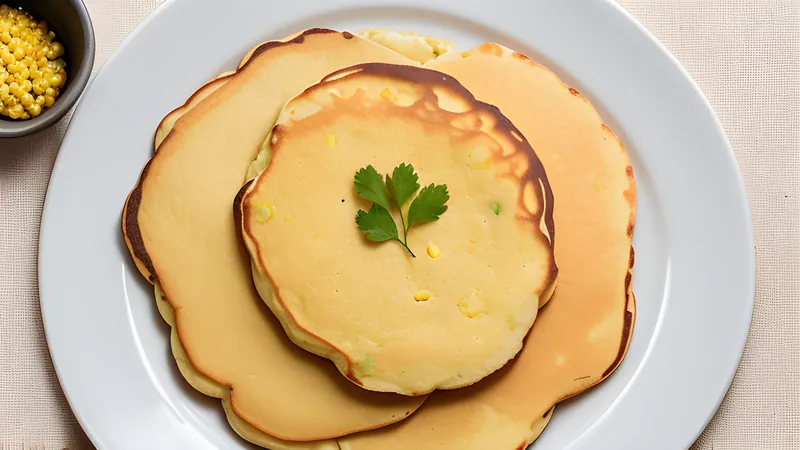
Cachapa: Venezuela's Sweetcorn Pancake
Thick corn griddle cakes folded around soft white cheese
Contents
↓ Jump to recipeThe first time I made cachapa with supermarket sweetcorn instead of the real thing, I understood why every Venezuelan recipe insists on it being in season. The kernels need to be plump enough to burst milk when you press a thumbnail into them. Frozen corn works in a pinch and I’ll give you the fix for it below, but fresh, just-picked corn is what turns this from a decent pancake into the dish Venezuelans queue for at roadside stalls.
Cachapa is corn, reduced to its essentials: kernels, a little sugar to round out the sweetness that’s already there, salt, and just enough binder to hold a pancake together on a hot griddle. No flour goes anywhere near a proper cachapa. The corn does all the work — its own starch thickens the batter as it cooks, which is why getting the kernel-to-liquid ratio right matters more than any other step in this recipe.
Cachapa: Venezuela's Sweetcorn Pancake
Ingredients
- 6 large ears fresh sweetcorn, kernels cut off (about 900g kernels)
- 2 tablespoons whole milk
- 2 tablespoons unsalted butter, melted, plus extra for the griddle
- 2 tablespoons sugar
- 1 teaspoon fine salt
- 1 tablespoon cornmeal (only if the corn is very juicy)
- 250g queso de mano or fresh mozzarella, torn into strips
- Extra butter, for frying and finishing
Method
- Cut the kernels from the cobs directly into a bowl, scraping the cobs with the back of the knife to collect the milky liquid.
- Blitz the kernels in a food processor with the milk until you have a thick, slightly grainy batter — not a smooth purée. Stop before it turns to soup.
- Stir in the melted butter, sugar and salt. If the batter pools rather than mounds on a spoon, add the cornmeal a teaspoon at a time until it holds its shape.
- Heat a heavy griddle or non-stick frying pan over medium heat and brush with butter.
- Pour a ladleful of batter (about 120ml) onto the griddle and spread gently into a 15cm round, about 1cm thick.
- Cook for 4-5 minutes until the underside is deep golden and the edges look dry, then flip and cook the second side for 3-4 minutes.
- While the second side finishes, lay the cheese over one half of the cachapa so it starts to soften.
- Fold the pancake over the cheese, press gently with the spatula for 30 seconds, then slide onto a plate.
- Repeat with the remaining batter, buttering the griddle between each one. Serve immediately, while the cheese is still pulling.
Corn country
Venezuela grows corn across a range of climates, from the hot lowlands around Maracaibo to cooler Andean valleys, and both the arepa and the cachapa trace back to the same staple, treated two different ways. Arepas are made from dried, nixtamalized corn flour — Harina P.A.N. is the brand everyone reaches for — ground fine and reconstituted with water into a dense, almost bread-like dough. Cachapas skip that whole process and use the corn fresh off the cob, pureed rough rather than ground fine.
That distinction matters because it puts cachapa on a different calendar. Arepas are a year-round staple, made whenever, from a shelf-stable flour. Cachapas are seasonal food, tied to when sweetcorn actually comes in — which in the llanos and along the coast means the months after the rains, when roadside stands start advertising cachapas the way British chip shops advertise fresh haddock. You eat corn cachapas because the corn just arrived, not because you fancied a pancake.
The name itself likely comes from an indigenous word, absorbed into Venezuelan Spanish the way so much of the country’s food vocabulary has indigenous roots layered under Spanish colonial influence and, later, African contributions via the coast. What’s certain is that cachapa long predates the arepa’s current dominance in Venezuelan food culture — this is one of the oldest continuously cooked dishes on the continent, older than the flour that competes with it for breakfast attention.
Queso de mano — “hand cheese” — is the traditional partner, a fresh, unaged, very mild cow’s milk cheese made in a way that lets it be pulled and stretched by hand during production, which is where the name comes from. It melts into long, soft strings rather than firming up the way an aged cheese would, and it has almost no salt of its own, which is exactly why the sugar and salt in the cachapa batter need to carry more of the seasoning than you’d expect from a savoury pancake. If you can’t find queso de mano — and outside Venezuelan and Colombian grocers, you likely can’t — fresh mozzarella is the closest substitute by texture, though I add a small pinch of extra salt to the batter to compensate for mozzarella’s blander base.
Getting the batter right
The single biggest mistake with cachapa batter is over-processing the corn into a smooth liquid. You want texture — flecks of kernel still visible, not a uniform paste. Pulse the food processor rather than running it continuously, checking every few seconds, and stop as soon as the mixture holds together when you tip the bowl.
Corn’s natural sugar and starch content varies more than people expect, season to season and variety to variety, which is why professional cachapa cooks judge batter by how it falls off a spoon rather than by a fixed recipe. It should mound slightly and hold a ridge for a second or two before settling — thinner than pancake batter, thicker than a crepe batter. If your corn is unusually juicy (this happens most with corn picked at peak ripeness, when the kernels are bursting with liquid), the batter will pool flat on the spoon. That’s when the tablespoon of cornmeal earns its place in the ingredient list — a modern rescue for a too-wet batch that adds no noticeable flour taste, since cornmeal is still corn.
Sugar in a savoury pancake reads oddly on paper. In practice, two tablespoons against 900g of corn kernels isn’t dessert-level sweetness — it’s there to underline flavour the corn already has, the same logic behind a pinch of sugar in tomato sauce. Leave it out and the cachapa tastes flatter, oddly, even though the corn itself hasn’t changed.
The griddle
A well-seasoned cast-iron griddle or plancha is the traditional tool, and it matters here more than in most pancake recipes because cachapa batter is thick enough that even heat distribution is the difference between a pancake cooked through and one that’s scorched outside, raw in the centre. Medium heat, not high — corn sugars caramelise fast, and a hot pan will give you a dark crust on a pancake that’s still gluey in the middle.
Spread the batter with the back of a spoon or ladle rather than pouring it thin and hoping it levels itself; cachapa batter is too thick to self-level the way crepe batter does. Aim for even thickness across the round, because thin patches will cook through before thick ones and start to catch.
Resist flipping early. The underside needs those four to five minutes to set fully — a cachapa flipped too soon will tear, and the corn’s natural moisture will leak out onto the griddle rather than staying inside the pancake where it belongs. You’ll know it’s ready when the visible edge has gone from wet-looking to matte and slightly cracked.
Folding and serving
The cheese goes in during the last minute of the second side’s cooking, not after the cachapa comes off the heat — the residual heat of the griddle is what melts it properly. Lay it over one half, fold the other half across, and press down gently with the spatula for thirty seconds so the two sides seal together and the cheese has time to soften fully against the hot pancake surface.
Cachapas are best eaten within minutes of coming off the griddle, while the cheese still pulls when you tear the pancake apart. They don’t hold well — the corn’s moisture means a rested cachapa turns gluey and the folded cheese cools into an unpleasant firm sheet rather than staying soft. If you’re making a batch for a group, keep the finished ones loosely tented with foil in a low oven (around 80°C) for no more than fifteen minutes while you finish the rest, and eat them promptly.
Variations worth knowing
Along Venezuela’s coast, cachapa e’yare pairs the pancake with shredded pork, usually cooked long and slow with onion and peppers until it falls apart, tucked in alongside or instead of the cheese. It’s heartier, closer to a full meal than a breakfast pancake, and popular at lunch stalls rather than morning ones.
Some cooks fold grated cheese directly into the batter as well as adding a folded portion at the end, giving you cheese distributed through the pancake instead of concentrated in the centre. I prefer keeping it simple and folded, because the contrast between plain corn pancake and pure melted cheese is part of what makes the first bite work.
A version using tender young corn (choclo tierno) rather than fully mature kernels produces a sweeter, softer cachapa, closer to a corn custard than a pancake in texture. If your corn is unusually sweet and tender, expect a shorter cook time and a more delicate final texture — check at the three-minute mark rather than waiting the full four to five.
What can go wrong
A cachapa that tears when you flip it usually means the underside hasn’t set long enough — give it another minute before you attempt the flip, checking that the edges have gone matte rather than glossy. A cachapa that’s scorched on the outside but still wet in the centre means the griddle was too hot for the batter’s thickness; drop the heat and give the next one longer at a gentler temperature rather than rushing it. If the batter tastes flat despite the sugar and salt, it’s almost always because the corn itself was picked past its prime — older corn converts more of its sugar to starch, which is why farmers’ market corn from early in the season tends to make noticeably better cachapa than corn that’s been sitting for a week.
Watery batter that won’t hold a shape on the spoon is the most common failure, and it’s rarely the corn’s fault outright — it’s more often a sign the kernels were cut too close to a very juicy cob and the processor pulled out more liquid than the recipe anticipated. The cornmeal fix works, but so does simply draining the batter briefly through a fine sieve before adding your dry ingredients, which lets excess liquid run off without diluting flavour.
Serving it properly
In Venezuela, cachapa turns up at breakfast, at lunch stalls, and as a late-night street food after a night out, which tells you how flexible the dish is once you’ve got the base method down. A simple cachapa with queso de mano needs nothing else, but a fried egg on the side turns it into a fuller breakfast, and a scattering of crisp bacon alongside works if you want something closer to what you’d find at a Caracas breakfast stand that’s borrowed a few ideas from further north.
Leftover batter, if you’re not going to cook it all in one sitting, keeps in the fridge for a day, covered, though the texture firms up as it sits and you may need a splash of milk stirred back in to loosen it before cooking. I don’t recommend keeping it longer than that — fresh corn batter turns sour quickly, and part of the appeal of this dish is that it’s meant to be made and eaten within hours of the corn coming off the cob.
Frozen corn, if you must
Fresh corn on the cob is worth seeking out for this dish specifically, more than for most corn recipes, because the flavour difference between fresh and frozen kernels is more pronounced once the corn is the entire dish rather than one ingredient among many. If fresh corn genuinely isn’t available, thaw frozen kernels completely and pat them dry before processing — frozen corn carries extra water that will throw off your batter consistency, and you’ll likely need the full cornmeal addition to compensate. The flavour will be milder than fresh corn, so consider adding an extra half-tablespoon of sugar to bring the sweetness back up to where it should be.
Cachapa pairs naturally with other corn-forward dishes from across the region — try it alongside a pastel de choclo for a corn-heavy spread, or serve it as part of a wider Venezuelan table with tequeños for the cheese course everyone actually fights over.
Related Content