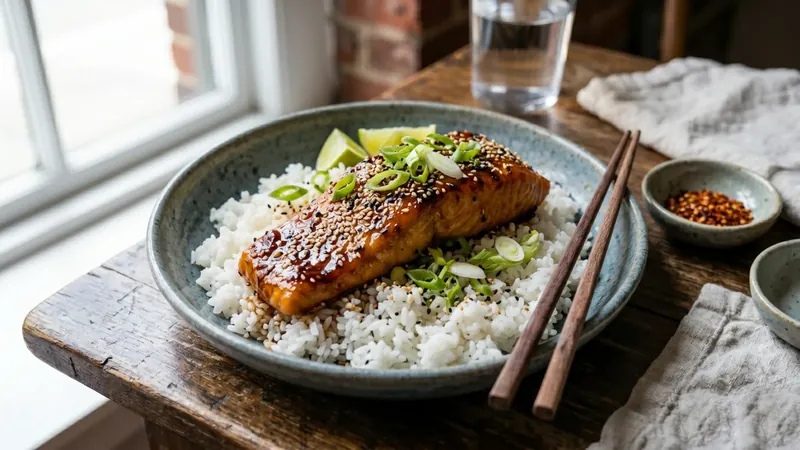
Ca Kho To: Catfish Caramelised in a Clay Pot
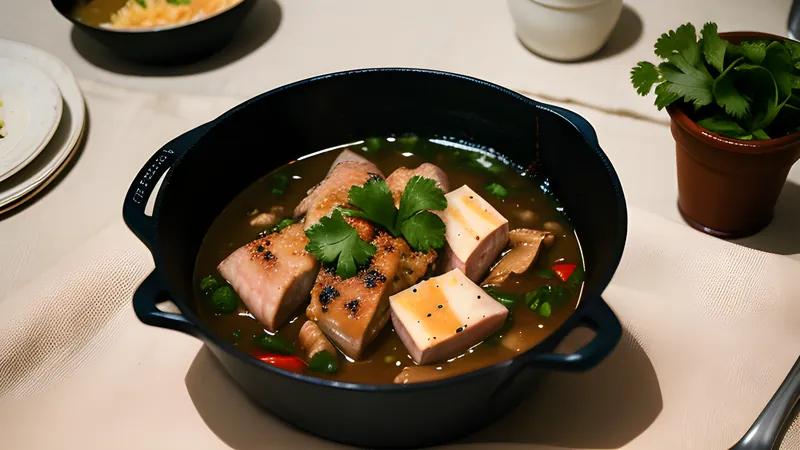
Mekong Delta fish braised black-gold in caramel, fish sauce and pepper
Contents
↓ Jump to recipeThere’s a particular smell that means something is either about to be delicious or about to be ruined, and it’s the smell of sugar past the point of caramel, edging into something bitter and dark. In most kitchens that smell means you’ve burnt something. In a Mekong Delta kitchen making ca kho to, it means you’re exactly where you need to be.
Ca Kho To: Catfish Caramelised in a Clay Pot
Ingredients
- 800g catfish steaks (or firm white fish such as pollock), cut 3cm thick
- 100g caster sugar
- 3 tbsp fish sauce
- 2 tbsp water, for the caramel
- 250ml coconut water (not coconut milk)
- 4 shallots, thinly sliced
- 4 garlic cloves, minced
- 1 thumb ginger, julienned
- 1 bird's eye chilli, sliced, plus 1 whole for garnish
- 1 tsp black pepper, freshly cracked, plus more to finish
- 1 tbsp vegetable oil
- 2 spring onions, cut into 3cm lengths
- 1/2 tsp MSG or 1/2 tsp extra sugar (optional, for roundness)
- Steamed jasmine rice, to serve
Method
- Pat the fish steaks dry and season lightly with a pinch of salt and pepper. Set aside for 15 minutes.
- Make the caramel: heat the sugar with 2 tbsp water in a dry clay pot or heavy saucepan over medium heat, swirling but not stirring, until it turns a deep amber-brown and just starts to smoke, about 6-8 minutes.
- Immediately add the fish sauce off the heat, standing back as it will spit. Stir to combine into a dark, glossy syrup.
- Add the oil, shallots, garlic and ginger to the pot and return to low heat. Fry gently for 2 minutes until fragrant, taking care not to burn the caramel.
- Lay the fish steaks into the pot in a single layer. Spoon the caramel sauce over each piece.
- Pour in the coconut water and add the sliced chilli and half the black pepper. Bring to a bare simmer.
- Cover and cook on low heat for 25-30 minutes, spooning the sauce over the fish every 10 minutes, until the sauce has reduced to a thick, sticky glaze and the fish is cooked through.
- Uncover for the final 5 minutes to let the sauce thicken further if it's still thin.
- Scatter with spring onions, the remaining black pepper and the whole chilli. Serve directly from the pot with steamed rice.
The caramel that isn’t sweet
Vietnamese cooking has a whole category of dishes called “kho” — things braised down in a thick, dark, savoury liquid built on caramelised sugar rather than tomato or wine. Ca kho to is the best-known fish version, and it depends on pushing sugar further than almost any Western recipe would dare: past golden, past amber, right to the edge of burnt, where the sucrose has broken down enough to taste bitter and smoky rather than sweet. That bitterness is the entire flavour base of the dish. Stop the caramel too early and the finished sauce tastes like a fish glazed in treacle. Push it to the right point and the sauce reads as savoury, almost meaty, with only a whisper of sweetness underneath the fish sauce and pepper.
The technique traces back to a delta where refrigeration arrived late and fish needed to survive without it. A thick, salty, intensely reduced sauce did the preserving that a fridge would do elsewhere — kho dishes were built to keep for days at room temperature in a hot, humid climate, eaten over several meals rather than cooked fresh each time. That’s changed with modern kitchens, but the flavour profile it produced hasn’t: dark, concentrated, built to season plain rice rather than stand alone.
Why the clay pot matters
The “to” in ca kho to refers to the clay pot itself — a squat, unglazed or partially glazed earthenware vessel that’s been used across Vietnam for braises for generations. Clay holds heat differently to metal: it heats slowly and unevenly at first, then holds a steady, gentle simmer far longer than a steel pan once it’s up to temperature, which suits a dish that needs 25-30 minutes of near-silent cooking rather than an active boil. A stainless steel or enamelled cast iron pot will still produce a good result, but the sauce reduces slightly faster and needs closer watching, since metal loses heat quickly the moment you lift the lid to check.
Traditional clay pots are also porous enough to pick up a faint smokiness over years of use on a charcoal or wood stove — new pots don’t have this, and there’s no shortcut to acquiring it beyond time. Don’t let the absence of a seasoned clay pot put you off making the dish; the caramel and fish sauce carry enough depth on their own that the pot is a genuine but not essential upgrade.
Choosing the fish
Catfish is the traditional choice because it’s abundant, cheap, and holds together through a long braise without falling apart into flakes — the flesh is dense and slightly fatty, closer in texture to monkfish than to cod. If you can’t get catfish, pollock, monkfish tail, or even firm salmon steaks all work, though salmon brings its own fattiness that changes the balance slightly and needs a touch less added oil. Avoid delicate white fish like sole or plaice; they disintegrate under the weight of a 25-minute simmer and the caramel sauce will overwhelm rather than season them.
Cut the fish into steaks rather than fillets where possible — a cross-section through the bone holds its shape better during the braise and the bone itself contributes a little extra body to the sauce as it cooks. If you’re using boneless fillets, cut them thicker than you think you need, at least 3cm, since thin pieces will overcook and fall apart before the sauce has reduced properly.
Building the sauce correctly
The order of operations protects the caramel from seizing. Sugar and water go in first, alone, over medium heat, swirled gently rather than stirred — stirring a caramel encourages sugar crystals to reform on the side of the pot, which can seize the whole batch into a grainy mess. Once it’s a deep amber-brown and just beginning to smoke, the fish sauce goes in off the heat, which stops the caramel cooking further and dilutes it into a workable syrup. This step spits and steams dramatically; stand back and add it in one go rather than a slow trickle.
Coconut water, not coconut milk, provides the braising liquid — it’s naturally slightly sweet and mineral rather than creamy or fatty, and it won’t split or curdle the way coconut milk can under a long simmer. If you can’t find coconut water, plain water with an extra half-teaspoon of sugar approximates it, though the flavour will be a shade flatter.
Basting matters more than most home cooks expect. Spooning the reducing sauce over the fish every ten minutes keeps the top surface glazed and prevents it drying out before the sauce has thickened enough at the bottom of the pot. By the end of cooking, the sauce should cling to the back of a spoon and coat the fish in a dark, glossy layer rather than pool as a thin liquid around it.
What can go wrong
Seized or crystallised caramel is the most common failure, and it happens when the sugar-water mixture gets stirred too early or too often. Once the sugar is dissolved and the pot is on the heat, resist the urge to stir — swirl the pot by its handle instead, which redistributes the syrup without disturbing crystals forming on the pot’s edge. If it does seize into a grainy mass, a splash more water and a few extra minutes over low heat will usually redissolve it, though the colour will take longer to develop the second time.
Burnt caramel, as opposed to properly dark caramel, is the other risk, and the line between them is measured in seconds. Properly cooked caramel for this dish is a deep mahogany-brown with a faint wisp of smoke just starting to rise — it should smell toasty and slightly bitter, not acrid. If it goes past that point into black, throw it out and start again; a truly burnt caramel tastes of ash no matter how much fish sauce and coconut water you add afterward, and there’s no rescuing it.
Under-reduced sauce is a timing problem rather than a technique problem. If the sauce is still thin after 30 minutes, uncover the pot fully and let it simmer harder for another 5-10 minutes, watching closely since a thin sauce can go from watery to correctly thick to over-reduced within a few minutes once most of the liquid has evaporated. The fish itself should be cooked through well before this point, so there’s no risk of drying it out by extending the reduction.
Variations across Vietnam
Different regions and households push the recipe in different directions. Some cooks add a spoonful of caramelised shallot oil at the start for extra depth, frying the shallots in oil until deeply golden before adding the sugar. Others include a few slices of pork belly alongside the fish, which renders fat into the sauce and adds a meatier register — a common trick in poorer households historically, since a little pork fat made a small amount of fish stretch further across a family meal.
In the south, palm sugar sometimes replaces white sugar for the caramel base, giving a rounder, slightly smoky sweetness that some cooks prefer to the sharper edge of refined sugar caramel. Green peppercorns, still on the stem, are another common addition in the delta itself, added whole partway through cooking for bursts of fresh, slightly floral heat that dried black pepper doesn’t provide. If you can find them fresh or brined, a small handful stirred in for the final ten minutes of cooking is worth trying.
Egg is a less common but genuine variation — whole hard-boiled eggs added to the pot partway through the braise soak up the caramel sauce and turn a deep amber-brown themselves, stretching the dish further and giving diners something rich to eat alongside the fish itself.
Serving and eating
Ca kho to is eaten as one part of a full Vietnamese family meal, always alongside plain steamed rice and usually a clear soup or a plate of raw or blanched greens to balance the intensity of the braise — the sauce is strong enough that a spoonful over rice, rather than a whole piece of fish per mouthful, is how it’s traditionally portioned. It pairs particularly well with the tang of a quick pickle, similar to the ones served alongside lemongrass pork banh mi, which cuts through the richness of the caramel.
Storage and make-ahead
Ca kho to genuinely improves with a day or two in the fridge — the sauce continues to penetrate the fish and the flavours settle and round out, which is exactly the preservation logic the dish was built on generations ago. Store it in the clay pot itself if you have room in the fridge, covered, or transfer to an airtight container. Reheat gently on the stove over low heat rather than in a microwave, adding a splash of water if the sauce has thickened too much to move freely, and bring it back to a bare simmer rather than a boil so the fish doesn’t toughen further.
Buying and preparing the fish
Ask a fishmonger for catfish steaks specifically, cut across the body rather than filleted lengthways — the cross-section shape holds together far better through a long simmer than a flat fillet would. If catfish isn’t available fresh, frozen steaks work almost as well provided they’re thawed slowly in the fridge overnight rather than under running water, which can waterlog the flesh and make it harder to sear a firm surface. Pat the fish thoroughly dry before it goes anywhere near the caramel; excess surface moisture cools the sauce rapidly and can cause the hot caramel to seize on contact.
It keeps for up to four days refrigerated and freezes reasonably well for up to two months, though the texture of the fish softens slightly on thawing — still perfectly good spooned over rice, just less distinct piece by piece. If this kind of deep, caramel-dark braise appeals, the same instinct for reduction and concentration shows up in bo kho, Vietnam’s lemongrass beef stew, and in the shallow, intensely reduced broth under mi quang — a cuisine that consistently prefers a smaller amount of something powerful over a larger amount of something diluted.
Related Content