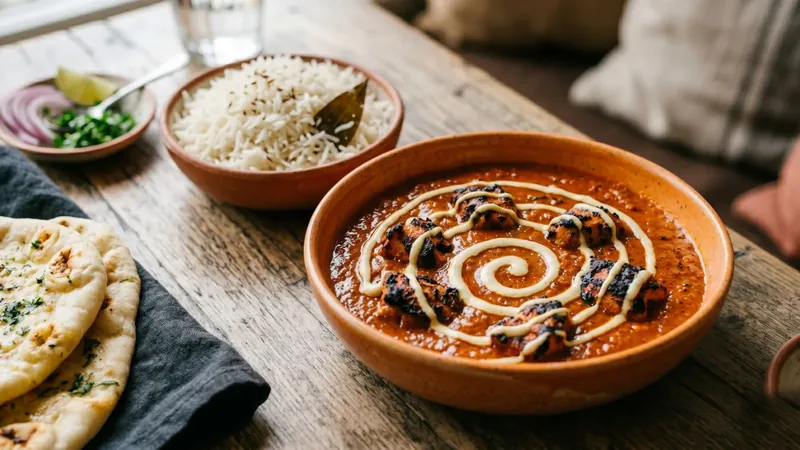
Butter Chicken with Smoked Paprika and Fenugreek
A silky murgh makhani with a gently smoky depth
Contents
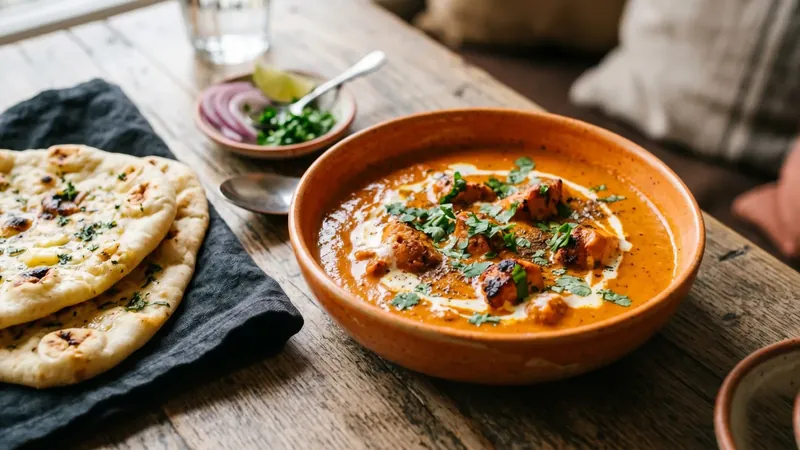
↓ Jump to recipeMurgh makhani is tender chicken in a glossy tomato-cream sauce, the kind of dish you order out and then wish you could make at home. This version leans on smoked paprika for a quiet, woodsmoke depth, dried fenugreek for that unmistakable curry-house aroma, and a spoon of honey to round the tomato’s edge. It tastes slow-cooked but comes together on a weeknight, and the sauce clings to every piece like velvet.
Butter Chicken with Smoked Paprika and Fenugreek
Ingredients
- 700g boneless chicken thighs, cut into large chunks
- 150g full-fat natural yoghurt
- 2 tbsp lemon juice
- 4 garlic cloves, crushed
- 1 tbsp grated fresh ginger
- 2 tsp smoked paprika
- 1 tsp ground cumin
- 1 tsp garam masala
- 1 tin (400g) chopped tomatoes
- 60g unsalted butter
- 1 large onion, finely chopped
- 150ml double cream
- 1 tbsp dried fenugreek leaves (kasuri methi)
- 1 tbsp honey
- Salt, to taste
- Fresh coriander, to serve
Method
- Mix the yoghurt, lemon juice, half the garlic and ginger, the smoked paprika, cumin and a pinch of salt. Coat the chicken and leave to marinate for at least 20 minutes, or overnight if you can.
- Heat a heavy frying pan until hot. Sear the marinated chicken in batches until browned and charred at the edges; it needn't be cooked through. Set aside.
- In the same pan, melt half the butter over medium heat and soften the onion for 8 minutes until golden.
- Stir in the remaining garlic and ginger and cook for another minute until fragrant.
- Add the chopped tomatoes and simmer for 10 minutes, breaking them down, until thick and jammy.
- Blend the sauce until completely smooth, then return it to the pan.
- Stir in the cream, honey and remaining butter, then crumble in the dried fenugreek between your palms to release its aroma.
- Return the chicken with any resting juices and simmer gently for 8-10 minutes until cooked through and the sauce is silky.
- Stir through the garam masala, taste and adjust salt.
- Scatter with coriander and serve with naan or basmati rice.
The Story
Butter chicken, or murgh makhani, is one of the dishes that defines North Indian cooking for much of the world, and unusually for a classic, its origin is fairly well documented. It is credited to the Moti Mahal restaurant in Daryaganj, Old Delhi, and to its founders Kundan Lal Gujral and Kundan Lal Jaggi, Punjabi refugees who fled Peshawar during the Partition of India in 1947 and rebuilt their business in the capital. The story runs that they hated to waste unsold tandoori chicken drying out on the hooks at the end of service, so they revived it in a gravy of tomatoes, butter and cream. Makhan is butter, and makhani the adjective that gives the dish its name. The recipe spread from there through the 1950s to become a fixture from Delhi to Birmingham, though Gujral’s descendants now argue the idea began earlier, in Peshawar itself before Partition. Whatever the precise sequence, the principle is sound and generous: char the chicken first, then give it a luxurious sauce to rest in.
The backbone of that sauce is tomato, mellowed by butter and cream until any sharpness disappears. Classic recipes build smokiness through the tandoor and sometimes a technique called dhungar, where a smouldering coal is placed in a small bowl in the centre of the dish, dabbed with ghee to make it smoke, and covered for a few minutes so the smoke perfumes the sauce. Most home cooks have neither a tandoor nor a spare lump of food-safe charcoal to hand, which is where smoked paprika earns its place here. Two teaspoons lend that gentle, fireside note without any special equipment, supporting the dish rather than overwhelming it. If you do own a lump of natural charcoal, the dhungar method takes five minutes and is worth trying once.
The other quiet hero is kasuri methi, dried fenugreek leaves. Crushed between the fingers to release their oils and added near the end, they bring a slightly bitter, almost maple-like fragrance that is instantly recognisable as the smell of a good curry house. They are sold in most supermarkets and Asian grocers and keep for ages in the cupboard, so a single packet will see you through many dinners. There is no true substitute, so it is worth seeking out.
Technique notes
A spoon of honey might raise an eyebrow, but a touch of sweetness is traditional in many versions, whether from sugar, extra cream or the natural sugars in slow-cooked onions. It balances the acidity of the tinned tomatoes and helps the sauce taste rounded rather than sharp. The single biggest step-up in flavour, though, is charring the chicken hard before it ever meets the sauce. Get the pan smoking hot and sear the marinated pieces in batches so they colour rather than steam; those blackened edges stand in for the tandoor and carry through the finished dish. Blend the tomato base until completely smooth for that signature velvet texture, and pass it through a sieve if you want it silkier still.
Thigh meat is the right choice for forgiving, juicy results, because its higher fat and connective tissue keep it moist through the simmer; breast works if you prefer, but add it later and watch it closely, as it dries out fast. Marinating the chicken in spiced yoghurt does double duty, seasoning the meat and tenderising it, because the yoghurt’s acidity and enzymes loosen the muscle fibres, so even a 20-minute soak pays off and an overnight rest pays off more.
Building the sauce
The order of operations is what gives the sauce its depth. Soften the onion slowly and fully first, over a medium heat for a good eight minutes until it turns golden and sweet, because rushing it leaves a raw, sharp edge that no amount of cream will hide. Onions cooked to this stage bring their own gentle sweetness and body, part of why butter chicken tastes richer than the short ingredient list suggests. Add the garlic and ginger only once the onion is soft, and cook them just a minute, as both scorch and turn acrid if left too long over a hot pan.
The tomatoes then need to be cooked down properly, not just warmed through. Simmer them for a full ten minutes until they thicken, darken and turn jammy, the moment the raw, tinny taste of tinned tomato cooks off and the sugars begin to concentrate. This is the single most skipped step in a home butter chicken, and skipping it is why so many versions taste thin and sour. Only once the base is thick and sweet do you blend it smooth and bring in the cream, butter and honey; adding dairy to an under-reduced, acidic sauce is what causes it to look split and grainy.
Finish the spicing at the end, not the start. Garam masala is a blend of already-roasted, aromatic spices, and its fragrance is volatile: stir it in during the last minutes so its warmth stays bright rather than cooking away. The same goes for the crushed kasuri methi and the final knob of butter, both added off the heat or just before serving so their aroma lands on the plate rather than in the extractor fan.
What can go wrong
Two faults account for most disappointing home versions. The first is a split, grainy sauce, which happens when cream meets an acidic base that has not been cooked down and mellowed. Reduce the tomatoes properly, take the pan off a hard boil before the dairy goes in, and stir the cream through gently over a low heat; if it does begin to look broken, a spoonful of cold cream whisked in off the heat usually pulls it back together. The second is a sauce that tastes flat despite a long ingredient list, and the culprit is almost always salt. Tomatoes, dairy and onions all need seasoning to sing, so taste at the end and add salt a pinch at a time until the flavours snap into focus. A final squeeze of lemon does the same job from the other direction, lifting a sauce that has gone slightly dull and heavy.
Heat is the third variable worth controlling deliberately. Traditional butter chicken is mild by design, its warmth coming from aromatics rather than chilli, which is why it suits the whole table. If you want more fire, reach for Kashmiri chilli powder rather than a hotter, harsher variety: it deepens the colour toward that restaurant red and adds a gentle prickle without scorching the delicate cream-and-tomato balance the dish is built on.
Substitutions, storage and serving
Double cream gives the richest sauce, but crème fraîche or full-fat coconut cream both work; coconut pushes it towards a different but very good dish. For heat, add a slit green chilli with the onions or a pinch of Kashmiri chilli powder, which brings colour more than fire. The sauce, like most tomato-based curries, improves overnight as the spices meld, so it is an excellent make-ahead; keep it in the fridge for up to three days or freeze for three months, and loosen with a splash of water or cream when reheating gently. Serve with warm naan for scooping, plain basmati to soak up the gravy, and a squeeze of lemon for a brighter finish. A scatter of fresh coriander and a final knob of butter stirred through just before serving give it the glossy sheen the dish is loved for. If you like this kind of rich, saucy braise, the same char-then-simmer approach underpins a chorizo and white bean stew or a plate of beef stroganoff.
Related Content