Bun Rieu: Crab and Tomato Noodle Soup
A tomato-red broth built on a crab-and-egg custard that floats rather than sinks
Contents
↓ Jump to recipeBun Rieu: Crab and Tomato Noodle Soup
Ingredients
- 300g fresh crab meat, picked, or 200g tinned crab meat, well drained
- 4 eggs
- 3 tbsp fish sauce, divided
- 1 tsp white pepper
- 2 tbsp vegetable oil
- 1 small onion, finely chopped
- 4 tomatoes, cut into wedges
- 2 tbsp tomato paste
- 1.5 litres pork or chicken stock
- 1 tbsp fermented shrimp paste (mam tom), or 2 tbsp fish sauce as a milder substitute
- 200g minced pork
- 150g firm tofu, cut into cubes and fried
- 500g dried rice vermicelli (bun), cooked according to packet instructions
- shredded banana blossom, to serve (optional)
- bean sprouts, to serve
- perilla, mint and coriander leaves, to serve
- lime wedges, to serve
- chilli, sliced, to serve
Method
- Whisk the crab meat, eggs, 1 tbsp fish sauce and white pepper together in a bowl until combined but still slightly chunky.
- Heat the oil in a pot and fry the onion until soft. Add the tomato wedges and tomato paste, and cook for 5 minutes until the tomatoes break down slightly.
- Pour in the stock and bring to a simmer. Stir in the mam tom (or extra fish sauce) and remaining fish sauce.
- Add the minced pork in small clumps, breaking it apart gently, and simmer for 5 minutes until cooked through.
- Reduce to a bare simmer. Pour the crab-egg mixture into the broth in a slow, steady stream without stirring, so it sets into soft, floating curds. Let it poach undisturbed for 4-5 minutes.
- Gently fold in the fried tofu cubes. Taste and adjust the seasoning with more fish sauce if needed.
- Divide the cooked vermicelli between bowls. Ladle the broth over, making sure each bowl gets a share of the crab custard and tofu.
- Serve with shredded banana blossom, bean sprouts, herbs, lime wedges and chilli on the side, to add at the table.
The soup that floats its centrepiece
Most noodle soups build their protein as something you find at the bottom of the bowl, submerged. Bun rieu does the opposite: the crab-and-egg mixture is poured into the simmering broth and left almost entirely undisturbed, so it sets into loose, soft curds that float on the surface, breaking apart gently when a spoon goes near them. That floating custard, tomato-red broth underneath it, is the single most recognisable image of the dish, and getting it to actually float rather than sink into a scrambled mess is the main technical hurdle standing between a good bowl and a mediocre one.
Bun rieu translates roughly to “crab-flavoured noodles” — rieu refers specifically to the crab paste or crab mixture itself rather than being a generic descriptor. Traditionally, and still in many Vietnamese households and market stalls, that crab comes from small rice-paddy field crabs, pounded whole — shell and all — into a paste, then strained to extract a concentrated crab liquid before the solids are discarded. Fresh picked crab meat or good tinned crab meat is a widely used, entirely legitimate substitute outside Vietnam or in home kitchens without easy access to live field crabs, though the flavour is milder and less concentrated than the traditional paste.
Why tomato, and why so much of it
Tomato is doing double duty in this broth: it provides the acidity that cuts through the richness of the crab and pork, and it’s responsible for the soup’s deep red-orange colour, which most other Vietnamese noodle soups don’t share. Cooking the tomato wedges down properly in oil with the onion before the stock goes in — a full five minutes, long enough for the tomatoes to slump and release their juices into the pan — builds a much deeper base than simply dropping raw tomato into simmering stock would. Tomato paste, added alongside the fresh tomato, reinforces the colour and concentrates the flavour further, especially useful if the fresh tomatoes on hand aren’t particularly ripe or flavourful.
Fermented shrimp paste is the backbone flavour, and it’s a genuine choice
Mam tom, Vietnamese fermented shrimp paste, is pungent in a way that catches newcomers off guard — dark purple-grey, intensely funky raw, and an ingredient some Vietnamese diners themselves either love or actively avoid. It’s traditional in bun rieu and contributes a savoury depth that fish sauce alone doesn’t fully replicate, but it’s also genuinely optional; a good bowl of bun rieu built on extra fish sauce instead is a legitimate, commonly served alternative rather than a compromise. If you do use mam tom, a small amount goes a long way — start with less than you think you need and add more only after tasting, since it’s much easier to add more funk than to remove it once it’s in the pot.
Getting the crab custard to float
The technique matters more than the ratio here. Pour the whisked crab-and-egg mixture into the broth slowly, in a thin, steady stream, over a wide area of the pot’s surface rather than dumping it in one place — and then leave it alone. Stirring at this stage breaks the forming curds into fine shreds that sink and cloud the broth, closer to an egg-drop soup than the intact, spoonable curds bun rieu is known for. A bare simmer, not a rolling boil, gives the eggs time to set gently as a cohesive mass that floats rather than a chaotic scramble that disperses through the liquid. Four to five minutes undisturbed, then a gentle nudge with the back of a ladle to check it’s set through, is usually enough.
Building the rest of the bowl
Minced pork, added directly to the simmering broth in small clumps rather than pre-cooked separately, contributes a second layer of savoury depth underneath the crab, and breaking it apart gently as it cooks — rather than stirring vigorously — keeps it in small, distinct pieces rather than a fine crumble that disappears into the broth. Fried tofu cubes are a near-universal addition, their slightly chewy, absorbent texture picking up the tomato broth well; fold them in gently at the very end so they don’t break apart or knock the crab custard off the surface.
The raw and blanched vegetable side is not a garnish so much as half the dish — shredded banana blossom (or a mix of shredded lettuce and herbs if banana blossom isn’t available), bean sprouts, and a generous handful of perilla, mint and coriander all get added at the table, by the diner, to taste. This is standard practice across most Vietnamese noodle soups, and bun rieu is no exception: the broth arrives properly seasoned and complete, but the fresh herbs and raw vegetables are meant to be folded in bite by bite as you eat, not stirred through all at once at the start.
Regional variations
Southern Vietnamese versions of bun rieu tend to be sweeter and often include a few pieces of fried tofu and blood cake (huyet), plus a slightly thicker, more tomato-forward broth than versions found further north, which lean saltier and more mineral from a heavier hand with the crab paste itself. Some versions substitute or add pork rib for the minced pork, simmered in the broth from the start to build additional body into the stock before the tomatoes and crab go in. Snails are another common addition in some regional versions, adding a chewy, briny note that pairs surprisingly well with the tomato base.
Make-ahead and storage
The broth, minus the crab custard and noodles, keeps well refrigerated for up to three days and freezes for up to two months — build it ahead in bulk if you’re planning to serve the soup more than once. The crab-egg custard, however, is very much a cook-to-order component; it doesn’t reheat well once set; reheated, it turns rubbery and loses the soft, custardy texture that makes it worth eating in the first place. Cook a fresh batch of the crab mixture each time you serve the soup, even if the broth itself is coming from the fridge or freezer. Keep the vermicelli, herbs and raw vegetables entirely separate until serving — cooked noodles left sitting in broth turn bloated and mushy within the hour.
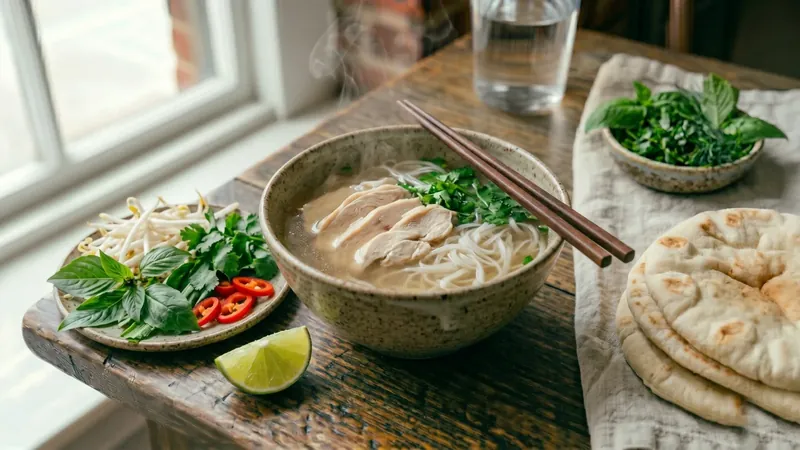
For more of Vietnam’s noodle-soup range, chicken pho shows the same rice-vermicelli logic with a completely different, star-anise-scented broth, while bun bo hue demonstrates the central Vietnamese, chilli-forward end of the spectrum. If you want something to follow this soup in a broader Vietnamese spread, bo kho makes a hearty next course.
Where field crab comes from, and why it matters to the flavour
The traditional method — pounding whole small field crabs, shell included, into a rough paste and then straining that paste through a sieve or cloth to extract a pale, faintly grey liquid — sounds laborious because it is, and it’s a task most urban Vietnamese households now buy pre-made rather than doing themselves. What that process extracts is different from picked crab meat in a way that’s worth understanding even if you’re using the meat-only substitute: the shells and roe contribute a mineral, almost briny depth that pure white crab meat, however good, doesn’t carry on its own. Some cooks bridge the gap by adding a small amount of crab roe or crab paste from a jar (sold at Vietnamese and other Southeast Asian grocers, usually labelled simply “crab paste” or “crab fat”) alongside fresh picked meat, which recovers some of that depth without requiring you to source or process whole field crabs at home.
If you can find whole blue crabs or similar, steaming two or three and picking the meat and roe by hand, then folding both into the egg mixture, gets you closer to the traditional flavour than tinned crab meat alone ever will. It’s more work, but the difference in the finished broth is noticeable, particularly in how much more savoury depth the custard itself carries once it’s poached into the soup.
A dish with deep roots in northern Vietnamese market cooking
Bun rieu is strongly associated with Hanoi and the broader Red River Delta region, where paddy fields historically provided an abundant, cheap source of small field crabs, making the dish a practical way to use a readily available ingredient that required real effort — hours of pounding and straining — to turn into something worth eating. It moved south and diversified along the way, picking up the sweeter, more tomato-forward character and the addition of blood cake and pork rib that mark many southern versions today. Street stalls specialising in bun rieu are common across Vietnam, often recognisable by the large pot of deep red broth kept at a steady simmer out front, with the day’s crab custard already floating and ready to be ladled the moment an order comes in.
Troubleshooting a broth that tastes thin
If the finished broth tastes watery or lacks the depth you’d expect from a dish built on crab, pork and tomato simultaneously, the most common cause is stock that wasn’t given enough time or body before the other ingredients went in — a proper pork or chicken stock, simmered separately for at least an hour beforehand rather than made from a quick bouillon cube, makes a real difference here, since the broth has fewer competing strong flavours than, say, a pho broth to hide behind if the base itself is weak. A second common issue is under-seasoning the tomato stage; the tomatoes and paste need their own five minutes of proper cooking in oil, uncovered, until they visibly break down and darken slightly, rather than being added straight to the stock and simmered only briefly, which leaves the broth tasting more like tinned tomato soup than a savoury base.
Buying tinned crab meat that actually works here
Not all tinned crab meat behaves the same way once whisked into the egg mixture — the wetter, flakier styles packed in brine tend to break down further during poaching, contributing to a slightly cloudier broth, while a firmer, more compact tinned crab meat holds its structure better and produces cleaner, more defined curds once poached. Drain whatever tin you’re using thoroughly and pat it dry with kitchen paper before whisking it into the eggs; excess liquid from the tin dilutes the mixture and makes it harder to get a good set once it hits the simmering broth.
Related Content