Bryndzové Halušky: Slovak Potato Dumplings With Sheep's Cheese
Grated raw potato, a perforated board, and a cheese that refuses to be substituted
Contents
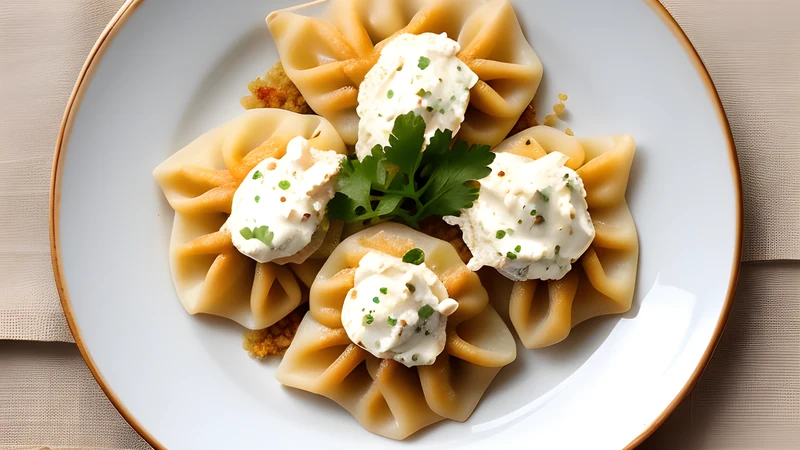
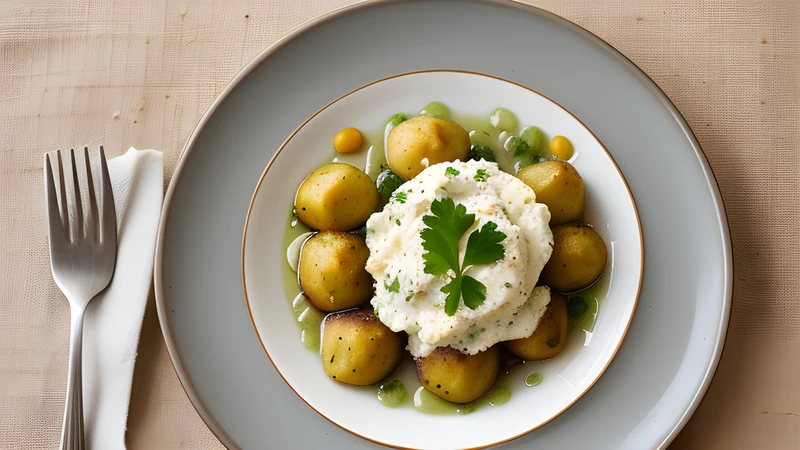
↓ Jump to recipeThe first thing to understand about bryndzové halušky is that the cheese is the dish and everything else is delivery. The dumplings are deliberately plain — grated potato, flour, egg, salt, no seasoning of any interest. The bacon is smoked pork fat doing what smoked pork fat does. What makes anyone care is bryndza: a soft, white, aggressively salty sheep’s cheese that tastes faintly of the animal and comes at you with a lactic sourness sharp enough to make the back of your jaw tighten.
Slovakia declared this its national dish, and there is an annual eating competition in the village of Turecká where people work through several kilos in front of a crowd. That tells you something about how the country feels about it, and also something about the portion sizes.
Bryndzové Halušky: Slovak Potato Dumplings With Sheep's Cheese
Ingredients
- 1 kg floury potatoes (Maris Piper or King Edward), peeled
- 200 g plain flour, plus up to 40 g more if needed
- 1 large egg
- 1.5 tsp fine salt for the dough
- 1 tbsp salt for the cooking water
- 250 g bryndza (or see the substitution section)
- 100 ml full-fat milk, warmed
- 200 g smoked streaky bacon, cut into 1 cm lardons
- 20 g unsalted butter
- 3 tbsp finely snipped chives
- Freshly ground black pepper
Method
- Grate the peeled potatoes on the fine side of a box grater into a large bowl — you want a wet pulp rather than shreds. Work quickly; the pulp browns in air.
- Tip the pulp into a clean tea towel over a bowl and squeeze out about half the liquid. Let the squeezed-out liquid stand for 3 minutes, pour off the water, and scrape the white starch from the bottom of the bowl back into the potato.
- Add the flour, egg and 1.5 tsp salt. Mix with a wooden spoon into a thick, sticky, sluggish batter that falls off the spoon in a slow ribbon. Add up to 40 g more flour only if it pours like cream.
- Fry the bacon lardons in a cold, dry frying pan over a medium heat for 8–10 minutes, until the fat has rendered and the pieces are crisp. Lift the bacon out with a slotted spoon and keep the fat in the pan.
- Bring a large, wide pan of water to the boil and add 1 tbsp salt.
- Hold a halušky board (or a colander with 5–8 mm holes) over the pan. Spread a few tablespoons of batter on it and push it through with a wet spatula so short dumplings drop into the water. Work in three or four batches so the pan is never crowded.
- Each batch is done 90 seconds after the dumplings float to the surface. Lift them out with a slotted spoon into a warm bowl and toss with a knob of the butter.
- Mash the bryndza with the warm milk in a bowl until it is a thick, spoonable cream with no dry lumps.
- Tip the hot dumplings into the bryndza cream and fold gently until every dumpling is coated. The residual heat softens the cheese; do not put it over a flame.
- Divide between four warm bowls. Scatter over the crisp bacon, spoon a little of the hot bacon fat over each portion, then add the chives and black pepper. Serve immediately.
Bryndza, and the mountain economy that made it
Bryndza comes from the Carpathian shepherding tradition — the valaská kolonizácia, a slow migration of Vlach pastoralists who moved along the Carpathian arc from the fourteenth century onwards, bringing sheep, a vocabulary, and a way of making cheese in a hut on a hillside with no refrigeration.
The method is a two-stage thing. Fresh sheep’s milk is renneted into a curd. The whey that runs off is žinčica, the drink; the pressed curd is hrudkový syr, a firm white lump. That lump is left to ripen for several days, then broken up, salted heavily, and worked into a paste. The salt is preservation; the ripening is flavour. What you end up with keeps for weeks in a mountain hut, travels down to the valley, and tastes of something the milk alone never suggested.
Slovak bryndza carries a protected designation of origin — Slovenská bryndza — which specifies a minimum sheep’s-milk content, and this is where the argument starts. Traditional bryndza was pure ewe’s milk. Modern commercial production is often a blend with cow’s milk, because sheep are seasonal and cows are not, and the PGI permits it. Purists in the Detva and Poľana regions will tell you the blended stuff is a shadow. They are not wrong, though the blended version is what most Slovaks actually eat.
The cheese’s saltiness is not incidental. At around 3% salt, bryndza is seasoning as much as it is dairy — which is exactly why the dumplings underneath it contain almost none. Season the halušky properly and the finished dish becomes inedible. Cooks who taste the raw batter and think it needs more salt are about to ruin their dinner.
The halušky themselves
A haluška is a small irregular dumpling, and the family stretches across the region: Hungarian nokedli, Austrian and German Spätzle, Czech versions of the same idea. What distinguishes the Slovak one is that raw grated potato does most of the work, which changes both the texture and the technique.
Raw potato brings water and starch. The water is a liability and the starch is the asset. That is why the squeeze step matters: you take out roughly half the free liquid, then let the extracted liquid settle so the suspended starch drops out, and put that starch back. Skip the settling and you throw away the thing that binds your dumplings, then compensate with more flour, and end up with something dense and pasty.
Floury potatoes only. A waxy potato holds its water stubbornly and gives up little starch, and the batter never comes together. Maris Piper is reliable and cheap.
Grate fine and work fast. Potato pulp oxidises visibly within a couple of minutes — a grey-pink cast that is harmless and unappetising. Some cooks add a squeeze of lemon; I think it interferes with the bryndza and prefer to just move quickly.
The batter consistency is the whole game and it is hard to specify in grams because potatoes vary enormously in moisture. What you want is something that falls from the spoon in a slow, reluctant ribbon — thicker than pancake batter, looser than a scone dough. Too thin and the dumplings dissolve into the water and you produce potato soup. Too thick and they will not push through the board, and the ones that do come out heavy.
Getting them into the water without a board
A proper haluškár is a perforated metal or wooden board you hold over the pan and scrape the batter across. If you have one, use it. If you do not, a colander with 5–8 mm holes works: hold it over the boiling water, spread batter across the base, push through with a wet spatula.
Two failure modes. First, the batter sticks to everything — keep the spatula wet, dipping it in the boiling water between passes, and it slides. Second, you make one giant batch and the pan temperature crashes, the dumplings sit in tepid water, and they swell and disintegrate. Three or four batches in a wide pan, never crowded, water back at a rolling boil before the next batch goes in.
Timing is simple: they float, then you count 90 seconds. Floating means the interior has heated enough for the trapped air and steam to lift them, and the extra minute and a half cooks the flour through. Pull them at the float and you taste raw flour. Leave them four minutes and they go from tender to gummy.
Combining, and the mistake everyone makes once
Do not put the bryndza over heat. This is the single most common error and it is unrecoverable.
Bryndza is a fresh, acid-set, high-salt cheese with no meaningful melting behaviour. Heat it directly and the casein tightens, the fat separates, and you get an oily grey mass with grains suspended in it. The correct approach uses only the residual heat of the just-drained dumplings: loosen the cheese with warm milk into a spoonable cream first, then fold the hot halušky through it off the heat. The dumplings arrive at around 90°C, the cheese warms to maybe 60°C, and it stays smooth and glossy.
The warm milk step also does something else useful. Bryndza straight from the tub is a dense paste that will not coat anything — you get clumps of cheese and bare dumplings. Mashed with 100 ml of warm milk it becomes a sauce with enough flow to reach every surface.
What goes wrong
The dumplings dissolve in the pan. The batter was too loose. There is a rescue: stir another 20 g of flour into what remains, test a single spoonful in the water, and adjust again. Always test one dumpling before committing a batch — it costs ninety seconds and saves the dinner.
They come out heavy and dense. Too much flour, usually added in a panic because the batter looked alarming. Grated raw potato batter always looks wrong. Trust the ribbon test over your instincts.
The finished dish is grey. Oxidised potato. You took too long between grating and cooking, or you left the pulp sitting in the bowl while you dealt with the bacon. Render the bacon first, boil the water first, then grate — the potato should be in the pan within eight minutes of meeting the grater.
Everything tastes of salt and nothing else. You salted the dough properly, salted the water heavily, used a full-strength bryndza, and then added the bacon. The dumpling salt is a background note only; 1.5 tsp for a kilo of potato is deliberately low.
The cheese sits in lumps. Either the bryndza was fridge-cold and the milk was cold, or you skipped the mashing step and tried to fold the tub straight in. Warm milk, a fork, and a minute of real effort until it looks like thick cream.
An oily slick on top. The cheese met direct heat somewhere — often from tipping the dumplings into a pan still sitting on a warm hob. Combine in a bowl, away from the stove.
Žinčica, and what to drink with it
The shepherd’s hut produced two things from every batch of curd: the cheese, and the whey left behind. That whey is žinčica, drunk warm and slightly sour, and in the Slovak mountains it is still sold at roadside stalls beside the halušky. It tastes like a thin, tangy, faintly grassy milk, and its function alongside a bowl of salted sheep’s cheese is obvious the moment you try it — it cuts, it refreshes, it resets the palate.
You will not find žinčica in Britain. The practical stand-in is buttermilk, cold, which does the same job with less character. Failing that, a cold lager works, and a dry Slovak or Austrian white with real acidity — a Grüner Veltliner, a Riesling — is genuinely good against the salt. Anything sweet or oaked will fight the cheese and lose.
Substituting bryndza, honestly
You cannot really replace it, and I would rather say so than pretend. The nearest thing available in Britain is a young sheep’s-milk feta, mashed with milk and a spoonful of soured cream to bring back some of the lactic softness — use 200 g feta, 50 g soured cream, and slightly more milk, and taste before adding salt anywhere. It will read as salty sheep’s cheese with potato, which is most of the way there.
Do not use cow’s feta, which is milder and rubberier. Do not use goat’s cheese, which has a completely different sharpness. Polish bryndza podhalańska is essentially the same cheese under a different flag and is an excellent option if you find it. Romanian brânză de burduf is close too.
If none of that is available, make the halušky and serve them the other traditional way: strapačky, tossed with braised sauerkraut and bacon instead of cheese. That version stands on its own and shares a lot of DNA with kapustnica in the way it uses sourness against fat.
Serving, storage and one variation
Serve it in warm bowls the moment it is combined. This dish has a working life of about six minutes: after that the dumplings absorb the cheese cream, tighten, and the bacon fat congeals. It does not reheat and it does not keep. That is a genuine constraint, and it is why bryndzové halušky is a dish you cook when everyone is already sitting down.
The bacon fat spooned over at the end is traditional and not optional in any Slovak kitchen I have eaten in. If it feels excessive, use half. The crispness of the lardons against the soft cheese is the only textural contrast in the bowl, so do render them properly — cold pan, medium heat, patience.
For a variation worth trying, fold 100 g of wilted, squeezed spinach into the cheese cream. It is not authentic and it cuts the richness in a way that makes a second bowl plausible. If you want the full potato-and-dairy Central European experience, the Czech bramborák uses the same grated raw potato in a completely different direction, and potato and cheese pierogi show what the Polish side does with the same three ingredients.
Related Content