Brown Butter Chocolate Chip Cookies with Flaky Salt
Chewy, nutty and deeply caramelised
Contents
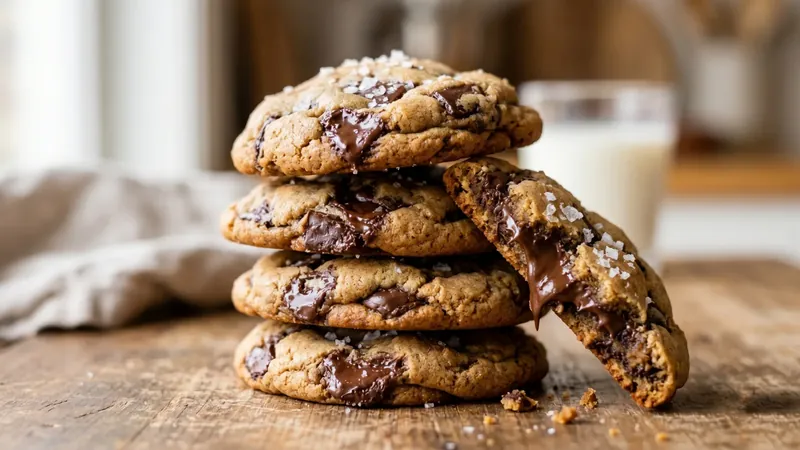
↓ Jump to recipeThis is the chocolate chip cookie turned up a notch: chewy in the middle, crisp at the edge, and threaded through with the toffee-and-hazelnut depth of brown butter. Browning the butter before it goes anywhere near the sugar is the twist that does the heavy lifting, lending a caramelised, almost butterscotch character you cannot get any other way. A pinch of flaky sea salt across the top just out of the oven sharpens every bite. Resting the dough is the secret to that bakery texture.
Brown Butter Chocolate Chip Cookies with Flaky Salt
Ingredients
- 170g unsalted butter
- 150g soft light brown sugar
- 100g caster sugar
- 1 large egg, plus 1 egg yolk
- 1 tsp vanilla extract
- 225g plain flour
- 1/2 tsp bicarbonate of soda
- 1/2 tsp fine salt
- 200g dark chocolate, chopped into chunks
- Flaky sea salt, for scattering
Method
- Melt the butter in a pan over a medium heat until it foams, smells nutty and the milk solids turn golden-brown. Pour into a heatproof bowl, including the toasted bits, and cool for 15 minutes.
- Beat the brown butter with both sugars until smooth and glossy.
- Beat in the egg, egg yolk and vanilla until thick and combined.
- Sift in the flour, bicarbonate of soda and fine salt, then fold until almost no flour remains.
- Fold through the chocolate chunks, then cover and chill the dough for at least 1 hour (or overnight for deeper flavour).
- Preheat the oven to 180C fan and line two baking trays with parchment.
- Roll the dough into balls of about 50g and space them well apart on the trays.
- Bake for 10 to 12 minutes until the edges are set and golden but the centres still look soft.
- Scatter each cookie with a little flaky sea salt while still hot.
- Leave on the tray for 5 minutes to firm up, then transfer to a wire rack to cool.
The story
The chocolate chip cookie is an American institution with an unusually tidy origin. It was created in the 1930s at the Toll House Inn in Whitman, Massachusetts, a converted 1709 tollhouse that Ruth Wakefield and her husband ran as a restaurant. Wakefield, a trained dietitian, chopped a bar of Nestlé semi-sweet chocolate into her butter cookie dough; the pieces held their shape in soft pockets rather than dissolving, and the “Toll House Chocolate Crunch Cookie” was born. The recipe ran in a Boston newspaper and then on the back of Nestlé’s chocolate bars, and by 1939 the company was selling the bar pre-scored for chopping — and soon after, as purpose-made chips. In exchange for the recipe, so the story goes, Wakefield received a lifetime supply of chocolate. The basic formula she set down — butter and two sugars creamed together, bound with egg and studded with chocolate — has barely changed since.
What separates a good cookie from a great one is usually texture and depth of flavour, and this recipe leans on both. Two sugars do different jobs: brown sugar, which contains molasses, brings moisture and chew along with a faint caramel note, while caster sugar promotes spread and crisp edges. An extra egg yolk adds richness and helps keep the centres tender. The bicarbonate of soda encourages a little browning and a slightly cakey lift at the edges.
The twist is brown butter. Melting butter until its milk solids toast transforms it from a simple fat into something fragrant and nutty, the same beurre noisette — literally “hazelnut butter” — prized in French cooking. What’s actually happening is a Maillard reaction: the proteins and trace sugars in the milk solids brown and throw off hundreds of new aromatic compounds, the same chemistry that browns toast and sears steak. In a cookie, that deepens the whole flavour towards butterscotch and roasted nuts, complementing the molasses in the brown sugar. Watch it closely, because there is a narrow window between nutty-golden and acridly burnt; pull the pan the moment the solids at the bottom are the colour of a hazelnut skin and the smell turns from buttery to toasty.
Because browning drives off some of the butter’s water — roughly the fifteen per cent or so of butter that is water simply steams away — the dough behaves a little differently, which is one reason resting it matters. Chilling firms the melted fat back up so the cookies hold their shape instead of spreading into thin discs, and it gives the flour time to hydrate evenly. That hydration is not cosmetic: a rested dough bakes with a more even, caramelised colour and a deeper, rounder flavour, which is why bakeries so often make their dough a day ahead. An hour is the minimum; overnight is noticeably better. If you can only spare an hour, roll the dough into balls first and chill those, so they’re ready to bake straight from cold.
Do not skip cooling the browned butter before you cream it with the sugars. Add it hot and it will start to melt the sugar and part-cook the egg you add next, giving a greasy, over-spread cookie. Fifteen minutes off the heat brings it down to a workable temperature while keeping it liquid enough to beat smooth.
The flaky salt on top is the finishing flourish and more than mere decoration. Salt is a flavour amplifier, and a few crunchy flakes landing on the tongue alongside sweet dough and bitter dark chocolate makes each element taste more vividly of itself; it also suppresses the perception of bitterness, which is why salted dark chocolate tastes rounder than unsalted. Large, brittle flakes such as Maldon are the point — they sit on the surface and dissolve slowly rather than disappearing into the crumb like fine salt would. Scatter them while the cookies are still hot so they stick.
This pairing of toasted butter and finishing salt runs through a whole family of bakes worth exploring. The rye chocolate chip cookie with smoked salt takes the same idea and adds the earthy depth of rye flour, while the brown butter almond financiers show off beurre noisette in its purest, most classically French form. Together, brown butter and flaky salt take a comforting classic and give it the kind of grown-up complexity that keeps people reaching for one more.
The chocolate, and why chunks beat chips
Chopping a bar rather than reaching for a bag of chips is worth the extra two minutes. Purpose-made chips contain stabilisers that help them keep their teardrop shape in the oven, which is exactly what you do not want here: chopped bar chocolate melts into uneven seams and molten pools, some pieces staying whole and others streaking through the dough. That variation is the pleasure of a proper bakery cookie. Use a dark chocolate around 60 to 70 per cent cocoa solids; milk chocolate turns the whole thing sickly against the sweet dough, and anything much darker than 75 per cent fights the brown sugar rather than balancing it. Chop it unevenly on purpose, keeping some pieces almost thumbnail-sized, and reserve a small handful to press into the tops of the dough balls just before baking so each cookie bakes with visible, glossy chocolate on the surface.
Getting the texture you want
This dough is forgiving of small tweaks, so bend it to your taste. For a chewier, denser cookie, chill the dough overnight and bake at the lower end of the time. For a thinner, crisper cookie with more spread, skip the second sugar swap and use 200g caster sugar with 50g brown, and bake straight from an hour’s chill. If your cookies spread into thin discs, the usual culprit is dough that was too warm going in, or a tray that was still hot from the previous batch: always start with a cool tray and cold dough. If they come out domed and cakey, you have either added too much flour, which is easy to do by scooping rather than weighing, or overbaked them past the point where the centres should still look soft.
Substitutions and variations
Brown all 170g of butter if you like the flavour turned up further, or brown just half and leave the rest as cool softened butter for a milder, more balanced result. Swap 50g of the plain flour for rye or wholemeal for an earthier, less sweet cookie in the spirit of a rye chocolate chip cookie with smoked salt. A handful of toasted, chopped hazelnuts or pecans folded in with the chocolate leans into the nutty beurre noisette note. And if you have run out of dark chocolate entirely, a coarsely chopped bar of good milk chocolate plus an extra pinch of flaky salt on top will get you most of the way there.
Storage and make-ahead
Baked cookies keep in an airtight tin for three to four days, though they’re best on the first day while the edges are still crisp. The dough is the real make-ahead asset: chilled, it keeps for up to three days in the fridge, and portioned balls freeze for up to three months. Bake them straight from frozen, adding a minute or two to the time — arguably the single most useful thing to have in the freezer, since fresh warm cookies are then twelve minutes away at any moment.
Related Content