Bramborák: The Czech Garlic Potato Pancake
Grated potato, far too much garlic, marjoram, and a shallow pan of lard
Contents
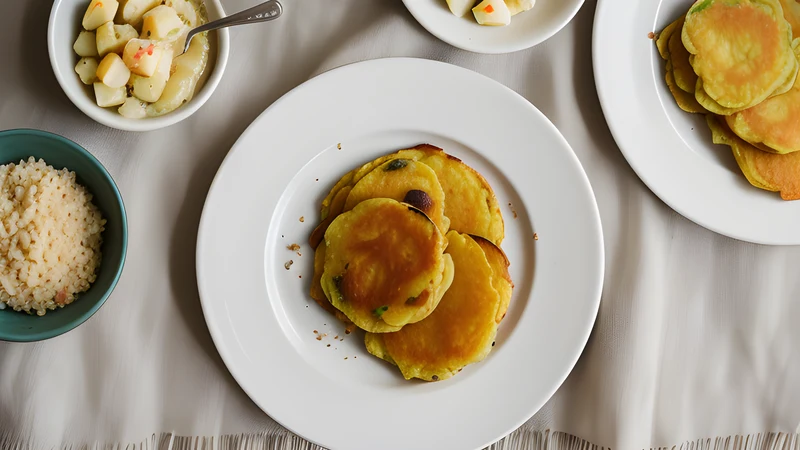
↓ Jump to recipeBramborák is grated potato, garlic and marjoram fried flat in lard, and the quantities in most Czech recipes look like typing errors. Six garlic cloves for six pancakes. Two teaspoons of dried marjoram. This is correct and it is the point: bramborák is a garlic delivery system with a potato chassis, and a timid version of it is a waste of a kilo of potatoes and a pan of fat.
It is Bohemian pub food, sold at Christmas markets in paper cones, made at home on weeknights when there is nothing else, and served in the country’s hospody as a main course the size of a dinner plate. There is a version stuffed with smoked pork called cmunda, and a version rolled around a sausage that exists purely to be eaten after beer.
Bramborák: The Czech Garlic Potato Pancake
Ingredients
- 1 kg floury potatoes (Maris Piper or King Edward), peeled
- 6 fat garlic cloves, crushed to a paste
- 1 large egg
- 60 g plain flour
- 2 tsp dried marjoram, crumbled between the palms
- 1.5 tsp fine salt
- 1 tsp coarsely ground black pepper
- 1/2 tsp caraway seeds, lightly crushed (optional)
- 150 ml milk (optional, for a softer interior)
- 150 g lard or pork dripping, for frying
Method
- Grate the potatoes on the coarse side of a box grater into a large bowl. Work fast — they discolour.
- Tip the grated potato into a clean tea towel over a second bowl and wring it hard for a full minute. Reserve the liquid.
- Let the reserved liquid stand for 3 minutes. Pour off and discard the water on top, keeping the white starch sludge at the bottom of the bowl.
- Return the wrung potato and the reserved starch to the large bowl. Add the garlic, egg, flour, marjoram, salt, pepper and caraway and mix thoroughly.
- If you want a softer interior, stir in the milk now. The mixture should drop heavily from a spoon rather than pour.
- Melt 3 tbsp of the lard in a heavy frying pan over a medium-high heat until it shimmers, about 175C.
- Drop 2 heaped tablespoons of mixture into the pan and press it out to a 15 cm round, 5 mm thick, with the back of a spoon. Cook 1 or 2 at a time.
- Fry for 3-4 minutes until the underside is deep gold and the edges have gone lacy and dark. Flip once and fry 3 minutes more.
- Drain on a wire rack, never on kitchen paper. Salt lightly.
- Add fresh lard between batches and let it come back to temperature before the next pancake goes in.
A late potato and an old habit
The potato reached Bohemia in the seventeenth century and was treated with the usual European suspicion for about a hundred and fifty years. What changed it was famine. The crop failures of the 1770s killed hundreds of thousands across the Habsburg lands, and Maria Theresa’s administration pushed potato cultivation hard as insurance against another one. It worked: potatoes yield three or four times as much food per hectare as rye on the same poor upland soil, and by 1850 Bohemia’s western highlands were growing them at scale.
Bramborák is what a peasant kitchen does with a glut of them. Brambory is the Czech word for potatoes, and it comes from Brandenburg — the Czechs named the vegetable after the place they thought it came from, which is a small piece of accidental history preserved in the dish’s name. The pancake needs one egg, a spoon of flour and whatever fat was rendered at the last pig slaughter, and it turns a cheap staple into something worth sitting down for.
The garlic and the marjoram are the Bohemian signature and they turn up together across the whole regional repertoire — in bramboračka, the potato soup, and in the sausage seasoning that runs through the winter sauerkraut larder. Where Germany treats the potato pancake as a sweet thing and serves it with apple sauce, Bohemia drove it savoury and never looked back.
It became pub food in the twentieth century for an obvious commercial reason: it is cheap, it fries in six minutes, it is aggressively salty and garlicky, and it makes people order another beer. Czech hospody sell it by the plate and it is one of the few things on the menu that survived the state-canteen era intact.
Marjoram, and why not oregano
Marjoram is the Czech herb. It goes in the potato soup, the tripe soup, the sausage and this, and Czech cooking without it does not taste Czech. It is a close relative of oregano — same genus, Origanum — and it is much gentler and sweeter, with a piney, faintly citrus note where oregano is peppery and aggressive. Substituting oregano gives you something that tastes Italian and wrong.
Use dried, and crumble it between your palms before it goes in. Dried marjoram holds its volatile oils in the leaf structure and crushing them releases the sabinene and terpinene that carry the flavour; thrown in whole, the leaves rehydrate in the batter and taste of hay. Fresh marjoram is fine and you need three times as much. Most Czech cooks reach for the dried jar even when fresh is growing on the windowsill, because drying concentrates exactly the note they want.
Six cloves, and why they survive the pan
Six cloves to a kilo. Crushed to a paste rather than chopped, because you want it distributed through every bite. Crushing ruptures the cells and lets alliin meet alliinase, which produces allicin — the compound responsible for raw garlic’s heat. Allicin is unstable and breaks down under heat into milder sulphur compounds, so what tastes savage in the raw batter comes out of the pan as a deep, sweet, roasted garlic flavour. This is why bramborák can take a quantity of garlic that would be unbearable in a salad.
Crush it, add it to the batter, and fry within twenty minutes. Left an hour, the allicin has already degraded in the bowl and you lose the top note.
Raw potato, and the starch trick
The potato goes in raw and grated, which distinguishes bramborák from every mashed- potato cake in Europe. Raw grated potato holds its shreds through frying, so the finished pancake has a fibrous, slightly stringy interior and shredded edges that crisp into lace. That lace is the best part.
Wringing the potato out is the step people skip and it decides the outcome. A kilo of grated potato holds 200-250 ml of water, and water in a frying pan does two bad things: it drops the oil temperature below the 160C needed for browning, and it turns to steam inside the pancake, which prevents the interior from setting and makes the whole thing floppy. Wring hard, in a tea towel, for a full minute. You will be surprised how much comes out.
Then keep the starch. Let the wrung liquid stand for three minutes and the potato starch — which is denser than water — settles into a white paste at the bottom of the bowl. Pour the water off and scrape that paste back into the mixture. It is the binder. It is also why the 60 g of flour is such a modest amount: recipes that skip the starch recovery need twice as much flour and end up tasting of pancake rather than potato.
Floury potatoes only. Maris Piper, King Edward, Russet. Waxy varieties like Charlotte have less amylose and much less free starch, and the shreds stay separate and never bind — you get a pan of fried potato confetti.
Frying
Lard, and enough of it that the pancake sits in 3 mm of fat. This is shallow frying that behaves like deep frying at the edges, which is where the lace comes from. Lard’s flavour is the traditional and correct one, and it has a smoke point around 190C, which gives you headroom at the 175C the pancake wants. Sunflower oil works and tastes of less. Butter burns.
Thin is the target. Five millimetres, pressed out with the back of a spoon to a full 15 cm across. A thick bramborák steams in its own middle and comes out grey and wet. The ratio you want is a lot of crust to a little interior, and thinness is the only way to get it.
Two at a time, maximum. Crowding drops the fat temperature and every pancake after the first absorbs oil instead of crisping. Between batches, add fresh lard and wait until it shimmers again — thirty seconds of patience saves a soggy pancake.
Drain on a wire rack. Kitchen paper traps steam against the underside and undoes the crust you just built, and this is the single most common way a good bramborák is ruined in the last ten seconds of its life.
Grating, and why the box grater wins
Use the coarse holes of a box grater. Not the food processor’s grating disc, which looks like a shortcut and is not: the disc’s blade shears the potato cleanly and throws long, even, wet strips, while a box grater’s punched holes tear as much as they cut, and the ragged shreds interlock and catch fat. That raggedness is what becomes lace at the edge of the pancake.
Grate lengthwise down the potato so you get long shreds. Short stubs behave like mash and give you a dense pancake. Aim for pieces 3-4 cm long where you can.
The knuckle problem is real with a kilo of potatoes. Stop when the potato is smaller than a matchbox and drop the ends into the wringing towel whole; they will not be missed. Work quickly throughout — the whole grating job should take five minutes, because every minute the shreds sit exposed is a minute of oxidation, and grey batter makes grey pancakes.
What goes wrong
It fell apart in the pan. Waxy potatoes, or you discarded the starch, or the batter was too wet. Add a tablespoon of flour and try again.
It’s grey. Oxidation — the potato sat too long after grating. Polyphenol oxidase browns cut potato within minutes. Grate straight into the bowl and mix immediately. It is cosmetic and it tastes fine.
It’s soggy in the middle. Too thick, or the potato was not wrung out, or the pan was too cool.
It’s greasy. Fat below about 160C. The pancake absorbs oil rather than searing its surface shut. Let the lard come back up between batches.
Variations and the honest case against
Cmunda is bramborák with smoked pork in it and is the pub version. Some cooks add a grated onion, which brings sweetness and more water — wring it with the potato. A version with grated hard cheese in the batter is common in Moravia. In South Bohemia they make them tiny and serve them by the dozen.
The honest objection is fat. These are fried in lard, they absorb some of it however carefully you work, and a plate of three is a serious quantity of it. They are also genuinely one-note — potato, garlic, marjoram, salt — with nothing acidic anywhere, which is why a pot of soured cream or a sharp pickled cucumber alongside is a real improvement. And they must be eaten immediately, which makes them awkward for more than four people unless someone is happy to stand at the stove.
For the same grated-potato idea with different seasoning, Belarusian draniki go the soured-cream route and drop the marjoram, while Swedish raggmunk add milk and flour for something closer to a batter pancake with potato in it. If you have arrived here from Prague’s Old Town looking for the actual old Czech street food rather than the tourist-facing trdelník, this is it.
Storage
Eat them now. Bramborák is at its best within two minutes of leaving the pan and is noticeably worse at ten. If you must hold a batch, keep them on a wire rack in a 110C oven for up to 20 minutes — never stacked, never covered. Leftovers refrigerate for two days and come back reasonably well in a dry pan over a medium heat for two minutes a side. Do not microwave them; you get a warm, limp disc and a small disappointment.
Related Content