Bourbon BBQ Pulled Pork
Slow-cooked, smoky and meltingly soft
Contents
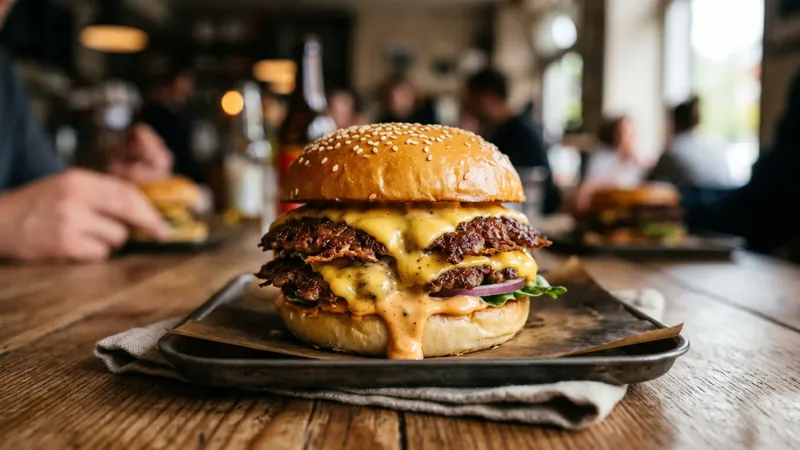
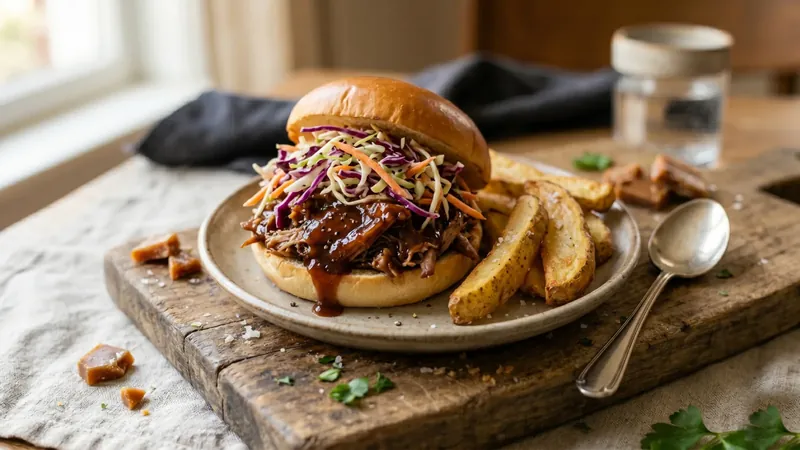
↓ Jump to recipePork shoulder is one of the great rewards of patient cooking: hours in a low oven render its connective tissue into something so tender it collapses at the touch of a fork. The twist here is a homemade barbecue sauce spiked with bourbon, simmered until the whisky’s caramel and vanilla notes soften into a smoky-sweet base. Piled into soft rolls with extra sauce on the side, it makes generous, crowd-pleasing eating with very little active effort. There is no smoker involved and no dawn start; a covered tin and a patient oven do almost all the work while you get on with your day.
Bourbon BBQ Pulled Pork
Ingredients
- 2kg boneless pork shoulder, skin removed
- 2 tbsp soft brown sugar
- 1 tbsp smoked paprika
- 1 tbsp fine salt
- 2 tsp ground cumin
- 2 tsp garlic granules
- 1 tsp mustard powder
- 1 tsp ground black pepper
- 1 onion, sliced
- 250ml chicken stock
- 300ml passata
- 100g soft brown sugar
- 100ml bourbon
- 3 tbsp cider vinegar
- 2 tbsp tomato puree
- 2 tbsp Worcestershire sauce
- 1 tbsp Dijon mustard
Method
- Mix the 2 tbsp brown sugar, smoked paprika, salt, cumin, garlic granules, mustard powder and black pepper into a dry rub. Pat the pork dry and massage the rub all over. Leave for an hour, or chill overnight.
- Heat the oven to 150C. Scatter the sliced onion in a deep roasting tin and sit the pork on top. Pour the stock around the base, cover tightly with foil and cook for 5 to 6 hours, until the meat pulls apart with a fork.
- Meanwhile, make the sauce. Combine the passata, 100g brown sugar, bourbon, cider vinegar, tomato puree, Worcestershire sauce and Dijon in a saucepan.
- Bring to a gentle simmer and cook for 20 to 25 minutes, stirring now and then, until thickened and glossy. The alcohol will cook off, leaving a smoky-sweet depth.
- Lift the cooked pork onto a board and rest for 15 minutes. Skim the fat from the tin juices and reserve a few spoonfuls of the cooking liquor.
- Shred the pork with two forks, discarding any large pieces of fat.
- Return the shredded meat to a clean tin or bowl. Pour over most of the bourbon sauce and a little reserved cooking liquor, then toss to coat.
- Taste and adjust with more vinegar or salt. Serve piled into soft rolls with the extra sauce alongside.
The story
Pulled pork sits at the heart of American barbecue, particularly in the Carolinas, where slow-cooked pork shoulder is a regional point of pride. Eastern North Carolina argues for a thin vinegar-and-pepper sauce and the whole hog; the western part of the state, around Lexington, favours the shoulder alone and a sauce that admits a little tomato. South Carolina complicates matters further with its mustard-based “Carolina Gold”, a legacy of German settlers in the state’s midlands. These are not marketing distinctions but genuine, argued-over regional identities, the sort people will defend at length over a paper plate.
Traditionally the meat is smoked low and slow over wood — hickory and oak in that part of the country — for the better part of a day. The gentle heat breaks down the tough collagen until it turns to gelatine and the muscle fibres separate effortlessly, while smoke settles a pink “smoke ring” just under the surface and a lacquered, savoury crust forms on the outside. A domestic oven cannot replicate live smoke, and it would be dishonest to pretend otherwise. What it can do is deliver the same melting texture through a long, covered braise at a low temperature, with smoked paprika in the rub standing in for that distinctive smokiness. It is a different dish from pit-smoked pork, but a very good one, and considerably more achievable on a Tuesday.
Shoulder, sometimes sold as Boston butt despite coming from the front of the animal, is the ideal cut precisely because it is well marbled and laced with connective tissue. The odd name is thought to come from colonial New England, where less prized cuts were packed into barrels known as butts for storage and transport; the “Boston” style of butchering the shoulder stuck to the name. Whatever its history, the cut is chosen for chemistry: lean muscle dries out long before it softens, whereas the fat and collagen in shoulder keep it succulent through hours of cooking. Collagen only begins to convert to gelatine at around 70C and needs sustained time above that to do it fully, which is exactly why you cannot rush this and cannot overcook it in the usual sense. The dry rub does double duty, seasoning the meat deeply and forming a flavourful crust, often called bark in barbecue circles.
The bourbon sauce is where this version steps away from tradition. Bourbon is an American whiskey, by US law made from a mash of at least 51 per cent corn and aged in new, charred oak barrels — a process formally recognised by Congress in 1964 as a distinctive product of the United States. That new charred oak is what gives bourbon its signature notes of caramel, vanilla and toasted oak, drawn out of the wood as the spirit ages. When simmered into a barbecue sauce, those flavours marry naturally with brown sugar and tomato, deepening the sweetness and adding a faint warmth. The alcohol itself largely evaporates during cooking, so what remains is flavour rather than bite. There is no need for anything expensive; a mid-range bourbon gives up its character to the sauce just as well as a bottle you’d be sad to cook with.
The vinegar in both the sauce and, in Carolina-style serving, alongside the meat is essential rather than optional. Its acidity cuts through the richness of the pork and the sweetness of the sauce, keeping each forkful bright instead of cloying. Cider vinegar is the traditional choice and its faint apple note suits pork particularly well. Tossing the shredded meat with a little of its own cooking liquor before saucing keeps it moist, a small step that prevents the dryness pulled pork can suffer once it leaves the oven and starts to cool.
A word on where things go wrong. The most common mistake is impatience: pulling the pork at four hours because it looks done. It will shred, but it will shred into dry, stringy strands rather than collapsing into soft, glossy clumps, because the collagen hasn’t finished its work. Trust the fork test — the meat should give no resistance at all — over the clock. The second mistake is under-seasoning after cooking; hours of braising dilute the salt, so taste the finished, sauced meat and be prepared to add more salt and a splash more vinegar than feels sensible. It needs the correction.
Sides, serving and getting ahead
Serve it the classic way, mounded into soft white rolls — a squishy brioche bun or a floury bap, nothing crusty enough to fight you. The three things it wants alongside are all about contrast: something acidic, something crunchy, and something cool. A sharp slaw dressed with cider vinegar rather than a heavy mayonnaise does all three at once, its raw cabbage cutting the fat and its acidity echoing the sauce. Sliced dill pickles or pickled jalapeños add a second hit of sourness and a little heat. If you’re feeding a crowd, set the sauced pork out in its dish and let people build their own rolls; it holds its heat well and looks generous.
For quantities, 2kg of raw shoulder yields a little over 1kg of pulled meat once the fat and any bone are gone, which is comfortably enough for six substantial rolls with seconds, or eight lighter ones. Scale the shoulder up or down and keep everything else roughly in proportion; a larger joint simply needs a little longer in the oven, judged by the fork rather than the clock.
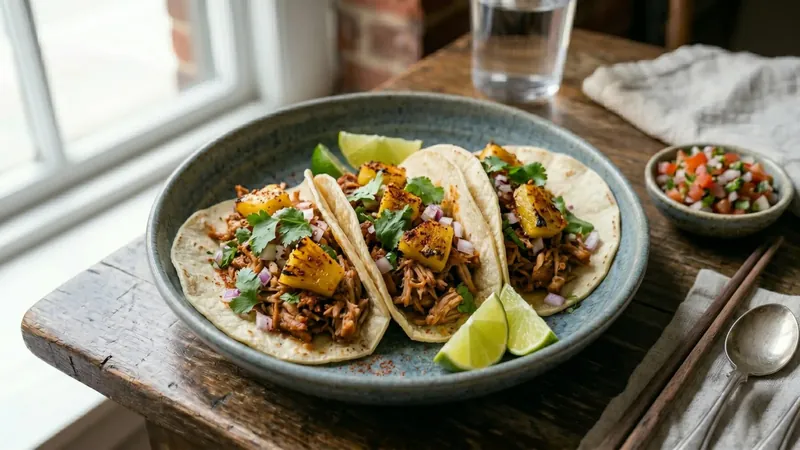
This is a genuinely good make-ahead dish, arguably better for it. Cook and shred the pork up to two days ahead, toss it with the sauce, and keep it covered in the fridge; the flavours settle and deepen overnight. Reheat gently, covered, in a low oven with a splash of stock or water to loosen it, stirring once or twice — high, fast heat will dry it out. It also freezes well, sauced, for up to three months. If you enjoy this kind of long, sticky, sauce-glossed pork, it sits in good company with char siu pork, where a sweet-savoury glaze does similar work over a Cantonese roast, and with the steamed-bun approach of pork belly bao buns with pickled daikon, which pairs rich pork with a sharp pickle for exactly the same reason the slaw matters here. Any leftovers are excellent folded through baked potatoes, tacos or quesadillas the following day, and a spoonful stirred into a pot of baked beans turns a tin into something worth serving on purpose.
Related Content