Boudin: The Cajun Rice Sausage
A soft, rice-and-pork sausage from south Louisiana, sold hot from petrol stations and eaten squeezed straight from its casing
Contents
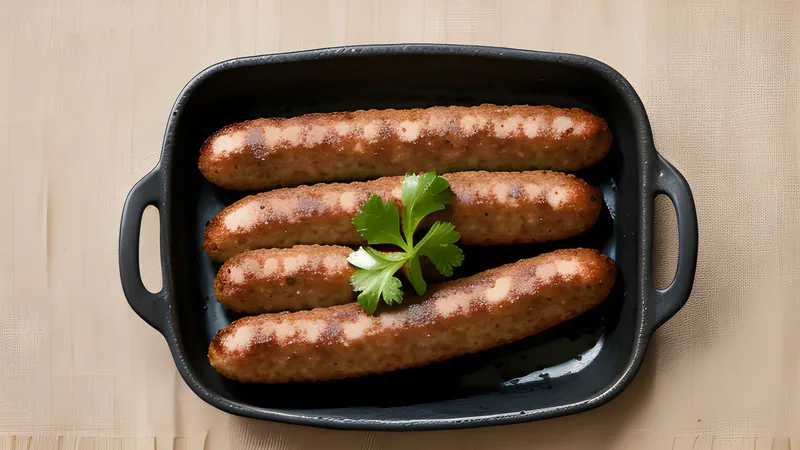
↓ Jump to recipeBoudin is a soft, moist sausage of pork, pork liver and rice, gently spiced and stuffed into a natural casing, and it’s one of the defining foods of Cajun south Louisiana, sold hot at petrol stations, grocery stores and dedicated boudin stands along the highways of Acadiana as reliably as coffee. It isn’t eaten sliced and fried the way most sausages are; it’s squeezed directly from its casing into the mouth, the casing itself usually discarded, which tells you most of what you need to know about its actual texture: closer to a savoury rice pudding held loosely together than to a firm, sliceable link.
Boudin: The Cajun Rice Sausage
Ingredients
- 900g pork shoulder, cut into large chunks
- 225g pork liver, trimmed
- 1 onion, quartered, plus 1 onion finely diced
- 3 celery sticks, roughly chopped, plus 2 finely diced
- 1 green pepper, roughly chopped, plus 1 finely diced
- 6 garlic cloves, whole, plus 2 finely chopped
- 2 bay leaves
- 2 tsp cayenne pepper
- 2 tsp smoked paprika
- 1 tbsp fine salt, plus more to taste
- 1 tsp black pepper
- 1/2 tsp ground white pepper
- 500g cooked long-grain white rice, cooled
- Small bunch spring onions, finely sliced
- Small bunch parsley, finely chopped
- 3-4m natural hog casings, rinsed and soaked
Method
- Put the pork shoulder, liver, quartered onion, roughly chopped celery, roughly chopped pepper, whole garlic cloves and bay leaves into a large pot and cover with water by 5cm.
- Bring to a simmer and cook gently for 1-1.5 hours, until the pork is completely tender and falls apart easily; skim any scum from the surface as it cooks.
- Lift out the meat and vegetables with a slotted spoon, reserving the cooking liquid, and discard the bay leaves.
- Once cool enough to handle, either finely chop the meat and vegetables by hand or pulse briefly in a food processor, keeping some texture rather than reducing it to a paste.
- Heat a splash of oil in a large pan and cook the finely diced onion, celery and pepper (the trinity) with the finely chopped garlic for 8-10 minutes, until soft.
- Stir the chopped meat mixture into the softened vegetables, along with the cayenne, smoked paprika, salt, black pepper and white pepper.
- Add the cooled cooked rice, spring onions and parsley, and mix thoroughly, loosening with a few tablespoons of the reserved cooking liquid until the mixture is moist and holds together when pressed, but isn't wet.
- Taste a small spoonful, cooked briefly in a pan, and adjust the seasoning; the mixture should taste assertively seasoned, since rice and casing both mute flavour.
- Stuff the mixture into the soaked hog casings using a sausage stuffer or a wide-nozzle piping bag, twisting into links about 15cm long, and prick each link a few times with a pin to prevent bursting.
- Poach the links gently in barely simmering water for 15-20 minutes, until heated through and the casing is taut, then serve warm.
Acadiana, and a sausage built to use everything
Boudin’s history runs through the Acadian people, French colonists expelled from Acadia (now Nova Scotia and the surrounding Canadian Maritimes) by the British in the 1755 Expulsion, who resettled in significant numbers across the swamps and prairies of south Louisiana over the following decades, becoming the Cajun population and culture recognised today. The Acadians brought French boudin-making traditions with them, specifically the practice of using rice and offal to stretch a small quantity of pork across a large household, and adapted it to Louisiana’s climate and available ingredients, above all the abundant rice grown across the state’s prairies, which became the sausage’s defining bulk ingredient in a way that doesn’t appear in most French boudin traditions.
The sausage reflects a genuinely practical, whole-animal cooking culture: when a family slaughtered a pig, as was common practice across rural south Louisiana well into the 20th century, boudin was a way of using the liver and trim meat that wouldn’t otherwise stretch far, bulked out with rice into something that fed considerably more people than the meat alone would have. That practical, use-everything logic is still visible in the best boudin today, and it’s worth keeping in mind if you’re tempted to skip the liver in this recipe; a small amount of liver gives boudin a mineral depth and a distinct savoury richness that pork shoulder alone doesn’t provide, and traditional versions treat it as essential rather than optional.
The trinity, and Cajun seasoning logic
The finely diced onion, celery and green pepper cooked down before the meat goes in is the Cajun and Creole “holy trinity,” the regional equivalent of French mirepoix or Spanish sofrito, and it appears at the base of nearly every substantial Cajun dish, from gumbo to jambalaya to boudin itself. Cooking it down properly, a full 8-10 minutes until genuinely soft rather than just warmed through, matters more than most home cooks expect; an undercooked trinity leaves a raw, sharp vegetable edge running through the finished sausage that a few extra minutes on the stove would have resolved.
Cayenne and smoked paprika together give boudin its characteristic warmth without tipping into aggressive heat, and it’s worth tasting and adjusting before you commit to stuffing the whole batch into casings, since both rice and the casing itself have a muting effect on seasoning once cooked, meaning a mixture that tastes correctly seasoned raw can read as slightly flat once it’s been stuffed and poached. Cook a small spoonful of the finished mixture in a hot pan for a minute or two and taste it properly before you stuff any casings; this is the single easiest way to avoid an underseasoned batch.
Getting the rice-to-meat ratio and moisture right
Boudin’s texture depends heavily on getting the balance between meat, rice and moisture right, and it’s a looser, wetter mixture than most sausage-making traditions call for. The rice should make up a substantial portion of the final mixture by volume, not a minor addition, and the reserved cooking liquid from poaching the pork is what keeps the whole mixture moist enough to pipe cleanly into the casing without turning dry and crumbly once cooked through a second time during the final poach. Add the liquid gradually and check the texture by pressing a small handful together; it should hold its shape loosely, similar to a risotto that’s just past its loosest point, rather than either running through your fingers or holding as a firm ball.
If you don’t have a sausage stuffer, a wide-nozzle piping bag or even a cut-corner freezer bag works reasonably well for filling natural casings by hand, though it takes more patience and a second pair of hands helps considerably, one person holding the casing steady on the nozzle while the other pipes and controls the flow. Boudin is also entirely legitimate served without any casing at all, as “boudin balls,” rolled into portions and deep-fried in a light coating, a very common preparation at Louisiana restaurants and festivals for anyone who’d rather skip the casing-stuffing process altogether.
What can go wrong
Links that split open during the final poach almost always mean the casing wasn’t pricked enough before going into the water, since trapped steam has nowhere to escape and the pressure finds the weakest point in the casing instead; prick each link generously with a pin along its length before it goes anywhere near the pot, and keep the poaching water at a bare simmer rather than a boil, since vigorous bubbling is rough enough on its own to split a properly pricked casing. A filling that squeezes out grey and pasty rather than moist and distinct usually means the rice was overcooked before it went into the mixture and turned starchy and gluey under the second cooking; next time, cook the rice slightly underdone and let it firm up as it cools before mixing. A bland finished sausage, even after tasting and adjusting the raw mixture, often comes down to under-seasoning specifically for the casing and rice’s muting effect; season the test spoonful more assertively than seems necessary; correctly seasoned boudin should taste slightly too salty and peppery on its own straight off a spoon, since rice and casing both dilute that intensity once the whole sausage is assembled and cooked.
Serving boudin and what to eat it alongside
Boudin is traditionally eaten hot, squeezed straight from the casing by hand, often standing at the counter of the petrol station or grocery store that made it, with the discarded casing set aside rather than eaten; some prefer the casing softened enough to eat along with the filling, and that’s really a matter of personal preference rather than any fixed rule. It’s commonly sold alongside cracklins (fried pork skin) and cold drinks as a roadside meal rather than a formal sit-down dish, and it travels well, making it a genuine road-trip food across south Louisiana in the way few other regional sausages are.
If you’re building a wider Louisiana table around it, boudin sits naturally alongside Louisiana chicken and andouille gumbo, which draws on the same trinity-and-rice logic in a completely different format, or a muffuletta if you want to cover both of Louisiana’s two great culinary traditions, Cajun and Creole New Orleans, on the same spread. Leftover boudin keeps well in the fridge for up to three days and reheats best by a gentle steam or a brief simmer in water rather than a microwave, which can make the casing split unevenly; it also freezes well for up to two months, thawed overnight in the fridge before reheating.
Sourcing casings and the harder-to-find ingredients
Natural hog casings are the traditional choice for boudin and give the sausage its proper snap and the ability to hold together well enough to squeeze from one end without collapsing entirely; they’re sold by specialist butchers and increasingly online, usually packed in salt and needing a thorough rinse and a soak in cold water for at least 30 minutes before use to remove excess salt and make them pliable enough to stuff. If casings genuinely aren’t available to you, making boudin balls instead, rolling the finished mixture into portions and either pan-frying or deep-frying them in a light breadcrumb or cornmeal coating, is a completely legitimate way to eat the same filling without needing to source casings at all, and it’s how a considerable amount of boudin is actually sold and eaten at Louisiana festivals regardless of casing availability.
Pork liver is worth sourcing from a proper butcher rather than a supermarket if you can, since freshness matters more with liver than with most other cuts; it should smell clean and faintly mineral rather than strong or sour, and a butcher who sells it regularly will have quicker turnover than a supermarket shelf where it might sit longer. If liver truly isn’t something you want to cook with, you can omit it and increase the pork shoulder slightly to compensate, though be aware you’re moving further from a traditional boudin and closer to a plain rice-and-pork sausage; the liver’s specific mineral depth is genuinely part of what boudin tastes like at its best, not an optional garnish.
A note on rice texture
Cook the rice for this recipe slightly firmer than you would for eating on its own, since it goes through a second cooking stage during the final poach and continues to soften; rice cooked to a soft, fully tender point before it even goes into the sausage mixture can turn slightly mushy by the time the finished links come off the stove. Day-old, cooled rice from the fridge actually works better here than freshly cooked rice, since the grains firm up slightly as they cool and hold their individual shape better through the mixing and stuffing process, giving the finished boudin a more distinct, less pasty texture throughout.
Storing and reheating without splitting the casing
Cooked boudin holds its texture best reheated gently rather than blasted with high heat; a bare simmer in water for 8-10 minutes, or a covered steam over a pan of simmering water, warms the links through without the pressure spike that a hard boil or a microwave can cause, both of which risk splitting an already-cooked casing that’s lost some of its elasticity in the fridge. If freezing, wrap links individually or lay them in a single layer with parchment between them before bagging, so they don’t fuse together in the freezer and tear apart when you try to separate them later; thaw fully in the fridge overnight before reheating rather than attempting to reheat from frozen, which cooks the outside long before the centre catches up.
Boudin’s rice-stretched, use-everything logic has real company elsewhere in the American South, notably hoppin’ John, the Carolina rice and field pea dish built on similar frugal, whole-larder thinking a few hundred miles up the coast.
Related Content