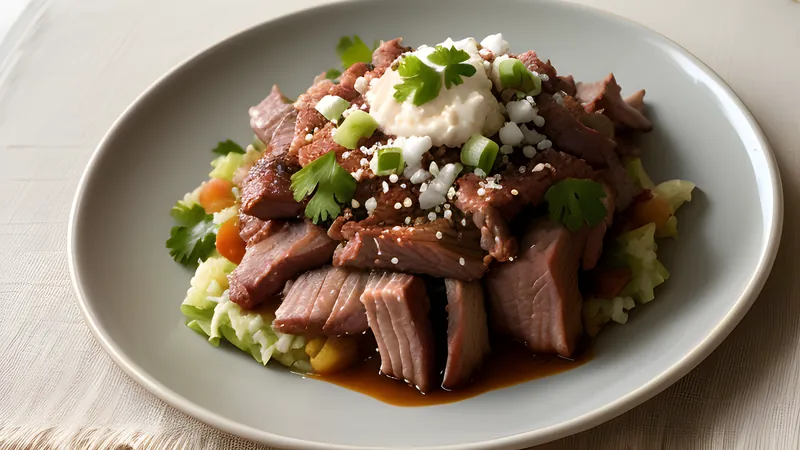
Bossam: Boiled Pork Belly With Wraps
The kimjang-day pork built to be wrapped, not sliced onto a plate
Contents
↓ Jump to recipeBossam is boiled pork belly, sliced and served to be wrapped rather than eaten off a plate with cutlery, and its strongest cultural association is with kimjang — the once-a-year communal event, traditionally held in late autumn or early winter, when families and neighbours gathered to make enough kimchi to last through the cold months. Kimjang required hours of labour: salting cabbage, mixing paste, packing it into jars destined for the ground or a cellar to ferment. Bossam was the meal that rewarded the workers at the end of the day, and specifically it was eaten with fresh, unfermented kimchi made that same afternoon — a version of the dish sometimes called bossam kimchi, lighter and crunchier than the fully fermented kind that would be ready weeks later.
That pairing is not incidental. Freshly boiled, still-warm pork belly wrapped with kimchi made only hours earlier is a genuinely different eating experience from the same pork with fully fermented kimchi — the fresh version is sweeter, crunchier, closer to a dressed salad than a pickle, and it’s specifically suited to being eaten in quantity after a long day of physical work. UNESCO recognised kimjang as intangible cultural heritage in 2013, citing exactly this kind of communal, generation-spanning food labour, and bossam’s role as the meal that closes out the day is part of what made the tradition worth preserving on paper as well as in kitchens.
Bossam: Boiled Pork Belly With Wraps
Ingredients
- 1kg pork belly, in one piece, skin on or off
- 1 onion, quartered
- 6 garlic cloves, crushed
- 4 spring onions, halved
- 3cm piece ginger, sliced
- 2 tbsp doenjang (soybean paste)
- 1 tbsp soy sauce
- 10 whole black peppercorns
- 2 bay leaves
- 1 tbsp instant coffee granules (tenderises and deepens colour)
- 2 litres water, or enough to submerge the pork
- 1 whole lettuce, leaves separated, for wrapping
- 1 bunch perilla leaves, for wrapping
- 200g fresh bossam kimchi or radish kimchi
- 2 tbsp salted shrimp (saeujeot), for serving
- 3 tbsp ssamjang (or mix 2 tbsp doenjang with 1 tbsp gochujang and a little sesame oil)
Method
- Place the pork belly in a large pot with the onion, garlic, spring onions, ginger, doenjang, soy sauce, peppercorns, bay leaves and instant coffee.
- Add water to fully submerge the pork, bring to the boil, then skim off any scum that rises.
- Reduce to a low simmer, cover, and cook for 1 hour 15 minutes to 1 hour 30 minutes, until a skewer slides through the thickest part with no resistance.
- Remove the pork and rest for 10 minutes before slicing into 5mm-thick pieces against the grain.
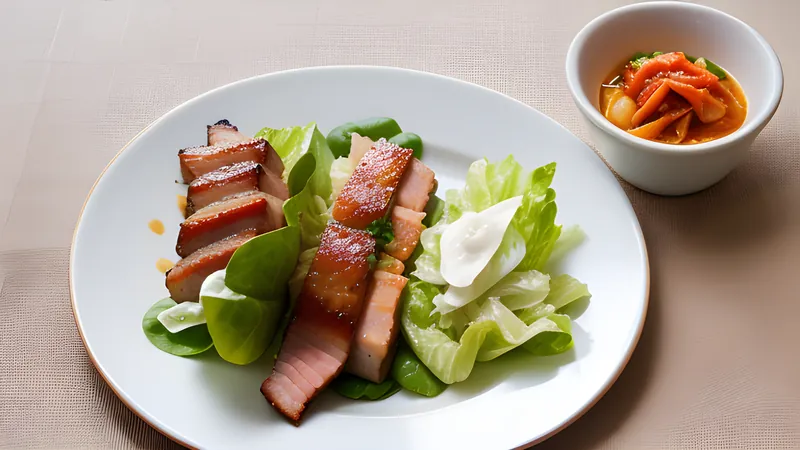
- Arrange the lettuce and perilla leaves, sliced pork, kimchi, salted shrimp and ssamjang on a serving platter.
- To eat, wrap a slice of pork with a little kimchi, a dab of ssamjang and a few grains of salted shrimp inside a lettuce or perilla leaf.
Why the pork gets simmered, not roasted
Unlike the crisp-skinned roasted pork belly familiar from Chinese or Filipino cooking, bossam’s pork is simmered gently in an aromatic liquid until it’s tender enough to slice cleanly but still holds together as a solid piece — no crackling, no char, just a clean, savoury-sweet, almost silky texture that’s designed to be wrapped rather than crunched. The simmering liquid does real work here: doenjang and soy sauce season the meat from the outside in over the ninety minutes it takes to become fully tender, while the aromatics (onion, garlic, ginger, spring onion) cut through the pork’s fat and keep the finished dish from tasting purely of meat and salt.
Instant coffee granules are a genuine and common Korean kitchen trick here, not a novelty addition. Coffee’s tannins and bitterness do two things: they help tenderise the meat slightly through the same mechanism that makes coffee-rubbed barbecue work, and they deepen the colour of the finished pork to a richer brown than plain water and soy sauce would achieve on their own, without adding any perceptible coffee flavour once diluted through two litres of simmering liquid. It’s a small addition but one worth not skipping if you want the colour restaurants achieve.
Choosing and cooking the belly
Buy pork belly in one solid piece rather than pre-sliced — you need enough thickness to simmer for over an hour without falling apart, and pre-sliced belly, cut for quick-cooking methods, will disintegrate under this treatment. Skin-on or skin-off both work; skin-on gives a slightly gelatinous edge to each slice that many people prefer, while skin-off is easier to slice cleanly and some find more pleasant to eat by hand.
Simmer, don’t boil hard. A rolling boil toughens the muscle fibres in the belly before the fat has had time to render and soften them, whereas a gentle simmer over the full ninety minutes gives the connective tissue time to break down properly. Test with a skewer or chopstick pushed into the thickest part of the belly — it should meet almost no resistance when the pork is ready. Pork that’s still firm needs more time regardless of the clock; bellies vary enough in thickness and fat content that timing alone isn’t a fully reliable guide. Skim the surface again after the first few minutes of the return to a simmer, since a second, finer layer of scum tends to rise once the initial rolling boil settles — removing it keeps the finished broth clear enough to strain and reuse as a light stock if you want to save it rather than discard it.
Resting the pork for ten minutes before slicing matters more than it sounds like it should. Cutting into it straight from the pot lets moisture and rendered fat escape with every slice, leaving drier, less cohesive pieces; a short rest lets the meat firm up slightly and hold together better under the knife. Slice against the grain, in pieces around 5mm thick — thin enough to fold easily into a lettuce leaf, thick enough to still register as a proper piece of meat rather than a shaving.
The wrap components, and why each one is there
Lettuce or perilla leaves form the wrap itself, and using both rather than just lettuce gives you a genuine choice of flavour profiles within the same meal — perilla has a distinctive, slightly anise-like, herbal edge that plain lettuce doesn’t, and pairs particularly well with the salted shrimp. Kimchi inside the wrap brings acidity and crunch that cuts the pork’s richness, functioning much the way pickles cut rich meat in other cuisines, but with a fermented depth that vinegar pickles don’t carry.
Salted shrimp, saeujeot, is the ingredient most likely to be unfamiliar to cooks outside Korea, and it’s worth sourcing rather than skipping if you can find it — a small jarred condiment of tiny shrimp fermented in salt, used here in small quantities directly on the pork rather than mixed into anything. Its intensely savoury, briny hit works almost like a seasoning rather than a topping; a few grains per wrap is plenty, and using too much overwhelms the other components rather than complementing them. If you genuinely can’t find it, a light dab of good fish sauce mixed with a pinch of sugar approximates the savoury-salty note, though it’s a substitute rather than an equivalent.
Ssamjang, the thick dipping paste built from doenjang and gochujang together with a little sesame oil, rounds out the wrap with fermented depth and a little heat. It’s worth making rather than buying pre-mixed if you have both pastes on hand already — the ratio is easy to adjust to taste, leaning more doenjang for savoury depth or more gochujang for heat and sweetness.
Assembling and eating
Bossam is eaten by hand, one wrap at a time: take a lettuce or perilla leaf, lay a slice of pork across it, add a little kimchi, a dab of ssamjang and a few grains of salted shrimp, then fold the leaf around the filling and eat it in one or two bites. It’s a communal, hands-on way of eating that suits a table of people working through a shared platter rather than individual plated portions, much like dakgalbi shares the same wrap-your-own format at the table.
Common mistakes worth naming
Slicing the pork too thick is a frequent problem, usually from wanting each piece to look substantial on the platter. A thick slice is harder to fold neatly into a small lettuce leaf and tends to fall apart mid-bite rather than staying wrapped. Aim genuinely thin, closer to a good ham slice than a steak, and let people take two pieces per wrap if they want more meat rather than compensating with thickness.
Skipping the resting step is the second common error, usually out of impatience to get the dish to the table while it’s hot. Ten minutes isn’t long, and the difference in how cleanly the pork slices is significant enough that it’s worth the wait — sliced straight from the pot, the belly tends to shred rather than cut, losing the clean presentation bossam is meant to have.
Using pre-fermented, fully sour kimchi as the only kimchi on the table is a minor miss rather than a real error, but it changes the character of the meal from what’s traditional. If you have time, even a quick, lightly fermented cabbage salad dressed with gochugaru, garlic and a little sugar gets you closer to the fresh bossam kimchi the dish is built around than a jar of long-fermented kimchi will.
Regional and seasonal notes
Bossam’s association with kimjang means it’s traditionally a cold-weather dish, eaten in the weeks when the year’s kimchi supply was being laid down, though restaurants serve it year-round now with no seasonal restriction. Coastal regions sometimes serve it with a side of raw oysters, a pairing called gul-bossam, where the briny oysters are eaten inside the same lettuce wraps alongside the pork — a specifically autumn and winter combination, since oysters are at their best in Korea during the colder months when kimjang traditionally happened anyway.
Some southern regional versions use a spicier kimchi with a stronger gochugaru presence than the milder, sweeter styles found further north, which shifts the balance of the wrap towards more heat and less of the crunchy freshness that plainer bossam kimchi provides. Either style is legitimate; the pork itself and its cooking method stay essentially constant across the country, with the accompaniments carrying most of the regional variation.
Bossam also shows up, in a smaller and less ceremonial way, as an everyday restaurant order entirely divorced from kimjang — ordered by groups wanting a substantial, sociable meat dish without the fire and smoke of Korean barbecue, since everything here is boiled rather than grilled. In that context it functions closer to how bindaetteok or dakgalbi does: shared food built for a table of people eating at their own pace rather than a dish plated for one.
Storage and make-ahead
The pork keeps well in its cooking liquid, refrigerated, for up to three days, and reheating it gently in the same liquid rather than dry keeps it from drying out. If you’re serving a crowd, cooking the pork a day ahead and reheating it before slicing actually improves the texture slightly, since the meat firms up overnight and slices more cleanly cold or just-reheated than it does straight out of a fresh simmer. Keep the kimchi and other wrap components fresh and assemble the platter close to serving time; a side of quick kimchi made a day or two ahead gives you something close to the fresh, bossam-style kimchi traditionally served alongside this dish.
Related Content