Blackberry and Brown Butter Clafoutis
A rustic French baked custard with autumn berries
Contents
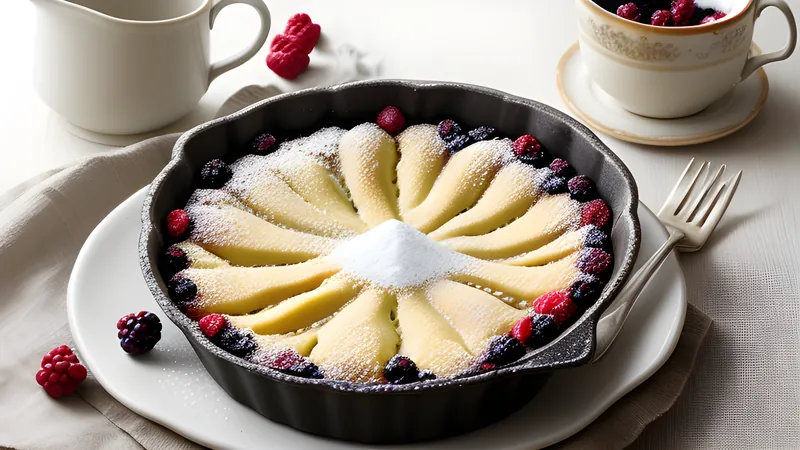
↓ Jump to recipeClafoutis is the pudding to make when you want something that feels both effortless and a little bit special. It is essentially a thick, sweet batter poured over fruit and baked until it sets into something between a custard, a flan and a baked pancake, with puffed golden edges and a soft, trembling middle. Traditionally it is made with cherries, but blackberries are wonderful here, their dark juice bleeding into the pale custard as they bake. The twist that gives it real character is brown butter, whisked into the batter so the whole thing carries a nutty, toasted warmth beneath the fruit.
Blackberry and Brown Butter Clafoutis
Ingredients
- 60g unsalted butter, plus extra for the dish
- 300g blackberries
- 3 large eggs
- 100g caster sugar, plus 1 tbsp for the dish
- 70g plain flour
- 0.25 tsp fine salt
- 300ml whole milk
- 1 tsp vanilla extract
- Finely grated zest of 1 lemon
- Icing sugar, for dusting
Method
- Heat the oven to 180C fan and butter a 24cm round baking dish, then dust it with the tablespoon of caster sugar.
- Brown the 60g butter in a small pan until it foams, smells nutty and turns deep gold, then set aside to cool slightly.
- Scatter the blackberries evenly over the base of the dish.
- Whisk the eggs with the 100g caster sugar and salt until pale and slightly frothy.
- Whisk in the flour until smooth, then gradually whisk in the milk, vanilla, lemon zest and the warm brown butter.
- Pour the batter gently over the blackberries.
- Bake for 35 to 40 minutes until puffed, golden and just set with a slight wobble at the centre.
- Cool for 10 minutes, dust generously with icing sugar and serve warm.
A pudding from the French countryside
Clafoutis comes from the Limousin region in central France, where it has long been a homely, frugal dessert thrown together when cherries were in season. The name is thought to derive from an Occitan word meaning to fill or to fix in place, which describes exactly what the batter does: it holds the fruit suspended in a soft custard. In its homeland, purists insist the cherries are left unstoned, the argument being that the pits release a faint almond-like flavour during baking, though most home cooks sensibly stone them to spare their guests’ teeth.
When the fruit is anything other than cherries, the French sometimes call it a flaugnarde, a distinction that is taken more seriously in France than most cooks elsewhere realise. The Académie française reportedly weighed in on the spelling and definition of clafoutis in 1979, insisting it was a cake with cherries, which gives you a sense of how strongly the French feel about their humble puddings. To a purist, then, this blackberry version is technically a flaugnarde, but clafoutis is the name that has travelled, and the batter now welcomes plums, apricots, berries and pears with equal grace. Its appeal is its honesty: there is no pastry to make, no layers to assemble, just a batter, some fruit and a hot oven. It is a country dessert in the best sense, the kind of thing made quickly after a meal and eaten warm straight from the dish.
That humility is precisely why it has endured. A clafoutis asks for no special equipment and no real skill, only a whisk and an ovenproof dish, which makes it the ideal pudding for a weeknight when you fancy something homemade but have no appetite for fuss. Blackberries, gathered free from a hedgerow in late summer or pulled from the freezer in the depths of winter, suit it perfectly.
How it comes together
The method could hardly be simpler, but a couple of small steps lift it. First, butter the baking dish and dust it with sugar, which gives the edges a delicate, crisp, caramelised crust as they bake. Scatter the blackberries over the base so they are evenly distributed and you get fruit in every spoonful.
The batter is whisked together much like a pancake batter: eggs and sugar first, then flour, then milk loosened in gradually to avoid lumps. The brown butter goes in last, still warm, carrying its toasted aroma through the whole mixture, along with a little lemon zest to keep things bright. Pour it gently over the fruit so the berries stay roughly in place rather than all rushing to one side.
Then it is simply a matter of baking until the clafoutis puffs dramatically and turns golden, with a centre that still wobbles slightly when you nudge the dish. It will sink a little as it cools, which is entirely normal and part of its rustic charm. A heavy dusting of icing sugar over the warm top is the traditional finish.
Why brown butter, and how to get it right
Browning the butter is the one step that lifts this from a pleasant baked custard to something with real depth, so it is worth understanding what is actually happening in the pan. As melted butter heats past the point where its water has boiled off, the milk solids suspended in it begin to toast and turn golden brown. This is the same Maillard browning that gives roast meat and toast their savour, and it converts the clean, creamy flavour of butter into something nutty, biscuity and faintly caramelised, with an aroma often compared to hazelnuts or toffee. Whisked into the batter, that toasted character carries through every mouthful and plays beautifully against the tart, jammy blackberries.
The trap is that brown butter turns to burnt butter in seconds. Use a light-coloured pan if you have one, so you can actually see the colour of the milk solids rather than guessing against dark metal, and keep the heat at medium. The butter will melt, then foam up as the water boils off, then quieten; watch for the flecks at the bottom of the pan turning from pale to golden to a proper toasty brown, and pull it off the heat the moment it smells nutty. Do not walk away. Tip it out of the hot pan promptly, milk solids and all, so the residual heat does not carry it past the point of no return, and let it cool slightly before whisking it into the batter so it does not scramble the eggs.
Tips, make-ahead and variations
The most common worry is a clafoutis that is too wet or too dense. The batter should be thin, more like cream than cake batter, so resist the urge to add extra flour. Bake until the centre is just set; a clafoutis pulled too early stays sloppy, while one left too long turns rubbery, so watch for that gentle wobble as your cue.
Clafoutis is at its very best warm from the oven, when the contrast between crisp edge and soft centre is sharpest, so it is not really a make-ahead pudding. That said, you can mix the batter an hour ahead and keep it in the fridge, then pour and bake when you want it. Give a fridge-cold batter a quick whisk before pouring, as the flour tends to settle. Leftovers are pleasant cold the next day, rather like a baked custard tart without the pastry, and a slice warms through gently in a low oven if you would rather not eat it cold.
A note on the dish, because it affects the result more than you would think. A wide, shallow ovenproof dish of around 24cm is ideal: it gives a good ratio of golden, caramelised edge to soft centre, and the thin layer of batter sets quickly and evenly. A deep, narrow dish holds too much batter for its surface area, so the middle stays wet long after the edges have set, and you end up either with a raw centre or overcooked edges. Ceramic, enamel or glass all work; metal conducts heat fastest and gives the crispest edge, but watch it does not scorch. Butter the dish thoroughly and dust it with caster sugar right up the sides, as that sugar coating is what gives the edges their delicate, crackly, caramelised crust, and the batter climbs it as it puffs.
Do not open the oven door for the first 25 minutes. Clafoutis puffs up dramatically as the eggs set and the water in the batter turns to steam, and a blast of cold air at the wrong moment can make it sink prematurely and unevenly. It will deflate somewhat as it cools whatever you do, which is entirely expected and part of the pudding’s rustic charm, but you want it to reach its full, dramatic puff in the oven first before it settles on the plate.
For variations, swap the blackberries for raspberries, halved plums, apricots or the traditional cherries, adjusting the bake slightly for juicier fruit; very wet fruit such as ripe plums benefits from a few minutes’ head start in the oven before the batter goes in, or from being patted dry, so the custard is not flooded. A splash of kirsch or brandy in the batter is lovely with stone fruit, and a pinch of ground almonds folded in deepens the nutty note and echoes the almond flavour the French prize in an unstoned-cherry clafoutis. Serve it as it is, or with a spoonful of cold crème fraîche to play against the warm, fragrant custard.
One small point on the fruit itself, since it changes the result. Frozen blackberries work perfectly well out of season, but add them straight from the freezer rather than thawing them first: thawed berries collapse and bleed a great deal of liquid into the batter, which slackens the custard and leaves you with a wet, streaky middle. Frozen and firm, they hold their shape long enough for the batter to begin setting around them before they soften. The same logic applies to very ripe fresh fruit, which is why a brief head start in the oven, or a quick pat with kitchen paper, earns its keep.
If the nutty, toasted character of the brown butter is what wins you over here, it is the same magic at work in almond financiers with brown butter, where the browned butter is the whole personality of the little cakes, and in brown butter chocolate chip cookies, which show what that toasty depth does to an everyday bake. Brown a little extra next time you make any of them; it keeps in the fridge for a week and is never unwelcome.
Related Content