Bigoli in Salsa: The Anchovy Pasta of the Venetian Fast Days
Thick wholemeal spaghetti, melted onions and salted fish, and nothing else
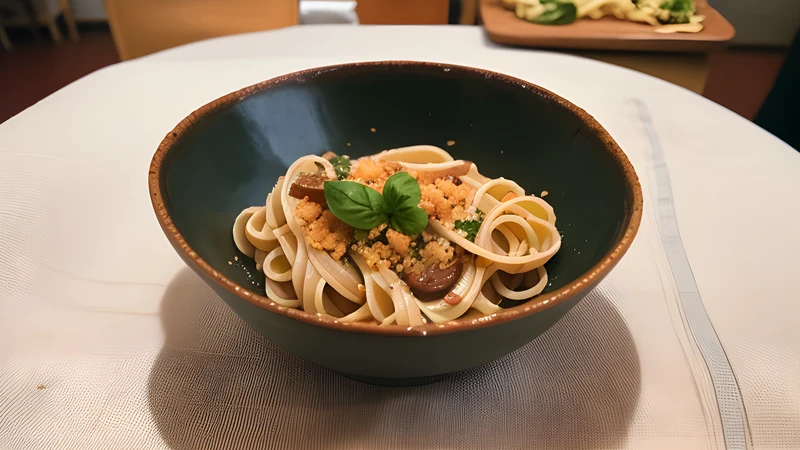
Contents
↓ Jump to recipeFour ingredients, fifty minutes, no cheese, no tomato, no garlic. Venice’s most famous pasta was designed for the days when the Church said you could not enjoy yourself, and it is one of the best things you can eat in the city. Whether the Church achieved anything here is a separate question.
Bigoli in salsa is what happens when a cook is handed a list of prohibitions and finds a loophole made of onions.
Bigoli in Salsa: The Anchovy Pasta of the Venetian Fast Days
Ingredients
- 400g bigoli, or wholemeal spaghetti, or thick bucatini
- 700g white onions, halved and sliced 2mm thick
- 6 tbsp extra-virgin olive oil
- 12 salted anchovies, rinsed and filleted, or 16 good oil-packed anchovy fillets
- 1 tsp white miso paste
- 80ml dry white wine
- 1/2 tsp freshly ground black pepper
- Fine sea salt, for the pasta water
- 1 tbsp flat-leaf parsley, finely chopped (optional)
Method
- If using salted anchovies, rinse them under cold running water, rub the salt off, then open each one along the belly with your thumb and lift the backbone out. Rinse again and pat dry. Oil-packed fillets need only draining.
- Put the sliced onions in a wide, heavy pan with 4 tablespoons of the olive oil, a pinch of salt and 100ml of water. Cover and cook over low heat for 30 minutes, stirring every 5 minutes, until the onions have collapsed completely and turned translucent. Do not let them colour.
- Uncover, raise the heat to medium and add the wine. Let it bubble away for 3 minutes until the pan is almost dry and the onions are starting to look glossy rather than wet.
- Lower the heat to its minimum. Add the anchovies and the miso and stir constantly for 6 to 8 minutes, pressing the fillets against the side of the pan with a wooden spoon. They will break up, foam slightly, and dissolve into the onions until no recognisable fish remains.
- Add the remaining 2 tablespoons of olive oil and the black pepper. Stir and taste. The salsa should be savoury and slightly sweet, with no salt added: the anchovies bring plenty.
- Bring a large pan of water to the boil and salt it lightly, using about half the salt you normally would. Cook the bigoli until al dente, 8 to 12 minutes depending on thickness. Reserve two mugfuls of the starchy water before draining.
- Add the drained pasta to the salsa with 150ml of pasta water. Toss hard over medium heat for 2 minutes, adding more water a splash at a time, until every strand is coated in a glossy brown sauce that clings. Serve immediately with more black pepper and the parsley, if using.
What a fast day actually meant
The Catholic calendar of the Venetian Republic contained a great many giorni di magro — lean days when meat, eggs and dairy were off the table. Christmas Eve, Good Friday, Ash Wednesday and the Friday of every ordinary week, plus the whole of Lent and a scattering of vigils before saints’ days. Depending on how you count, an observant household was eating lean for something between a third and a half of the year.
This was never a hardship diet in a city built on fish. Salted anchovies from the Adriatic and from further south were cheap, kept for years in their barrels of salt, and delivered exactly the savoury weight that meat would have brought. Onions cost nothing and grew everywhere on the terraferma. The pasta was wholemeal, because white flour was expensive and the point of a fast day was visible modesty.
What the rule created, by accident, is a dish with an enormous amount of glutamate in it and almost nothing to distract from that. Anchovies are one of the most glutamate-dense foods in the European larder, up there with parmesan and cured ham, and the slow onion melt contributes its own sweetness and body. The result reads as rich and meaty while containing no meat whatsoever, which is either an elegant piece of cookery or a theological loophole, and Venetians have never seemed troubled by the ambiguity.
The name of the pasta comes from the bigolaro, a hand-cranked bronze press that extrudes thick, slightly rough strands. The bronze die matters more than the flour: it drags on the dough and leaves a chalky, porous surface that sauce grips. Machine-cut spaghetti with a Teflon die is smooth and glassy, and salsa slides straight off it into the bottom of the bowl.
The onions, which take half an hour and cannot be hurried
Seven hundred grams of onions to four hundred grams of pasta looks like a typo. It is the recipe. They collapse to roughly a third of their volume and become the sauce; there is nothing else to make one out of.
Slice them thin — 2mm, on the grain or across it, this genuinely does not matter as much as the internet claims — and start them with a lid, a pinch of salt and a splash of water. The water is a heat buffer. It keeps the pan below 100C until the onions have released their own moisture, which stops any browning before it starts.
Browning is the failure mode. A properly made salsa is the colour of milky coffee, and the anchovies put that colour there. Golden onions taste of French onion soup: sweet, roasted, assertive. They are lovely and they are the wrong dish. If you catch gold at the edges, add two tablespoons of water immediately and drop the heat.
Thirty minutes under a lid, stirring every five. You are looking for onions that have lost all structural integrity — press one against the pan and it should smear rather than break. Undercooked onions leave the salsa stringy and the strings show up in every mouthful.
Then the wine goes in uncovered and reduces almost to nothing. This does two jobs: it takes the pan from steamed to concentrated, and its acidity brightens what is otherwise a very sweet base.
Melting the anchovies without frying them
Here is where most versions go wrong. The anchovies go in at the very end, on the lowest heat you can manage, and they should dissolve rather than fry.
Anchovy fillets are largely protein and fat, cured to the point where the muscle fibres have already broken down. Warm them gently in oil and they fall apart into a savoury emulsion within six minutes, pushed along with a wooden spoon. Get them too hot and the proteins seize and the fillets brown, and browned anchovy turns bitter and fishy in the aggressive way that puts people off anchovies for life.
Salted anchovies, sold whole in tins or by weight from a good deli, are meaningfully better than oil-packed. They have a cleaner, less metallic flavour and a firmer texture. They also need work: rinse the salt off under cold water, open the belly with a thumbnail, lift out the backbone in one movement and rinse again. Twelve fish take five minutes. If you use oil-packed fillets, buy ones in olive oil rather than sunflower, use sixteen rather than twelve, and drain them well.
Do not add salt to the salsa. Twelve anchovies bring around 2 grams of sodium into the pan. Salt the pasta water at half your usual strength, taste at the end, and you will almost never need more.
The miso, and why it belongs
A teaspoon of white miso goes in with the anchovies. This is my addition and I will defend it, briefly.
Shiro miso is fermented soya and rice koji. At a teaspoon in a pan feeding four it stays completely undetectable as itself, so nobody at the table tastes soy sauce. What it brings is a second glutamate source with a different profile from the anchovies, plus a small amount of nucleotides from the koji fermentation. Glutamate and nucleotides together are synergistic: the perceived savouriness of the combination is several times what either delivers alone. It is the same reason Japanese dashi uses kombu and bonito together, and the same reason parmesan on a tomato sauce does more than the arithmetic suggests.
The practical effect is that the salsa tastes deeper and rounder without tasting more of fish. If you want to test it, hold back a spoonful of onions before the miso goes in and compare. Nine people out of ten pick the miso version and cannot say why.
Add it early enough to dissolve and late enough not to cook. In with the anchovies, off the heat within eight minutes.
Tossing it, and the water
The salsa is a broken sauce until the pasta arrives. What brings it together is starch.
Cook the bigoli in less water than you would normally use — enough to cover, no more — so the water gets properly cloudy. That cloud is dissolved amylose, and it is the emulsifier that binds the anchovy oil, the olive oil and the onion liquid into something glossy.
Drain the pasta a minute early, keep two mugs of water, and finish the cooking in the pan with the salsa. Toss hard for a full two minutes, adding water in splashes. You are looking for the moment the sauce stops sitting in the bowl and starts wearing the pasta. If it looks dry, more water; if it looks soupy, keep tossing and it will tighten.
No cheese. This is a fast-day dish and dairy was forbidden, and beyond the theology, pecorino on an anchovy salsa is salt on salt.
Making the sauce cling
Every Italian pasta dish that looks simple on paper is really a lesson in emulsification, and this one is unusually honest about it. There is no cream here, no egg, no cheese. The gloss on a good plate of bigoli in salsa comes from oil and water being forced into a stable suspension by starch, and understanding that turns a technique into a decision.
Six tablespoons of olive oil is a lot for four people, and it needs somewhere to go. If it stays as oil, it pools at the bottom of the bowl and the pasta tastes greasy. If it emulsifies, the same six tablespoons read as richness spread across every strand. The difference between those two outcomes is about ninety seconds of vigorous tossing and roughly 150ml of cloudy water.
The mechanics are worth knowing. Amylose, the long straight-chain starch that leaches out of pasta as it cooks, behaves as a weak emulsifier: the molecules park at the boundary between oil droplets and water and stop the droplets from finding each other and merging back into a slick. More cloud means more amylose means a more stable sauce. This is why the amount of water you boil the pasta in genuinely matters, and why an enormous stockpot — the standard advice for a decade — actively works against you here. Enough water to cover the bigoli and let them move is plenty.
Agitation supplies the energy. A gentle stir will not do it. You want the pan shaking, the pasta moving, tongs lifting and dropping the strands so oil and water are repeatedly forced through each other. Venetian cooks do this over a live flame with a flick of the wrist that takes years to learn and about four minutes to fake convincingly with tongs.
You will know it has worked because the sauce changes appearance. Broken, it is brown onions in a puddle of oil. Emulsified, it turns opaque, slightly paler, and coats the back of a spoon. That colour shift is the sign to serve.
If it splits in the bowl on the way to the table, which happens if the pan was too hot, a splash of cold pasta water and ten seconds of tossing off the heat brings it back.
Tips, swaps and what to do with the leftovers
Pasta. Real bigoli are worth seeking out from an Italian deli. Failing that, wholemeal spaghetti is the closest in flavour and roughness, and bronze-die bucatini is the closest in bite. Standard white spaghetti works and is a slightly thinner experience.
Vegetarian. There is no honest version — the anchovy is the dish. Two tablespoons of miso plus a tablespoon of capers and a sheet of crumbled toasted nori gets you somewhere savoury and interesting, and it is a different recipe wearing this one’s clothes.
Sardines. Some Venetian families use salted sardines rather than anchovies, particularly on Christmas Eve. They are milder and need ten fillets rather than twelve. If you have fresh ones, the sweet-sour sarde in saor is where they belong.
Storage. The salsa keeps five days in the fridge under a film of olive oil and freezes for three months. Make a double batch of onions; the melt is the only laborious part and it costs nothing extra to do twice as much.
Reheating. Never reheat dressed pasta. Warm the salsa with a splash of water and cook fresh pasta.
If you like this kind of four-ingredient Roman-Venetian austerity, cacio e pepe works the same trick with cheese and starch, and bucatini all’amatriciana shows what happens when the fast day ends and the pork comes back. For anchovies used as a seasoning rather than a sauce, hasselback potatoes with anchovy butter makes the same argument on a different plate.
Related Content