Bicol Express: Pork in Coconut Milk and Long Chillies
A stew named after a train, from a region that never actually invented it that way
Contents
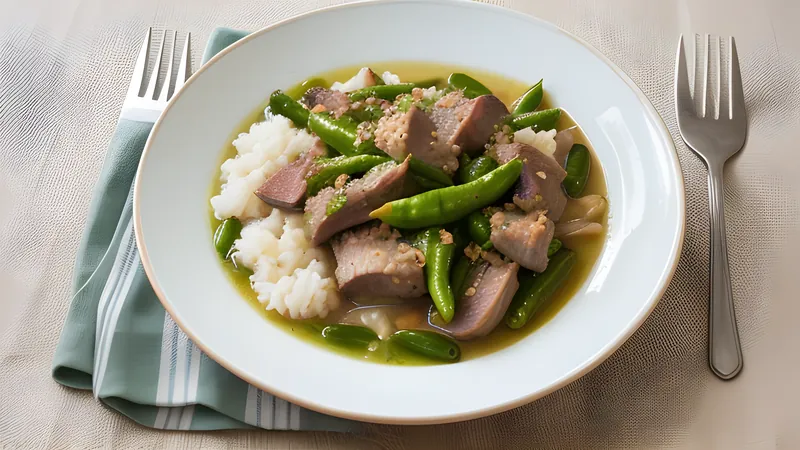
↓ Jump to recipeBicol Express is one of the few Filipino dishes with a founding story specific enough to date: it was invented in the 1970s at a restaurant called Amber Wong’s in Malate, Manila, by cooks who took the fiery, coconut-heavy cooking style of the Bicol region — famous across the Philippines for using chilli more aggressively than almost anywhere else in the archipelago — and built a new dish around it, then named it after the Bicol Express train line that ran overnight from Manila down to the Bicol peninsula. The name was a joke about speed and heat rather than a claim of regional origin, and it stuck so thoroughly that most people now assume the dish itself comes straight from Bicol kitchens, when really it’s a Manila tribute act that happened to get the flavour profile right enough to become genuinely beloved on its own terms.
Bicol Express: Pork in Coconut Milk and Long Chillies
Ingredients
- 700g pork belly, cut into 2cm cubes
- 1 tbsp oil
- 6 cloves garlic, minced
- 1 onion, chopped
- 3cm ginger, minced
- 3 tbsp bagoong alamang (shrimp paste), or to taste
- 400ml thin coconut milk
- 200ml thick coconut cream (kakang gata)
- 10 long green chillies (siling haba), sliced into 3cm lengths
- 3–5 bird's eye chillies, sliced, or to taste
- 1 tsp sugar
- salt, to taste
Method
- Heat the oil in a heavy pot over medium heat. Add the pork belly and cook, stirring occasionally, until it renders fat and turns golden at the edges, about 8 minutes.
- Add the garlic, onion and ginger, and cook for 3 minutes until fragrant and softened.
- Stir in the shrimp paste and cook for 2 minutes, letting it toast slightly in the fat rather than just dissolving.
- Pour in the thin coconut milk, bring to a gentle simmer, cover, and cook for 30 minutes, stirring occasionally, until the pork is tender.
- Add the long green chillies and bird's eye chillies. Simmer uncovered for 8 minutes until the chillies soften slightly but still hold their shape.
- Stir in the thick coconut cream and sugar. Simmer gently for 3–4 minutes without letting it come to a hard boil, as the thick cream can split if boiled hard.
- Taste and adjust salt — the shrimp paste is salty, so add gradually. Serve hot with steamed rice.
Why Bicol cooks so much with chilli and coconut
The joke works because it’s rooted in something true. Bicol, at the southeastern tip of Luzon, is the one region in the Philippines where food writers and Bicolanos themselves will tell you chilli is used with real intensity, in dishes like laing (taro leaves in coconut milk and chilli) and sinigang na sili. Most Filipino regional cuisines lean towards sourness, saltiness and a moderate hand with heat; Bicol is the outlier, and food historians generally attribute this to the region’s volcanic soil, which happens to suit chilli cultivation particularly well, alongside a strong Bicolano preference for building dishes around coconut milk in two stages — a thinner, more diluted milk (gata) used to simmer and tenderize, and a thicker, richer cream (kakang gata, closer to the first pressing) stirred in near the end to enrich and finish. Bicol Express borrows that two-stage coconut technique wholesale, even though the dish itself was born in a Manila restaurant kitchen rather than a Bicolano home.
The role of shrimp paste
Bagoong alamang, a fermented shrimp paste with a colour ranging from pink to deep brown-red depending on how it’s made, is not a garnish here — it’s the backbone of the dish’s savouriness, doing the same job fish sauce does in Thai or Vietnamese cooking but with a thicker, funkier, more concentrated character. Toasting it briefly in the pork fat and aromatics before adding liquid matters: raw shrimp paste straight into a simmering sauce tastes flat and one-dimensionally salty, while paste given a minute or two in hot fat develops a deeper, almost caramelised edge that carries through the whole dish. Buy a good jar from a Filipino or Southeast Asian grocer rather than substituting a generic shrimp paste from elsewhere in Asia — bagoong alamang has a distinct texture, chunkier than Malaysian belacan or Thai kapi, and the dish reads noticeably different with a smoother paste standing in.
Method notes: the two coconut milks
Using both a thin and a thick coconut milk, rather than one can of standard coconut milk throughout, is the single technique that separates a good Bicol Express from an average one. The thin milk simmers alongside the pork for half an hour, giving the fat time to render into the sauce and the pork time to turn properly tender without the coconut fat splitting under prolonged heat — thinner milk has less fat to break down under a long simmer. The thick cream goes in only at the very end, off a hard boil, purely to round out richness and give the sauce its characteristic silkiness. If you boil the thick cream hard or for too long, the fat separates from the water content and you get an oily slick on top rather than a cohesive sauce — a mistake that’s very hard to fully correct once it’s happened, short of blending the sauce smooth, which changes the texture of the dish entirely.
If you only have one tin of full-fat coconut milk, you can approximate the two stages: use the thinner, more liquid portion that settles at the bottom of the tin for the initial simmer, and reserve the thicker cream that rises to the top for the finish. It’s not identical to buying separate products, but it gets you most of the way there.
What can go wrong
The most common mistake, beyond boiling the finished sauce too hard, is under-rendering the pork belly at the start. Pork belly needs those initial eight minutes in the pan to render enough fat that it doesn’t turn tough and chewy over the following half hour of simmering — skip that step and go straight to adding liquid, and the fat never fully breaks down, leaving pockets of unrendered fat that taste greasy rather than silky.
The second is chilli timing. Long green chillies (siling haba) are added partway through rather than at the start because they lose their bright colour and crisp bite if simmered the full cooking time — added too early, they turn a dull khaki and go completely soft, losing the textural contrast against the tender pork that makes the dish work. Bird’s eye chillies, included for genuine heat rather than colour, can go in alongside the long chillies or be added at the very end depending on how much fire you want in the finished dish.
Substitutions and variations
Pork belly is the traditional cut, but pork shoulder works well for a slightly leaner version, and some households use pork liver alongside the belly for extra depth — a nod to the same postwar habit of stretching cuts of meat with offal that shows up in dishes like kaldereta. Siling haba, sold fresh at Filipino and some Southeast Asian grocers, can be substituted with Anaheim chillies or milder banana peppers if you want the visual length and gentle heat without sourcing the specific variety; adjust the bird’s eye chilli quantity up if you do this, since the substitute chillies bring less heat on their own.
A vegetarian version exists in some households, swapping pork for firm tofu or oyster mushrooms, though the shrimp paste stays — vegetarians substitute a fermented soybean paste (tausi or miso) for a similar umami depth without the seafood.
Storage
Bicol Express keeps well in the fridge for up to four days and, like most coconut-based stews, tastes better the day after cooking once the flavours have settled. Reheat gently over low heat rather than a hard boil, for the same reason you avoid boiling the coconut cream hard during cooking — a fast reheat risks splitting the fat again, leaving an oily film across the top of the pot instead of a cohesive sauce. It also freezes well for up to two months, though the texture of the chillies softens further after freezing and thawing.
Serve it with rice alongside chicken tinola for a table that runs from fiery to soothing, or after sisig if pork and chilli are already the running theme of the meal.
How the dish spread nationally
What happened after Bicol Express opened in Malate is a fairly clean case study in how a restaurant dish becomes a national staple. Within a decade of its 1970s debut, the recipe had spread well beyond Manila’s restaurant scene into home kitchens across the country, helped along by its relative simplicity — pork, coconut milk, shrimp paste and chilli, all ingredients already present in most Filipino pantries, just combined in a way nobody had quite put together before. By the 1980s it was a fixture on turo-turo (point-and-eat) canteen menus nationwide, and today it sits comfortably alongside dishes with centuries of documented history, despite being younger than most people’s grandparents. It’s a useful reminder that “traditional” in Filipino cooking doesn’t always mean ancient — plenty of now-canonical dishes have a traceable birthdate and a named inventor, and Bicol Express is one of the clearest examples, its origin story confirmed by food writers and even by members of the family who ran the original restaurant.
Reading the heat correctly
One detail that trips up cooks working from an unfamiliar pantry: siling haba, the long green chilli used here, is mild by most standards — closer to a jalapeño or milder than one, included mainly for its grassy flavour and length rather than raw heat. The actual fire in Bicol Express comes almost entirely from the bird’s eye chillies (siling labuyo) added alongside or after. Confusing the two, or assuming the long chillies are meant to carry the dish’s spice, leads to a version that tastes flat and underseasoned on the heat front even with a generous handful of siling haba stirred through. If you like your food properly fiery, in the way Bicolano cooking is known for, lean on the labuyo count rather than piling in extra long chillies expecting the same result.
Pairing and serving
Bicol Express is rich enough that it rarely needs more than plain steamed rice alongside it to balance the coconut fat and chilli heat. A side of sliced tomato and raw onion, dressed with nothing more than a squeeze of calamansi, gives a cool, acidic contrast that cuts through the dish between mouthfuls — a pairing borrowed from how Filipino tables generally handle rich, fatty stews, offering something bright and uncooked on the side rather than another cooked dish competing for the same register.
A note on regional pride
Many Bicolanos have mixed feelings about a dish invented in Manila carrying their region’s name, especially given that actual Bicolano cooking includes dishes — laing, Bicol’s version of sinigang, pinangat — with far deeper local roots and no equivalent national fame. Bicol Express gets the credit for representing Bicolano heat on menus nationwide, while dishes that are genuinely, historically from the region stay comparatively obscure outside it. That tension is worth mentioning when you tell someone what you’re making — the name honours a Manila restaurant’s 1970s invention, cooked in the style of a region it never actually originated in.
Leftover sauce, once the pork is gone, is worth keeping — spoon it over rice on its own or use it as a braising base for a second batch of vegetables like aubergine or green beans, since the coconut and shrimp paste base has already done most of the flavour work and needs very little else to carry a second, smaller dish.
Related Content