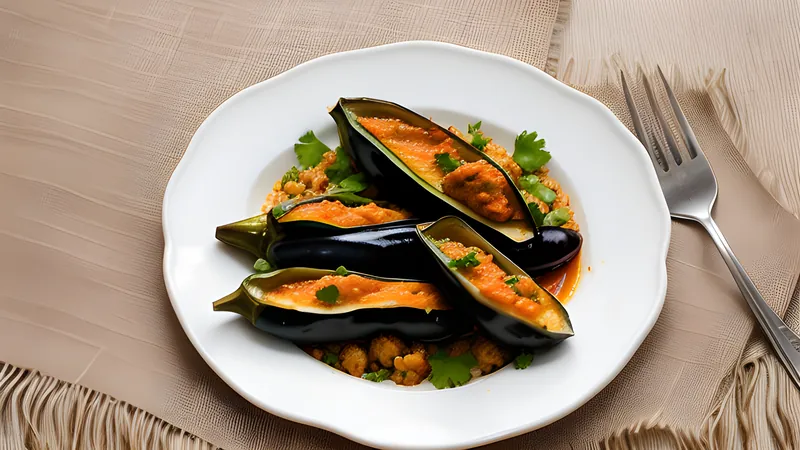
Bharli Vangi: Maharashtrian Stuffed Aubergine
Baby aubergines slit and packed with a roasted peanut and coconut masala
Contents
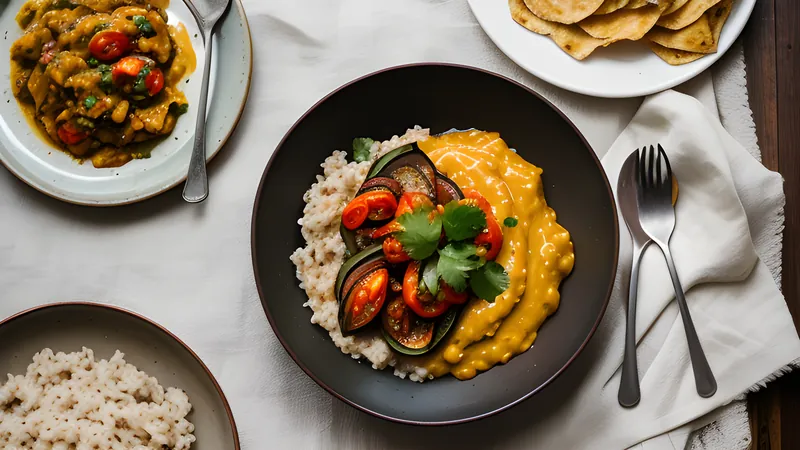
↓ Jump to recipeBharli vangi takes the smallest aubergines you can find, slits them without cutting them apart, and packs them full of a roasted peanut, sesame and coconut masala that turns a fairly plain vegetable into the centrepiece of a Maharashtrian meal. The stuffing does double duty, flavouring the aubergine from the inside while the same paste, loosened with water, becomes the gravy they simmer in. It is a dish built on patience with a knife and a well-toasted spice mix rather than any particular technical difficulty.
Bharli Vangi: Maharashtrian Stuffed Aubergine
Ingredients
- 8 small baby aubergines, about 500g total
- 4 tbsp raw peanuts
- 3 tbsp sesame seeds
- 4 tbsp dried grated coconut (kopra)
- 1 tsp coriander seeds
- 1 tsp cumin seeds
- 3 dried red chillies
- 1 tbsp goda masala or garam masala
- 1 tsp red chilli powder
- 0.5 tsp ground turmeric
- 1 tsp jaggery, grated
- 1 tbsp tamarind pulp
- Salt, to taste
- 4 tbsp oil
- 1 tsp mustard seeds
- 10 curry leaves
- Pinch of asafoetida
- 1 onion, finely chopped
- 200ml water, plus more to loosen
- 2 tbsp chopped coriander, to finish
Method
- Wash the aubergines and slit each one from the base almost to the stalk in a cross shape, keeping the stalk intact so the aubergine holds together; leave in a bowl of salted water to stop them browning.
- Dry-roast the peanuts, sesame seeds, coconut, coriander seeds, cumin seeds and dried red chillies separately in a dry pan for 2-3 minutes each, until fragrant and lightly coloured, then cool and grind to a coarse powder.
- Mix the ground roasted masala with the goda masala, chilli powder, turmeric, jaggery, tamarind pulp and a pinch of salt, adding a spoonful of water if needed to make a thick, spoonable paste.
- Drain the aubergines and pat dry, then stuff each one generously with the masala paste through the slits, reserving about a third of the paste for the gravy.
- Heat the oil in a wide, heavy pan over a medium heat. Add the mustard seeds and let them pop, then add the curry leaves and asafoetida.
- Add the onion and fry for 6-8 minutes until golden.
- Stir in the reserved masala paste and cook for 2 minutes, then add the water and bring to a simmer.
- Carefully lower the stuffed aubergines into the pan, cover, and cook on a low heat for 20-25 minutes, turning gently every few minutes, until the aubergines are completely tender when pierced with a knife.
- Check the seasoning, loosening with a splash more water if the gravy is too thick, and simmer uncovered for 2-3 minutes if it needs reducing.
- Scatter with chopped coriander and serve hot.
The Story
Bharli vangi, literally “stuffed aubergine” in Marathi, sits alongside bharli mirchi (stuffed peppers) and bharla batata (stuffed potato) as part of a whole Maharashtrian family of dishes built around the same principle: hollow out or slit a vegetable, pack it with a spiced peanut-coconut masala, and let the two cook together so the vegetable takes on the flavour from the inside out rather than from a gravy alone. Peanuts and sesame are the backbone of Maharashtrian vegetarian cooking generally, standing in for the cream and cashew pastes more common further north, and both were historically far more affordable and locally available across the Deccan plateau than dairy-heavy alternatives.
Goda masala, the spice blend that flavours the paste, is distinctly Maharashtrian and built around dagad phool (stone flower, a type of lichen), sesame, dried coconut and a mellow warmth that is sweeter and rounder than a typical North Indian garam masala. It turns up across the state’s home cooking in dals, gravies and stuffed vegetables alike, and a jar of it is worth having on hand if you cook from this region more than occasionally; plain garam masala is a workable but noticeably blunter substitute.
Bharli vangi turns up most often at Maharashtrian home meals rather than restaurant menus, served as part of a thali alongside varan-bhaat (plain dal and rice), a dry vegetable, and a stack of chapatis, since its rich stuffing needs plainer things around it to balance the plate. It is equally at home as a festival dish, cooked in bulk for Ganesh Chaturthi gatherings when a household needs to feed dozens of relatives from one large pan, precisely because it holds and reheats well rather than losing texture the way a delicate vegetable stir-fry would.
Choosing and prepping the aubergines
Small, firm baby aubergines are essential here, not a stylistic preference. Their compact size means the flesh cooks through fully in the 20-25 minutes it takes to soften properly, while a large aubergine cut the same way would either stay raw at the centre or collapse at the edges long before the middle caught up. Slitting in a cross from the base while leaving the stalk end intact keeps the aubergine held together as one piece through cooking, rather than falling into loose quarters in the pan; a firm, gentle touch with a sharp small knife matters more than force. Soaking the slit aubergines in salted water is not just about preventing browning, it also seasons the flesh lightly from the outside before the stuffing goes in.
Toasting the masala properly
Dry-roasting each element of the stuffing separately, rather than throwing them all into the pan together, matters because peanuts, sesame and coconut all toast at different rates and burn if rushed alongside faster-roasting spices. Peanuts need a longer, gentler roast to cook through to their centre without scorching the skin; sesame seeds can go from pale to burnt in under 30 seconds once they start popping, so they need close attention and a shorter time in the pan. Grinding the roasted mixture only coarsely, rather than to a fine powder, keeps some genuine texture in the finished stuffing, which is part of what makes bharli vangi feel substantial rather than like a plain vegetable in sauce.
Why tamarind and jaggery both go in
A small amount of both tamarind and jaggery in the paste is a deliberate balancing act rather than a case of using two sweeteners for the sake of it. Tamarind’s sourness cuts through the richness of the peanuts, sesame and oil, while the jaggery rounds off tamarind’s sharper edge so the finished dish reads as balanced rather than either flat or aggressively sour. Maharashtrian cooking leans on this sweet-sour-spicy triangle across many of its vegetable dishes, and bharli vangi is a clear example of how small the quantities of each need to be, a single teaspoon of jaggery against a tablespoon of tamarind pulp, to notice the difference without either flavour taking over.
Turning the aubergines without breaking them
The aubergines are at their most fragile in the first ten minutes of simmering, before the flesh has softened enough to hold its shape under a spoon. Turn them gently with the back of a spoon or a pair of tongs, cradling rather than stabbing, and resist the urge to stir the pan the way you would a looser curry. A lid on for most of the cooking time traps steam that helps cook the aubergines evenly from all sides without needing to turn them constantly, which reduces the risk of the stuffing spilling out through the slits before it has had time to set into the flesh.
What can go wrong
Three mistakes account for almost every disappointing bharli vangi. The first is under-toasting the peanuts, sesame and coconut: rushed through the pan on a high heat, they colour on the outside while staying pale and raw-tasting at the centre, and that rawness carries straight through into the finished stuffing no matter how long the aubergines then simmer. Toast each element patiently over a medium heat, shaking the pan often, and trust your nose over the clock; the moment the coconut smells distinctly nutty rather than merely warm is the moment to take it off.
The second is choosing aubergines that are too large or too old. A baby aubergine that has sat around for a week softens and turns bitter, and one that is genuinely large will never cook through evenly in the time this dish allows; buy them as fresh and as small as you can find, ideally no longer than a thumb. The third is a gravy that ends up either too thin, tasting watery and unfinished, or so thick it scorches on the base of the pan before the aubergines are tender. Loosen gradually with small splashes of water rather than committing a large amount up front, since it is far easier to thin a gravy than to reduce one back down once it has already gone in around delicate, half-cooked vegetables.
Bharli Vangi Across Maharashtra
Kolhapur’s version of bharli vangi tends to run hotter and darker than the recipe here, built with kanda-lasun masala, a fierce onion-garlic spice paste specific to the region, in place of some of the goda masala, and often finished with a spoonful of the same red chilli oil that flavours Kolhapuri mutton. Konkan households along the coast lean harder on fresh coconut instead of the dried kopra used inland, giving a sweeter, more delicate stuffing that cooks slightly faster since fresh coconut releases more moisture into the gravy as it simmers. In Vidarbha, in the east of the state, the dish is often made drier still, with barely any gravy at all, closer to a stuffed vegetable fry than a curry, and eaten alongside a much larger quantity of rice to carry the intense masala. None of these versions is more correct than another; the base technique, roasted masala packed into slit aubergine, travels across the whole state and simply picks up whatever the local pantry favours.
Substitutions, storage and serving
If baby aubergines are not available, small courgettes or even bell peppers can be stuffed with the same masala, though cooking times will need adjusting down for a softer vegetable. Bharli vangi keeps for up to three days in the fridge, and the flavour deepens noticeably by the second day as the masala continues to permeate the aubergine flesh; it freezes reasonably well for up to two months, though the texture of the aubergine softens slightly on thawing. The masala paste itself can be made up to three days ahead and kept in the fridge, which is worth doing if you are cooking bharli vangi for a gathering, since it means the only job left on the day is stuffing and simmering the aubergines themselves. Doubling the stuffing quantity and freezing half, uncooked, in a sealed container is also a reliable way to have a head start on a second batch of the dish another week.
Serve it with rice or the sweet puran poli for a proper Maharashtrian spread that balances savoury against sweet, or alongside misal pav if you want a full vegetarian feast from the same regional pantry.
Related Content