Beef Tehari: Dhaka's Mustard Oil Rice
A yellow-tinged one-pot rice built on mustard oil and small cubes of bone-in beef
Contents
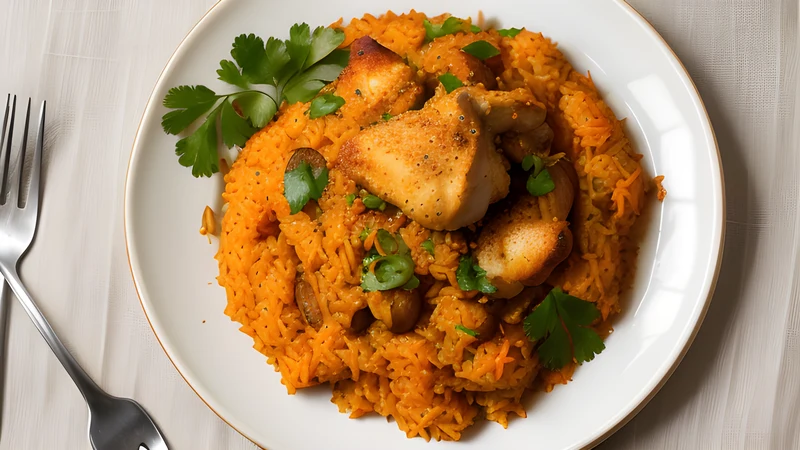
↓ Jump to recipeTehari is Dhaka’s answer to the same question biryani asks — how do you cook rice and meat together so both come out right — but it takes a different route to get there. Where a formal biryani layers par-cooked rice over a fully cooked meat curry and seals the pot to finish both together in trapped steam, tehari cooks the beef and rice in the same liquid from a much earlier stage, colours everything a distinct pale yellow with turmeric, and relies on pungent mustard oil rather than ghee for its defining flavour.
Beef Tehari: Dhaka's Mustard Oil Rice
Ingredients
- 600g beef shin or chuck, bone-in if possible, cut into 2cm cubes
- 400g aromatic rice (kalijira or basmati), washed and soaked 20 minutes
- 5 tbsp mustard oil
- 2 onions, thinly sliced
- 6 garlic cloves, crushed
- 3cm ginger, grated
- 3 green chillies, slit
- 1 tsp turmeric
- 1 tsp red chilli powder
- 1 tsp cumin seed
- 4 green cardamom pods
- 4 cloves
- 1 cinnamon stick
- 1 bay leaf
- 2 tbsp plain yoghurt
- 1/2 tsp ground nutmeg
- 1/4 tsp ground mace
- 600ml hot water or beef stock
- salt to taste
- crispy fried onions to serve
Method
- Heat the mustard oil in a heavy pot until it just begins to smoke, then let it cool for a minute — this takes the raw pungency off the oil before you cook with it.
- Add the whole spices (cardamom, cloves, cinnamon, bay leaf) and cumin seed, let them sizzle 30 seconds, then add the sliced onions and cook 10 minutes until golden.
- Add garlic, ginger and green chillies, cook 2 minutes, then add the beef and brown it hard for 8 minutes.
- Stir in turmeric, chilli powder and salt, then the yoghurt a spoonful at a time. Cook 5 minutes until the oil starts to separate at the edges.
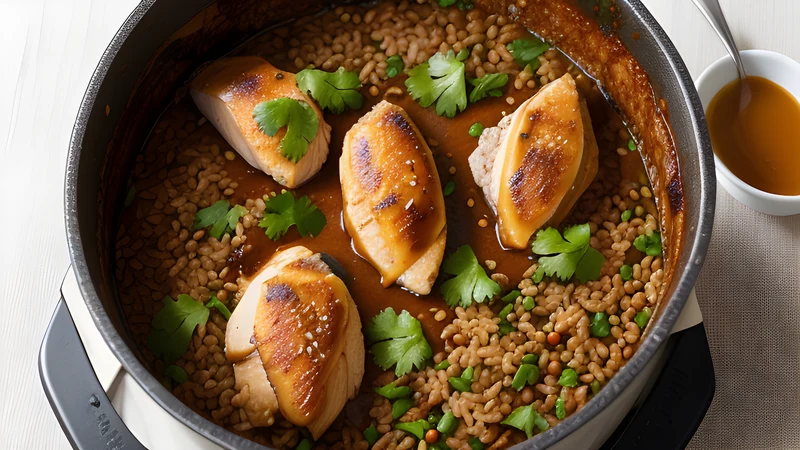
- Add the hot water or stock, bring to a simmer, cover and cook on low heat for 45 minutes, until the beef is tender and the liquid has reduced by about half.
- Drain the soaked rice and stir it into the pot along with the nutmeg and mace. There should be roughly 1.5cm of liquid above the level of the rice; top up with hot water if needed.
- Bring to a simmer, then cover tightly and cook on the lowest possible heat for 20 minutes without lifting the lid. Turn off the heat and rest a further 10 minutes before fluffing.
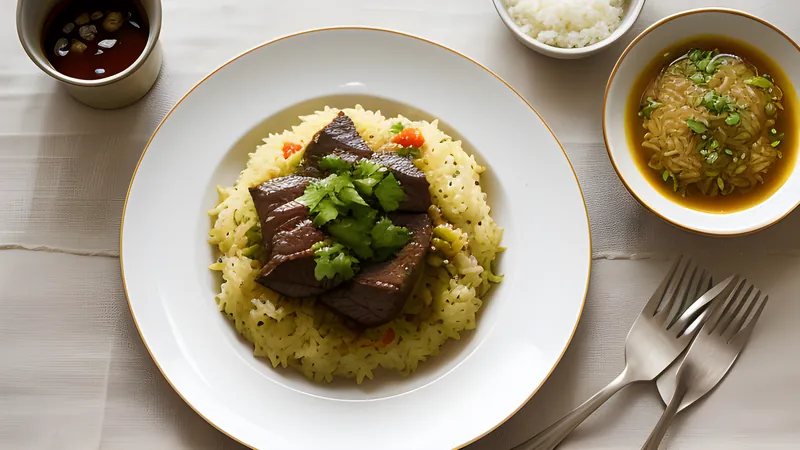
- Serve scattered with crispy fried onions.
A working-class Dhaka dish
Tehari has a reputation in Dhaka as more of an everyday, working-class dish than the more elaborate, layered biryanis served at weddings and formal occasions — it’s the rice sold from street carts and roadside eateries across the city, cooked in large pots for a lunchtime crowd rather than prepared as a centrepiece for a celebration. That reputation shows in the technique: tehari is genuinely a one-pot dish, without the separate parboiling of rice, separate reduction of the meat curry, and final assembly-and-seal that a proper dum biryani demands. Everything happens in sequence in a single pot, which is both faster and more forgiving, and part of why it remains the rice dish Dhaka households actually cook on a Tuesday rather than save for special occasions.
The bone-in beef is a deliberate choice specific to tehari rather than an economy measure. Small cubes of bone-in shin or chuck release marrow and collagen into the cooking liquid over the initial simmer, and that liquid is what the rice then cooks in — so the rice itself carries genuine beef flavour rather than simply sitting alongside separately cooked meat, the way rice often does in other pilau-style dishes.
Mustard oil is not optional
Mustard oil’s sharp, faintly bitter pungency is the single ingredient that defines tehari against every other rice-and-meat dish in the region. It needs to be heated until it just smokes and then allowed to cool slightly before you start cooking with it — raw mustard oil is aggressively sharp and slightly acrid, and that brief heating mellows it into something nutty and warm without losing its distinct character entirely. Skipping this step, or substituting a neutral vegetable oil, produces a technically edible pilau, but it won’t taste like tehari; the mustard oil’s particular pungency is doing structural work in the dish’s flavour, not just contributing background richness the way ghee would.
If mustard oil isn’t available, a mix of vegetable oil with a small amount of prepared English mustard stirred through at the end is a workable approximation, though it’s a genuine compromise rather than an equivalent substitute. Anyone with access to a South Asian grocer should buy proper cold-pressed mustard oil — it keeps for months in a cool cupboard and is worth having on hand for this dish alone.
Turmeric and the tehari colour
Tehari’s pale, even yellow — distinct from the deeper saffron-orange of a formal biryani — comes from turmeric stirred into the meat base before the rice goes in, rather than saffron strands steeped in warm milk and drizzled over the top in patches the way a layered biryani is finished. That’s a meaningful difference in both technique and result: tehari’s colour is uniform throughout the dish because it’s mixed in from the start, while biryani deliberately shows patches of plain white rice next to deep orange rice as a mark of the dum-cooking method. Getting the quantity of turmeric right matters more than it might seem — too much turns the rice a flat, chalky yellow with a slightly bitter edge, while the right amount gives a warm, appetising gold that still lets the beef and mustard oil come through as the dominant flavours.
Nutmeg and mace, the quiet finish
The small quantities of ground nutmeg and mace stirred in alongside the rice are easy to skip and easy to underrate. They don’t register as an identifiable flavour the way the mustard oil or turmeric do, but they round off the whole dish with a warm, faintly sweet background note that keeps the mustard oil’s sharpness from feeling one-dimensional. Bengali home cooks are precise about using both rather than either — nutmeg alone reads slightly medicinal in this quantity, while mace alone can taste thin, and the combination is genuinely more than the sum of its parts. Buy whole nutmeg and grate it fresh if you can; pre-ground nutmeg loses its aromatic oils within a few months on the shelf and tastes noticeably flatter by comparison.
Getting the rice right
The rice-to-liquid ratio at the point the rice goes in is the part of this recipe that rewards attention over exact measurement, since bone-in meat releases variable amounts of liquid depending on the cut and cooking time. You want roughly 1.5cm of liquid sitting above the level of the rice once it’s stirred in — enough that the rice can absorb fully over the 20-minute covered cook without drying out or catching on the bottom, but not so much that you end up with a wet, risotto-like texture at the end. If in doubt, err very slightly on the side of more liquid; you can always cook off excess with the lid removed for the last few minutes, but there’s no fixing rice that’s caught and burned on the base of the pot.
Aromatic short-to-medium grain rice like kalijira, a small-grained rice specific to Bangladesh, is the traditional choice and worth seeking out if you want the most authentic texture — it cooks up softer and stickier than basmati, closer to the texture Dhaka households expect from tehari. Basmati is a fine substitute and more widely available, but keep the soaking and resting times as given, since basmati needs both to cook through fully without turning gluey in this one-pot method.
Beef cut and bone
Shin and chuck are the right cuts here because both carry enough connective tissue to break down properly over the forty-five-minute simmer before the rice goes in, releasing gelatine into the cooking liquid that gives the finished rice a faint richness plain water never could. A leaner cut like rump will cook through fine but won’t contribute the same depth to the rice itself, since it’s the collagen breakdown that’s doing the real work here rather than the meat’s flavour alone. If your butcher can leave a little bone in the cubed shin, take it — a few small bone fragments simmering alongside the meat add noticeably more body to the stock than boneless meat on its own, and Dhaka households cooking tehari at home rarely bother removing every trace of bone before it goes in the pot.
Common mistakes
Lifting the lid during the final 20-minute rice cook is the most common fault — every time you lift it, steam escapes that the rice needs to finish cooking evenly, and you risk ending up with rice that’s cooked at the top of the pot but undercooked and dense near the bottom. Trust the timing and resist checking. The second common mistake is rushing the mustard oil’s initial heating-and-cooling step; oil that’s still too hot when the whole spices go in will scorch them instantly rather than gently releasing their aroma.
Variations
Mutton or goat tehari is at least as common as beef in Dhaka households, cooked with the same method and a similarly long initial simmer given goat’s tougher texture. A chicken version exists too, popular for its shorter cooking time, though it needs bone-in thigh pieces rather than breast to hold up through the process and won’t give the cooking liquid quite the same body a longer-simmered red meat provides. Potato is a frequent addition, cut into large chunks and added alongside the beef during the initial simmer, stretching the dish and giving it a slightly different texture that many families consider just as traditional as the beef-only version.
Serving and pairing
Tehari is usually served on its own, with perhaps a simple cucumber and onion salad and a wedge of lime, rather than the elaborate raita and side dishes that accompany a formal biryani spread. If you want to build a broader Bengali table around it, shorshe ilish shares the same mustard-forward instinct in fish form and makes a genuinely complementary dish rather than a competing one, while khichdi with ghee and crispy onion shows the same one-pot rice logic taken in an entirely vegetarian, lentil-based direction. Crispy fried onions, made by slowly frying thin onion slices in oil until deep golden and draining them on paper, are worth making fresh rather than buying pre-packaged versions — the shop-bought kind are often stale and lose their crunch quickly once scattered over hot rice, while a fresh batch stays audibly crisp through the whole meal.
Storage and make-ahead
Tehari keeps well in the fridge for up to three days and reheats gently with a splash of water to loosen the rice back up, though like most rice dishes it’s best reheated in a covered pan on low heat rather than blasted in a microwave, which tends to dry out the edges before the centre warms through. It freezes reasonably for up to a month, though the texture of the rice softens slightly on thawing, which matters less here than in a formal biryani since tehari’s rice was never meant to have quite the same distinct, separate grain structure to begin with.
Related Content