Beef Empanadas with Olive and Egg
Flaky hand pies with a savoury-sweet filling
Contents
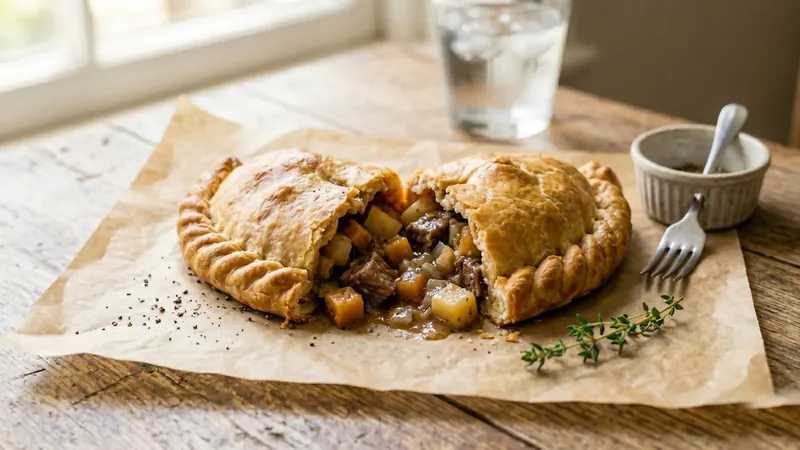
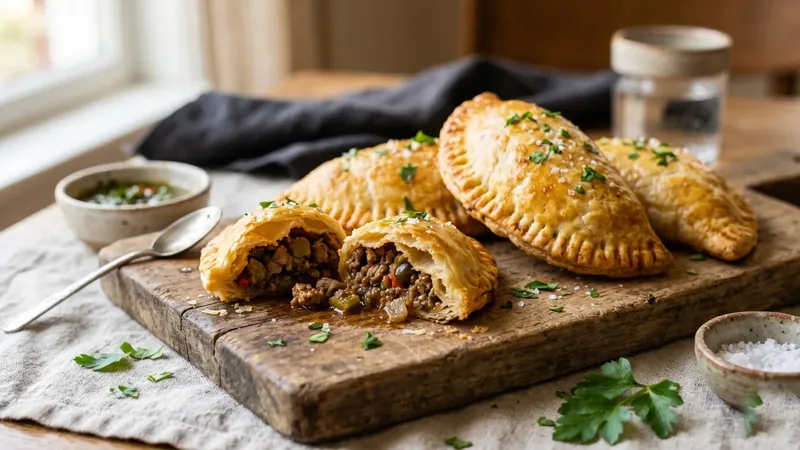
↓ Jump to recipeThese hand pies wrap spiced beef mince in a tender, flaky pastry that shatters at the first bite. The savoury-sweet twist comes from the classic Argentinian flourish of chopped green olives and hard-boiled egg folded through the filling, lending brightness and richness in equal measure. Cumin, paprika and a pinch of chilli keep the beef warm and gently spiced. Serve them straight from the oven, or pack them for a picnic.
Beef Empanadas with Olive and Egg
Ingredients
- 300g plain flour, plus extra for dusting
- 150g cold unsalted butter, diced
- 1 tsp salt
- 1 egg yolk
- 80ml cold water
- 1 tbsp olive oil
- 1 onion, finely chopped
- 300g beef mince
- 1 tsp ground cumin
- 1 tsp sweet paprika
- 1/2 tsp dried chilli flakes
- 8 green olives, chopped
- 2 hard-boiled eggs, chopped
- 1 egg, beaten, to glaze
- Salt and black pepper
Method
- Rub the cold butter into the flour and salt until the mixture resembles breadcrumbs.
- Stir in the egg yolk and cold water, bringing the dough together. Wrap and chill for 30 minutes.
- Heat the olive oil in a pan and soften the onion for 5 minutes.
- Add the beef mince and brown well, breaking it up with a spoon.
- Stir in the cumin, paprika and chilli flakes, season, then cook for a further 2 minutes. Leave to cool completely.
- Fold the chopped olives and hard-boiled egg through the cooled beef.
- Roll out the dough on a floured surface and cut out twelve 12cm circles.
- Spoon filling onto each circle, brush the edges with water, fold over and crimp the edges with a fork or by pleating.
- Arrange on a lined baking tray and brush with beaten egg.
- Bake at 200C (180C fan) for 22-25 minutes until deep golden.
- Cool for 5 minutes before serving warm.
The story
The empanada travelled to Latin America with Spanish and Portuguese settlers, who had themselves inherited the idea of enclosing a filling in pastry from cooks across the Mediterranean and the Middle East; the concept has a documented trail back to the Moorish samosa-like pastries of Al-Andalus, and the first known printed empanada recipe appears in a Catalan cookbook, the Llibre del Coch, in 1520. The name comes from the Spanish verb empanar, to wrap or coat in bread, and the form proved endlessly portable: a complete, self-contained meal that could be carried to the fields, down the mine or onto the road. In the Spanish-speaking Americas the same basic idea splintered into countless regional versions, each shaped by what was abundant nearby.
In Argentina the empanada became something close to a national obsession, with nearly every province claiming its own style. The filling here draws on one of the most recognisable traditions, the empanada salteña from the north-western province of Salta, where beef is seasoned generously and studded with two signature additions: green olives and chopped hard-boiled egg. The olives bring a salty, briny sharpness that cuts through the richness of the meat, while the egg adds a soft, mellow note and a pleasing texture. Salteñas often use hand-cut beef and a little diced potato, and are traditionally sealed with a distinctive rope crimp. It is this combination of savoury, salty and faintly sweet within a single bite that gives the dish its distinctive character.
Argentine cooks debate the finer points endlessly. Should the beef be minced or hand-cut with a knife, which gives a chunkier, more rustic filling? Should the empanadas be baked, as they are here, or fried until blistered and crisp? And the repulgue, the decorative rope-like crimp sealing the edge, is a craft in its own right, with different patterns traditionally used to signal which filling lies inside, so a cook can tell a beef empanada from a chicken or cheese one without cutting it open.
Why the pastry works, and where it goes wrong
The twist in this version lies less in the filling, which honours the classic, than in the pastry. A proper buttery shortcrust, rested well and rolled thin, bakes up flaky and golden rather than the sturdier, sometimes lard-based masa used for empanadas that must survive deep-frying. Two things make or break it, and both come down to keeping butter cold and solid until the oven does its work. Letting the dough rest in the fridge for at least 30 minutes relaxes the gluten, so the pastry rolls without springing back and bakes without shrinking, and it keeps the butter firm; those little pockets of cold butter release steam in the heat of the oven, and that steam is what pushes the layers apart into flakes. Overwork the dough or let it warm up and you smear the butter into the flour, and the result bakes dense and tough rather than short and tender.
Cooling the filling fully before assembly is just as important. A warm filling starts melting the butter in the pastry before the empanadas even reach the oven, and the crisp, layered finish is lost; worse, warm filling releases steam that makes the base soggy and prone to bursting at the seam. Take the time to cool it completely, chill it if you are in a hurry, and only then fill and seal. Brush the edges with a little water, fold, and press firmly with a fork or crimp by hand so no filling escapes to scorch on the tray. If you enjoy this kind of buttery, hands-on dough work, it has a lot in common with rolling out olive oil and fennel seed grissini; and if you want another generously spiced beef supper, the beef stroganoff makes a fine counterpoint on the same table.
Substitutions, storage and make-ahead
Short on time, ready-rolled shortcrust pastry works perfectly well; just cut your circles and proceed from the filling stage. Swap the beef mince for chicken thigh, mince, or a mixture of squash and black beans for a vegetarian version, keeping the cumin, paprika and chilli that give the filling its warmth. Not a fan of olives, use capers for a similar salty punch, or leave them out and lean harder on the egg. A pinch of ground cinnamon or a handful of raisins is traditional in some regions and tips the filling further towards the savoury-sweet.
These are an excellent make-ahead. Assemble them, then either chill for a day or freeze raw on a tray before bagging up; bake straight from frozen, adding five minutes to the time. Baked empanadas keep for three days in the fridge and reheat crisp in a hot oven for eight to ten minutes; the microwave will heat them through but sacrifices the flakiness, so use the oven if you can. They are as good warm from the tray as they are packed cold for a picnic or a lunchbox, which is exactly the portability the empanada was invented for.
Seasoning and cooling the filling
The filling is where flavour is won or lost, so season it while it is hot and taste it before it cools, remembering that a filling wrapped in unseasoned pastry needs to be assertive on its own. Brown the mince properly rather than just cooking it grey: push it into the base of a hot pan and leave it to catch and colour before breaking it up, because that caramelisation is the difference between a rich, savoury filling and a bland one. Once the spices go in, give them a minute or two in the fat to bloom, which deepens the flavour of the cumin and paprika far more than adding them at the end ever could. A splash of stock or a spoonful of the beef’s own juices keeps it moist; a bone-dry filling makes for a disappointing empanada, but a wet one soaks and splits the pastry, so aim for just-moist and no more.
Then comes the discipline that trips up most people in a hurry: cool the filling completely. Spread it out on a plate or tray so it drops to room temperature quickly, then chill it if you can. Cold filling against cold pastry is the whole secret to a crisp, well-sealed empanada, and it is worth building the wait into your plan rather than fighting it.
Shaping and sealing
Aim for twelve neat 12cm circles, re-rolling the offcuts once (twice and the pastry toughens). Spoon a generous tablespoon of filling slightly off-centre, leaving a clear border, and resist the urge to overfill: an overstuffed empanada bursts at the seam and leaks its juices onto the tray, where they burn. Brush the border lightly with water, fold the pastry over into a half-moon, press out any trapped air, and seal firmly. A fork gives the quickest reliable seal; the traditional repulgue rope crimp takes practice but looks handsome and holds beautifully once you have the knack. Cut a tiny steam vent in the top of each, brush with beaten egg for a deep-golden shine, and bake until the pastry is properly coloured, because pale shortcrust is underbaked shortcrust and tastes of raw flour.
Related Content