Beef Bulgogi with a Pear Marinade
Sweet, savoury and quick-seared
Contents
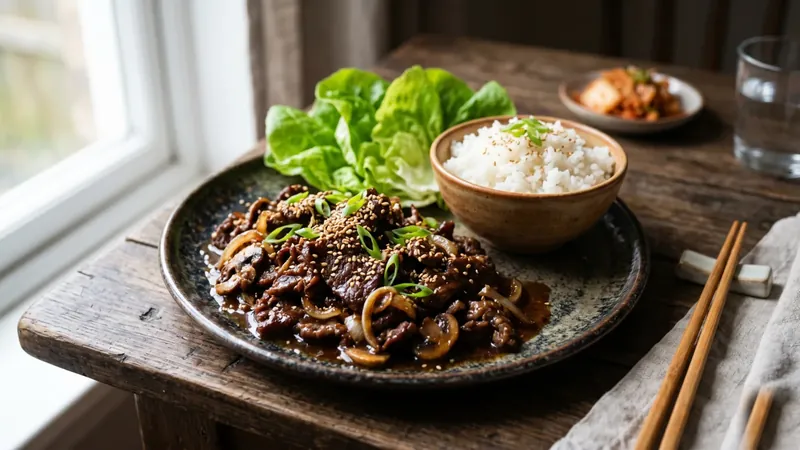
↓ Jump to recipeBulgogi means “fire meat”, and the appeal lies in that fast caramelised char against a sweet-savoury marinade. The twist here is grated pear, a quietly traditional touch that tenderises the beef and lends a clean, fruity sweetness no amount of sugar can match. Thinly sliced and seared hard in batches, the meat turns glossy and deeply flavoured in minutes. Pile it onto rice or wrap it in cool lettuce leaves.
Beef Bulgogi with a Pear Marinade
Ingredients
- 600g beef sirloin or rib-eye, very thinly sliced
- ½ ripe Korean or Conference pear, peeled and grated
- 4 tbsp soy sauce
- 2 tbsp light brown sugar
- 1 tbsp toasted sesame oil
- 4 garlic cloves, finely grated
- 1 tbsp grated fresh ginger
- 3 spring onions, sliced, plus extra to serve
- 1 tbsp mirin
- ½ tsp ground black pepper
- 1 tbsp neutral oil, for cooking
- 1 tbsp toasted sesame seeds
- Steamed rice, to serve
- Lettuce leaves, to serve
Method
- If the beef is not pre-sliced, firm it in the freezer for 30 minutes, then slice as thinly as possible across the grain.
- In a bowl, mix the grated pear, soy sauce, brown sugar, sesame oil, garlic, ginger, spring onions, mirin and black pepper.
- Add the beef and turn to coat. Cover and marinate for at least 30 minutes, or up to 4 hours in the fridge.
- Heat a large frying pan or wok over a high heat until almost smoking, then add the neutral oil.
- Lift the beef from the marinade, letting excess drip away, and add to the pan in a single layer, working in batches so it sears rather than stews.
- Cook each batch for 2-3 minutes, turning once, until caramelised at the edges and just cooked through.
- Return all the beef to the pan, pour in any remaining marinade and let it bubble and glaze the meat for 1 minute.
- Scatter with sesame seeds and extra spring onion and serve with steamed rice and lettuce leaves for wrapping.
The story
Bulgogi is one of Korea’s best-loved dishes, a marinated, grilled beef with a long lineage in Korean cooking. Its ancestor is usually traced to maekjeok, a skewered, seasoned meat associated with the Goguryeo kingdom of the early Korean peninsula, which over time evolved into the thinly sliced, sweet-savoury bulgogi recognised today. The name itself is plain and evocative: bul meaning fire and gogi meaning meat, a reminder that this began as something cooked quickly over flame rather than the pan-seared weeknight version most of us make at home. In Korea it is often grilled at the table over a charcoal or gas brazier, the smoke and char part of the whole experience.
The marinade is where the character lives. Soy sauce supplies salt and depth, toasted sesame oil brings its unmistakable aroma, and garlic and ginger lend warmth; a splash of mirin rounds the edges. Sugar adds the gentle sweetness that helps the meat caramelise, but it is the pear doing the quiet heavy lifting. The thinness of the cut is just as essential: bulgogi is meant to be tender almost to the point of collapse, which is why home cooks firm the beef in the freezer for half an hour to slice it wafer-thin, and always cut across the grain to shorten the muscle fibres.
The grated pear is the detail that elevates the whole thing, and it is no modern gimmick but a traditional Korean technique. Asian pear is used in Korean kitchens to tenderise beef because it contains actinidin and related enzymes that gently break down the proteins in the meat, leaving it softer and more succulent. Those same enzymes are why you should not marinate for longer than about four hours: leave the beef overnight in a pear-heavy marinade and the surface turns mushy and grainy rather than tender. The pear also carries a delicate, almost floral sweetness that feels cleaner than sugar alone. A ripe Korean pear is ideal; where one is hard to find, a Conference or other firm dessert pear stands in well, and kiwi or grated onion will do the same enzymatic work in a pinch.
Getting the sear right
Cooking bulgogi well is mostly about heat and restraint. A pan that is genuinely hot, close to smoking, and beef added in modest batches will sear and caramelise; an overcrowded pan releases liquid and steams the meat into something grey and sad, the exact opposite of what you want. Lift the beef from the marinade and let the excess drip away before it hits the pan, because too much wet marinade in the pan is the fastest route to steaming. Once each batch is browned, return everything to the pan with the last of the marinade and let it bubble down to a sticky, savoury glaze that clings to the meat. If your marinade has a lot of sugar in it, keep it moving at this stage so it glazes rather than scorches.
This sits alongside the other seared, quick-cook beef dishes worth having in your back pocket: it shares the “hot pan, thin slices, do not overcook” discipline of a beef stroganoff, and makes an interesting contrast with the low-and-slow patience of a beef bourguignon, the same ingredient handled at opposite ends of the heat spectrum.
How to serve it, and make it your own
Traditionally bulgogi is enjoyed in ssam, the Korean practice of wrapping a bite of meat and rice in a lettuce or perilla leaf, often with a smear of ssamjang fermented bean paste and a sliver of raw garlic. That hands-on, build-your-own style suits a relaxed table, and the cool crunch of the lettuce is a perfect foil to the rich, sweet beef. Serve it with steamed short-grain rice and, if you have them, a few simple banchan side dishes such as kimchi or quick-pickled cucumber.
For substitutions, the cut is flexible: sirloin and rib-eye are ideal, but any well-marbled quick-cooking beef works, and thinly sliced pork shoulder makes an excellent dwaeji bulgogi. Add half a teaspoon of gochugaru or a spoonful of gochujang to the marinade for a spicy version. Leftovers keep for two days in the fridge and are excellent stuffed into a rice bowl or folded through fried rice the next day. The marinated raw beef also freezes well for up to two months; defrost overnight in the fridge and sear as above.
Slicing, and where cooks go wrong
The single most common mistake is thick, unevenly cut beef, which never picks up the marinade properly and turns chewy in the pan. Firming the meat in the freezer for 25 to 30 minutes, until it is stiff at the edges but not frozen solid, makes it far easier to slice thinly and cleanly with a sharp knife. Aim for slices around 3mm thick, and cut across the grain rather than along it: the grain is the direction the muscle fibres run, and slicing across them shortens those fibres so the beef bites tender rather than stringy. If your butcher will slice sirloin for shabu-shabu or hotpot, that pre-sliced beef is perfect and saves the fiddly freezer step entirely.
The second mistake is impatience with the pan. A wok or heavy frying pan needs to be properly, almost frighteningly hot before the beef goes in, and it needs room. Too much meat at once drops the temperature and the pan floods with released juices, at which point you are boiling grey beef rather than searing it. Cook in two or three batches, give each a couple of minutes undisturbed to take colour, and only then toss. The reward is the charred, caramelised edges that give bulgogi its name.
Balancing the marinade
A good bulgogi marinade is a balance of salty, sweet, aromatic and savoury, and it is worth tasting and adjusting to your own liking. If it tastes too salty, add a little more grated pear or a teaspoon of sugar; too sweet, and a splash more soy sauce or a squeeze of the marinade’s own reduced juices at the end brings it back. Some cooks add a spoonful of grated onion for extra sweetness and enzymatic tenderising, others a slick of Korean rice syrup for gloss. The version here keeps it clean and classic, letting the pear and the sesame oil lead, but there is plenty of room to make it your own once you understand what each element is doing.
One further point on the marinade’s timing, because it governs the texture as much as the flavour. Thirty minutes is the minimum for the seasonings to penetrate the thin slices, and around two to four hours is the sweet spot, long enough for the pear enzymes to soften the beef without going too far. Push past four hours and those same enzymes keep working on the surface proteins, turning the outside of the meat pasty and grainy rather than tender, so if you need to prepare further ahead, mix the marinade without the pear and grate the pear in during the final hour. If you are cooking for a crowd, marinate the beef in a single flat layer in a shallow dish or a sealed bag rather than a deep bowl, so every slice sits in contact with the mixture and picks up an even coating.
Related Content