Beef Bourguignon with Smoked Bacon and a Whisper of Chocolate
A French classic with extra depth
Contents
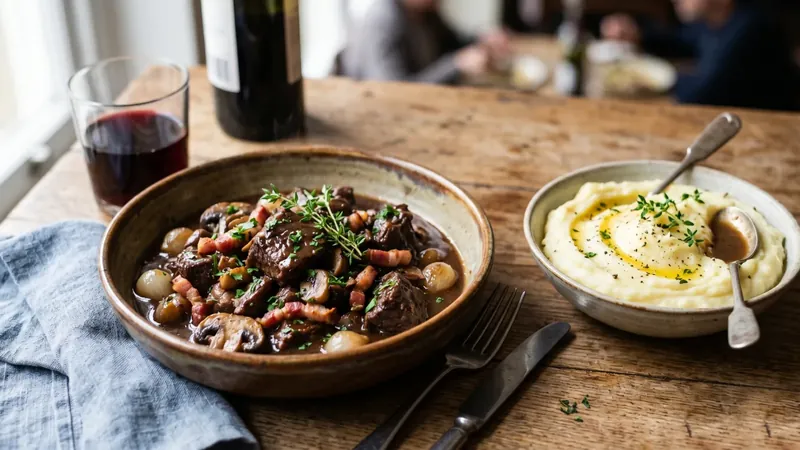
↓ Jump to recipeBeef bourguignon is already a study in depth, but two small additions push it further. Smoked bacon lardons lend a savoury, woody undertone the classic only hints at, while a whisper of dark chocolate, stirred in right at the end, smooths the wine and lends the sauce a glossy richness. Slow-braised until the beef yields to a spoon, it is a stew worth the long, unhurried afternoon.
Beef Bourguignon with Smoked Bacon and a Whisper of Chocolate
Ingredients
- 1.3kg beef shin or chuck, cut into large chunks
- 3 tbsp plain flour
- 3 tbsp olive oil
- 200g smoked bacon lardons
- 2 onions, chopped
- 3 carrots, cut into chunks
- 3 garlic cloves, crushed
- 2 tbsp tomato purée
- 750ml red wine (a Burgundy or other pinot noir)
- 400ml beef stock
- 2 bay leaves
- 3 sprigs fresh thyme
- 15g dark chocolate (70% cocoa)
- 300g button mushrooms
- 250g shallots, peeled and left whole
- Salt and black pepper, to taste
- Chopped parsley, to serve
Method
- Toss the beef with the flour and a good pinch of salt and pepper. Heat the oven to 150C (130C fan).
- Heat 1 tbsp oil in a large casserole and fry the smoked bacon lardons until crisp and golden, then set aside.
- Add more oil and brown the floured beef in batches until well coloured all over, then set aside with the bacon.
- Add the onions and carrots to the pot and cook for 8 minutes, then stir in the garlic and tomato purée for 1 minute.
- Pour in the red wine, scraping up the sticky bits from the base, and let it bubble for 3 minutes.
- Return the beef and bacon to the pot with the stock, bay leaves and thyme. Bring to a simmer.
- Cover and transfer to the oven for 2 hours and 30 minutes, until the beef is very tender.
- Meanwhile, fry the mushrooms and whole shallots in a little oil until golden, then stir them into the stew for the final 30 minutes.
- Stir in the dark chocolate until melted, then taste and season. Discard the bay and thyme stalks.
- Rest for 10 minutes, scatter with parsley, and serve with mash or crusty bread.
The story
Beef bourguignon, or boeuf à la bourguignonne, takes its name from Burgundy, the eastern French region as famous for its cattle as for its wine. The dish is the very definition of a regional speciality made from local ingredients: beef from the Charolais herds that graze the area, braised slowly in the red wine the region is celebrated for. Like so many great stews, it began as humble, rustic cooking, a way to render tough, cheap cuts tender through long, gentle braising, the kind of dish a farmhouse kitchen could leave over low heat while everyone got on with the day.
Over time it rose from country kitchens to the heights of French cuisine, codified by Auguste Escoffier in his 1903 Guide Culinaire as one of the cornerstone dishes of the classical repertoire. It became known to English-speaking home cooks above all through Julia Child, whose 1961 Mastering the Art of French Cooking set out to demystify French food and presented bourguignon, in her words, as “certainly one of the most delicious beef dishes concocted by man”. Her version fixed the template most of us cook to now: the dish that proved patient technique mattered more than fuss. The classic garnish is a trio of bacon lardons, button mushrooms and small glazed onions, added towards the end so they keep their character rather than dissolving into the braise.
That traditional garnish is exactly why the smoked bacon here feels like an enhancement rather than a departure. Bourguignon has always carried pork in the form of lardons; choosing a smoked variety simply deepens the savoury, faintly woody note already present, and lends the sauce a backbone the unsmoked version only gestures at. The chocolate is the more playful touch, but it follows a logic cooks across southern Europe know well, most famously in a Catalan or Italian civet of hare or wild boar, where a little dark chocolate finishes a rich game stew. A tiny amount, no more than 15g, rounds the sharpness of the wine and adds body and gloss without ever reading as sweet. Stir it in off the boil and let it melt through; any more than a small square and it tips into pudding.
Why the technique works
A few principles separate a good bourguignon from a great one, and each has a reason behind it. Use a cut with plenty of connective tissue, such as shin or chuck, since lean cuts dry out and turn stringy over long cooking while these convert their collagen to gelatine, which is what gives the finished sauce its silk and the meat its yielding, spoonable tenderness. Dry the beef thoroughly on kitchen paper before it hits the pan; a wet surface steams instead of browning. Brown the meat properly and in batches, because a crowded pan drops in temperature and the beef stews grey rather than developing the caramelised Maillard crust that underpins the whole dish. And use a wine you would happily drink, since the sauce is essentially reduced wine and a thin, harsh bottle only concentrates as it cooks; a pinot noir or other Burgundy is traditional, but any medium-bodied dry red will do.
The low, slow oven at 150C matters too. A hard boil on the hob agitates the meat and can toughen it before the collagen has time to break down; the gentle, even heat of the oven surrounds the pot and holds it at a bare simmer, which is exactly what a long braise wants. If you love this style of patient, wine-dark braise, it shares its whole philosophy with a beef stroganoff built for speed at the opposite extreme, and pairs beautifully with the buttery, custardy comfort of a quiche Lorraine if you are feeding people across a long, lazy French lunch.
Substitutions, storage and make-ahead
No Burgundy to hand? Any dry, medium-bodied red works, and a splash of port or a spoonful of redcurrant jelly can stand in for the rounding effect of the chocolate if you would rather leave it out. Swap the button mushrooms for chestnut or a handful of dried porcini soaked in warm water, adding the strained soaking liquid to the pot for extra depth. For a lighter finish, use pancetta in place of the smoked bacon lardons.
Above all, give it time, and ideally give it a day. This is a stew that genuinely improves overnight: cool it, chill it, and the flavours settle and deepen while any fat rises and sets on top for easy removal. Reheat gently on the hob or in a low oven until piping hot. It keeps for three to four days in the fridge and freezes well for up to three months, which makes a double batch one of the smartest things you can do with a free weekend afternoon. Serve with buttery mash, plain boiled potatoes, or crusty bread to mop the sauce, and a glass of whatever red went into the pot.
The garnish, and why it goes in late
The trio of bacon, mushrooms and glazed onions is not just decoration; it is the textural counterpoint to a long, soft braise. Add them at the start and they dissolve, giving up their character to the sauce and leaving nothing to bite on. That is why the mushrooms and whole shallots go in for only the final half hour: long enough to take on the flavour of the sauce and glaze in it, short enough to keep their shape and a little resistance. Fry them separately first, in a hot pan with a little oil, until they are genuinely golden. Mushrooms in particular need a hot pan and room to breathe; crowd them and they steam and go grey, exactly as they would in a stroganoff. Getting real colour on them before they join the pot adds a savoury depth that a stew simmered all-in-one never quite reaches.
The whole small shallots, or button onions, are traditional and worth the peeling. Blanch them briefly in boiling water first and the skins slip off easily; then brown them whole so they caramelise on the outside while staying sweet and intact within. If you cannot face peeling a bag of tiny onions, halved shallots do the job with less fuss.
Thickening, seasoning and finishing
The flour tossed with the beef at the start does most of the thickening, dispersing evenly as the braise cooks so you avoid the raw, pasty taste of flour stirred in late. If the finished sauce is thinner than you like, lift the meat and vegetables out with a slotted spoon and reduce the liquid over a brisk heat until it coats the back of a spoon, then return everything to the pot. If it is too thick, loosen it with a splash of hot stock. Season only at the very end, after the sauce has reduced and concentrated and the salty bacon has done its work, because a stew that tastes perfectly seasoned early will taste over-salted once it has reduced. Discard the bay leaves and thyme stalks, stir the chocolate through off the boil, rest the pot for ten minutes so the sauce settles, and scatter with parsley just before it reaches the table.
Related Content