Basler Läckerli: The Spiced Honey Biscuit of Basel
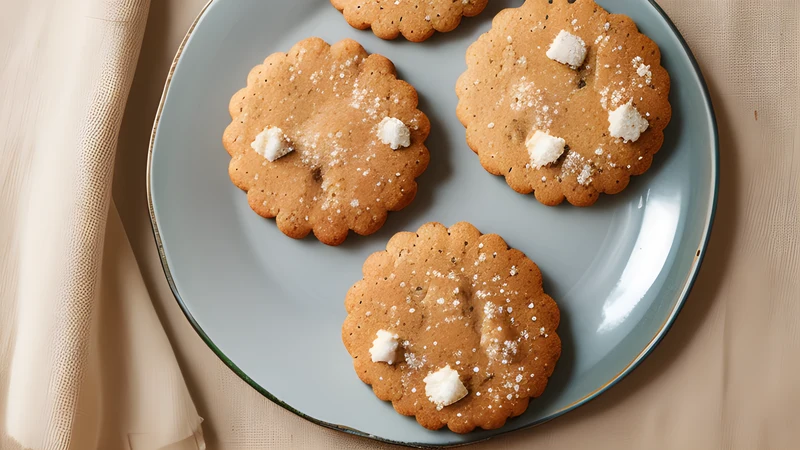
A honey-and-kirsch slab, baked in one sheet, glazed hot and cut into rectangles
Contents
↓ Jump to recipeA Läckerli is a biscuit with no butter and no eggs in it, which today sounds like a dietary decision and in 1400 was simply what a biscuit was. Honey, flour, spice, nuts and peel. The fat comes from the almonds; the tenderness comes from the honey; the keeping comes from both.
Basel has been making them since at least the fifteenth century, and the reason is trade. Basel sits on the Rhine at the point where the river turns north, at a junction of routes running from Italy over the Gotthard, from Burgundy, and down towards the Low Countries. It was a Council city — the Council of Basel sat from 1431 to 1449 and brought half of Christendom’s clergy and their money into town — and it had a university from 1460 and a spice trade that gave its bakers access to cinnamon, cloves and nutmeg at a time when most of Europe did not have them.
The Läckerli is what that access looks like on a plate. The Läckerli-Zunft, a guild of Basel spice bakers, is documented in the fifteenth century, and their product was designed as a luxury that could sit in a merchant’s saddlebag for a month. That is the same commercial thinking that made the Engadine’s walnut tart travel and that put Linz’s tart into the post.
Basler Läckerli: The Spiced Honey Biscuit of Basel
Ingredients
- 250g runny honey
- 150g caster sugar
- 60ml water
- 400g plain flour
- 1 tsp ground cinnamon
- 1/2 tsp ground cloves
- 1/2 tsp ground nutmeg
- 1/4 tsp ground star anise
- 1/2 tsp fine salt
- 1 tsp baking powder
- 1/2 tsp bicarbonate of soda
- 150g whole blanched almonds, roughly chopped
- 100g candied orange peel, finely diced
- 50g candied lemon peel, finely diced
- 3 tbsp kirsch
- Finely grated zest of 1 lemon
- 100g icing sugar, for the glaze
- 2 tbsp kirsch, for the glaze
- 1 tbsp water, for the glaze
Method
- Warm the honey, caster sugar and water in a pan over a low heat, stirring until the sugar dissolves and the mixture reaches 60C. Do not boil.
- Whisk the flour, cinnamon, cloves, nutmeg, star anise, salt, baking powder and bicarbonate of soda together in a large bowl.
- Pour the warm honey syrup into the dry ingredients and stir with a wooden spoon until it forms a stiff, sticky mass.
- Work in the chopped almonds, both candied peels, 3 tbsp kirsch and the lemon zest until evenly distributed. The dough will be heavy and difficult; use your hands once it cools enough.
- Press the dough onto a lined 30 x 40cm baking tray, using a wetted palette knife or a sheet of clingfilm to spread it to an even 1cm thickness right into the corners.
- Rest the sheet uncovered at room temperature for 8 hours or overnight.
- Bake at 180C fan for 22-25 minutes until the surface is firm, dry and evenly deep golden brown.
- Immediately whisk the icing sugar, 2 tbsp kirsch and 1 tbsp water into a thin glaze and brush it over the whole sheet while it is still in the tin and still very hot.
- Leave for exactly 5 minutes, then cut the sheet into 4 x 5cm rectangles with a large sharp knife while still warm.
- Cool completely in the tin, then separate and store in an airtight tin for at least 3 days before eating.
Läckerli, Lebkuchen and the family it belongs to
The Läckerli is a member of a large and old European family: the honey-and-spice cake, cousin to German Lebkuchen, Dutch taai-taai, Italian panforte and English gingerbread. They all share a structure — honey rather than butter, a flour dough with no fat rubbed in, spice in quantity, and a long rest before baking — and they all descend from the same medieval convergence of monastic beekeeping and the spice routes.
Nuremberg has the most famous version, protected by geographical indication since 1996. Siena’s panforte is nearly identical in concept and dates to the same period. What distinguishes Basel’s is the kirsch, the high proportion of candied peel, and the fact that it is baked as a single sheet and cut afterwards rather than shaped individually.
The name is the fun part. Läckerli comes from the Alemannic lecken, to lick, and the diminutive — the little lickable thing. It is closely related to the German lecker, meaning tasty. The Basel dialect spelling with the umlaut and the double consonant is defended fiercely; there is also an Appenzeller Biberli and a Zurich Läckerli and Basel considers both to be impostors.
There is also an urban legend, repeated on tourist websites, that the Läckerli was invented for the Council of Basel by an Italian baker. There is no evidence for it. What is documented is that the guild existed, that Basel had the spice, and that the biscuit was well established by the time anyone thought to write it down.
Kirsch is the local signature and it belongs. Basel-Landschaft is cherry country — the surrounding hills grow the Chriesi that go into Baselbieter Kirsch, one of Switzerland’s protected spirits — and a good kirsch tastes of cherry stone rather than of alcohol, which is precisely the almond-adjacent note this biscuit wants. Use a real one. Supermarket kirsch made from neutral spirit and flavouring will do nothing for you.
Candied peel is worth making, or at least worth buying properly
A quarter of this dough by weight is candied peel and almond, so both need to be good.
The candied peel sold in tubs in British supermarkets is mostly the problem. It tends to be made from whatever citrus was cheapest, boiled hard, saturated in glucose syrup and left with a texture like rubber and a flavour like nothing. In a Christmas cake it disappears under the fruit. Here it is a leading flavour and it will let you down.
Look for whole candied orange and lemon peel sold in halves or quarters, wet-looking and translucent, from an Italian or German deli. It costs several times as much and you dice it yourself. The difference in the finished biscuit is not subtle.
Making it takes three days of doing almost nothing. Take the peel of four unwaxed oranges, cut into strips with as much white pith left on as you like — the pith is where the texture comes from. Blanch it three times from cold water, bringing it to the boil and draining each time, which pulls out the bitterness. Then simmer it very gently in a syrup of 500g sugar to 500ml water for an hour, take the pan off the heat and leave it in the syrup overnight. The next day, bring it back to a bare simmer for twenty minutes, and leave it overnight again. Repeat once more. Each cycle raises the sugar concentration in the peel slowly enough that the cells do not collapse, which is the whole trick — rush it and you get the rubber.
Dice it finely for Läckerli, 3-4mm. Large chunks make the sheet hard to cut and give you biscuits that are all peel in one corner and all almond in the other.
The almonds want chopping rather than slivering. Buy whole blanched almonds and go at them with a knife until the pieces are somewhere between a lentil and a pea. Ready-chopped almonds are dust and small shards, and they vanish into the dough.
No fat, no eggs: how it holds together
Understanding what is happening here explains every step.
Honey is roughly 17% water, 38% fructose and 31% glucose, and both those sugars are hygroscopic — they hold onto water tenaciously. That is the entire preservation mechanism. A Läckerli with no butter to go rancid and no egg to spoil, sitting at a water activity low enough that nothing can grow in it, will keep for months at room temperature.
Warm the honey syrup to about 60C and no further. Hot enough to dissolve the sugar and to hydrate the flour quickly; cool enough that you are not cooking the honey, which destroys its aroma, or starting to caramelise the sugar.
The two raising agents are doing different jobs. Baking powder is double-acting and gives you lift in the oven. Bicarbonate of soda needs an acid, and honey is mildly acidic, so it contributes some lift — but more importantly it raises the dough’s pH, which accelerates Maillard browning. That is why Läckerli and Lebkuchen go so dark so evenly. It also contributes to the faintly soapy, distinctive Lebkuchen flavour, which is either a feature or a defect depending on how much you use. Half a teaspoon is right.
The overnight rest before baking is the step people skip and it is the one that makes the biscuit. Eight hours at room temperature lets the flour hydrate fully in a very low-water dough, lets the honey’s sugars distribute, and lets the spice bloom. A sheet baked immediately after mixing is gritty, dry and one-dimensional. Some traditional Basel recipes rest the dough for weeks in a crock, which is an old Lebkuchen technique.
The glaze and the five minutes after the oven
The Läckerli’s finish is a thin kirsch glaze brushed on while the sheet is still furiously hot in the tin, and the timing is exact.
At that temperature the glaze does two things at once: the alcohol and most of the water flash off within seconds, and the sugar left behind fuses onto the surface as a thin dry film rather than sitting on it as icing. Wait until the sheet is warm rather than hot and the glaze stays wet, soaks in and goes tacky. Wait until it is cold and you have iced a biscuit, which is a different and worse thing.
So have the glaze whisked and the brush in your hand before the timer goes. Sheet out of oven, glaze on, thirty seconds of work.
Then cut at five minutes. This is the other exact number. A hot Läckerli sheet is soft and will tear under a knife; a cold one is hard enough to shatter and you will lose a third of the batch to broken corners. At five minutes it slices like fudge. Use a long, heavy, sharp knife, press straight down rather than sawing, and wipe the blade between cuts. Trim the edges first — a 30 x 40cm sheet gives you a clean 40 rectangles at 4 x 5cm and the trimmings are the cook’s reward.
Where it goes wrong
They are rock hard. Overbaked, almost certainly. Twenty-five minutes is a maximum and the sheet keeps firming as it cools, so a tray that looks slightly soft in the centre at 22 minutes is done. They also harden if the sheet was pressed thinner than 1cm.
They are pale and taste raw. Underbaked, or you skipped the bicarbonate of soda and lost the browning.
The glaze slid off. The sheet was too cool. Glaze it in the tin, immediately.
The dough is impossible to spread. It is meant to be difficult. Lay a sheet of clingfilm over it and press with your palms, or use a palette knife dipped in hot water. An offset spatula makes it far easier.
They taste harsh and thin. No rest, or bad kirsch. Both are worth fixing.
They went hard after a week. Store them properly. An airtight tin with a slice of apple in it, replaced every few days, keeps them at exactly the right chew — an old Lebkuchen trick that works because the biscuit’s hygroscopic sugars pull moisture out of the apple.
Give them three days
Like the Nusstorte, a Läckerli is unfinished when it comes out of the oven. Three days in a tin lets the spices integrate and the crumb soften from brittle to chewy, and they are properly good at a fortnight and still fine at two months. Basel bakes them for Christmas markets in October.
For variations: some Basel recipes add 50g of ground hazelnut, and some use a mix of honey and glucose syrup for a softer chew. A tablespoon of cocoa is not traditional and is quite good. If you want to lean into the spice, the natural neighbours are Greece’s honey-soaked Christmas biscuit, which does something similar with a syrup rather than a glaze.
A word on the honey, too. Use something with character — a chestnut or forest honey has the resinous, faintly bitter edge that carries the clove and star anise, while a mild acacia leaves the biscuit tasting mostly of sugar. Swiss bakers reach for a dark mountain honey and it shows. Whatever you use, it must be runny at room temperature; set honey will not dissolve evenly into the syrup and you will find crystalline patches in the finished sheet.
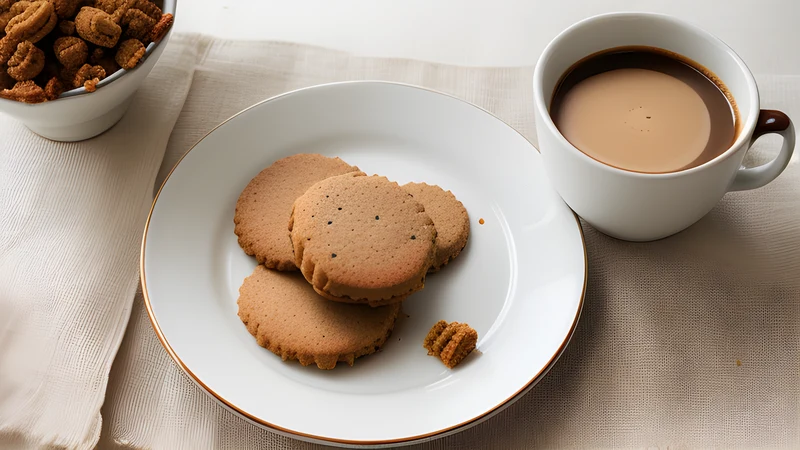
Eat them with black coffee, or with a small glass of the same kirsch. They are 600 years old and they know what they are.
Related Content