Pesto Genovese with a Basil-Mint Blend
Vivid, fresh and fragrant
Contents
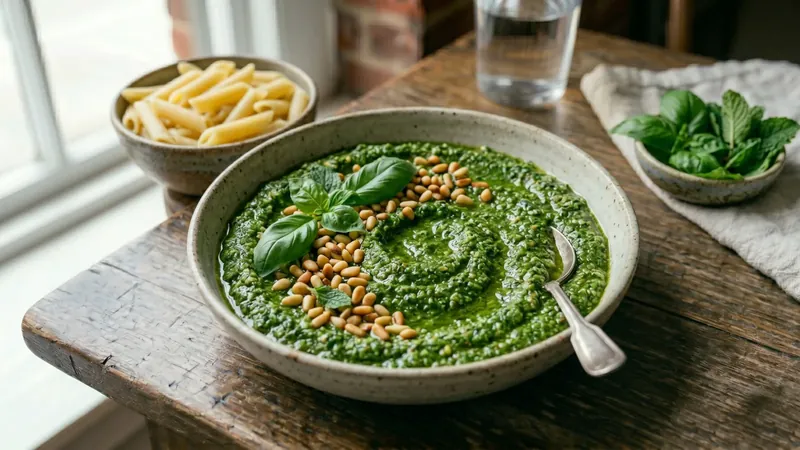
↓ Jump to recipeClassic Genovese pesto is one of the great uncooked sauces, all sweet basil, grassy olive oil and salty cheese pounded into a fragrant paste. The twist here is a small handful of fresh mint blended in with the basil, which adds a cool, lifted note that makes the whole sauce taste even greener, and toasting the pine nuts for a deeper, nuttier backbone. It comes together in minutes and tastes of high summer whatever the season.
Pesto Genovese with a Basil-Mint Blend
Ingredients
- 60 g fresh basil leaves
- 15 g fresh mint leaves
- 40 g pine nuts
- 1 small garlic clove
- 40 g Parmesan, finely grated
- 20 g Pecorino, finely grated
- 120 ml extra-virgin olive oil
- Sea salt, to taste
- Squeeze of lemon (optional)
Method
- Toast the pine nuts in a dry frying pan over a medium heat for 3-4 minutes, shaking often, until pale golden. Tip out and cool.
- Crush the garlic with a pinch of salt to a paste, using a mortar and pestle or the flat of a knife.
- Add the basil and mint leaves and pound or pulse until broken down.
- Work in the cooled pine nuts until you have a coarse green paste.
- Stir in the grated Parmesan and Pecorino.
- Add the olive oil gradually, mixing until loose and glossy. Avoid over-blending, which dulls the colour.
- Season with salt and a tiny squeeze of lemon if it needs lifting.
- Toss through hot pasta with a splash of cooking water, or use as you like. Store under a film of oil in the fridge.
The Story
Pesto takes its name from the Italian verb pestare, meaning to pound or crush, a reminder that the sauce is defined by its method rather than any single ingredient — it shares that root with the pestle you crush it with. It is the signature condiment of Liguria, the crescent of coast in north-west Italy that curls around the port city of Genoa, from which the classic version, pesto alla genovese, takes its full name. The recipe as we know it is younger than its ancient reputation suggests: the first written version appears in Giovanni Battista Ratto’s La Cuciniera Genovese of 1863, though it descends from older pounded-herb sauces going back to the Roman moretum, a paste of garlic, herbs, cheese and oil.
Traditionalists insist on a marble mortar and a wooden pestle, and there is real logic to it. Crushing works the leaves against a rough surface and tears them slowly, releasing their aromatic oils without generating much heat. A food processor’s fast steel blades do the opposite: friction warms the basil and drives the oxidation that turns it bitter and dull, while the leaves bruise rather than break. If you do reach for a machine, keep it quick, pulse rather than run it, and chill the bowl and blade first. In 2007 Genoa even hosted the first World Pesto Championship, contested entirely with marble mortars, which tells you how seriously the city takes the point.
The hero ingredient is basil, and not just any basil. The leaves grown on the Ligurian hillsides are prized for being small, tender and especially sweet, without the sharp, almost minty edge that larger leaves can carry. Whatever basil you use, the goal is the same: a vivid green sauce that smells of summer. The garlic, pine nuts and two cheeses each play a supporting role, the Pecorino bringing a salty tang and the Parmesan a mellow, nutty depth, while good olive oil binds everything into a loose, spoonable paste.
The mint in this version is a gentle liberty rather than a reinvention. Mint and basil are botanical cousins, both members of the Lamiaceae, the aromatic mint family that also includes oregano, sage and rosemary, which is why they sit together so comfortably; a small proportion of mint amplifies the freshness of the basil and adds a clean, cooling lift without ever tasting like a separate ingredient. The cooling sensation itself comes from menthol, the compound in mint that triggers the same cold-sensing nerve receptors as a drop in temperature. The trick is restraint: keep the mint to a quarter or less of the basil so it supports rather than competes. Mint has a long partnership with richer, spiced food too, which is why it turns up in a lamb kofta with mint yoghurt; here it does quieter, greener work.
Toasting the pine nuts is the second small refinement. Raw, they are soft and faintly resinous; warmed in a dry pan until golden, they develop a rounder, more pronounced nuttiness through the Maillard browning reaction, which gives the finished sauce extra depth. Watch them closely, shaking the pan often, because pine nuts are high in oil and tip from pale gold to burnt in moments. A light hand throughout is the real lesson of pesto: overworking it in a blender heats the leaves and turns the bright green dull and khaki, so whether you use a mortar or a machine, work quickly and stop sooner than you think.
Getting the ingredients right
Good pesto is a short list of ingredients, so each one has to pull its weight. The pine nuts are the classic choice and the most expensive; if the price stings, blanched almonds or, in the Sicilian pesto alla trapanese tradition, a handful of them alongside the tomatoes make a fine substitute, and walnuts give a earthier, more rustic result. Buy pine nuts in small quantities and keep them in the freezer, as their high oil content means they turn rancid quickly at room temperature. For the cheese, real Parmigiano-Reggiano and a genuine Pecorino, grated from the block rather than the pre-grated tub, make an audible difference: pre-grated cheese is coated with anti-caking agents that leave the sauce grainy and muted.
The garlic needs a firm hand held over it. A single small, fresh clove is plenty for this quantity; raw garlic only grows more aggressive as it sits, so a pesto that tastes balanced when made can turn harsh by the next day if you were heavy-handed. If you are sensitive to it, blanch the peeled clove in boiling water for thirty seconds first, which knocks back the raw heat while keeping the flavour. Salt the garlic as you crush it, too — the crystals act as an abrasive that helps break it down to a smooth paste and stops it slipping around the mortar. Season the finished sauce cautiously, remembering that both cheeses are already salty, and taste before you reach for more.
What can go wrong
The most common disappointment is a dull, khaki pesto instead of a vivid green one, and it almost always comes down to heat and oxygen. Warm blades, warm leaves and long exposure to air all speed up the oxidation of the chlorophyll. Keep everything cool, work fast, and get the sauce under a film of oil as soon as it is made. Bitterness is the second pitfall, and it usually traces back to over-blended basil, too much raw garlic, or olive oil that is itself bitter and peppery; a milder, fruitier oil suits pesto better than an aggressive, grassy one, which can taste acrid once emulsified. If a batch does turn out sharp, a tiny squeeze of lemon or a pinch of sugar rounds it off, and a spoonful of the cheese or a little more oil softens the edges.
Pesto’s uses stretch far beyond a bowl of pasta. It is wonderful stirred into a minestrone at the last moment, in the Ligurian style, spooned over roasted vegetables or grilled fish, spread thinly through a sandwich, or loosened with a little more oil into a dressing. It also makes a bright, herby dip alongside something crisp and fried, such as a plate of vegetable samosas, and a spoonful swirled through baked eggs cools their heat with a green, fresh note. When tossing it through pasta, never add it to a pan over direct heat; instead combine it with the drained, still-hot pasta and a splash of the starchy cooking water off the stove, which warms it through gently, emulsifies the oil and helps it coat every strand.
Storing and keeping the colour
Pesto is at its most vivid within an hour of making, but it keeps for up to a week in the fridge if you protect it from air, which is what dulls the colour. Press it into a jar or small container, smooth the top and pour a thin film of olive oil over the surface to seal out oxygen, then cover and chill. It also freezes well: spoon it into an ice-cube tray, freeze, then bag the cubes so you can drop one into a sauce or soup whenever you need it. If you are freezing, some cooks leave out the cheese and stir it in fresh after thawing, since the dairy can turn slightly grainy, though for most uses it is a difference you will barely notice. Bring refrigerated pesto back to room temperature and give it a stir before using; straight from the cold it is stiff and its flavour is muted. The reward is a sauce that tastes of the garden and brightens everything it touches.
Related Content