Bandeja Paisa: Antioquia's Loaded Tray
Beans, rice, pork and plantain built into Colombia's biggest plate
Contents
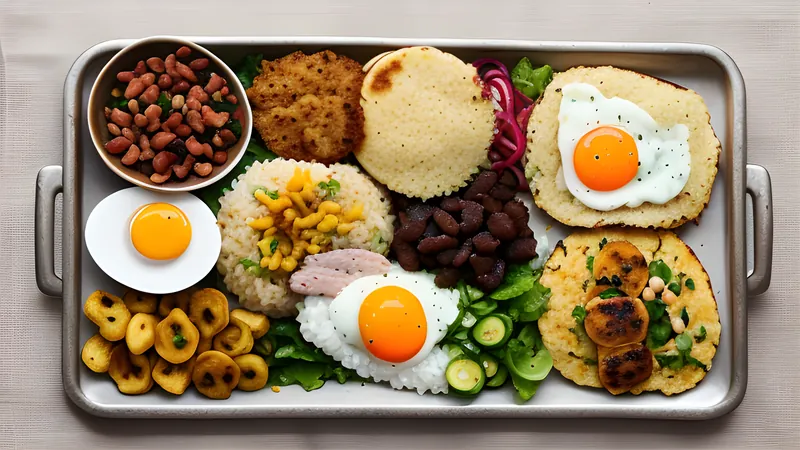
↓ Jump to recipeBandeja paisa is less a single dish than a whole meal arranged on one enormous tray: red beans, rice, ground beef, crisp pork belly, chorizo, fried egg, sweet plantain, a corn arepa and avocado, each kept distinct from the others rather than combined. It comes from Antioquia, the mountainous coffee-growing region around Medellín, where it began as fuel for a hard day’s physical work and has since become the dish most associated with Colombian cooking abroad. One tray is genuinely a full day’s calories in a single sitting.
Bandeja Paisa: Antioquia's Loaded Tray
Ingredients
- 300g dried red beans (or kidney beans), soaked overnight
- 1 pork hock or ham bone (optional, for the beans)
- 300g long-grain white rice
- 3 tbsp vegetable oil, divided
- 1 onion, finely chopped, divided
- 4 garlic cloves, crushed, divided
- 2 tomatoes, chopped, divided
- 1 tsp ground cumin
- 400g pork belly, skin on, cut into 3cm chunks
- 500g beef mince
- 2 chorizo sausages
- 2 ripe plantains, sliced lengthways
- 4 corn arepas (shop-bought or homemade)
- 4 eggs
- 1 avocado, sliced
- Salt and black pepper
Method
- Drain the soaked beans and place in a large pot with the pork hock, if using, and enough fresh water to cover by 5cm. Bring to a simmer and cook for 1-1.5 hours, topping up water as needed, until the beans are completely tender.
- Heat 1 tbsp oil in a pan and soften half the onion for 5 minutes. Add half the garlic and half the chopped tomatoes, and cook for 5 minutes until broken down.
- Stir the tomato mixture into the cooked beans, along with the cumin, and simmer for 15 minutes, mashing a few spoonfuls against the side of the pot to thicken the liquid. Season well.
- Cook the rice according to packet instructions in salted water until fluffy, then set aside covered.
- Season the pork belly chunks with salt and fry in a dry pan over medium-high heat for 15-18 minutes, turning often, until the fat renders and the skin turns deeply crisp. Drain on kitchen paper.
- In a separate pan, heat 1 tbsp oil and soften the remaining onion for 5 minutes. Add the remaining garlic and cook for 1 minute.
- Add the beef mince and brown well, breaking it up, for 8-10 minutes. Stir in the remaining chopped tomato and cook for 5 minutes more. Season well.
- Fry the chorizo sausages in a dry pan for 8-10 minutes, turning, until browned and cooked through.
- Fry the plantain slices in the remaining oil for 3-4 minutes a side until caramelised and soft.
- Warm the arepas on a dry griddle or pan for 2 minutes a side.
- Fry the eggs until the whites are set and the yolks still soft.
- Assemble each tray with rice, beans, ground beef, pork belly, chorizo, plantain, arepa, a fried egg and avocado slices, arranged separately rather than mixed together.
The story
Antioquia’s coffee farmers and muleteers, the arrieros who carried goods over the region’s steep mountain paths on mule trains before roads reached every town, needed food dense enough to sustain hours of physical labour, and bandeja paisa grew out of that need: beans and rice for carbohydrates and protein, pork for fat and calories, and whatever else the farm or the market provided that week added to the tray. “Paisa” refers to people from Antioquia and the wider coffee region, a distinct cultural identity within Colombia with its own accent, its own historical relationship to coffee farming, and its own strong food traditions that bandeja paisa sits at the centre of.
The dish as it’s known today, with its specific combination of components, is largely a 20th-century assembly rather than an ancient recipe, pulling together elements that existed separately in Antioqueño cooking, beans, arepas, chicharrón, into one standardised plate that restaurants could serve consistently. It caught on quickly both as a point of regional pride and as an easy dish for restaurants across Colombia and eventually abroad to represent Antioquia’s cuisine to outsiders, to the point that some paisas now consider the restaurant version, heavier on meat than the working farmer’s plate ever was, a slightly inflated caricature of the original.
What every version agrees on is the principle of separation: nothing on a bandeja paisa is meant to be mixed together into one flavour, the way a stew might combine its ingredients. Each component, the beans, the rice, the meats, the plantain, is cooked and seasoned in its own right and kept distinct on the tray, so a diner builds their own combination bite by bite rather than eating a single, blended dish.
Getting the beans right
The beans carry more of the dish’s character than any other single component, and they reward the same patience a good pot of beans always does. Soaking overnight is worth the planning it requires, since it shortens the cooking time considerably and produces a more evenly tender bean than one cooked from dry without soaking. A ham bone or pork hock added to the pot, if you have one, deepens the broth with a savoury richness that plain water and beans alone can’t match, and it’s worth asking a butcher for one specifically for this purpose if it isn’t something you’d otherwise have to hand.
Mash a few spoonfuls of the cooked beans against the side of the pot once the tomato sofrito goes in; this thickens the liquid into something closer to a light sauce clinging to the whole beans, rather than leaving them swimming in a thin broth. Taste and adjust the seasoning generously at this stage, since the beans are eaten alongside several other rich, well-seasoned components and need to hold their own rather than fade into the background of the tray.
Rendering the pork belly properly
Chicharrón, the crisp pork belly that anchors one corner of the tray, depends entirely on rendering the fat slowly enough that the skin turns properly brittle rather than staying chewy. Starting the pork in a dry pan, no added oil, lets its own fat render out gradually as the heat builds, basting the meat in its own drippings as you turn the pieces regularly. Fifteen to eighteen minutes over medium-high heat, not blasting hot, gives the fat time to render fully before the outside scorches; rushing this with too high a heat crisps the surface while leaving a layer of unrendered fat just beneath it, which is the most common complaint about a disappointing chicharrón.
Drain the finished pieces well on kitchen paper and salt them again while they’re still hot, since salt applied to hot, freshly rendered fat sticks and seasons far more effectively than salt added once the pork has cooled. If you enjoy this kind of hearty, multi-component tray, ajiaco makes an interesting contrast from the same country, built as a single unified soup rather than a tray of separate parts, and arepas are worth mastering on their own if you want to make the accompanying corn cake from scratch rather than buying it ready-made.
Assembling the tray
Presentation is not an afterthought with bandeja paisa; the way the components are arranged, distinct and separate rather than piled together, is part of what defines the dish. Use the largest plate or tray you own and give each element its own clear space: rice in one corner, beans in another, the beef and pork belly given their own patches, the arepa and plantain leaning against the edge, the fried egg sitting on top of the rice, and the avocado fanned out to one side. A tray that looks like a single indistinct pile misses the point of a dish built specifically around variety and choice.
Serve everything hot except the avocado, which should be added last and cool, and bring the tray to the table as soon as it’s assembled; a bandeja paisa that sits around loses the contrast between crisp pork, fluffy rice and a runny egg yolk that makes the first few bites so satisfying.
Feeding a genuine appetite
A full bandeja paisa easily exceeds a thousand calories in a single serving, and that scale is deliberate rather than accidental; the dish was built for people doing physically demanding work all day, and a modern kitchen serving it as an occasional weekend feast should treat the portions with the same generosity rather than trimming them down to something more restrained. That said, few households need to make the full tray every time; splitting the components across two lighter meals, beans and rice one night, the meats and arepa the next, is a practical way to enjoy the same flavours without committing to the entire spread in one sitting.
Balance the tray with something to drink that can stand up to it: Colombians often pair bandeja paisa with a cold beer or a glass of lulada, a tart lulo-fruit drink, both of which cut through the richness of the pork fat and the beans’ hearty starch. Whatever you serve alongside, keep it simple, since the tray itself is already doing the work of a complete meal and doesn’t need much beyond a squeeze of lime over the avocado to finish it properly.
Timing the whole assembly
The trickiest part of bandeja paisa is logistical rather than technical: getting five or six separate components to the table hot and ready within a few minutes of each other. Start the beans first, since they need the longest cooking time by a wide margin, and use that hour to prep everything else, chopping onions and garlic for both the beans and the beef, portioning the pork belly, slicing the plantain. Cook the rice and keep it covered and warm rather than trying to time it to finish at the exact moment everything else does; rice holds its heat well under a lid far better than fried components do.
Fry the pork belly and the chorizo earliest among the hot components, since both hold their crispness reasonably well resting on kitchen paper, then move to the beef mince, and leave the eggs and the final warming of the arepas until the very last few minutes before plating. Working in that order keeps the components that lose quality fastest, the fried egg especially, as close to the moment of serving as possible.
Substitutions, storage and make-ahead
Kidney beans are a reasonable substitute for the smaller red beans traditionally used, though they’ll take slightly longer to soften. A good pork sausage stands in for chorizo if that’s what’s available, and shop-bought arepas, widely sold frozen, are a legitimate shortcut that most paisa households use on a busy weeknight rather than always making their own from scratch. Vegetarian versions exist, swapping the meats for extra plantain, avocado and a fried or scrambled egg, though it’s a genuinely different, lighter meal rather than a true substitute for the original.
The beans and rice both keep well for three days in the fridge and reheat easily, making them worth cooking in a larger batch ahead of a day you plan to serve the full tray. The pork belly and beef mince are best cooked fresh close to serving, since both lose their textural appeal, crisp skin and properly browned mince, once reheated from cold. Plan the beans a day ahead if you can, since a rested pot of beans, left overnight in the fridge, often tastes even better the following day once the flavours have had time to settle.
Related Content