Baleadas: Honduras and the Folded Flour Tortilla
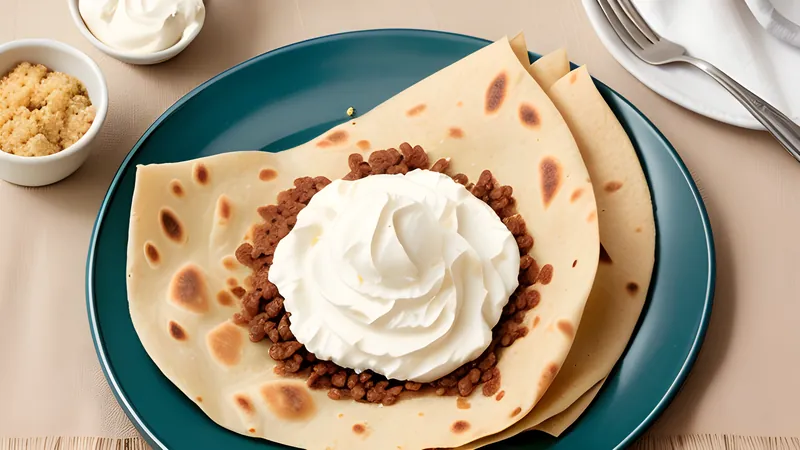
A thick flour tortilla folded around beans and cream
Contents
↓ Jump to recipeA baleada is defined by a fold rather than a roll, and the distinction matters more than it sounds like it should. Roll a thick flour tortilla around a filling the way you would a burrito and the tortilla splits along its length under the pressure; fold it once in half over a flatter spread of beans, cream and cheese, and the thick dough holds together the way it’s meant to. Honduras’s most recognisable street food is built entirely around that one structural decision, and once you understand why the fold works, the rest of the dish is straightforward.
Baleadas: Honduras and the Folded Flour Tortilla
Ingredients
- 500g plain flour
- 1 tsp salt
- 1 tsp baking powder
- 60g lard or vegetable shortening
- 220ml warm water, plus more as needed
- 400g refried beans, warmed
- 150ml Honduran crema or soured cream
- 150g queso fresco or a mild crumbly cheese, crumbled
- For the baleada especial: 2 eggs, scrambled
- 1 avocado, sliced
- 150g cooked chorizo, crumbled
Method
- Mix flour, salt and baking powder in a large bowl, then rub in the lard until the mixture looks like coarse breadcrumbs.
- Gradually add warm water, mixing until a soft, smooth dough forms that isn't sticky, adding more water a tablespoon at a time if needed.
- Knead for 5 minutes until smooth, then rest covered for 15 minutes.
- Divide into 6 balls and roll each into a thin round about 20cm across.
- Cook each tortilla on a dry, hot griddle or comal for 1 to 2 minutes a side until lightly browned in spots and cooked through, but still soft and pliable.
- Keep the cooked tortillas covered with a clean cloth to stay warm and pliable while you cook the rest.
- Spread each warm tortilla with refried beans, then crema, then crumbled cheese, and add scrambled egg, avocado and chorizo for a baleada especial.
- Fold the tortilla in half and serve immediately while everything inside is still warm.
A name that means “shot,” and nobody agrees why
The word “baleada” comes from “bala,” bullet, and every account of how a dish this simple ended up named after gunfire disagrees on the specifics. The most repeated story places the dish’s invention in La Ceiba, on Honduras’s Caribbean coast, sometime in the early-to-mid twentieth century, and credits it to a street vendor generally remembered as Doña Miriam Chinchilla or a similarly named local seller of tortillas and beans. From there the stories diverge: some say the name came from patrons who joked that eating one felt like being hit by a bullet in a good sense, describing how quickly and satisfyingly it filled you up; others say a specific customer, a docker or labourer with a nickname involving gunfire, was the vendor’s regular and lent the food his name; a less flattering version holds that the folded tortilla with its filling visible at the torn edge visually resembled a wound.
None of these accounts comes with strong documentary evidence, and Honduran food writers themselves tend to present the naming story with a shrug rather than certainty, treating it as one of those food-origin tales that’s been repeated long enough to become accepted local lore regardless of whether anyone can prove the specific vendor or customer existed as described. What’s better established is the where and roughly when: La Ceiba and the northern Caribbean coast of Honduras, early-to-mid twentieth century, as a working-class street food built for dockers, market vendors and anyone needing a cheap, filling, portable meal that didn’t require sitting down to eat.
Why flour rather than corn, here specifically
Honduras sits at an interesting point in Central American corn-versus-wheat geography. Much of Mesoamerica further north and further south leans heavily on corn masa for its everyday flatbreads — Mexico’s tortillas, El Salvador’s pupusas — but Honduras, along with parts of northern Mexico, has a strong tradition of wheat flour tortillas as well, generally attributed to earlier and more sustained Spanish colonial wheat cultivation in these specific regions compared with areas where corn remained overwhelmingly dominant. The baleada’s flour tortilla is thicker and a little more elastic than a thin Mexican-style flour tortilla, closer in texture to a soft flatbread, which is precisely what lets it fold rather than tear under a reasonably generous filling.
Sencilla versus especial
The baseline baleada — sencilla, “simple” — is just beans, crema and cheese folded into the warm tortilla, and it’s a completely legitimate meal on its own, especially as a quick breakfast eaten on the way to work, which is how most Hondurans encounter it most days. The baleada especial adds scrambled egg, and often avocado and a meat — chorizo, shredded chicken or fried pork are all common — turning the same basic fold into a heartier, more substantial plate suited to a bigger appetite or a weekend breakfast rather than a quick weekday one. There’s no strict rule for what “especial” must contain beyond egg being close to mandatory; vendors and home cooks build it out from there according to what’s on hand and what a customer’s willing to pay for.
Getting the tortilla thick enough to fold, thin enough to eat
The tortilla dough here uses lard rubbed into the flour before the water goes in, a technique closer to a shortcrust pastry than to a lean bread dough, and it’s what gives the finished tortilla enough tenderness and slight flakiness to fold cleanly rather than cracking along the fold line the way a leaner, purely water-and-flour dough tends to. Roll the dough to about 20cm across and no thinner — thinner rolling gives you a tortilla closer to the Mexican style, which won’t hold the weight of a properly filled baleada without tearing.
Cook the tortilla until it’s browned in spots but still soft rather than crisped through — a baleada tortilla needs to stay pliable enough to fold without cracking even after it’s cooled slightly on the way to the table, and a tortilla cooked too long or over too high a heat will crisp and become brittle exactly where you need it to bend.
Honduran crema versus soured cream
Honduran crema is thinner and slightly tangier than Mexican crema, closer in body to a runny soured cream, and it’s what actually gives a baleada its characteristic sauce-like layer rather than a thick dollop. Standard soured cream, thinned with a splash of milk until it pours rather than spoons, is a reasonable substitute if Honduran or Mexican crema isn’t available locally — the goal is a texture that spreads thinly and evenly across the tortilla rather than sitting in a heavy blob that won’t distribute when folded. Crème fraîche, thinned the same way, also works, though it carries a slightly different, more buttery tang than the cultured cream traditionally used.
Refried beans, and why the texture matters here
The beans in a baleada should be smooth and spreadable, closer to a thick paste than to whole or roughly mashed beans, since a chunkier bean texture doesn’t spread evenly across the tortilla and tends to tear the dough as you try to work it into an even layer before folding. If you’re making refried beans from scratch specifically for baleadas, blend or mash them more thoroughly than you might for a dish where the beans are eaten on their own, and loosen with a little of their own cooking liquid or a splash of water if they’ve thickened up too much on standing to spread easily.
What tends to go wrong
The most common failure is a tortilla that cracks along the fold, which traces back either to rolling it too thin or to cooking it too long past the point of pliability. If your finished tortillas are cracking, next batch roll them slightly thicker and pull them off the griddle a touch earlier, while they’re still soft to the touch rather than crisp at the edges.
The second failure is overfilling. A baleada especial piled with too much egg, avocado, chorizo, beans and cream will split at the fold under its own weight the moment you pick it up — spread each layer thinly and evenly rather than mounding a large quantity in the centre, and if you want a genuinely hearty version, make two baleadas rather than overloading one.
The third is beans and crema added cold, which cools the warm tortilla too fast and makes it noticeably stiffer and harder to fold by the time it reaches the table. Warm the refried beans through before spreading, and don’t let the assembled baleada sit around before folding and serving. A baleada is meant to be eaten within a minute or two of being folded, straight off the griddle and into your hand, and it’s genuinely one of the few dishes where a slight excess of urgency at the table is entirely appropriate rather than a sign of bad manners.
Where baleadas sit on the Honduran table
Baleadas function in Honduran daily life much the way a bacon roll or a breakfast burrito functions elsewhere — an everyday, unglamorous, cheap food eaten quickly and often, rather than a special-occasion dish reserved for holidays or family gatherings. Street stands and small comedores selling little else but baleadas are common across Honduran towns and cities, usually opening early and doing steady trade through the morning, and the dish has travelled with Honduran migration to the United States in much the way pupusas travelled with Salvadoran migration, becoming a recognisable marker of Honduran-American food culture in cities with sizeable Honduran communities, Houston and New Orleans among them.
Storage and make-ahead
The tortilla dough can be made a few hours ahead and kept covered at room temperature, or refrigerated overnight if you want to get ahead for a next-morning breakfast — bring it back to room temperature before rolling, since cold dough is stiffer and harder to roll thin and even. Cooked, unfilled tortillas keep well wrapped in a clean cloth for a few hours and reheat briefly on a dry griddle to soften back up if they’ve firmed up on standing.
Refried beans keep for three to four days refrigerated and reheat easily, which means the filling components can genuinely be prepared ahead even if the tortilla itself is best made and filled close to serving. Assembled, filled baleadas don’t keep or reheat well — the cream and beans make the tortilla soggy on standing — so this is a dish to assemble to order rather than to make in a big batch ahead of time.
Building your own especial
Beyond egg, avocado and chorizo, plenty of other fillings turn up in an especial depending on region and vendor: shredded beef, fried plantain, pickled jalapeños, or a scoop of mashed potato mixed with a little tomato and onion sofrito known as a “tajadas”-adjacent addition in some coastal versions. There’s no single fixed especial recipe to follow slavishly — think of the sencilla as the fixed base that always applies, and the especial additions as a genuinely flexible list built from whatever’s good and available, added in a thin enough layer that the fold still closes cleanly around everything inside.
If you’re building out more of Central America’s everyday griddled and folded staples, our pupusas piece covers El Salvador’s corn-masa answer to the same need for a cheap, filling, handheld meal, and gallo pinto traces the rice-and-beans breakfast that shows up on tables throughout the region right alongside dishes like this one. Taken together, the three dishes make a fair map of how differently three neighbouring countries solve the identical problem of turning corn, wheat and beans into a breakfast someone can eat standing up on the way to work.
Related Content