Baked Eggs with Nduja, Mozzarella, and Basil
A spicy, molten one-pan brunch

Contents
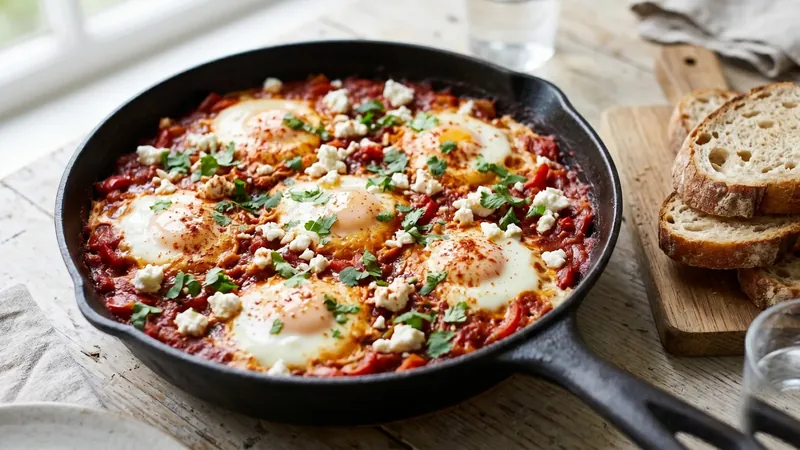
↓ Jump to recipeThere is a particular kind of weekend morning that calls for something more than toast but less than a full sit-down production, and this is the dish I reach for every time. Eggs baked in a spiced tomato sauce are a global comfort, but the version that has earned a permanent place in my kitchen leans hard on one ingredient: nduja, the soft, spreadable, fiercely spicy salami from Calabria. It melts into the sauce like a secret, lending a smoky heat and a deep savoury richness that ordinary chilli flakes simply cannot match. With torn mozzarella going stringy in the heat and basil thrown over at the last second, it is brunch that tastes like far more effort than it is.
Baked Eggs with Nduja, Mozzarella, and Basil
Ingredients
- 1 tbsp olive oil
- 1 small onion, finely chopped
- 2 garlic cloves, thinly sliced
- 400g tin chopped tomatoes
- 60g nduja
- 0.5 tsp dried oregano
- Pinch of caster sugar
- 4 large eggs
- 1 ball (125g) mozzarella, torn
- Salt and black pepper
- Handful of fresh basil leaves
- Crusty bread, to serve
Method
- Heat the olive oil in an ovenproof frying pan over a medium heat and soften the onion for 6 to 7 minutes until translucent.
- Add the garlic and cook for a minute, then stir in half the nduja and break it up so it melts into the oil.
- Pour in the chopped tomatoes, add the oregano and sugar, season, and simmer for 8 to 10 minutes until thickened. Heat the grill or oven to 200C.
- Make four wells in the sauce and crack an egg into each. Dot the remaining nduja around the pan and scatter over the torn mozzarella.
- Transfer to the oven, or slide under the grill, and cook for 6 to 8 minutes until the whites are set but the yolks still run.
- Tear over the basil, grind on plenty of black pepper, and serve straight from the pan with crusty bread.
The Story
Baked eggs belong to a wide and generous family of dishes that stretches across the Mediterranean and the Middle East. The most famous relative is shakshuka, the North African and Levantine breakfast of eggs poached in a cumin-scented pepper and tomato sauce, but Italy has its own tradition of uova in purgatorio, eggs in purgatory, where the flames of chilli give the dish its damnation-themed name. Turkey has menemen; Spain has huevos a la flamenca; the Balkans and the Levant have a dozen more. What they share is a piece of simple wisdom: eggs cooked gently in a well-seasoned sauce, with bread to catch what the spoon misses. If you like the idea but want something cooler and more delicate, the yoghurt-and-chilli-butter route of Turkish eggs, or çılbır, sits at the opposite, calmer end of the same family. This recipe plants its flag firmly in the Italian camp, then turns the heat up with a Calabrian flourish.
That flourish is nduja, and it is worth knowing a little about it. Calabria, the toe of the Italian boot, is a region of rugged hills and an old, frugal cooking tradition, and nduja was born as a way of using the soft, fatty trimmings of the pig. The name is thought to share a root with the French andouille, a legacy of the region’s Napoleonic period. The meat is ground with a generous quantity of the local sweet-hot peperoncino, packed into a casing and aged for weeks or months until it becomes a soft, spreadable paste the colour of glowing embers. Traditionally it hails from the town of Spilinga, on the slopes above the Tyrrhenian coast, which holds a festival in its honour each August. It is one of those ingredients that has quietly conquered restaurant menus over the past decade or so, and once you have a jar in the fridge you will find yourself adding it to pasta, pizza and roast potatoes with abandon.
The trick to using it here is to split it. Half goes into the sauce early, where it dissolves into the oil and seasons the whole dish from within, spreading its smoky warmth evenly through the tomatoes. The other half is dotted on top just before the eggs go into the oven, so it stays in molten little pockets that punctuate each spoonful with a hit of concentrated heat. This way you get both a background warmth and bright bursts of spice, rather than one flat note.
The tomato sauce deserves a moment’s attention, because it is the foundation everything else sits on. Soften the onion slowly and patiently — a good six or seven minutes over a medium heat, not a rushed two — so it turns sweet and translucent rather than catching and going bitter; this quiet sweetness is what balances the fire of the nduja. Give the garlic only a minute, as it scorches fast and turns acrid. The pinch of sugar is not there to make the sauce sweet but to correct the natural acidity of tinned tomatoes, which can taste sharp and tinny; a small amount rounds the edge without anyone tasting sugar. Simmer the sauce until it is genuinely thick and glossy, thick enough that a spoon dragged across the base leaves a brief trail, because a watery sauce cannot cradle the eggs and will run thin on the plate.
Mozzarella is the cooling counterweight. I use a soft ball of fresh mozzarella rather than the firmer grating kind, torn into rough pieces so it slumps and stretches in the heat without weeping too much liquid into the sauce. If you can find it, buffalo mozzarella is even better, richer and more lactic, though it is a touch wetter so tear it small and drain it on kitchen paper first.
A few practical notes from making this far too many times. The single most important moment is judging the eggs. They carry on cooking in the residual heat of the pan, so pull them out while the yolks still look glossy and underdone; by the time you have carried the pan to the table they will be perfect. If you prefer firmer yolks, simply give them another minute or two. Crack each egg into a cup first if you are nervous, then tip it into its well, which saves you fishing out shell at the last minute.
There is a little chemistry worth understanding in that judging. An egg white sets at around 63°C, while the yolk stays fluid until roughly 68 to 70°C, which is why a gently baked egg gives you firm white and a molten centre if you catch it in that narrow window. The wide, shallow pan of sauce holds a lot of stored heat, so the moment the whites turn opaque, the eggs are effectively done; another two or three minutes on the residual heat alone will take a barely set yolk to fully cooked. If your whites are setting too slowly while the yolks race ahead, your sauce was probably too thin or too cool when the eggs went in, so simmer it a little longer and hotter next time before making the wells.
As for variations, this dish is forgiving and fun to play with. A handful of cooked greens such as spinach or cavolo nero wilted into the sauce makes it more of a meal; a spoonful of soft, herby ricotta dolloped on alongside the mozzarella adds a gentle creaminess. A scatter of fresh basil and mint pesto swirled over at the end brings a cool, green counterpoint to the heat. If nduja is hard to find, a soft cooking chorizo crumbled in and given a few minutes to release its paprika oil is a fine stand-in, though you will lose a little of that distinctive Calabrian character. To make it a fuller weekend spread, it sits happily alongside something richer like eggs benedict on sourdough muffins for a table that covers both the fiery and the buttery ends of brunch.
What you should not skip is the bread. Use something with a sturdy, chewy crumb — a good sourdough or ciabatta — and toast or griddle it if you like, so it holds up to the sauce without going to pieces. Half the joy of this dish is the moment you tear off a piece, drag it through the spiced sauce and runny yolk, and decide that toast alone was never going to cut it. Serve it straight from the pan, one spoon each, and let everyone fight over the crispiest edge of nduja.
One last practical note on timing, because this is a dish best cooked to order rather than held. The sauce itself is happy to be made in advance: cook it up to the point just before the eggs go in, cool it and keep it in the fridge for two or three days, then reheat it in the pan until it bubbles before making the wells and cracking in the eggs. What you cannot do is cook the whole thing ahead, because reheated baked eggs turn rubbery and the yolks set hard. If you are feeding more than two, use a wider pan or two pans rather than crowding the eggs, which need a little space in the sauce to set evenly. Scale the nduja to taste too; jars vary a good deal in heat, so start with the quantity here and push it up once you know how fierce your particular one is.
Related Content