Bak Kut Teh: Pork Ribs in Peppered Broth
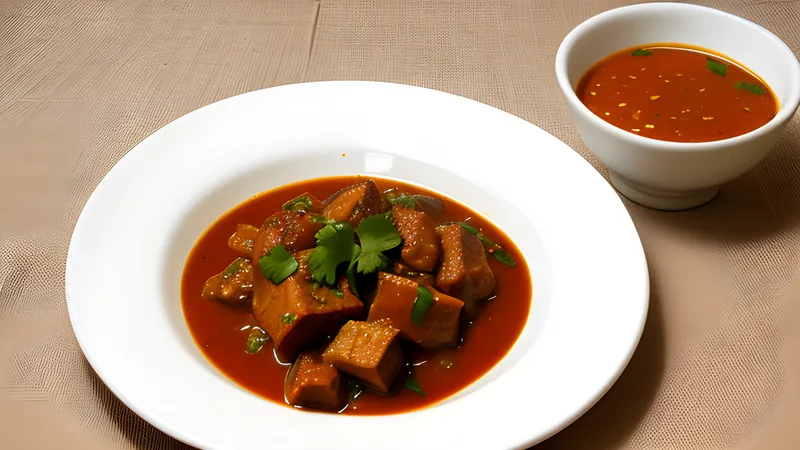
White pepper, whole garlic, and ribs simmered until the broth turns the colour of strong tea
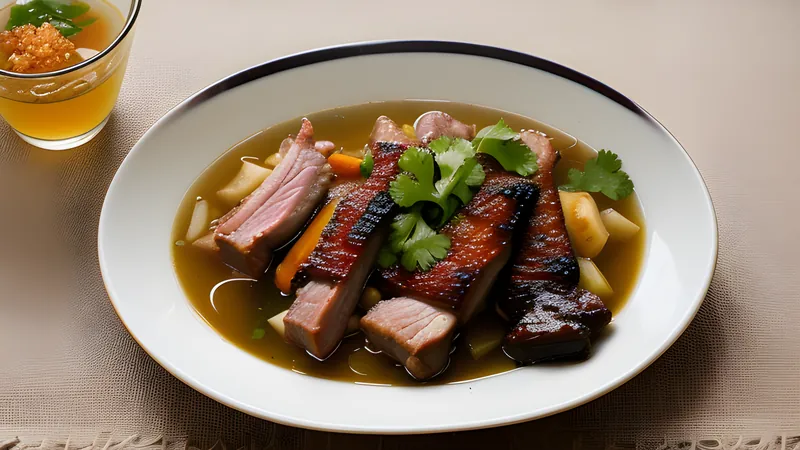
Contents
↓ Jump to recipeBak Kut Teh: Pork Ribs in Peppered Broth
Ingredients
- 1.2kg pork ribs, cut into short lengths
- 1 whole pork knuckle bone or trotter, chopped (ask your butcher)
- 2 whole bulbs garlic, unpeeled, tops sliced off
- 4 tbsp whole white peppercorns, lightly crushed
- 1 tbsp black peppercorns, crushed
- 3 tbsp light soy sauce
- 2 tbsp dark soy sauce
- 1 tsp sugar
- 2.5 litres water
- 200g fried tofu puffs, halved
- 1 head enoki or a handful of shiitake, stems trimmed
- 2 tsp salt, or to taste
- cooked white rice, to serve
- youtiao (Chinese dough sticks), to serve
- sliced red chilli in dark soy, for the table
Method
- Blanch the ribs and pork bone in boiling water for 3 minutes to remove scum, then drain and rinse under cold water.
- Put the ribs and bone into a large pot with the water, both bulbs of garlic, and the crushed white and black peppercorns.
- Bring to the boil, skim any froth, then reduce to a bare simmer and cover. Cook for 1.5 hours.
- Stir in the light soy, dark soy, and sugar. Simmer uncovered for a further 20 minutes so the broth reduces slightly and darkens.
- Add the tofu puffs and mushrooms for the last 10 minutes of cooking.
- Taste and season with salt — the broth should be peppery first, salty second, with a faint sweetness underneath.
- Ladle into bowls with the ribs, tofu puffs and mushrooms. Serve with rice, youtiao for dipping, and chilli in dark soy on the side.
The version that skips the herb cabinet
Say bak kut teh to most people outside Malaysia and Singapore and they picture a murky brown broth thick with dang gui, wolfberries and star anise — the Teochew-influenced style that dominates Singapore’s coffee shops today. This is the other one: the Klang version, named for the port town on Malaysia’s west coast where the dish is said to have originated, and it runs on white pepper instead of a spice cabinet. No star anise, no cinnamon, no dang gui. Just ribs, whole heads of garlic, a genuinely startling amount of crushed white peppercorns, and two hours of patience.
The name means “meat bone tea” — bak (meat), kut (bone), teh (tea) in Hokkien — and the tea part isn’t decorative. Dockworkers in Klang in the early twentieth century, many of them Hokkien migrants doing punishing manual labour at the port, drank thick, dark Chinese tea alongside the broth to cut through the fat and help digestion after a bowl loaded with pork and garlic. The tea habit stuck to the name even after some diners stopped bothering with it. The pairing still shows up on menus as lou cha, served in the same squat handleless cups you’d find at any kopitiam, and a proper Klang breakfast still arrives with a pot of it whether you order tea or not.
The founding myth credits a labourer, sometimes named Lee Boon Teh, who supposedly created the dish to fortify his ailing father, or alternatively fed it to fellow dockhands needing sustained energy for backbreaking shifts unloading cargo along the Klang river. Whichever version you believe, the through-line is consistent: this was working food, built to be cheap, filling, and warming, made from the tougher cuts — ribs, knuckle, sometimes tripe and liver — that a poor immigrant community could afford and had the patience to cook slowly over a low charcoal flame before anyone had a stove that could hold a steady simmer unattended.
Klang versus the Teochew style
The two traditions are often lumped together under one name, and the confusion is understandable since both exist happily in the same city these days. The Teochew style, more common in Singapore, leans on Chinese five-spice components — cinnamon bark, star anise, cloves, dang gui root — steeped for hours to produce a broth that reads more medicinal, closer to a herbal tonic soup than a pepper broth. It’s the version most non-Malaysian diners have actually eaten, since it travelled more readily into Singaporean hawker centres and from there into diaspora restaurants worldwide.
Klang bak kut teh went the opposite direction: fewer ingredients, sharper focus, all the character riding on pepper and garlic rather than a bouquet of dried herbs. Ordering “bak kut teh” in Klang itself and expecting the herbal Singapore style will get you a puzzled look — the peppery broth is simply what the words mean there, full stop. Some Klang stalls also serve a black version, heavier on dark soy for a near-black colour and a more caramelised sweetness, which sits stylistically between the two traditions without belonging fully to either.
Why white pepper carries the whole pot
Black pepper gets sharper and more citrusy as it cooks; white pepper, made from ripe peppercorns soaked to strip the outer skin before drying, has a mustier, more fermented heat that survives a two-hour simmer without turning bitter. That’s the entire reason the Klang style works: crush the peppercorns coarsely rather than grinding them to dust, so they release their oils slowly into the broth instead of dumping all their flavour in the first twenty minutes and then contributing nothing but grit for the rest of the cook. A mortar and pestle, six or seven firm pulses, gets you there. A spice grinder will pulverise them into powder and mute the broth into something flat.
Garlic gets the same restraint. Whole bulbs, unpeeled, just the papery top sliced off to expose the cloves — they simmer for the full two hours and turn soft and mellow, verging on sweet, while the skins keep the cloves from disintegrating into the broth and clouding it. Diners fish the cloves out at the table and squeeze them straight from the skin onto their rice, where they collapse into something closer to a spread than a clove of garlic. Peeled, minced garlic would dissolve into the liquid instead and turn the whole pot cloudy and sharp rather than rounded.
The ribs, and why the bone matters
Ask your butcher for a mix of meaty pork ribs and a chopped knuckle bone or trotter piece — the collagen from the bone is what gives the broth body, a faint stickiness on the lips that a rib-only broth never quite achieves no matter how long you simmer it. Blanching the ribs and bone first, in a full boil for three minutes before rinsing under cold water, removes the grey scum that would otherwise cloud the finished broth and leave a slightly metallic aftertaste behind. Skip this step and the first twenty minutes of the real simmer will throw up a scummy froth that’s much harder to skim cleanly once the peppercorns are already floating through the liquid.
The soy goes in only after the long simmer, in the final half hour — light soy for savoury depth, a smaller amount of dark soy purely for colour, plus a spoonful of sugar to round the pepper’s heat rather than sweeten the broth outright. Add the soy at the start and the extended cooking time will reduce it down to something salty and one-dimensional, losing the layered pepper-garlic backbone the dish takes its name from. Season with salt only at the very end, after tasting — the soy already carries plenty of sodium, and oversalting early is the single easiest way to ruin a pot that’s taken two hours to build.
Serving it properly
A bowl of bak kut teh always comes with plain white rice on the side rather than in the bowl — the broth is meant to be sipped and the rice eaten separately, dunked or drizzled as you go rather than mixed straight in. Youtiao, the long fried dough sticks sold at breakfast stalls across the region, get torn into pieces and dropped into the broth to soak, turning custardy on the inside while the exterior briefly holds its crunch before giving way entirely. If you can’t find fresh youtiao, day-old ones reheated in a dry pan for a couple of minutes work nearly as well as anything sold fresh at 7am from a cart.
Sliced red chilli steeped in dark soy sauce, sitting in a little saucer at the table, is the standard condiment — a spoonful over the ribs adds a clean, uncomplicated heat that doesn’t compete with the pepper already doing the work. Some stalls also offer a garlic-chilli dip on the side, but the dark soy and chilli combination is the one you’ll see at nearly every Klang shopfront, unchanged for decades.
Tofu puffs and mushrooms are common additions rather than strict tradition — enoki brings a mild, almost sweet contrast against the pepper, while shiitake, fresh or reconstituted from dried, adds an earthy note that holds its own. Add them in the final ten minutes of cooking; any longer and the mushrooms turn rubbery while the tofu puffs lose the spongy, absorbent texture that makes them so good at soaking up broth in the first place.
Getting the broth right when it goes wrong
The most common failure is a broth that tastes flat despite two hours on the stove — nine times out of ten this means the peppercorns were ground too fine and burned off their heat early, or the pot boiled too hard instead of holding a bare simmer. A rolling boil breaks down the collagen unevenly and drives off the more volatile pepper oils along with the steam, leaving you with a broth that smells peppery in the kitchen but tastes surprisingly mild in the bowl. Keep the heat low enough that the surface barely trembles, with only the occasional slow bubble breaking through.
The second common problem is a broth that’s too thin and watery despite the long cooking time, usually because the knuckle bone was skipped or because too much water was used relative to the amount of bone and rib. If you can’t get a knuckle bone from your butcher, a couple of chicken feet added alongside the ribs will do a similar job of thickening the broth with collagen, though the flavour leans slightly sweeter than the traditional pork-only version. Reducing the broth by a further ten or fifteen minutes uncovered, after the soy goes in, also helps concentrate a thin batch without needing more bone.
A third fix, less about the broth than the eating of it: don’t skip the garlic. It’s tempting to leave the whole bulbs in the pot purely as flavouring and discard them before serving, treating them the way you might a bouquet garni, but the soft, mellowed cloves are meant to be eaten, squeezed onto the rice or eaten straight with a little of the broth spooned over. A bowl served without its garlic bulbs on the side is missing half the point of the dish.
Variations worth trying
The black version mentioned earlier — heavier on dark soy, verging on a near-black colour with a rounder, slightly caramelised sweetness — is worth trying once you’ve made the standard version a few times and have a feel for the pepper-to-liquid ratio. Simply increase the dark soy by another tablespoon and let the broth reduce for an extra ten minutes uncovered near the end of cooking.
Some households add a length of pig’s tail or a section of pork belly alongside the ribs for extra richness, since the higher fat content renders slowly into the broth over the two-hour simmer and adds a silkiness that lean rib meat alone doesn’t provide. If you go this route, skim the surface fat once at the halfway point and again just before serving, or the broth turns greasy rather than rich.
Make-ahead and storage
Bak kut teh improves overnight — the pepper mellows slightly and the garlic finishes softening fully into the broth. Cool completely, then refrigerate for up to three days in a covered container. Reheat gently on the stovetop rather than in the microwave, which tends to make the pork stringy and tough. It also freezes well for up to two months; freeze the broth and ribs together, but add fresh tofu puffs and mushrooms only after reheating, since both go mushy once frozen and thawed.
If you want to stretch the broth for a second meal, ladle off what remains after the ribs are eaten, strain out the spent garlic skins and peppercorn husks, and simmer a fresh batch of tofu puffs and rice cakes in it the next day. The garlic and pepper will have infused deeply enough by then that the broth barely needs any further adjusting, maybe just a splash more light soy to bring the seasoning back up to strength.
This sits well next to other Malaysian and Singaporean coffee-shop staples: try it alongside hainanese chicken rice for a proper hawker-style spread, or follow it with chai tow kway if you’re building out a full breakfast table rather than a single dish. For a tea to go with the bowl in the old dockworker style, teh tarik is the closest thing to the original pairing you’ll get cooking at home, and it’s worth making the full frothy version rather than just steeping a bag.
Related Content