Baghrir: The Thousand-Hole Semolina Pancake
cooked on one side only, so every bubble stays open
Contents
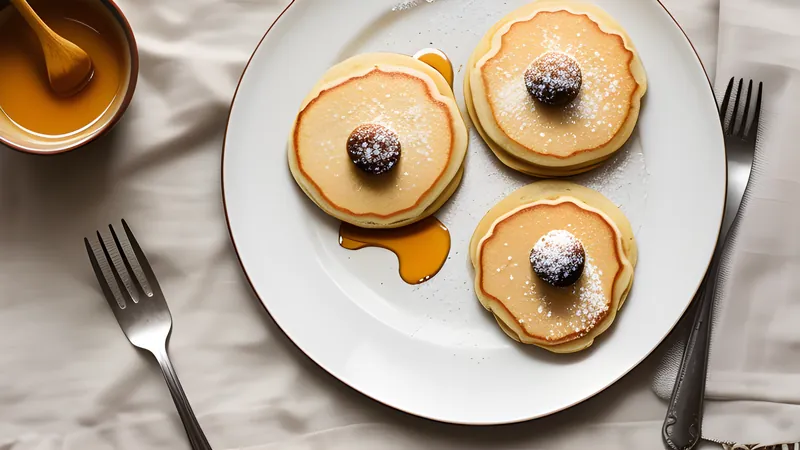
↓ Jump to recipeBaghrir is the pancake that makes people stop and ask how it’s done, because the entire surface of each one is covered in tiny, even holes that look almost engineered rather than cooked. Unlike a Western pancake, which is flipped and cooked on both sides, baghrir is poured once and cooked on one side only, and it’s exactly that restraint — leaving it alone, resisting the urge to flip or press it — that produces the sponge-like structure it’s known for. It sits alongside msemen as the other pillar of a Moroccan breakfast table, and where msemen is dense, flaky and folded, baghrir is soft, spongy and almost custard-like, soaking up honey and melted butter the way a good crumpet soaks up jam.
Baghrir: The Thousand-Hole Semolina Pancake
Ingredients
- 250g fine semolina
- 80g plain flour
- 1 tsp instant yeast
- 1 tsp baking powder
- 1/2 tsp salt
- 1 tsp sugar
- 500ml warm water
- 60g unsalted butter, melted
- 60g clear honey
- 1 tbsp orange blossom water (optional)
Method
- Put the semolina, flour, yeast, baking powder, salt and sugar into a blender or food processor.
- Add the warm water and blend for 2-3 minutes until completely smooth and slightly frothy, with no trace of grittiness.
- Pour the batter into a bowl, cover, and leave in a warm place for 45-60 minutes, until visibly bubbly on the surface and a shade lighter in colour.
- Do not stir the batter after it has risen; ladle it gently from the top so the air bubbles stay intact.
- Heat a non-stick pan over medium heat with no oil; test the heat with a small spoonful of batter, which should set with visible holes within 20-30 seconds.
- Ladle a thin, even layer of batter into the centre of the pan, about the size of a side plate, without spreading it with the back of the spoon.
- Cook undisturbed for 2-3 minutes, until the entire surface is covered in small holes, the batter has fully set, and the edges lift away from the pan cleanly.
- Lift the pancake out onto a clean tea towel without flipping it, and repeat with the remaining batter, stacking the cooked pancakes on the towel and covering loosely as you go.
- Warm the honey, melted butter and orange blossom water together in a small pan until just combined.
- Serve the pancakes warm, drizzled generously with the honey butter, or offer it on the side for guests to pour themselves.
A pancake for the fast-breaking table
Baghrir has a particular association with Ramadan, where it appears constantly on the iftar table at the moment the day’s fast breaks — something soft, quickly digestible and generous with honey after a full day without food or water. Its popularity isn’t limited to Ramadan, though; it’s an everyday breakfast food across Morocco the rest of the year too, sold from carts stacked twenty high and wrapped in paper for people to eat on the walk to work. What keeps it a special-occasion food as much as an everyday one is exactly the theatre of it — the moment of lifting a freshly cooked pancake off the pan and turning it over to reveal a surface completely stippled with holes still gets a reaction at the table even from people who’ve eaten thousands of them.
Why the holes happen
The thousand holes are not a decorative trick; they’re a direct result of the batter’s chemistry and how it’s cooked. Baghrir batter combines both yeast and baking powder, a double-leavening approach that most Western pancake recipes don’t use. The yeast works slowly during the resting period, producing carbon dioxide bubbles that rise gently through the thin batter; the baking powder then gives a faster, more immediate lift once the batter hits the hot pan. Because the pancake is cooked only from below and never flipped, every bubble that forms has to escape upward through the surface rather than being trapped and flattened by a second side of cooking, and as each bubble bursts through the setting batter it leaves behind a tiny open hole. A flipped pancake would seal that structure shut on the second side; baghrir’s whole appeal depends on never doing that.
Blend, don’t whisk
Using a blender rather than a whisk for the batter isn’t just convenience — it’s what gets the semolina fine and hydrated enough to avoid a gritty finished texture. Semolina, even the fine grade, doesn’t dissolve the way flour does; a whisk will leave small ungrated granules suspended in the batter that never fully soften, giving you a slightly sandy bite in the finished pancake. A blender or food processor run for a full two to three minutes breaks the semolina down properly and incorporates air at the same time, which helps the batter along before the yeast even starts working. If you don’t own a blender, a stick blender in a tall jug does the job nearly as well.
The rest matters more than the cook
Give the batter the full forty-five minutes to an hour in a warm spot — near a radiator, in a switched-off oven with the light on, or simply on the counter in a warm kitchen. You’re looking for a batter that has visibly loosened, developed a faint froth of bubbles across the top, and turned a shade paler than when you mixed it. A batter that hasn’t risen enough won’t have the internal bubble structure needed to form holes properly when it hits the pan, and no amount of careful cooking afterwards will make up for a rushed rest.
Once it has risen, treat it gently. Don’t stir the batter back together before ladling — this knocks out exactly the air you spent the last hour building up. Ladle from the top of the bowl in a smooth, steady pour directly into the centre of the pan, and don’t spread it out with the back of a spoon the way you might with a crepe. Baghrir batter is loose enough to spread on its own into a roughly round shape; interfering with a spoon disturbs the surface just as the bubbles are trying to form and rise.
Getting the pan right
No oil goes in the pan — a dry, well-seasoned non-stick surface is essential, since any oil pooling on the surface stops the batter from setting evenly and can leave patches without holes. Test your pan’s heat with a small spoonful of batter before committing to a full one: it should set and show the first holes within twenty to thirty seconds. Too hot and the outside sets before the bubbles have had time to rise and burst through, trapping them under a skin instead of leaving open holes; too cool and the pancake takes too long to set, turning dense and a little gummy in the middle. Medium heat, held steady rather than adjusted mid-batch, is usually right once you’ve found it with your test spoonful.
Resist any urge to flip. The top surface, once set, should look matte and slightly tacky rather than wet, and the edges should lift cleanly away from the pan on their own — that’s your sign it’s ready to come out, no second side required.
Troubleshooting a pancake with no holes
If your first attempt comes out smooth and pale without the characteristic holes, the fault is almost always in the resting stage rather than the pan. A batter that hasn’t fermented long enough simply doesn’t have enough trapped gas to force its way through the surface as it sets. Check that your yeast is still active — dissolve a pinch in a spoonful of warm water with a little sugar before you start, and if it doesn’t foam within ten minutes, it’s dead and your batter won’t rise properly no matter how long you leave it. The second most common cause is a pan that’s too hot, which sets the surface into a skin before the bubbles below have had time to rise and burst through it; if you’re getting a handful of holes rather than the promised thousand, try dropping the heat slightly and giving the next one a little longer to set.
Serving
The classic finish is a warmed mixture of melted butter and honey, sometimes with a splash of orange blossom water stirred through for a floral top note, poured generously over a stack of pancakes so it pools into every hole and soaks down through the sponge. Go easy on the orange blossom water here as elsewhere in Moroccan baking — a tablespoon is plenty for this quantity of butter and honey, and too heavy a hand turns the whole thing faintly soapy rather than perfumed. Amlou — the Moroccan almond, argan oil and honey spread — is another traditional accompaniment if you want something richer and nuttier than plain honey butter. Baghrir is best eaten within minutes of coming off the pan while it’s still warm enough for the honey butter to soak all the way through; a cold baghrir loses a lot of its charm; the holes are still there, but the sponge tightens up and the whole thing eats more like bread than like the soft, custardy pancake it should be.
Storage and reheating
Baghrir doesn’t keep especially well once dressed with honey butter, so it’s worth cooking the full batch and only sauce what you’ll eat immediately. Undressed, cooled pancakes keep in an airtight container in the fridge for up to 2 days, or freeze for up to a month, layered with baking paper. Reheat gently, either in a low oven wrapped in foil for about ten minutes or briefly in a dry pan, then dress with the honey butter fresh — a microwave will work in a pinch but tends to toughen the sponge slightly compared with a gentler reheat. If you’re cooking for a crowd and want everything ready at once, keep finished pancakes warm under a clean tea towel on a plate rather than in a low oven — a dry oven, even on its lowest setting, dries the sponge out and closes up some of the character that makes baghrir worth making in the first place.
Variations
Some households swap a portion of the water for milk, which gives a slightly richer, more tender crumb, though it also shortens how long the batter keeps its rise once mixed, so use it the same day. Whole-wheat baghrir, using a portion of wholemeal flour in place of the plain flour, is a heartier variation some families favour for a more substantial breakfast, though it produces slightly fewer, larger holes than the all-white version. A pinch of saffron steeped in the warm water before blending gives the pancakes a faint golden colour and a subtle perfume, a nice touch if you’re serving baghrir as part of a more festive breakfast spread alongside sellou during Ramadan, when both dishes commonly appear on the table for iftar. If you want a savoury version, a pinch of cumin in the batter and a topping of soft cheese instead of honey is a reasonable, less common departure from tradition worth trying once you’ve mastered the basic method.
Batch cooking for a table
Once you’ve found the right heat on your pan, baghrir cooks fast enough to keep up with a hungry table — a full batch of twelve takes about twenty-five minutes once you’re moving through them steadily. Use two pans at once if you’re cooking for more than four people; the batter holds its rise well enough sitting covered at room temperature to work through a double batch without losing the bubbles that make the whole exercise worthwhile.
Baghrir asks for very little active effort but real patience with the resting time and real restraint once the batter hits the pan — the two things a confident cook most often overrides out of habit, and exactly the two things this particular pancake needs left alone.
Related Content