Aussie Meat Pie With a Proper Short Crust
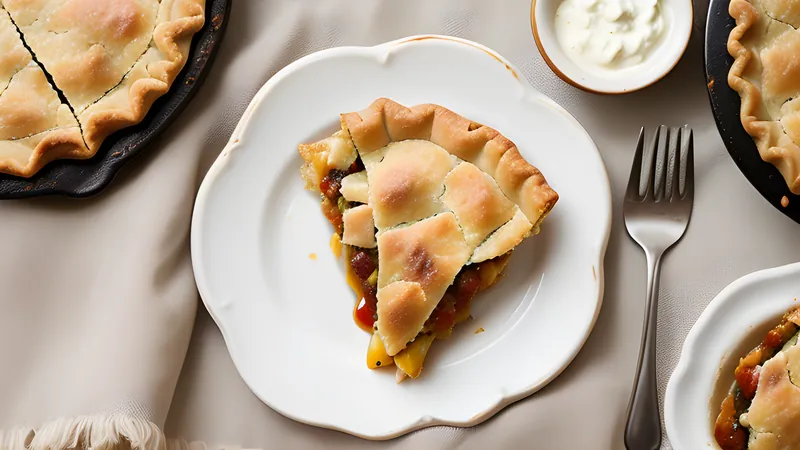
Rich beef and gravy filling under a crisp short-crust base and a puff pastry lid
Contents
↓ Jump to recipeAussie Meat Pie With a Proper Short Crust
Ingredients
- 1kg beef chuck, diced small
- 2 tbsp plain flour, for dusting the beef
- 2 tbsp vegetable oil
- 1 large onion, finely chopped
- 3 garlic cloves, chopped
- 2 tbsp tomato paste
- 500ml beef stock
- 2 tbsp Worcestershire sauce
- 1 beef stock cube, crumbled
- 1 tsp cracked black pepper
- 1 bay leaf
- 1 tbsp cornflour mixed with 2 tbsp cold water
- 300g plain flour, for the short-crust base
- 150g cold butter, cubed
- 1 egg yolk
- 3-4 tbsp iced water
- 375g block puff pastry, for the lids
- 1 egg, beaten, for glazing
Method
- Toss the diced beef with the 2 tbsp plain flour. Heat oil in a heavy pot over high heat and brown the beef in batches — don't crowd the pan. Set the beef aside.
- Lower the heat, add the onion and garlic to the same pot, and cook until softened, about 5 minutes. Stir in the tomato paste and cook 1 minute.
- Return the beef to the pot with the stock, Worcestershire sauce, crumbled stock cube, pepper and bay leaf. Bring to a simmer, cover, and cook on low heat for 2 hours until the beef is fork-tender.
- Stir in the cornflour slurry and simmer uncovered for 5 minutes until the gravy coats the back of a spoon thickly. Remove the bay leaf and cool the filling completely — hot filling will melt the pastry base.
- For the short crust, rub the cold butter into the 300g flour until it resembles breadcrumbs. Mix in the egg yolk and enough iced water to bring it into a firm dough. Wrap and chill for 30 minutes.
- Roll the short-crust dough thin and line six individual pie tins, trimming the edges. Chill the lined tins for 15 minutes, then blind bake at 200C (180C fan) for 12 minutes until pale gold and set.
- Fill each base generously with the cooled beef filling. Roll the puff pastry and cut lids slightly larger than the tins. Brush the short-crust rim with beaten egg, top with the puff lid, and press to seal. Trim, crimp the edges, and cut a small steam vent in the centre.
- Brush the tops with beaten egg and bake at 200C (180C fan) for 25-30 minutes until the lids are deeply golden and puffed. Rest 5 minutes before serving.
The pie that built a national identity around a paper bag
Australia eats roughly 260 million meat pies a year — close to ten for every person in the country — and almost none of them look anything like the one in this recipe. Servo pies, footy pies sold in paper bags at the football, party pies passed round at barbecues: the mass-produced version is a genuine national obsession, but it’s built for speed and shelf life, with a soft all-round pastry designed to survive a microwave and a squeeze of tomato sauce through a hole in the top. This is the other version — the one a proper bakery or a home cook builds from scratch, with a short-crust base sturdy enough to hold a wet filling and a puff pastry lid that shatters when you bite into it.
The meat pie arrived with British settlers, who brought a centuries-old pastry tradition already comfortable wrapping stewed meat in a crust that doubled as portable packaging before refrigeration existed. Convicts and free settlers alike ate meat pies from street stalls in colonial Sydney and Melbourne decades before Federation, sold by hawkers who kept them warm in tin boxes lined with cloth — the direct ancestor of the servo pie warmer that still sits by every Australian petrol station till today. What Australia did with it over the following two centuries was turn a British staple into a piece of working-class culture distinct enough that it now gets its own entry in national food surveys, sits at the centre of AFL and NRL match-day catering, and inspires yearly “pie of the year” competitions judged with the seriousness other countries reserve for wine.
Two pastries doing two different jobs
The defining decision in a proper pie is using different pastry for the base and the lid, and it’s not fussiness — the two surfaces face completely different problems. The base holds a wet, gravy-rich filling for the entire time you’re eating the pie, so it needs to be sturdy and slightly biscuity rather than flaky; a short crust, built by rubbing cold butter through flour until it resembles fine crumbs, gives you exactly that. The lid never touches the wet filling directly until the moment you break it open, so it can afford to be a laminated puff pastry that puffs dramatically in the oven and shatters into buttery layers under a fork.
Bakeries selling thousands of pies a day sometimes use one all-purpose pastry for both, because it’s faster and cheaper, and it’s the single biggest reason most commercial pies have a soft, slightly damp base by the time they reach you. Building the base and lid separately takes maybe fifteen extra minutes across the whole process and solves the problem completely.
Picking the right cut of beef
Chuck is the right call for this filling, but it’s worth knowing why, because the wrong cut ruins the pie in a way no amount of gravy can rescue. You want a cut that’s worked hard during the animal’s life — shoulder muscle laced with collagen — because that collagen is what melts down over two hours of gentle simmering into the gelatine that makes the gravy cling rather than run. Chuck, blade and gravy beef all do this job well and are usually the cheapest cuts in the cabinet, which is a rare case of the better choice also being the cheaper one. Skip anything labelled “diced steak” or “casserole steak” without checking the actual muscle — some packs are just off-cuts of leaner, quicker-cooking meat that turns dry and stringy rather than tender over a long braise, because it never had enough connective tissue to break down in the first place. If your butcher will cut to order, ask for chuck specifically and have it diced slightly larger than you think you need, since it shrinks noticeably as the fat and collagen render out.
Blind baking the base is not optional
The short-crust base needs a proper blind bake — twelve minutes at a solid oven temperature, empty, before any filling goes near it — for one reason: raw pastry sitting under a slow-cooked, moisture-heavy filling for another half hour in the oven will not cook through in the middle, no matter how long you leave the whole pie in. You’ll get a pastry base that’s golden and crisp on the very outer edge and translucent, gluey and raw an inch further in, and there’s no fixing it once the filling’s gone in on top. Blind baking sets the base’s structure first, so it only has to hold its shape and finish colouring during the final bake rather than cook from raw.
Chilling the lined tins before blind baking matters just as much as the bake itself. Pastry that goes into a hot oven still warm and slightly soft from rolling will slump down the sides of the tin as the butter melts before the structure sets, leaving you with pies that have thin, uneven walls. Fifteen minutes in the fridge solves it, and it’s the kind of step that’s easy to skip when you’re hungry and impatient, which is exactly when it matters most.
Why the filling has to be cold before it goes in
Hot filling poured straight from the pot into a blind-baked pastry shell will soften and partially melt the base before the pie even reaches the oven, undoing the entire point of blind baking it in the first place. Cool the beef and gravy completely — spreading it thin in a shallow dish speeds this up considerably compared to leaving it in the pot — before you spoon it into the pastry cases. The filling should be thick enough to sit in a mound rather than pool flat; if it’s still runny after two hours of simmering, that cornflour slurry at the end is what fixes it, thickening the gravy enough that it won’t seep into the pastry once baked.
The beef itself wants long, slow cooking rather than a quick braise. Chuck, being a working muscle full of connective tissue, needs the full two hours at a gentle simmer to break down into something that falls apart under a fork; rush it and you get chewy, resistant cubes of meat sitting in a gravy that tastes fine but doesn’t match the texture the crust promises.
Variations bakeries actually sell
Curried mince pies turn up on nearly every Australian bakery counter, built the same way but with a tablespoon of curry powder bloomed in the onions before the beef goes back in — a legacy of Anglo-Indian cooking that filtered into Australian kitchens through the same colonial trade routes that shaped so much British-adjacent food. A splash of extra Worcestershire sauce and a pinch of ground cumin alongside the curry powder pushes the flavour further without turning the pie into something else entirely — the beef and gravy base still needs to read as a meat pie first. Chunky steak and mushroom versions swap some of the beef for sliced field mushrooms added in the last twenty minutes of simmering, so they keep some bite rather than dissolving into the gravy. In South Australia, the “pie floater” takes the whole pie and drops it upside down into a bowl of thick pea soup, a Adelaide institution since the late nineteenth century and still served from a handful of dedicated carts. Vegetarian versions swap the beef for a mix of mushrooms, lentils and a splash of soy sauce for the savoury depth that meat normally provides, simmered the same two hours so the mushrooms collapse into something with real body rather than staying rubbery.
What can go wrong
A soggy bottom almost always traces back to one of three causes: skipping the blind bake, filling the case while the beef mixture is still warm, or under-thickening the gravy so it stays thin enough to soak straight through the pastry. If you’ve done all three correctly and still get some softening at the very centre of the base, that’s normal — a little give directly under the thickest part of the filling is unavoidable with a wet filling, and it’s the outer two-thirds of the base staying crisp that actually matters.
Cracked or shrunken short crust usually means the dough was overworked or under-rested. Rubbing the butter into the flour should stop the moment it looks like coarse breadcrumbs — keep going and the butter starts to soften and blend in properly, which builds gluten and toughens the finished pastry. Thirty minutes in the fridge lets the gluten relax and the butter firm back up, both of which stop the case shrinking away from the tin walls in the oven.
A gravy that’s too thick before the cornflour slurry even goes in usually means the simmer ran too fast rather than too long — a hard boil evaporates liquid quickly without giving the collagen time to properly render, leaving you with reduced-down toughness rather than tenderness. Keep the pot at the gentlest simmer you can manage, with just the odd bubble breaking the surface, for the full two hours.
Storage and reheating
Baked pies freeze well once completely cooled — wrap individually and they’ll keep for up to three months. Reheat from frozen in a moderate oven, uncovered, for around 25 minutes rather than microwaving, which turns the puff lid soggy and rubbery in seconds. If you’re making the filling ahead, it keeps in the fridge for up to three days and actually improves overnight as the flavours settle, so cooking the beef a day before assembling the pies is a reasonable way to split the job across two evenings.
The short-crust dough itself freezes just as well raw, rolled flat between sheets of baking paper so it thaws quickly and evenly — useful if you want pastry ready to go without committing to baking a full batch of pies in one sitting. Blind-baked, unfilled short-crust cases will also keep in an airtight container at room temperature for a day, which means the pastry work and the filling can genuinely happen on separate days without either one suffering, and assembly on the day you actually want pie becomes a fifteen-minute job rather than a three-hour one.
For another campfire-adjacent Australian staple built on getting a crust right, damper, baked directly in the coals of a fire, takes the opposite approach — no butter, no lamination, just flour and heat. And for the sweet side of the same corner of the world, hokey pokey ice cream, studded with shattered honeycomb, is the dessert most likely to follow a proper pie at an Antipodean family dinner.
Related Content