Attiéké: Fermented Cassava Couscous from Abidjan
The granular ferment that outsells rice at Adjamé market
Contents
↓ Jump to recipeAt Adjamé market in Abidjan, attiéké sellers work from covered stalls with steamers going from six in the morning, and the smell — faintly sour, faintly nutty, like good sourdough crossed with rice vinegar — carries down the aisle before you see the food itself. Attiéké is Côte d’Ivoire’s answer to couscous, made from fermented, grated cassava rather than wheat semolina, steamed into small, separate, slightly chewy granules. It is eaten more often than rice in the south of the country, and outsiders who expect a rice substitute are usually surprised by how much personality it has.
Attiéké: Fermented Cassava Couscous from Abidjan
Ingredients
- 500g dried fermented grated cassava (attiéké, sold frozen or dried at African grocers)
- 2 tablespoons vegetable oil
- 1 teaspoon fine salt
- 4 whole tilapia or sea bream (about 400g each), cleaned and scored
- 3 tablespoons vegetable oil, for the fish
- 1 teaspoon fine salt, for the fish
- 1/2 teaspoon ground black pepper
- 2 large tomatoes, sliced
- 1 large red onion, thinly sliced
- 2 tablespoons white vinegar
- 1-2 fresh red chillies, thinly sliced
Method
- If using dried attiéké, sprinkle with a little water and rub between your fingers to rehydrate and separate the granules; if frozen, defrost fully and break apart the same way.
- Toss the granules with the 2 tablespoons of oil and the teaspoon of salt so every grain is lightly coated.
- Set the attiéké in a steamer basket lined with muslin over boiling water and steam for 20 minutes, fluffing with a fork halfway through, until the grains are tender and separate.
- Meanwhile, rub the fish inside and out with oil, salt and black pepper, and score the skin diagonally two or three times per side.
- Grill the fish over hot charcoal or under a very hot grill for 6-8 minutes per side, until the skin is charred and the flesh flakes easily.
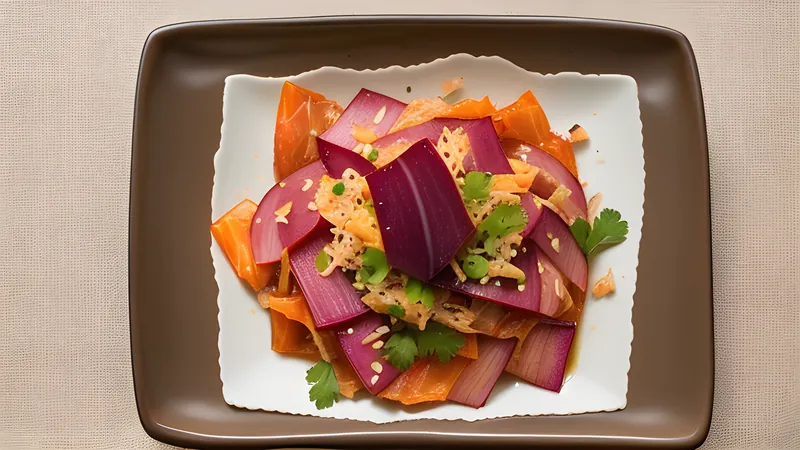
- Toss the sliced onion with the vinegar and a pinch of salt and leave to soften for 10 minutes.
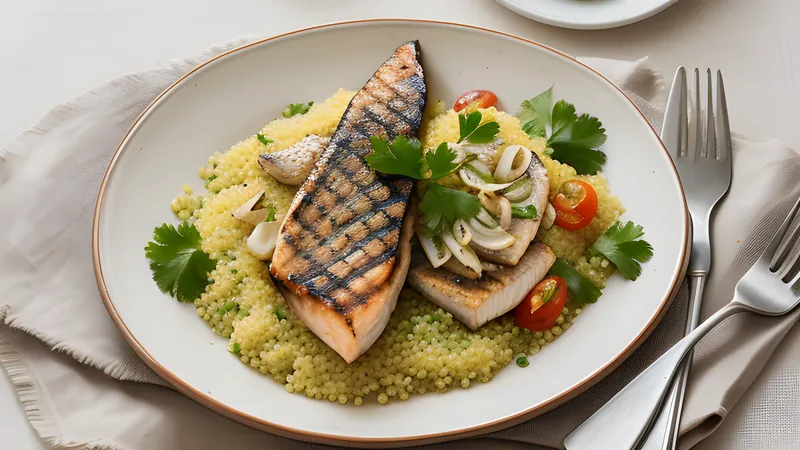
- Pile the steamed attiéké on a platter, top with the grilled fish, sliced tomato, pickled onion and fresh chilli, and serve immediately.
Fermented cassava, not just grated cassava
The distinction that makes attiéké what it is sits entirely in the fermentation. Cassava root is peeled, grated, and mixed with a small amount of starter from a previous batch (a handful of already-fermented cassava mash, similar in principle to a sourdough starter or a ginger bug). Left to ferment for one to three days, the mixture develops lactic acid and a distinctive tang, and — just as importantly — the fermentation breaks down a portion of the cyanogenic compounds naturally present in raw cassava, which is one reason cassava across West Africa is so often processed this way rather than eaten fresh.
After fermentation, the mash is pressed to remove excess liquid, sieved into fine granules, and traditionally sun-dried before a final light steaming to finish the grains — a multi-day process that most home cooks, in Abidjan as much as anywhere else, now buy pre-made rather than do themselves. Dried or frozen attiéké, sold at African grocers worldwide, has already been through fermentation and initial processing; the cook’s job at home is simply to rehydrate and steam it, which takes twenty minutes rather than three days.
The Baoulé origin story
Attiéké is generally credited to the Baoulé and Adioukrou peoples of central and coastal Côte d’Ivoire, where cassava has been a staple starch for centuries, well before rice imports became widespread in the twentieth century. As Abidjan grew into a commercial hub through the colonial and post-independence periods, attiéké travelled with rural migrants into the city and became, over a few generations, less a regional specialty and more the default starch of the entire south — the dish you’d find at a roadside grill stall in any neighbourhood, served alongside whatever fish or meat was on the coals that day.
The market at Adjamé remains one of the biggest wholesale attiéké hubs in West Africa, supplying Abidjan and exporting dried and frozen product across the region and into diaspora communities in France, where Ivorian attiéké-and-grilled-fish spots are common in Paris’s African food quarters.
Steaming it right
Whether you’re working from a dried packet or fresh frozen attiéké, the technique is the same: rehydrate lightly, oil the granules so they don’t clump, and steam rather than boil. Boiling attiéké in water turns it gluey and wet; steaming keeps every granule separate, with a texture closer to properly cooked couscous than to rice or polenta. A muslin-lined steamer basket helps enormously here — it lets steam through while keeping the fine granules from falling through the holes.
Traditional attiéké is steamed twice with a rest in between, a step some vendors still follow for extra fluffiness, but a single 20-minute steam with a mid-way fork-fluff gets you 90% of the way there for home cooking. The grains are done when they’re tender all the way through but still hold their shape individually rather than clumping into a paste.
The fish is not optional
Attiéké is rarely served on its own — it’s built to be a bed for grilled fish, and the pairing (poisson braisé in the French used across Côte d’Ivoire) is close to a national dish in its own right. Tilapia and sea bream are the most common choices, scored so the marinade and char penetrate the flesh, grilled hot and fast over charcoal until the skin blisters. The fish is served whole, head and tail on, with the grilled skin left crisp rather than trimmed away.
Alongside it, a raw or lightly pickled onion-and-tomato relish, sharpened with vinegar and a scatter of fresh chilli, cuts through both the richness of the grilled fish and the mild tang of the attiéké. This isn’t a garnish so much as a third component of the plate, eaten in roughly equal measure with the fish and the couscous itself.
UNESCO added the knowledge and skills associated with attiéké to its Representative List of the Intangible Cultural Heritage of Humanity in 2024, following a joint submission from Côte d’Ivoire — the first time the dish’s production methods were formally recognised as cultural heritage rather than simply a foodstuff. The listing specifically credits the women who pass down fermentation and processing techniques through generations, a recognition that matches how the dish is actually made: almost entirely by women-run production cooperatives around Abidjan, Dabou and Jacqueville, the coastal towns most associated with the highest-quality attiéké.
Substitutions and shortcuts
Fresh attiéké is not something you’ll find outside West Africa or its diaspora communities, but dried and frozen versions are widely stocked at African and Caribbean grocers and work well once rehydrated — look for packets labelled attiéké or placali couscous. If you can’t find it at all, a fine bulgur or couscous seasoned with a spoonful of lemon juice and a pinch of extra salt gets closer to the right acidity and texture than plain semolina couscous, though it won’t have the same faint funk that fermentation gives the real thing.
For the fish, any firm white fish that grills well works — red snapper, mackerel and even good-quality farmed sea bass are common substitutes when tilapia isn’t available. Prawns grilled the same way, marinated in the same oil-salt-pepper rub, are a legitimate variation street vendors use interchangeably with fish depending on the day’s catch.
Storage
Cooked attiéké keeps in the fridge for two to three days in an airtight container; reheat by resteaming for five minutes rather than microwaving, which tends to dry the granules out and make them hard rather than tender. Dried, unrehydrated attiéké keeps for months in a sealed bag in a cool cupboard, and frozen attiéké keeps for several months in the freezer — defrost fully before rehydrating.
Grain size matters more than you’d think
Market vendors in Abidjan sell attiéké in at least three grades — fine, medium and coarse — and regular buyers are particular about which one suits which dish. The finest grind, closest in size to couscous proper, is generally preferred for garba and other fast, casual servings where a light, quick-cooking texture is wanted. The coarser grades, with a visibly larger and more separate granule, are favoured for the classic grilled-fish plate, where the couscous needs enough structure to hold its own next to a substantial piece of fish rather than disappearing into the background. Packets sold abroad rarely specify a grade, but if you have a choice, a medium grind is the safest all-purpose option for the fish-and-attiéké recipe here.
Common mistakes
The single most common failure with pre-made attiéké is skipping the rehydration step and steaming it straight from the packet. Dried granules that haven’t been dampened and rubbed apart first will steam unevenly, leaving a crunchy, undercooked centre in some grains and a mushy exterior on others. Take the time to sprinkle water over the dried product and work it through with your fingers until it feels like damp sand — this two-minute step is what determines whether the final texture is fluffy or patchy.
Overcrowding the steamer basket is the second common issue. Attiéké needs room for steam to circulate through the granules; piling it in a thick, packed layer means the top cooks while the bottom stays gluey. Spread it in a layer no more than four centimetres deep, and if you’re doubling the recipe, steam in two batches rather than one crowded one.
Grilling the fish too gently is the third mistake, and it’s really a fish mistake rather than an attiéké one, but the two are served together so it’s worth naming. Attiéké’s job on the plate is to be the mild, absorbent counterpoint to a fish that’s been properly charred — pale, gently pan-fried fish next to attiéké tastes flat, because the whole dish depends on that contrast between the smoky, blistered skin and the clean, faintly sour couscous underneath. Get the grill or the pan properly hot before the fish goes anywhere near it.
Variations
Attiéké au poisson (with grilled fish) is the classic street-food version, but home cooks in Abidjan also make attiéké garba — a simplified, faster version popular as a late-night snack, pairing the granules with deep-fried tuna steaks rather than whole grilled fish, plus a chilli-heavy tomato sauce known as sauce garba. It’s cheaper and quicker than the full grilled-fish plate and has become its own street-food category, sold from garba stands that stay open well past midnight in Abidjan’s Yopougon and Adjamé districts.
A vegetarian version simply omits the fish altogether and pairs the attiéké with grilled or roasted vegetables — courgette, aubergine and bell peppers dressed the same way as the onion relish — though this is much more common outside Côte d’Ivoire than within it, where fish is central to almost every attiéké meal. Some coastal households also add small dried shrimp, toasted briefly in a dry pan, scattered over the finished plate for a savoury depth that doesn’t require any extra cooking.
Related on the site
Attiéké belongs to the same family of long-fermented West African staples as kenkey, Ghana’s sour steamed maize dumpling wrapped in corn husk — both rely on multi-day lactic fermentation to build their signature tang. For another Central African dish built around a rich stew rather than a grilled fish plate, moambe, the Congo’s palm butter chicken stew, shows how differently West and Central African cooking treat the same core proteins. And if fried plantain alongside your fish appeals more than a couscous bed, kelewele, Ghana’s ginger and chilli fried plantain, is the West African street-food answer to a starchy side.
Related Content