Arroz de Marisco: Portugal's Soupy Shellfish Rice
Loose, wet and eaten with a spoon
Contents
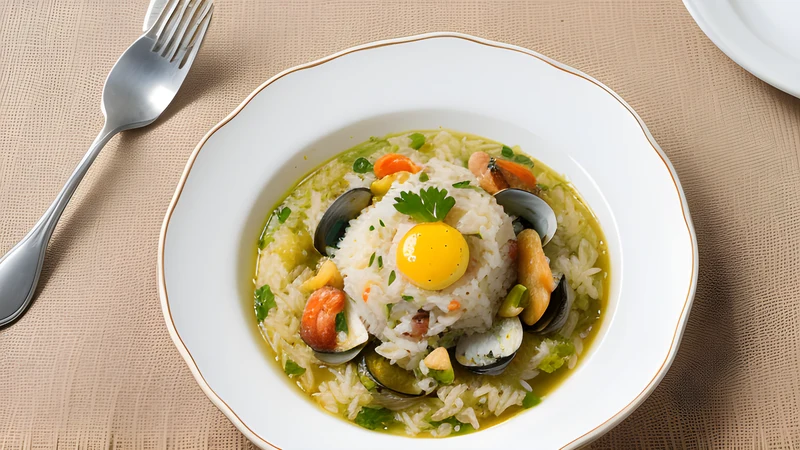
↓ Jump to recipeThe first thing to understand about arroz de marisco is that it is wet. Not risotto-wet, where the grains sit in a creamy suspension. Properly wet — malandrinho, the Portuguese say, which translates roughly as roguish and means the rice slides around the spoon. If you can stand a fork up in it, you have made something else.
This is the signature dish of the Costa de Prata, the stretch of Atlantic coast around Vila Franca de Xira and Marinha Grande, and it was voted one of Portugal’s Seven Gastronomic Wonders in 2011. In the restaurants there it arrives in a cataplana — the hinged copper clam-shell pan the Algarve borrowed from the Moors — and it is put in the middle of the table with a ladle and no ceremony.
Arroz de Marisco: Portugal's Soupy Shellfish Rice
Ingredients
- 500g large raw prawns, shell on, heads on
- 500g clams, purged in salted water for 1 hour
- 400g mussels, scrubbed and debearded
- 1 medium cooked crab, or 200g picked white crab meat
- 6 tbsp olive oil
- 1 large onion, finely diced
- 4 garlic cloves, thinly sliced
- 1 red pepper, finely diced
- 2 bay leaves
- 400g tinned chopped tomatoes
- 1 tbsp tomato purée
- 1 tsp sweet smoked paprika
- 150ml dry white wine
- 1.4 litres water
- 300g carolino or arborio rice
- 1 tsp piri-piri sauce, or 1 small dried chilli, crumbled
- 25g fresh coriander, chopped, plus more to finish
- Fine sea salt
- 1 lemon, cut into wedges
Method
- Peel the prawns, keeping heads and shells. Refrigerate the peeled prawns. Heat the oven to 220C.
- Spread the heads and shells on a baking tray with 1 tbsp olive oil and roast for 12 minutes, until deep coral and smelling toasted. Do not let them blacken.
- Scrape the roasted shells and every sticky bit from the tray into a pan with 1.4 litres water, 1 bay leaf and the crab shell if using a whole crab. Simmer for 25 minutes, then strain through a sieve, pressing hard on the solids. Keep hot. You want about 1.2 litres.
- Meanwhile, put the clams and mussels in a wide pan with 50ml of the wine, cover, and steam over a high heat for 3-4 minutes until they open. Discard any that stay shut. Reserve the liquor, strained, and pick two thirds of the shellfish from their shells.
- In a wide heavy pan or cataplana, warm 5 tbsp olive oil over a medium heat. Add the onion, red pepper and 1 bay leaf with a good pinch of salt and cook for 12 minutes until soft and translucent, stirring often.
- Add the sliced garlic and cook for 2 minutes. Stir in the tomato purée and paprika and cook for 1 minute more.
- Add the tinned tomatoes and the remaining 100ml wine. Cook, stirring, for 10 minutes until the mixture darkens, thickens and the oil separates at the edges. This is the refogado and it is the flavour base.
- Add the rice and stir for 1 minute to coat every grain in the fat.
- Pour in the hot prawn stock and the strained shellfish liquor. Bring to a boil, then drop to a fast simmer and cook uncovered for 16-18 minutes, stirring every few minutes, until the rice is just tender.
- Stir in the piri-piri, the picked clams and mussels, the crab meat and the peeled prawns. Cook for 3 minutes, until the prawns are pink and opaque through.
- Kill the heat. Stir in the chopped coriander and taste for salt. The rice should be soupy enough to move when you tilt the pot; loosen with hot stock if not.
- Arrange the reserved shell-on clams and mussels on top, scatter with more coriander, and take the pot to the table with lemon wedges.
What separates it from paella
People reach for the paella comparison and it misleads them. Paella is a dry rice cooked in a wide shallow pan so the liquid evaporates and the bottom caramelises into socarrat. Arroz de marisco is the opposite instinct: a deep pot, a generous ratio of liquid to grain, and a finish that is deliberately loose. Spain has its own wet rice, arroz caldoso, and that is the closer relative.
The rice matters. Portugal grows carolino, a short Japonica variety from the Sado and Mondego valleys, which releases starch freely and thickens the surrounding broth into something with body. Arborio is the easy substitute and behaves similarly. Basmati or long grain will not work — they stay separate and leave you with prawns in soup.
Roast the heads
Here is the change that transforms this dish, and it costs twelve minutes. Most recipes tell you to fry the prawn shells briefly in the pan. Instead, spread the heads and shells on a tray and roast them at 220C.
The heads are where the flavour is — they hold the hepatopancreas, the brown fat that carries almost all of a prawn’s sweetness and iodine. Roasting drives the Maillard reaction across the whole surface at once and renders that fat out onto the tray, where it browns further. When you scrape the tray into the stock pot you are collecting compounds that a quick fry never generates. The resulting stock is a deeper orange, tastes toasted rather than merely marine, and gives the finished rice a colour you would otherwise be tempted to fake with more paprika.
Watch it, though. Twelve minutes at 220C is right; sixteen gives you burnt shell, and burnt shell is bitter and unrescuable. Pull them when they are the colour of a terracotta pot and the kitchen smells like a seafood grill.
The refogado
Every Portuguese pot dish sits on a refogado — onion and garlic cooked slowly in a lot of olive oil, then tomato, then time. This is the same foundation under caldo verde and half the country’s stews, and it is where people rush and pay for it.
Twelve minutes for the onion and pepper. You are after translucent and sweet, with no colour. Then the garlic, which needs two minutes and no more. Then the tomato, and this is the part that requires patience: ten minutes of cooking until the mixture visibly darkens from red to brick, thickens, and the oil breaks out at the edges of the pan. That splitting oil is the signal. It means the water has gone and the sugars have started to concentrate. Add the rice before that happens and the finished dish tastes of tinned tomato.
Six tablespoons of olive oil looks like a lot. It is correct. The oil carries the paprika and the tomato’s fat-soluble compounds and it is what gives the broth its gloss.
Timing the shellfish
Everything in this pot cooks at a different speed, and the crime is putting it all in together. Prawns take three minutes. Clams take four. A prawn cooked for eighteen minutes has the texture of a rubber band.
So: steam the clams and mussels separately, keep their liquor — which is salty, so hold back on salting the pot until the end — and add the picked meat back at the very end. Peel the prawns raw and add them for the last three minutes only. Reserve a handful of shell-on clams and mussels to arrange on top, because the dish should look like the sea and not like a bowl of orange porridge.
Discard anything that refuses to open. It was dead before it got in the pan.
Getting the consistency right
Sixteen to eighteen minutes for the rice, stirring every few minutes to work the starch loose. Test a grain: it should be tender with the faintest resistance at the core. The rice keeps drinking after the heat goes off, so pull it a minute early and expect it to tighten.
The finished pot should be soupy. Tilt it — the rice should slide. If it has set, add hot stock a ladle at a time until it moves. Loosening it at the table is standard practice, and any Portuguese cook will do it without comment.
Salt last. Between the shellfish liquor and the stock you may need almost none.
Buying the shellfish
Clams first, because they are the ones that ruin dinner. Portugal uses amêijoas, small thin-shelled clams; palourdes or the common supermarket vongole are the right size. They arrive full of sand and they must be purged — an hour in water salted to roughly 30g per litre, which is close enough to seawater that the clams relax and open and spit. Fresh tap water kills them and they die closed, holding their grit. Change the water once if it goes cloudy. Then lift them out rather than pouring, so the sand stays at the bottom of the bowl.
Tap any clam that is sitting open. If it closes, it is alive and it goes in the pot. If it stays open, it is dead and it goes in the bin, and one dead clam is enough to make a whole pot smell of ammonia.
Mussels want scrubbing and debearding, and the beard should be pulled towards the hinge rather than away from it, which kills the mussel if you do it more than a minute or two before cooking.
Prawns: buy them shell-on and head-on, which is the whole basis of the stock, and frozen is genuinely fine. Prawns are almost always frozen at sea and then thawed on the fishmonger’s ice, so the ones in the freezer cabinet have had one thaw fewer than the ones on display.
The salt problem
This dish has three sources of salt arriving at different times and no way to take any of them back out. Clam and mussel liquor is essentially seawater. The prawn shell stock picks up salinity from the heads. And the rice, which absorbs a litre of liquid, concentrates whatever was in it.
So do not salt anything until the very end. Season the refogado with a small pinch to help the onions sweat, and then stop. Taste once the rice is cooked, once the shellfish liquor is in and once the reduction has happened, because that is the only moment the number is fixed. Salted early, this becomes inedible and there is no rescue.
The last five minutes
The rice keeps working after the heat is off. It carries on absorbing, and a pot that looked perfectly soupy on the hob can arrive at the table set solid if you dithered on the way. Two habits fix this: pull the rice a minute before you think it is done, and hold back 200ml of hot stock to loosen it at the last second.
Warm the bowls, and take the pot to the table rather than plating in the kitchen. This is a communal dish and it loses temperature fast in a shallow bowl.
What can go wrong
The broth is thin and pale. The refogado was rushed, or the shells were fried instead of roasted. Both are the same mistake in different clothes: you skipped the browning.
It is bitter. Burnt prawn shells, or burnt paprika. Watch the tray at twelve minutes, and add the paprika with the pan off the direct flame.
The prawns are rubbery. They went in too early. Three minutes, at the end, and no more.
The cataplana, and whether you need one
The cataplana is a hinged copper pan shaped like two woks facing each other, clamped shut, and it is a direct descendant of the Moorish tajine — the Algarve has been making them since at least the Muslim period. It works as a low-pressure steamer: the seal traps steam, the copper conducts heat evenly, and shellfish cook fast in their own liquor.
For arroz de marisco specifically, it is theatre. The dish is cooked uncovered for most of its life and it wants a wide surface for evaporation, so a heavy casserole does everything the cataplana does. Where the cataplana earns its keep is in ameijoas na cataplana — clams, pork and coriander — where the seal is the whole point.
Buy one if you want the object on your table. Do not buy one to make this.
The colour
A finished pot should be somewhere between terracotta and rust, glossy with oil, and the colour tells you whether you did the work. It comes from three places, in descending order: the roasted prawn heads, the reduced tomato, and the paprika. People who skip the first two try to compensate with the third, and it shows — paprika-driven colour is flat and matte and slightly orange-brown, and the dish tastes of paprika instead of prawn.
If you want to push the colour honestly, a pinch of saffron in the stock is legitimate on the Algarve coast and adds depth without lying about it. Half a dozen threads, crushed and steeped in a spoonful of hot stock for ten minutes before it goes in.
Substitutions, storage, variations
No cataplana required — a wide heavy casserole is fine. Frozen shell-on prawns work well and are often better than the tired fresh ones on a supermarket counter; defrost them slowly in the fridge and the heads will still roast.
Leftovers are a problem, honestly. The rice absorbs everything overnight and becomes a solid block. It reheats into something decent if you loosen it hard with stock and accept that the prawns will be tougher. Better to cook the amount you will eat.
For a different direction, swap half the shellfish for firm white fish and a handful of grilled octopus — the octopus needs to be cooked separately and folded in at the end. And if you want the heat pushed properly, a full tablespoon of piri-piri instead of a teaspoon takes it towards the Algarve, where they are less coy about chilli.
Coriander is non-negotiable. So is the lemon.
Related Content