Arroz con Gandules: Puerto Rico's Christmas Rice
Sofrito, pigeon peas, and the crust everyone fights over
Contents
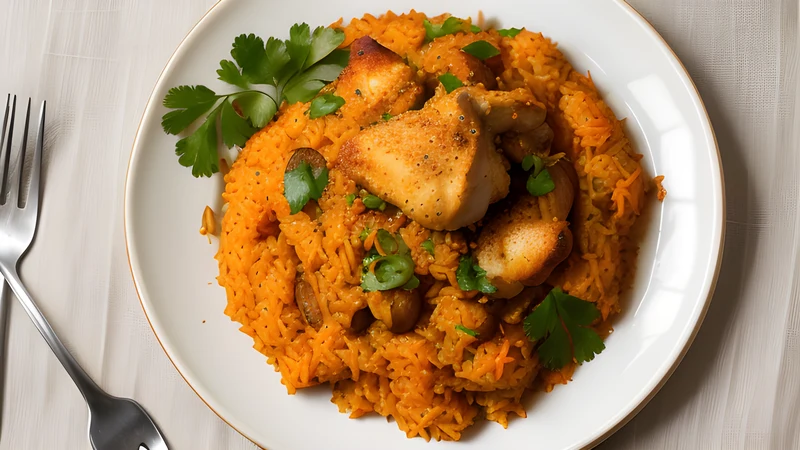
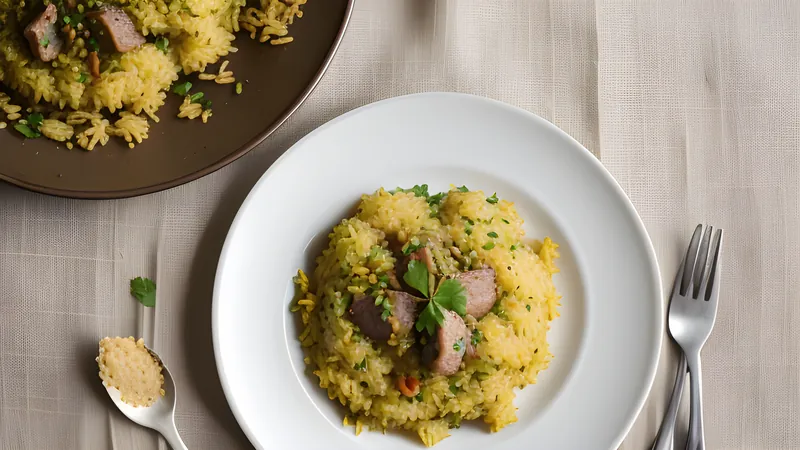
↓ Jump to recipePuerto Rican Christmas dinner has a fixed core that doesn’t move from house to house the way the rest of the meal might: pernil, the slow-roasted pork shoulder, and underneath or alongside it, always, arroz con gandules. The rice is as fixed a part of December in Puerto Rico as the pernil itself, essential rather than optional, and a table without it would prompt genuine questions from anyone sitting down to eat.
Arroz con Gandules: Puerto Rico's Christmas Rice
Ingredients
- 100 g salt pork or thick-cut bacon, finely diced
- 2 tbsp olive oil
- 1 cup sofrito (blended culantro/recao, cilantro, ají dulce, garlic, onion and green pepper)
- 2 tbsp tomato paste
- 2 tbsp achiote (annatto) oil
- 12 pimiento-stuffed green olives, halved
- 1 tbsp capers
- 2 bay leaves
- 1 tsp dried oregano
- 400 g pigeon peas (gandules), tinned and drained or cooked from dried
- 500 g medium-grain rice, rinsed until the water runs clear
- 750 ml chicken stock
- 2 tsp fine salt, or to taste
Method
- Render the salt pork or bacon in the olive oil in a heavy pot over medium heat, stirring occasionally, until deeply crisp and golden, 8 to 10 minutes. Lift the crisp pieces out with a slotted spoon and set aside for garnish, leaving the rendered fat in the pot.
- Add the sofrito to the pot and cook over medium heat for 5 minutes, stirring often, until it smells fragrant and the raw edge has cooked off.
- Stir in the tomato paste, achiote oil, olives, capers, bay leaves and oregano. Cook for 2 to 3 minutes until everything is glossy and combined.
- Add the pigeon peas and rinsed rice, stirring to coat every grain in the sofrito mixture.
- Pour in the stock and salt, stir once, and bring to a full boil. Taste the liquid; it should taste slightly saltier than you want the finished rice to be.
- Cover tightly, reduce the heat to the lowest setting, and cook undisturbed for 20 to 25 minutes, resisting the urge to lift the lid, until the liquid is fully absorbed.
- Turn off the heat and let the pot rest, still covered, for 10 minutes. Fluff the rice gently with a fork, working from the edges toward the crisp bottom layer without breaking it up too much, and scatter the reserved crisp pork over the top before serving.
A dish built entirely on its base
Arroz con gandules is, more than most rice dishes, a demonstration of what a proper sofrito can do. Sofrito, the blended base of culantro (a broad, serrated-leaf herb related to but distinct from cilantro), cilantro, ají dulce (a small, sweet, barely-hot Caribbean pepper), garlic, onion and green pepper, is the foundation of a huge share of Puerto Rican savoury cooking, and this rice is essentially sofrito, achiote and pigeon peas cooked directly into the grain rather than served as a garnish or sauce alongside it. Get the sofrito right, cooked long enough to lose its raw sharpness but not so long it turns bitter, and the rice is most of the way to being right too.
Ají dulce is the ingredient most likely to be unfamiliar outside Puerto Rican and wider Caribbean kitchens, and it’s worth seeking out specifically rather than substituting bell pepper alone, which is what most of the recipe already calls for elsewhere. Ají dulce looks almost identical to a Scotch bonnet but carries essentially none of its heat, contributing a distinct sweet-peppery flavour that bell pepper alone doesn’t fully replicate. Latin American grocers stock it fresh or frozen; frozen loses little of the flavour that matters here.
Gandules and their Puerto Rican identity
Pigeon peas arrived in the Caribbean from West Africa via the transatlantic slave trade, adapting well to Puerto Rico’s climate and becoming, over generations, as identifiably Puerto Rican an ingredient as sofrito itself, even though the plant’s origins lie thousands of miles away. Fresh gandules, sold in their pods seasonally, have a slightly firmer bite and a greener, less earthy flavour than the tinned or dried peas used most of the year; tinned gandules are what the overwhelming majority of Puerto Rican households actually reach for on a Tuesday, reserving fresh ones for when they’re in season and worth the extra shelling time.
The pea’s name gives the dish its own identity distinct from other Caribbean rice-and-legume combinations. Dominican moro de guandules uses the same pea under a different regional name and a slightly different sofrito ratio; Puerto Rico’s version is defined as much by its specific sofrito and achiote treatment as by the pea itself, which is a reminder that across the Caribbean, the same base ingredients get assembled into dishes with genuinely distinct identities depending on which island’s specific technique and seasoning built them.
The crackling on top
Traditional arroz con gandules renders its salt pork directly into the sofrito and leaves it there, distributed through the finished rice rather than reserved separately. Pulling the crisped pieces out before the rice goes in, then scattering them back over the top once everything is fluffed and plated, is the one change I’ve made here, and it does two things a fully-mixed version doesn’t: it guarantees every serving gets a genuinely crisp piece of pork rather than one that’s gone soft simmering in liquid for twenty-five minutes, and it lets you see, and therefore control, exactly how much rendered pork ends up in each portion. The flavour difference in the pot is negligible, since the fat still renders into the sofrito either way; the textural difference on the plate is real.
Pegao, and why you should want it
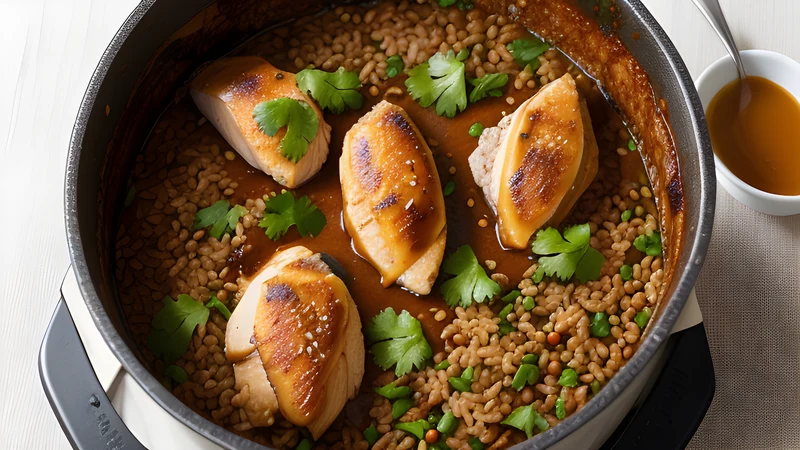
The thin, deeply golden crust of rice that forms against the bottom of the pot, called pegao, is the single most contested and prized part of the entire dish, deliberate rather than a cooking error, and in many Puerto Rican households whoever gets to it first, scraping it up in crisp, caramelised sheets, is considered to have won something. Getting it requires genuine restraint: once the rice goes to its lowest simmer, covered, leave it completely alone for the full 20 to 25 minutes. Lifting the lid to check releases steam the pot needs to cook evenly, and stirring at any point during that window breaks up the bottom layer before it’s had time to properly crisp and caramelise against the hot metal.
A heavy pot, cast iron or a thick-bottomed steel pan, conducts and holds heat more evenly than a thin one, and gives a more reliable pegao than a flimsy pot prone to hot spots that scorch in one place while staying pale in another. If your rice has never formed a proper pegao before, the fix is usually either too thin a pot or too much residual moisture from lifting the lid partway through; both are avoidable with the equipment and patience described here.
Getting the rice right beyond the crust
Medium-grain rice, rather than long-grain, is traditional and correct for this dish; it holds slightly more moisture and starch than long-grain, giving arroz con gandules its characteristic clingy, cohesive texture rather than the fully separate grains you’d want in, say, a pilaf. Rinsing it until the water runs clear is still worth doing even with medium-grain rice, removing enough surface starch that the finished dish is tender rather than gluey, while leaving enough behind that the grains hold together properly once fluffed.
Salt the cooking liquid slightly more assertively than you’d want the finished rice to taste, since rice absorbs less seasoning than the liquid volume implies and a pot that tastes correctly seasoned before the rice goes in will often taste under-salted once the grains have soaked it all up.
Serving, storage and what belongs alongside it
Arroz con gandules keeps for up to four days refrigerated and freezes for up to two months, though the pegao doesn’t survive reheating in any recognisable form; treat leftovers as excellent rice rather than expecting the crust to return. Reheat gently with a splash of stock or water to loosen it, covered, over low heat, or in short microwave bursts stirred between each.
At Christmas it sits under or alongside pernil as described, but on any other day of the year it’s a complete side in its own right against roast chicken, fried pork chops, or simply a fried egg. If you’re building out a wider rice-and-legume education, hoppin’ john runs the same rice-and-pea logic through a very different American South tradition, and pastelón, Puerto Rico’s plantain lasagne, makes an obvious second course from the same kitchen if you’re cooking a full Puerto Rican spread.
Making your own achiote oil
Store-bought achiote oil is convenient and entirely acceptable, but it’s simple enough to make at home that I’d encourage it: warm 3 tablespoons of annatto seeds in 125 ml of neutral oil over the lowest possible heat for 8 to 10 minutes, until the oil turns a deep orange-red, then strain out the seeds and discard them. The oil keeps for weeks in a sealed jar at room temperature and is useful well beyond this one dish, adding colour and a faint earthy, peppery flavour to beans, stews and other rice dishes across Puerto Rican and wider Latin American cooking. Some Puerto Rican cooks add a smashed garlic clove or a few peppercorns to the oil while it warms for a rounder flavour; either is a fine addition if you’re making a batch to keep on hand.
If achiote seeds aren’t available, a good sazón packet with achiote already included is a reasonable substitute for both the colour and a portion of the seasoning, though it will shift the salt balance of the finished dish, so taste and adjust before adding the full 2 teaspoons of salt called for separately.
Variations worth trying
Some households add a handful of raisins to the pot alongside the olives and capers, a sweet counterpoint that shows up in several classic Puerto Rican rice dishes and divides opinion sharply; try a small handful in a portion of the batch if you’re curious rather than committing the whole pot to an ingredient some of your guests might not expect. Others build a heartier, more stew-like version using cubed pork or chorizo added at the sofrito stage, turning a side dish into something substantial enough to serve as a main course on its own with nothing more than a simple salad alongside.
Fresh gandules, when they’re in season, need a brief precook, about 15 minutes at a bare simmer, before going into the rice pot, since they’re firmer than the tinned or dried peas most of the year; taste one at the 15-minute mark and continue simmering in 5-minute increments until it’s tender but still holds its shape, then proceed with the recipe as written using the partially cooked fresh peas in place of the tinned ones.
A note on tomato paste versus sauce
Some versions of this recipe use a few spoonfuls of tomato sauce (Spanish-style, not the Italian pasta kind) rather than tomato paste, giving a lighter, slightly looser colour and flavour to the finished rice. Either works; tomato paste, used in the smaller quantity given here, concentrates the flavour more efficiently and is what I’d recommend if you’re cooking this regularly and want a pantry staple that keeps for months in the fridge once opened, rather than a sauce you’ll need to use up quickly.
Pot size and ratios
Scale this recipe up confidently for a full Christmas table; the sofrito-to-rice-to-liquid ratio holds steady whether you’re cooking for six or sixteen, though a much larger batch needs a wider pot rather than simply a deeper one, since the pegao only forms properly where rice makes direct contact with hot metal across a broad surface. A tall, narrow pot loaded with a double batch will cook the rice through fine but give you far less of the crust everyone is fighting over at the end, so if you’re doubling the recipe for a crowd, consider splitting it across two wide pots rather than one large deep one.
Related Content