Arrosticini: The Skewered Mutton of Abruzzo
Cubes of sheep, a trough of charcoal, and no sauce whatsoever
Contents
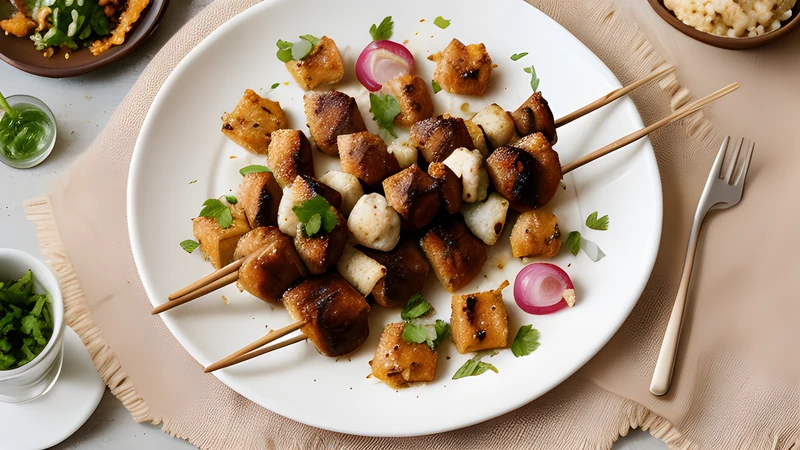
↓ Jump to recipeArrosticini are cubes of sheep on a stick. There is no marinade, no sauce, no rub applied before the fire, and no accompaniment beyond oiled bread and a glass of Montepulciano. Everything that makes them good happens in the cutting and in the ninety seconds either side of the turn. This is a recipe with almost nothing in it, which is exactly why it goes wrong so often.
I cook them on a Tuesday in a Copenhagen courtyard, which is roughly as far from Campo Imperatore as you can get without leaving Europe, and they still work. What they need is the right shape of fire and the right ratio of fat to lean. Neither requires a plane ticket.
Arrosticini: The Skewered Mutton of Abruzzo
Ingredients
- 900g mutton or hogget leg, boned, or lamb leg if mutton is unavailable
- 150g hard sheep or lamb fat, from the kidney or the top of the leg
- 24 bamboo skewers, 25cm long and 3mm thick
- 2 tsp fennel seeds
- 3 tsp flaky sea salt
- 1 loaf of country bread, sliced 2cm thick
- 60ml extra virgin olive oil, for the bread
- 1 lemon, cut into wedges
Method
- Spread the meat and the fat on a tray in a single layer and freeze for 40 minutes, until firm at the edges and cold in the centre but not solid.
- Toast the fennel seeds in a dry frying pan over medium heat for 90 seconds, until they smell of aniseed and darken by a shade. Cool, then crush coarsely in a mortar and mix with the flaky salt. Set aside.
- Cut the meat into 1.5cm cubes with a thin, very sharp knife, trimming out silverskin as you go. Cut the fat into 1cm cubes.
- Thread each skewer with eight cubes of meat, slipping a cube of fat in after the second and the sixth. Push the meat into the middle 12cm of the skewer so both ends stay bare. Leave 2mm of air between cubes.
- Light a chimney of charcoal. When the coals are covered in grey ash and you can hold a hand 10cm above them for only two seconds, spread them into a bed 12cm wide and two coals deep.
- Rest the skewers across the bed so the bare ends sit on the grill rails and the meat hangs over the fire. Cook for 2 minutes, turn once, and cook for 90 seconds more. The fat should be translucent and the corners blackened.
- Pile the skewers on a sheet of brown paper, scatter with the fennel salt and cover with a second sheet for 2 minutes.
- Brush the bread with olive oil, grill it for 40 seconds a side over the dying coals, and serve alongside with lemon wedges.
The shepherds who had nothing else to grill
Abruzzo is the most mountainous region in mainland Italy — the Gran Sasso massif tops out at 2,912 metres, and the high plain of Campo Imperatore beneath it has been sheep country for as long as anyone has written anything down. Until the middle of the twentieth century, flocks walked the tratturi, the grass droving roads that ran from these mountains down to the Tavoliere plain in Puglia, a round trip of roughly 240 kilometres twice a year. The best of those roads, the Tratturo Magno, was wide enough — 111 metres, by fifteenth-century decree — to move tens of thousands of animals at once.
Shepherds on that walk ate what the flock could spare. A lamb is worth money. A ewe past lambing age is worth very little, and her meat is dense, strongly flavoured and tough in every direction. Cut into cubes small enough to cook through in three minutes over embers, that same meat becomes tender by geometry. The dish is a solution to a specific economic problem, and the solution happens to taste extraordinary.
The name comes from arrosto, roast, filtered through local dialect: rustelle in the Teramo hills, arrustelle further south. The traditional cutting tool is a cassetta, a wooden box with a grid of blades that turns a block of pressed meat into cubes in one push. Purists in Villa Celiera will tell you the machine-cut version is inferior because the grid ignores the grain and the silverskin, and they are right, which is why we are doing this with a knife.
There is a live argument in Abruzzo about whether the cube should be pure lean with fat threaded between, or whether each cube should carry its own seam of fat. The Teramo school threads separate fat. The Pescara school cuts from a piece that already runs marbled and takes what it gets. I thread, because it lets me control the ratio when the butcher hands me a leg that has been bred to be lean.
The grill matters as much as the meat. A canala is a charcoal trough about 20cm wide, 15cm deep and as long as you like, with no grate. The skewer rests on the two long edges, the bare ends stay cool enough to grab, and the meat hangs in the heat with nothing touching it. Fat drips straight onto the coals and comes back as smoke. If you have a kettle barbecue, you can fake this by banking the coals into a narrow strip down the middle and letting the skewer ends rest on the rails. It comes close enough that nobody will complain with their mouth full.
The fat is the whole argument
Sheep fat is the ingredient people leave out, and leaving it out is why home arrosticini taste like dry kebab. The interspersed cubes of hard fat do three jobs at once: they render into the lean cubes touching them, they flare on the coals and smoke the skewer from below, and they leave gaps so the heat reaches the sides of the meat rather than steaming it.
Ask your butcher for hard fat from around the kidney or from the top of the leg. Soft belly fat melts too early and drips away before it does any good. If you can only get lamb rather than mutton, buy the fat separately anyway — modern lamb legs are lean enough that a skewer of pure lean will be chalky in the middle.
Freezing the meat for 40 minutes is the difference between neat cubes and ragged ones. Cold meat resists the knife instead of squashing away from it, and a 1.5cm cube that is actually 1.5cm on all sides cooks evenly. A cube of 2cm has almost twice the volume of a 1.5cm cube and will still be raw when the outside is carbon. Measure the first three, then trust your eye.
Silverskin is the thin, pearly membrane over the muscle. It stays tough through any amount of heat, and it contracts hard over a fire, curling the cube and squeezing out juice. Slide the knife under it, angle the blade up, and drag. It comes off in sheets if the meat is cold.
The fennel salt
Here is the one thing I do that Villa Celiera does not. Wild fennel grows all over the Abruzzo hillsides and turns up in sausages, in bread, in more or less everything except the arrosticini themselves. I toast fennel seeds, crush them coarsely and mix them with flaky salt, then dress the skewers with that mixture the moment they come off the fire.
The timing is deliberate. Salt applied before grilling draws moisture to the surface, which then has to boil off before browning can start — you lose the crust in exchange for nothing. Salt applied to hot, rendered meat sticks to the fat film and stays crunchy. Toasting the seeds first converts some of the anethole into softer, nuttier compounds and takes the raw medicinal edge off, which matters when the seed is sitting whole on the tongue.
Ninety seconds under a sheet of paper lets the salt melt into the fat rather than falling off onto the plate. It also lets the meat relax. Skip it and the first skewer will be tighter than the fifth.
Fire, and the two-second hand
The single most common failure is a fire that is merely hot rather than fierce. These cubes need to brown before their centres pass 60°C, and that means radiant heat you cannot hold a hand over for more than two seconds at 10cm. A full chimney of lumpwood charcoal, spread narrow and deep rather than wide and thin, gets there. Briquettes work but burn cooler and longer; use them and add a minute per side.
Turn once. Every turn drops the surface temperature and restarts the browning, and arrosticini are on the grill for barely three minutes total. Two minutes, one turn, ninety seconds, off. If the fat has not gone glassy and the corners have not blackened, the fire was too cool, and no amount of extra time will fix that — it will only dry the lean.
Cook them in batches of six or eight so you can turn the whole row in one sweep. Anyone standing near the grill should be eating them as they come off. Arrosticini served at the table, on a plate, in a stack, after resting for five minutes are a different and sadder dish.
What goes wrong
The cubes are grey and weeping. The fire was too cool, or the skewers were crowded so tightly that the meat steamed itself. Rebuild the coals, leave 2mm of air between cubes, and grill in rows of six with a hand’s width between skewers.
The meat is tough after three minutes. Almost always silverskin. It contracts to roughly half its length over a fire and drags the muscle with it. Trim harder next time; there is no cooking your way past it.
The fat vanished and the skewer is dry. Wrong fat. Belly and flank fat start melting around 30°C and are gone before the coals have done anything useful. Hard kidney fat holds until well past 45°C, which is long enough to matter over a three-minute cook.
Everything tastes of lighter fluid. Use a chimney starter and paper. This sounds obvious and I still meet people doing otherwise.
The salt fell off. You salted too early, or you skipped the paper. Both fixes are free.
Substitutions, storage and variations
Hogget — sheep between one and two years old — is the sweet spot if true mutton is hard to find. Ask at a farmers’ market in autumn. Goat works and is closer in character to old sheep than lamb is. Beef skirt cut the same way makes an excellent skewer and a dishonest arrosticino.
Bamboo skewers do not need soaking here. The cook is too short for them to catch, and the bare ends sit on the rails away from the coals. Metal skewers conduct heat into the cubes from the inside and will overcook the centres before the outside browns, which is the opposite of what you want.
You can cut and thread the skewers up to a day ahead. Lay them flat in a single layer, cover, and keep them in the coldest part of the fridge. Do not stack them — the cubes press together and lose the air gaps. Raw skewers freeze well for a month, laid on a tray, then bagged once solid; grill from frozen and add a minute a side.
Leftovers are a lost cause as arrosticini and a good one as filling. Pull the meat off, chop it roughly, and fold it into a pan of caponata, or pile it onto oiled toast the way you would with sardines on toast with charred lemon. It has enough smoke to carry a whole plate.
For the bread, use anything with an open crumb and a real crust — the wet-dough method behind ciabatta with an open crumb gives you exactly the structure that soaks oil without collapsing. Oil it generously, grill it fast over the coals that are already dying, and rub it with a cut clove of garlic if you are the sort of person who thinks bread should fight back. I am that sort of person, and I will be the first to admit that no shepherd on the Tratturo Magno ever did it.
Drink something local and unserious. Montepulciano d’Abruzzo is the obvious pour and it earns it: the tannin cuts sheep fat, and the cheap bottles are honest in a way the expensive ones sometimes are not. Cerasuolo, the same grape made as a deep rosé, is better still in warm weather. Serve either at 15°C, which in practice means twenty minutes in the fridge.
The bread is a course in its own right. In the arrosticinerie around Penne, a table orders bread by the slice and skewers by the fifty, and the bread is there to catch the fat that runs off the paper. Do not put it out early. Grill it last, while the coals are collapsing, so it arrives warm and greasy at the moment the pile is at its highest.
Count on six skewers a person and then double it. Nobody has ever eaten six.
Related Content