Arepas Reinas Pepiadas
The Venezuelan corn pocket with creamy chicken and avocado
Contents
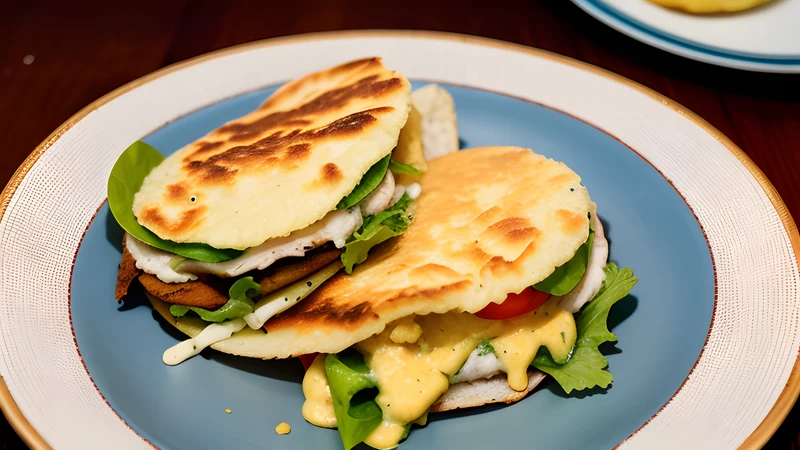
↓ Jump to recipeThe arepa is the daily bread of Venezuela and Colombia, a griddled corn cake eaten at breakfast, split and stuffed at lunch, served plain alongside dinner. But one arepa outranks all the others in fame, and it has a story worth telling before you make it. The reina pepiada — roughly, the “curvy queen” — is filled with a cool, creamy salad of shredded chicken, ripe avocado and mayonnaise, and it is the arepa that Venezuelan expatriates chase across the world.
It was invented in Caracas in the 1950s by the Álvarez brothers, who ran an arepera and named their new creation in honour of Susana Duijm, the Venezuelan beauty queen who had just won the 1955 Miss World title. “Pepiada” was Caracas slang of the day for a shapely, good-looking woman, and the generous, curvaceous fill of chicken and avocado earned the arepa the name. Seventy years later it is on every arepera menu and in every homesick Venezuelan’s memory. The dish is a small monument to a moment of national pride, and it happens to be one of the great sandwiches of the Americas.
Arepas Reinas Pepiadas
Ingredients
- 2 cups (250g) white masarepa (pre-cooked cornmeal, e.g. Harina P.A.N.)
- 2.5 cups (600ml) warm water, approximately
- 1 tsp fine salt
- 1 tbsp neutral oil, plus more for the griddle
- 2 cooked chicken breasts, finely shredded (about 300g)
- 1 ripe Hass avocado
- 3 tbsp good mayonnaise
- Half a small onion, very finely diced
- Juice of half a lime
- Small bunch coriander, chopped
- Salt and black pepper
Method
- Stir the salt into the warm water. Add the masarepa gradually, mixing with your hand, until you have a soft dough. Add the oil and knead for 2 minutes. Rest for 5 minutes, then check: it should be smooth and not crack at the edges when patted. Adjust with water or masarepa.
- Divide into 6 balls and pat each into a disc about 9cm across and 1.5cm thick, smoothing any cracks with a wet finger.
- Heat a lightly oiled griddle or heavy pan over medium heat. Cook the arepas for 6 to 7 minutes a side until a deep golden crust forms and they sound hollow when tapped.
- For a full crust, finish in a 180C oven for 8 minutes so the centre cooks through.
- Mash the avocado roughly. Fold in the shredded chicken, mayonnaise, onion, lime juice and coriander. Season well with salt and pepper.
- Split each hot arepa most of the way through and pack generously with the chicken-avocado salad. Eat straight away.
The flour is not cornmeal
Let me clear up the single thing that trips up everyone making arepas for the first time. You cannot make them with polenta, cornflour, cornstarch or ordinary cornmeal. You need masarepa, which is a specific pre-cooked corn flour — the corn is cooked, dried and ground so that it hydrates instantly into a mouldable dough. The two brands you will find are Harina P.A.N. and Harina Doña Arepa, sold in Latin and international shops in yellow or white bags. White masarepa is traditional for reina pepiada. Do not confuse masarepa with masa harina, the lime-treated Mexican corn flour used for tortillas — they behave differently and are not interchangeable.
Masarepa also comes in white and yellow, and the two carry slightly different characters even though they behave the same in the bowl. White is the default for the reina pepiada and most savoury fills, with a clean, mild corn flavour; yellow has a sweeter, more pronounced corn taste and makes a handsome golden arepa that many people prefer for breakfast. Buy whichever the recipe calls for, and store the open bag well sealed, because the flour picks up moisture and stale masarepa makes a dull dough. Traditionally arepas are cooked on a budare, a flat, slightly domed cast-iron or clay griddle that holds a steady, even heat, and if you cook them often it is worth seeking one out. A heavy cast-iron frying pan or a flat tawa does the same job for everyone else. The key in every case is patience with the heat: a moderate, unhurried griddle builds the crust the dish depends on.
Once you have the right flour, the dough is genuinely easy. Warm water, salt, and the flour added gradually until it comes together into a soft, smooth mass like modelling clay. The one test that matters: pat a ball flat and look at the edges. If they crack and crumble, the dough is too dry — wet your hands and knead in a little more water. If it sticks to everything, add a spoon more masarepa. A five-minute rest lets the flour fully hydrate, and the dough almost always needs a touch more water after resting, so check again.
Cooking the arepa
Shape smooth discs about a centimetre and a half thick, smoothing the edges with a wet finger so they do not crack in the pan. Griddle them on a lightly oiled heavy pan over medium heat — medium, not high, because you want a deep golden crust to build slowly while the inside cooks. Rushed on high heat they scorch outside and stay raw and pasty within.
For thick arepas destined for splitting, the reliable move is to griddle both sides until crusted and coloured, then transfer them to a 180C oven for eight to ten minutes to cook the centre through. You know they are done when they feel light and sound hollow when tapped, like a little drum. This crust-and-hollow structure is the whole point: the shell goes crisp, the inside steams into a soft crumb, and when you split it there is a natural pocket waiting to be filled.
The reina pepiada filling
The salad is where restraint pays off. You want it cool, creamy and fresh, never heavy. Shred the cooked chicken finely — poached chicken breast is standard, though leftover roast works well and tastes better. Mash a ripe Hass avocado roughly so there are still some lumps, then fold in the chicken, just enough mayonnaise to bind and enrich, a little very finely diced onion, lime juice to keep the avocado green and cut the richness, and plenty of chopped coriander. Season assertively with salt and black pepper; a bland filling drags the whole thing down.
Some cooks add a spoon of the avocado mashed to a purée for extra creaminess, and in Venezuela you will occasionally find peas in the mix, though purists frown. Keep the mayonnaise honest and modest — this should taste of avocado and chicken, with the mayo as background, never a mayonnaise salad with a little chicken in it.
Poaching the chicken so it stays juicy
If you are cooking chicken specially for this, do not boil it hard. Put the breasts in a pan with cold water to cover, a bay leaf, half an onion and a good pinch of salt, bring it to a bare simmer, then turn the heat off, cover, and leave it for fifteen to twenty minutes off the heat. The residual heat cooks the breast through without the fierce bubbling that turns it stringy and dry. Let it cool in the poaching liquid if you have time, then shred with your fingers along the grain into fine threads rather than chopping into cubes — the fine strands catch the dressing far better and give the soft texture the reina pepiada is known for. Save the poaching liquid; it is a light stock worth freezing.
The other queens and kings
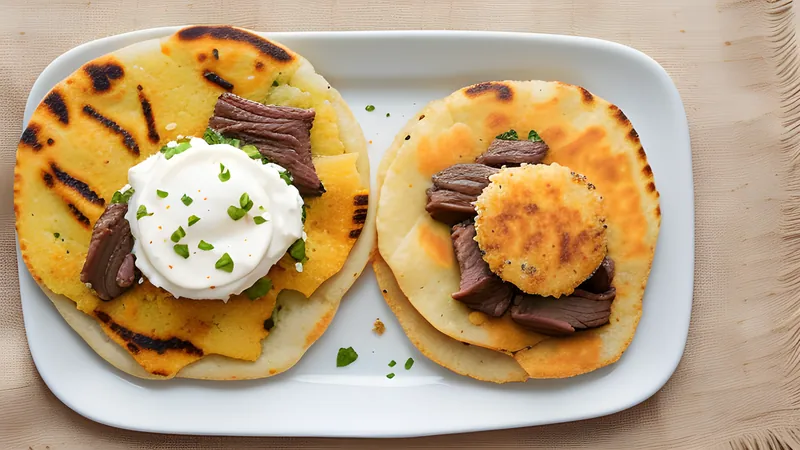
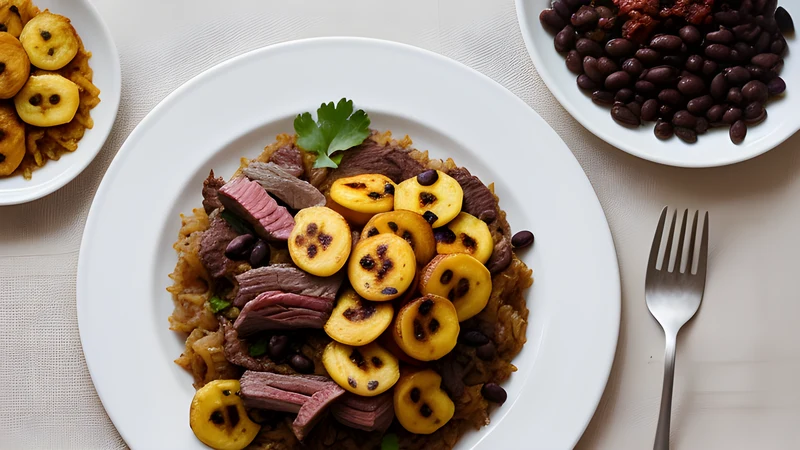
Once you can griddle a good arepa, a whole menu opens up, because Venezuela names its fillings with real affection. The reina pepiada is the famous one, but its close relative the sifrina adds grated yellow cheese to the same chicken-and-avocado salad. The pelúa, the “hairy one”, is shredded beef with yellow cheese; the dominó is black beans with white cheese, named for the domino colours; the catira is chicken and cheese; the rumbera is roast pork with cheese. There is even the pabellón arepa, which packs in the full national plate of shredded beef, black beans and fried plantain. Colombia treats the arepa differently again: often thinner, unfilled, and eaten as an accompaniment or split and buttered, with the cheese-stuffed arepa de choclo made from sweet young corn a firm favourite. Knowing the family helps you cook, because it tells you the shell is a constant and the fill is where a household stamps its identity. Master the disc and the griddle, and you can work through the whole list at your own pace. The reina pepiada earns its fame by being the coolest and creamiest of them, but the same shell that carries it will carry any of its cousins the moment you fancy a change.
Filling and eating
Split each arepa while it is hot, cutting most of the way through so it opens like a pitta pocket but stays hinged. Pack it full — the reina pepiada is meant to be overstuffed, spilling a little at the edges. Eat immediately, while the crust is crisp against the cold, creamy fill. That contrast of hot, toasty corn shell and cool avocado salad is the entire pleasure, and it fades within minutes as the arepa softens, so this is not a make-ahead sandwich.
Getting ahead and keeping things
You can cook plain arepas earlier in the day and revive them: a few minutes in a hot oven or a dry pan brings back the crust. The chicken-avocado salad is best made fresh because avocado browns, but if you must prepare it an hour ahead, press cling film directly onto the surface and keep the extra lime handy. Uncooked arepa dough dries out quickly, so keep it covered with a damp cloth while you work through the batch.
Two faults account for most first-time disappointments. A dough that cracks around the edges as you shape it is too dry, and the fix is to wet your hands and work in a little more water until the surface goes smooth. An arepa that stays gummy in the middle went onto too fierce a heat, so the crust set and coloured before the centre could cook; drop the temperature and give it the oven finish. Neither problem is fatal once you can read the signs.
Leftover plain arepas are one of the great breakfasts — split, toasted, and filled with butter and a slab of white cheese, or a fried egg. In Venezuela the plain arepa is a blank canvas eaten every single day, and the reina pepiada is just its most glamorous outfit.
Other fills and where this sits
The same arepa shell takes any number of fillings. Split it and stuff it with black beans, shredded beef and white cheese and you are close to the components of a pabellón criollo, Venezuela’s national plate, served here between corn instead of over rice. For the full-dress Venezuelan occasion there is the labour-of-love Christmas parcel hallacas, which shares this same devotion to corn dough and slow-built filling. Between the everyday arepa and the once-a-year hallaca sits the whole warmth of the Venezuelan kitchen.
Get the right flour, keep the griddle at medium, and overfill without apology. The reina pepiada earned its crown by being generous, and a stingy one misses the point entirely.
Related Content