Apple and Caraway Coleslaw
Crunchy, tangy and a little aromatic
Contents
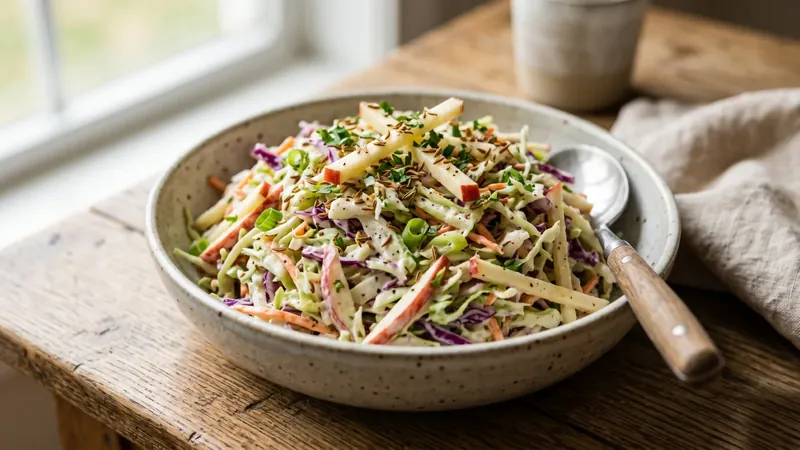
↓ Jump to recipeColeslaw can be a sad, claggy afterthought, but a couple of small changes turn it into something you actively look forward to. Coarsely grated apple, stirred into the dressing skin and all, brings sweetness and an extra layer of crunch, while a teaspoon of toasted caraway lends a warm, faintly aniseed aroma that lifts the whole bowl. The result is fresh and tangy rather than heavy, the ideal partner to a roast, a burger or a slab of mature cheese.
Apple and Caraway Coleslaw
Ingredients
- 1 tsp caraway seeds
- 400g white cabbage, finely shredded
- 2 carrots, coarsely grated
- 1 crisp eating apple, such as Braeburn
- 1/2 small red onion, very thinly sliced
- 100g mayonnaise
- 2 tbsp natural yoghurt
- 1 tbsp cider vinegar
- 1 tsp Dijon mustard
- Small handful of chopped parsley
- Salt and black pepper
Method
- Toast the caraway seeds in a dry frying pan over a medium heat for a minute or two until fragrant, then tip out to cool.
- Put the shredded cabbage and grated carrot into a large bowl.
- In a smaller bowl, whisk together the mayonnaise, yoghurt, cider vinegar and Dijon mustard, then season.
- Grate the apple coarsely, leaving the skin on, and stir it straight into the dressing to stop it browning.
- Add the sliced red onion and most of the toasted caraway seeds to the dressing.
- Pour the dressing over the cabbage and carrot and toss thoroughly until everything is evenly coated.
- Taste and adjust the seasoning, adding a little more vinegar if you like it sharper.
- Scatter with the parsley and remaining caraway seeds, and chill for 20 minutes before serving.
The Story
Coleslaw has a longer pedigree than its supermarket-tub reputation suggests. The name comes from the Dutch koolsla, a contraction of kool, meaning cabbage, and sla, meaning salad. Dutch settlers brought the dish to the Hudson Valley in the seventeenth century, when the area was still the colony of New Netherland, and it took root and evolved there; the anglicised spelling we use today grew out of that transplanted tradition. The idea underneath has always been the same simple thing: raw cabbage, finely cut and bound with a dressing, a clever way of turning a hardy, long-keeping winter vegetable into something fresh and palatable. Early American versions were dressed with little more than melted butter, vinegar and salt; the mayonnaise-heavy slaw most people picture only became possible once commercial mayonnaise arrived in jars in the early twentieth century.
The dressing is where styles diverge, and where most shop-bought slaw goes wrong. Some cooks favour a sharp vinaigrette, others a thick, sweetened blanket of mayonnaise. This recipe splits the difference by cutting the mayonnaise with natural yoghurt and cider vinegar, so the slaw stays light and keeps its tang without turning gloopy or greasy. A teaspoon of Dijon adds backbone and a little heat that stops the whole thing tasting flat. The aim is to coat the vegetables rather than drown them, leaving the cabbage and carrot with plenty of audible crunch. If you want to be exact about it, dress the vegetables about twenty minutes before serving rather than hours ahead: salt in the dressing slowly draws water out of the cabbage, and a slaw made too early sits in a puddle of its own liquid by the time it reaches the table.
Apple is a natural friend to cabbage, a pairing found through the cooking of northern Europe, from German and Polish kitchens to British ones. Choosing a crisp eating variety such as Braeburn, Cox or Granny Smith keeps the texture firm and the flavour balanced between sweet and sharp; softer varieties like Golden Delicious tend to collapse into mush against the dressing. Grating the apple straight into the acidic dressing is a small but genuinely useful trick. Cut apple browns because an enzyme called polyphenol oxidase reacts with oxygen; the acid in the vinegar lowers the pH and slows that reaction right down, which is the same reason a squeeze of lemon keeps sliced apple pale. Leaving the skin on adds colour, fibre and a little extra bite, so there is no reason to peel it.
Caraway is the real signature here, and the seed that lifts this out of the ordinary. These slender, ridged, crescent-shaped seeds come from Carum carvi, a plant in the same family as carrots, parsley and fennel, and they carry a distinctive warm, earthy flavour with a clear hint of anise. It is the seed that flavours rye bread and a long list of Central European cabbage dishes, from sauerkraut to braised red cabbage. Cabbage and caraway have such a long-standing affinity that the seed can seem almost purpose-built to season the vegetable, which is why the two turn up together so reliably across German, Austrian, Hungarian and Scandinavian cooking. If you like that flavour in bread as much as in salad, the same seed does quiet, aromatic work in a rye and caraway soda bread.
Toasting the seeds briefly in a dry pan is not an optional flourish; it is the step that makes the dish. The gentle heat drives off a little moisture and volatilises the aromatic oils, which rounds off any raw, soapy harshness and deepens the fragrance. Watch them closely, because they go from fragrant to acrid in seconds, and tip them straight out of the hot pan the moment they smell nutty so they stop cooking. Crush a small pinch between your fingers before adding them if you want the flavour to carry further through the slaw.
Let the finished slaw sit for twenty minutes or so before serving. That short rest gives the cabbage time to soften just slightly and lose its squeaky rawness, and lets the flavours mingle; bring it to the table while it is still cold and crisp. It keeps in the fridge for a day or two, though the apple is at its freshest soon after mixing and the cabbage gradually gives up more water, so give it a quick drain and a stir before serving leftovers. It is at its best alongside something rich: a Sunday roast, a burger, or a wedge of mature Cheddar and a hunk of bread. For a sweeter cousin at the other end of the meal, the same apples turn up in a salted caramel apple crumble, and if you are cooking a bigger spread, a batch of vegetable samosas makes a good crunchy partner on the same table.
Getting the texture right
The single greatest fault in homemade coleslaw is watery, limp cabbage, and it is entirely avoidable. Shred the cabbage as finely as you can, ideally on a mandolin or with a sharp knife rather than a box grater, which tends to bruise and crush the leaves and release their water prematurely. The carrot is better coarsely grated so it holds some bite; grate it too fine and it turns to mush and bleeds colour into the dressing. If you are making the slaw more than an hour ahead, a useful professional trick is to salt the shredded cabbage lightly, leave it in a colander for twenty minutes, then squeeze out the released water and pat it dry before dressing. This concentrates the flavour and guarantees crunch even in leftovers, at the cost of a slightly softer texture. For a same-day slaw dressed shortly before serving, you can skip that step entirely.
Make-ahead and storage
Coleslaw is one of the few salads that genuinely benefits from a short sit, but it turns against you if you leave it too long. For same-day serving, dress the vegetables twenty minutes to an hour before the meal and keep the bowl covered in the fridge until the last moment. If you need to prepare further ahead, shred the cabbage and carrot, grate the apple into a little of the acidulated dressing, and store the vegetables and the mayonnaise dressing separately, combining them only when you are ready to serve. Dressed slaw keeps for a day or two in a sealed container, though it steadily gives up water and softens; drain off any pooled liquid and give it a brisk stir before it goes back on the table. The caraway flavour, if anything, deepens overnight, so leftovers are rarely a hardship.
Substitutions and variations
The recipe is forgiving. Swap half the white cabbage for red, or for a mix that includes finely shredded kale or Brussels sprouts, for a slaw with more colour and a slightly more robust flavour. If you cannot get on with mayonnaise at all, use 150g of thick natural yoghurt in its place, adding an extra teaspoon of Dijon and a little more cider vinegar to compensate for the loss of richness. For a dairy-free version, use a vegan mayonnaise and skip the yoghurt, loosening the dressing with a teaspoon of olive oil instead. A grated eating apple can become a small, tart Bramley if that is what you have, though you will want a pinch more sugar in the dressing to balance it. And if caraway is not to your taste, toasted fennel or cumin seeds each shift the slaw in a different but equally welcome direction: fennel keeps it in the same aniseed register, while cumin nudges it towards something warmer and more savoury for serving alongside grilled or spiced food.
Related Content