Appelflappen: Dutch Apple Fritters for New Year's Eve
Puff pastry triangles, brown-butter apple, and the last hot thing you eat before midnight
Contents
↓ Jump to recipeEvery year in late November, a small aluminium hut appears on a Dutch street corner that had no hut in October. It has a serving hatch, a queue, and a smell you can find with your eyes shut. That is the oliebollenkraam, and it sells two things: oliebollen, which are yeasted dough balls fried until they look like meteorites, and appelflappen, which are triangles of puff pastry stuffed with spiced apple and dropped into the same oil. The hut stays until roughly 2 January. Then it goes, and the corner is a corner again for eleven months.
Appelflappen are the ones I actually want. Oliebollen are heavy and they go stale in about ninety minutes. An appelflap has shattering laminated pastry, hot apple that keeps its shape, and a snowfall of icing sugar that gets on your coat. Made at home, at 180°C, with apples you chose yourself, they are considerably better than the ones from the hut — and the whole thing takes an afternoon, most of which is the filling sitting in the fridge getting cold.
Appelflappen: Dutch Apple Fritters for New Year's Eve
Ingredients
- 500 g Goudreinet or Bramley apples (about 3 medium), peeled and cored
- 40 g unsalted butter
- 60 g caster sugar
- 60 g raisins
- 3 tbsp dark rum (or apple juice)
- 1.5 tsp ground cinnamon
- 1/4 tsp ground cardamom
- 1/4 tsp fine salt
- 2 tsp lemon juice
- 2 tsp cornflour
- 10 sheets frozen puff pastry, 10 x 10 cm, thawed
- 1 egg, beaten
- 2 litres sunflower oil, for frying
- 40 g icing sugar, for dusting
Method
- Warm the rum in a small pan until steaming, pour it over the raisins in a bowl and leave them to swell for 20 minutes.
- Cut the peeled apples into 1 cm dice. Melt the butter in a wide frying pan over medium heat and keep cooking it for 3-4 minutes, swirling, until the milk solids turn hazelnut-brown and it smells toasted.
- Add the apple, sugar, cinnamon, cardamom and salt. Cook over medium-high heat for 8-10 minutes, stirring, until the apple is tender at the edges and still holds its shape, and the pan looks wet rather than syrupy.
- Drain the raisins, reserving the liquid. Stir the raisins and lemon juice into the apple. Slake the cornflour with 2 tsp of the reserved rum and stir it in. Cook for 1 minute more until the liquid thickens and clings. Spread the filling on a plate and chill for at least 45 minutes, until cold and stiff.
- Lay a pastry square on a lightly floured board. Place 2 heaped tablespoons of cold filling on one half, leaving a 1.5 cm border. Brush the border with beaten egg.
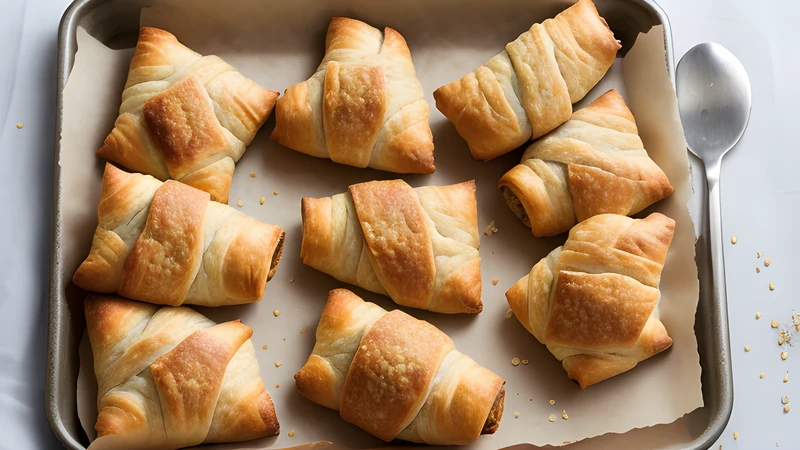
- Fold the square corner to corner into a triangle. Press the edges together with your fingers, then seal firmly all round with the tines of a fork. Repeat with the rest. Chill the triangles for 20 minutes.
- Heat the oil in a deep, heavy pan to 180°C, using a thermometer. The oil should be no more than a third of the way up the pan.
- Fry three at a time, seam-side down first, for 3 minutes, then turn and fry for 2-3 minutes more, until deep gold and visibly puffed. Keep the oil between 175°C and 180°C between batches.
- Lift onto a rack set over kitchen paper. Rest for 5 minutes, dust heavily with icing sugar and eat warm.
Oud en Nieuw, and the hut on the corner
The Dutch fry at the turn of the year with an enthusiasm that surprises visitors. Oud en Nieuw — old and new — is a domestic night. People stay in, the television runs the oudejaarsconference (a satirist’s year-in-review monologue, an institution since Wim Kan’s radio broadcasts in the 1950s), and at midnight the entire country goes outside and sets off fireworks in the street, legally, at once. In the eastern provinces they still do carbidschieten: calcium carbide and water in a milk churn, lit, firing the lid across a frozen field. Between the television and the fireworks, there is a table with coffee and fried pastry on it.
The apple in a proper appelflap should be a Goudreinet, which the rest of Europe knows as Belle de Boskoop. It turned up as a chance seedling in Boskoop, in South Holland, in 1856, and it is one of the great cooking apples: high acid, dense flesh, and enough structure to survive being cooked twice — once in the pan, once in the oil. Bramley is the closest British equivalent and works exactly as well. A Golden Delicious will collapse into sauce and blow your pastry open, which is a lesson you only need once.
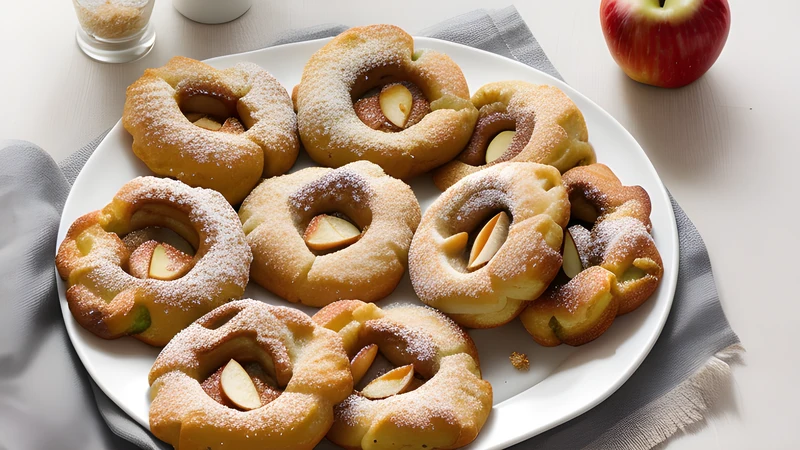
It is worth knowing that the hut sells a second apple thing, and the two get confused constantly. An appelbeignet is a whole ring of apple, cored, dipped in a loose beer batter and fried; it comes out soft and craggy. An appelflap is the puff-pastry triangle. Ask for the wrong one and you will get the wrong one. Both are correct at New Year, and Dutch families have firm household positions on which is superior.
There is a story you will hear about why the Dutch fry in midwinter at all — that the fat-cakes were eaten to defend against the Germanic goddess Perchta, who flew over the houses during Yule and slit open the bellies of anyone who had not feasted, her sword sliding harmlessly off the grease. It is a wonderful story and it is repeated everywhere. Folklorists have never managed to tie it to any medieval source, and the honest answer is duller: fat and sugar were expensive, midwinter was the feast, and a deep pan of hot oil is a very efficient way to turn cheap flour and apples into something worth queueing for. The Perchta version survives because it is better. Meanwhile the AD Oliebollentest, in which the newspaper Algemeen Dagblad has sent judges to rank the nation’s frying huts every year since 1993, is entirely real, and stallholders put the results in their windows for a decade afterwards.
Buy the pastry
Nobody in the Netherlands makes puff pastry for appelflappen. It is sold frozen, in stacks of 10 x 10 cm squares, in every supermarket, and it is good. Home-laminating a dough that you are about to submerge in oil is a way of spending five hours to arrive at the same triangle. Buy the all-butter sheets if you can find them — the flavour difference in a fried pastry is real, because the frying fat is neutral sunflower oil and the only butter taste comes from the dough itself.
If you can only get a rolled sheet rather than squares, unroll it, cut 10 cm squares, and stack the offcuts flat on top of one another before re-rolling. Never ball them up: puff pastry has horizontal butter layers and squashing them into a ball turns your second batch into shortcrust.
Why the filling has to be cold
This is the whole recipe, and it is the step everyone skips.
Warm filling gives off steam. Steam inside a sealed triangle in 180°C oil expands fast, and it will find the weakest part of your seal and open it. Once the seal goes, oil floods the cavity, the apple boils out, and you are left with a sad flat thing and a pan of sugary oil that foams. Cold filling starts as a solid block. It thaws gently while the pastry does its own work, and by the time it is properly hot the pastry has already set into a rigid shell that can hold it.
The cornflour is doing the same job from the other side. Cooked apple releases a lot of water, and 2 teaspoons of cornflour binds that free liquid into a gel that stays put. Slake it in cold liquid first — dropped in dry it will seize into lumps that never disperse.
The brown butter is the twist, and it earns its place. Cooking the butter until the milk solids toast gives you nutty, slightly savoury compounds that make the filling taste like it has apple pie crust in it before it has met any pastry. Watch it: from foaming to hazelnut is about ninety seconds, and from hazelnut to burnt is about twenty. Get the apple in as soon as it smells right, because the fruit’s water stops the browning dead.
Frying laminated pastry
Puff pastry works in an oven because the water in the dough flashes to steam and shoves the butter-separated layers apart. In oil at 180°C, the same thing happens roughly three times faster and much more violently. The triangle visibly inflates in the first minute. That is why the seam goes down first — the pastry sets in that orientation while the pressure inside is still building, and a seam that has already crisped is far harder to burst.
Temperature discipline decides everything else. Below about 165°C the pastry absorbs oil faster than it can seal its surface, and you get a translucent, greasy flap. Above 190°C the outside is mahogany before the inside layers have finished separating, leaving a raw, doughy seam. Three at a time in a big pan; each cold triangle drops the oil temperature by 8-10°C, and a crowded pan never recovers.
Drain on a rack, never straight onto paper. On paper, the underside sits in its own condensing steam and softens within two minutes. And dust the icing sugar on while they are warm but no longer wet — too early and it dissolves into a glaze, too late and it slides off.
The oil, and feeding a room
Sunflower oil is the Dutch default and the right call: neutral, cheap enough to use two litres of without flinching, and stable to about 225°C. Groundnut works. Olive oil does not — it smokes low and its flavour is aggressive against apple. You want a pan wide enough that three triangles are not touching, and deep enough that two litres fills it a third of the way. That headroom is a safety margin, because sugary filling that escapes will foam the oil up hard and fast.
Strain the cooled oil through a coffee filter into the bottle it came from and it will fry two or three more batches before it darkens and starts smelling of old chips. Sugar is what kills frying oil quickest, so appelflappen oil has a shorter life than chip oil. When it goes brown and viscous, it is done; pour it back into a bottle and take it to the household waste depot rather than the sink.
For a party, the freezer does the work. Shape and seal the triangles, freeze them solid on a tray, then bag them. They fry from frozen at 175°C — slightly lower, because the centre needs longer — for about 7 minutes, turning once. This is the only version I would actually plan a New Year’s Eve around: the filling is made on the 29th, the triangles are shaped on the 30th, and on the night somebody stands at the pan for twenty minutes producing hot ones on demand instead of a cold pile made at six o’clock.
Salt the oil never, and salt the filling always. That quarter-teaspoon in the apple is the difference between fruit that tastes sweet and fruit that tastes of apple. Dutch bakery versions tend to skip it, which is why supermarket appelflappen taste flat and slightly one-note even when the pastry is good.
The honest case against
They are at their peak for about fifteen minutes and merely good for an hour. This is a pastry with a short, brutal window, which is exactly why the Dutch buy them from a hut on the night and eat them standing up. If you want apple in pastry that will still be excellent tomorrow, apfelstrudel is the better use of your afternoon, and gevulde speculaas will happily sit in a tin for a week. Appelflappen are for a specific night, in company, with the pan still warm.
Variations, and keeping them
Baked, at 200°C for 22-25 minutes on a lined tray, egg-washed and sugared: drier, flakier, closer to a British turnover, and entirely acceptable if you would rather not run a pan of oil while children are indoors. You lose the shattering quality that only frying gives.
Speculaas spice in place of the cinnamon and cardamom — cinnamon, clove, mace, white pepper, ginger — pushes the whole thing towards Dutch Christmas. A teaspoon of apricot jam under the apple adds gloss and sharpness. A firm pear, cooked the same way, is very good and nobody will guess.
They reheat better than they have any right to: 180°C oven, on a rack, 5 minutes, then re-dust. What you cannot do is fry them in advance and cover them. Cold leftover filling keeps three days in the fridge and is excellent on Dutch baby pancakes, or spooned over yoghurt with a crushed stroopwafel on top, which is what happens in my kitchen on 1 January while the street outside is being swept.
Related Content