Appam and Ishtu: Lacy Hoppers with Coconut Stew
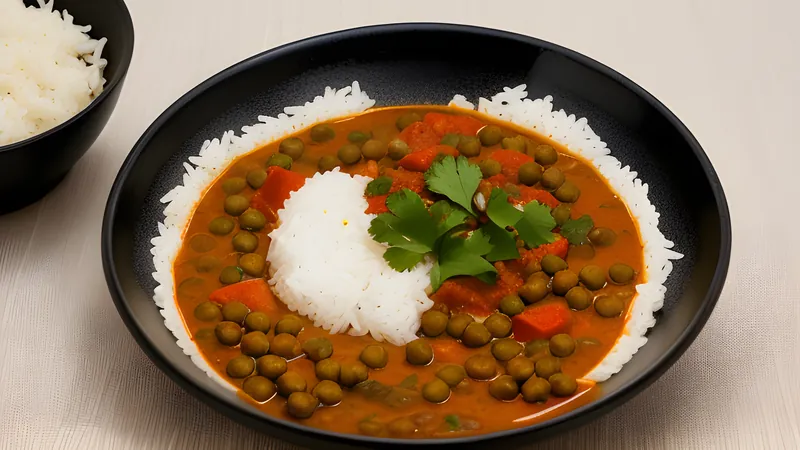
Fermented rice-and-coconut pancakes, bowl-shaped, alongside a pale vegetable stew

Contents
↓ Jump to recipeAppam is one of the few Indian breads that looks nothing like what people picture when they hear the word bread. It is a bowl-shaped pancake, thin and delicately lacy at the rim, thick and soft as a cushion in the middle, made from a fermented batter of ground rice and coconut swirled around a small curved pan rather than poured flat. Alongside it sits ishtu, a pale, gently spiced coconut-milk vegetable stew that Kerala’s cooking took from a colonial Irish stew and remade almost entirely in its own image, keeping little beyond the idea of vegetables simmered soft in a white sauce.
My clever twist is folding a portion of already-cooked rice into the raw, soaked rice before grinding. It is a trick some Kerala households use and others skip, and it changes the appam’s texture noticeably: the cooked rice’s starches have already gelatinised, so the batter ferments a little faster and the finished pancake’s centre comes out softer and slightly springier, closer to a proper sourdough crumb than the flatter, denser middle you get from an all-raw-rice batter.
Appam and Ishtu: Lacy Hoppers with Coconut Stew
Ingredients
- 300g raw rice, soaked 5 hours
- 100g cooked rice (leftover, or freshly cooked and cooled)
- 200g fresh grated coconut, or frozen and thawed
- 1 tsp active dried yeast, or 2 tbsp thick coconut toddy if available
- 1 tbsp sugar
- 1/2 tsp fine sea salt, plus more to taste
- Water, as needed
- 2 tbsp coconut oil, for the pan
- For the ishtu: 500ml coconut milk (first and second extraction combined)
- 2 medium potatoes, cut into 2cm chunks
- 1 carrot, sliced
- 80g green beans or peas
- 1 onion, thinly sliced
- 1 thumb ginger, julienned
- 3 green chillies, slit
- 2 sprigs fresh curry leaves
- 1 cinnamon stick
- 3 cloves
- 3 green cardamom pods, cracked
- 2 tbsp coconut oil
- Fine sea salt, to taste
Method
- Drain the soaked rice and blend with the cooked rice, grated coconut and just enough water to make a thick, smooth batter, similar in consistency to a thick pancake batter.
- Dissolve the yeast and sugar in 3 tbsp warm water, wait 10 minutes until foamy, then stir into the batter along with the salt. Cover and leave in a warm spot for 6-8 hours or overnight, until visibly risen and bubbled.
- For the ishtu, heat coconut oil in a pot and fry the onion, ginger, green chillies and curry leaves for 3-4 minutes until the onion softens without colouring much.
- Add the cinnamon, cloves and cardamom and cook 1 minute until fragrant, then add the potatoes and carrot with the thinner, second-extraction coconut milk (or a splash of water if using one type of milk) and a pinch of salt.
- Simmer 12-15 minutes until the vegetables are just tender, then add the beans or peas and cook 5 minutes more.
- Pour in the thick, first-extraction coconut milk, season with salt, and warm through gently for 2-3 minutes without letting it boil, which can make the milk split. Keep warm.
- For the appam, loosen the fermented batter with a little water if it has thickened overnight, to a consistency that coats the back of a spoon but still pours freely. Season with a final pinch of salt.
- Heat a well-seasoned appam pan (a small, curved wok-like pan) over medium heat and brush lightly with coconut oil. Ladle in a portion of batter and immediately swirl the pan in a circular motion so the batter climbs the sides thinly, leaving a thicker pool in the centre.
- Cover and cook 2-3 minutes until the edges turn lacy and golden-brown and the centre is set and spongy, with no need to flip. Lift out with a thin spatula and repeat, re-oiling the pan lightly every few appam.
- Serve the appam warm, cupped side up, with the warm ishtu spooned into the centre.
A pancake shaped by its cooking vessel
Appam is defined as much by its pan as by its batter. The appachatti is a small, deep, rounded pan, traditionally cast iron or now often non-stick, shaped almost like a miniature wok, and the technique of swirling the batter up its curved sides the instant it hits the hot metal is what produces the pancake’s signature shape: thin, crisp, lacy edges climbing to a thick, soft, almost custardy centre where the batter has pooled. Without that specific pan and that specific swirling motion, you get something closer to a flat rice pancake — pleasant, but not appam.
The dish is central to Christian and Syrian Christian households in Kerala in particular, where appam and stew is a standard Sunday breakfast and a fixture of Christmas morning, though it is eaten across religious communities throughout the state and in Sri Lanka, where a similar dish is called hoppers. It sits alongside puttu and kadala curry as one of Kerala’s two great steamed breakfast staples, the two dishes rotating through the same households on alternating mornings. Toddy, the fermented sap of the coconut palm, was the traditional leavening agent, lending a distinctive sourness and natural fizz to the batter well before commercial yeast reached Kerala’s kitchens; toddy shops still supply it to some traditional cooks today, though yeast has become the practical everyday substitute almost everywhere else.
Why fermentation is not optional
Unlike a dosa batter, which will still cook into something edible if under-fermented, appam genuinely does not work without a proper rise. The lacy edge, the dish’s most recognisable feature, is created by tiny bubbles of carbon dioxide in the fermented batter bursting against the hot pan surface as the thin outer layer sets; an unfermented or under-fermented batter has no bubbles to burst and produces a flat, dense pancake with none of the characteristic lace. Give the batter genuinely six to eight hours in a warm spot, and look for visible bubbling and a faint sour smell before you judge it ready, rather than going by the clock alone — a cold kitchen can easily double the time needed.
The blend of raw and cooked rice matters here too. Ground raw rice alone gives the fermenting yeast plenty of starch to work on but produces a slightly grainy batter; the pre-cooked rice’s already-broken-down starch grinds smoother and gives the yeast an easier, faster source of sugar to ferment, which is part of why this version rises a little quicker than an all-raw-rice batter and why the finished pancake’s centre has a noticeably softer, spongier bite.
Two extractions of coconut milk
Ishtu’s gentle, layered richness comes from using coconut milk in two stages rather than one. The vegetables cook first in a thinner, second-extraction milk — made by blending already-squeezed coconut a second time with more water — which has enough body to simmer the potatoes and carrots without curdling under sustained heat. The thick, first-extraction milk, pressed straight from freshly grated coconut with minimal water, goes in only at the very end and only ever gets warmed gently, never boiled; thick coconut milk’s proteins and fats separate visibly if pushed to a hard simmer, turning a silky stew grainy and oily-looking. If you only have one type of tinned coconut milk to hand, use it for both stages but hold back roughly a third to add at the end unboiled, to preserve at least some of this textural contrast.
The whole spices — cinnamon, clove, cardamom — are used whole and fried briefly in oil rather than ground, which is deliberate. Ishtu is meant to taste gently fragrant rather than assertively spiced, and whole spices release their oils slowly into the coconut milk without the more concentrated, sometimes bitter edge ground versions can bring. Fish the whole spices out before serving if you like, though most Kerala households leave them in and simply eat around them, the same way you would with a whole bay leaf in a stew.
Serving and keeping
Appam and ishtu are eaten together, the pancake’s soft centre torn and used to scoop the stew, its lacy crisp edges providing textural contrast. If you are laying out a full Kerala breakfast spread, a bowl of meen moilee is a natural companion for the same reason ishtu is: both are gentle, coconut-based, and built to be eaten with something to scoop them up.
Appam batter keeps in the fridge for up to three days, continuing to ferment slowly and developing more sourness the longer it sits; bring it back to room temperature and loosen with a splash of water before cooking, since chilled fermented batter thickens and needs adjusting each time. Cooked appam do not keep or reheat well — the lacy edges turn leathery and the soft centre dries out — so cook only what you plan to eat in one sitting and hold the rest of the batter for the next morning. Ishtu keeps for two days refrigerated and reheats gently on the stove; avoid the microwave, which tends to overheat the coconut milk unevenly and risks splitting it in patches.
The swirl, and why most first attempts come out flat
The single technique that separates a proper lacy appam from a flat rice pancake is the swirl itself, and it has to happen in the first two or three seconds after the batter hits the pan, while it is still thin and mobile enough to climb. Ladle in one portion, then immediately lift the pan off the heat slightly and rotate your wrist in a full circle, letting the batter run up the curved sides under its own momentum before it starts to set. Hesitate, or try to swirl a pan that has cooled too much between appam, and the batter sets flat in the base before it has a chance to climb, giving you a plain round pancake with none of the characteristic thin, crisp lace at the edge.
Pan temperature drifts across a cooking session, which is why re-oiling and briefly reheating the pan every three or four appam matters more here than it would for an ordinary flat pancake. Too cool, and the batter sets too slowly to climb before it stops moving; too hot, and the thin edges scorch and turn bitter before the thick centre has had time to cook through and set. A well-seasoned cast-iron appachatti holds heat more evenly across a session than a thin non-stick pan, which is worth knowing if your early attempts are cooking unevenly from one appam to the next.
Variations across Kerala’s kitchens
Plain appam, the version here, is sometimes called vellayappam, “white appam,” to distinguish it from kallappam, a version made with a higher proportion of toddy or a longer, more vigorous ferment that gives a noticeably more sour, almost beer-like flavour and a slightly darker colour from the extra fermentation time. Palappam takes the coconut milk itself and folds it into the batter rather than serving it alongside as stew, giving a richer, sweeter pancake often served with just a simple vegetable curry rather than ishtu specifically.
A well-known variation cracks a whole egg into the centre of the batter just after swirling and before covering the pan, letting it set gently in the thick middle while the lacy edges cook as normal — egg appam is a common addition in Kerala homes for a heartier breakfast and needs nothing more than the same covered, low-heat approach to set the egg through without overcooking the surrounding pancake.
What goes wrong
Beyond an unfermented batter producing a flat pancake, the most common issue is a batter ground too coarsely, which prevents it from climbing the pan’s sides smoothly and instead leaves visible grainy patches at the lacy edge rather than a fine, even lattice. Blend longer than feels necessary, and if your blender struggles with the quantity of rice, work in smaller batches with slightly more water rather than forcing a single overloaded jar to do the whole job at once.
The other frequent problem is a stew that splits. Ishtu’s finishing coconut milk should go in only once the pot is off any serious heat, warmed through gently rather than simmered, and stirred rather than left to sit over a flame; thick coconut milk separates into visible oil and curd once it crosses roughly a hard simmer, and there is no fixing a split stew afterward beyond straining out the worst of it and accepting a slightly less silky finish.
A loose, watery batter is the third common complaint, usually from measuring rice and coconut by volume rather than weight, since the two ingredients pack very differently depending on how finely the coconut was grated. Weigh both where you can, and treat the water quantity as approximate and adjustable rather than fixed, adding it gradually during grinding until the batter reaches the thick, spoon-coating consistency described above rather than following a rigid figure that assumes a particular brand of rice or a particular coconut’s moisture content.
Related Content