Anticuchos: The Peruvian Heart Skewer
Marinated, char-grilled beef heart from Lima's street corners
Contents
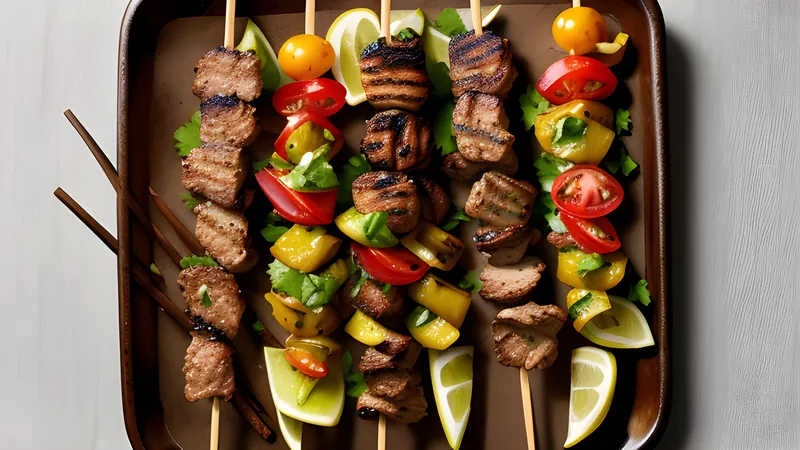
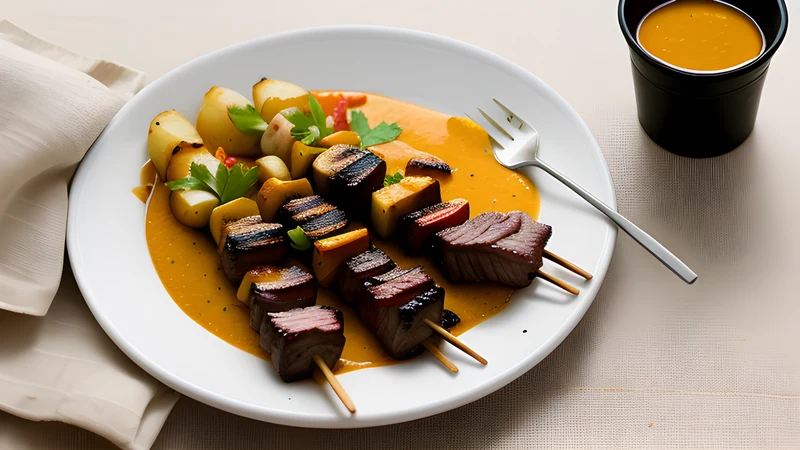
↓ Jump to recipeAnticuchos are, for my money, the finest street food in South America, and they are made from an ingredient most British cooks walk straight past: beef heart. Cubes of it, marinated in a deep red paste of aji panca chilli, garlic, cumin and vinegar, then threaded onto skewers and grilled hard over coals until the outside is charred and the inside stays tender and just pink. In Lima they are sold from smoking street carts in the evening, three skewers to a plate with a boiled potato and a nub of corn, and the queues form for the carts with the best marinade. Do not be squeamish. Beef heart is lean, clean-tasting, faintly mineral and, cooked right, more tender than steak.
I understand the hesitation about offal, but heart is the gateway. It has none of the soft richness of liver or kidney; it is a hard-working muscle, so it eats like a very lean, very flavourful beef — closer to a good bavette than to anything you would think of as offal. It is also cheap, sustainable in the nose-to-tail sense, and takes marinade beautifully. Grilled over fire with a proper Peruvian marinade, it is genuinely one of the best things you can eat off a skewer.
Anticuchos: The Peruvian Heart Skewer
Ingredients
- 800g beef heart, trimmed of fat and sinew, cut into 3cm cubes
- 4 tbsp aji panca paste (Peruvian red chilli)
- 1 tbsp aji amarillo paste (optional, for heat)
- 6 garlic cloves, finely grated
- 80ml red wine vinegar
- 1 tbsp ground cumin
- 1 tsp dried oregano
- 1 tsp freshly ground black pepper
- 1.5 tsp salt
- 3 tbsp neutral oil, plus more for basting
- To serve: boiled potatoes, boiled corn, and a fresh aji sauce
Method
- Trim the beef heart hard: remove all silverskin, fat and any tubes, leaving clean, dark red muscle. Cut into 3cm cubes.
- Whisk together the aji panca, aji amarillo, garlic, vinegar, cumin, oregano, pepper, salt and oil into a marinade.
- Toss the heart cubes in the marinade until thoroughly coated. Cover and refrigerate for at least 4 hours, ideally overnight.
- Thread 4 to 5 cubes onto each skewer, packed snugly but not crushed. Reserve the leftover marinade.
- Get a grill, griddle or barbecue very hot. Loosen the reserved marinade with a splash of oil for basting.
- Grill the skewers 2 to 3 minutes per side, basting with the loosened marinade, until well charred outside but still pink and tender within. Beef heart is lean, so do not overcook past medium or it toughens.
- Rest 2 minutes. Serve with boiled potato, corn and aji sauce.
From the plantation to the parrilla
Anticuchos have a history that runs straight through the injustices of the colonial period. The dish is generally traced to the enslaved Africans brought to coastal Peru, who were given the offcuts the Spanish landowners discarded — including the hearts — and turned them, with indigenous chillies and imported spices, into something extraordinary. The word itself may come from Quechua (anti-uchu, roughly “Andean stew” or “cut with chilli”), a reminder of how thoroughly these food cultures fused. What began as making the best of scraps became, over centuries, a national delicacy sold on every street corner.
That story of transformation — the discarded cut made glorious — sits at the heart of a lot of the world’s great street food, and Peru has more than its share of dishes born from the meeting of African, indigenous, Spanish and later Asian cooking. You taste the same layered history in aji de gallina and in the wok-fired lomo saltado. Anticuchos are usually associated with October and the Señor de los Milagros processions in Lima, when the anticucheras set up in force, but they are an everyday, all-year pleasure.
The anticuchera and her cart
It is worth picturing where this food properly belongs. The classic anticucho comes off a street cart at dusk, tended by an anticuchera, traditionally a woman, who works a long, narrow charcoal grill fanned to a fierce glow, skewers laid in tight rows, a pot of marinade beside her for basting and a stack of boiled potatoes and corn keeping warm. The smoke is part of the sales pitch; you follow your nose to the busiest cart. Regulars have their loyalties and will walk past three grills to reach the fourth, because the marinade recipe is the anticuchera’s signature and closely guarded. This is fast, sociable, standing-up eating, ordered by the skewer and eaten from a square of paper, and the whole ritual has lately climbed from the street into Lima’s smart restaurants, where chefs plate single luxurious skewers of prime heart. Both versions share the same heart: cheap muscle, dark chilli marinade, and fire. Cooking it at home, you join a very long line of cooks who took the least wanted cut and made it the thing people queue for.
Aji panca, the gentle red chilli
The marinade is built on aji panca, the dried, deep-red Peruvian chilli that is the milder, fruitier sibling of the yellow aji amarillo. Panca has almost no heat; what it brings is a berry-ish, smoky, faintly chocolatey depth and a beautiful dark red colour. It is what gives anticuchos their signature look and their savoury base note. Like aji amarillo, it is most easily bought as a paste in jars from Latin grocers.
If you cannot find aji panca paste, blend a couple of soaked dried guajillo or ancho chillies with a little smoked paprika to approximate its mild, fruity depth; it captures the spirit even if the match is not exact. A spoonful of aji amarillo alongside it adds the gentle heat that many anticucho vendors include; leave it out for a milder skewer.
Cumin is the other defining note, and Peruvian cooking uses it generously — do not be shy with it here. Together with garlic, oregano, black pepper and a good hit of red wine vinegar, it makes a marinade that is savoury, tangy and aromatic. The vinegar does double duty: it seasons and it very slightly tenderises the lean muscle.
Buying and trimming the heart
A whole beef heart is a large, dense, dark red muscle, and most butchers will order one or sell you one cheaply — it is not a prized cut, which is part of the appeal. You want to trim it properly, and this is the only fiddly part of the recipe. Cut it open, and remove all the fat, the tough silverskin, and any tubes or valves, leaving clean, deep-red muscle. What remains cuts easily into neat cubes. One heart yields a generous amount of trimmed meat, more than enough for four.
Cut the cubes a consistent 3cm so they cook evenly. Heart is very lean, which means two things: it takes a marinade quickly and deeply, and it overcooks into toughness if you are careless. Both point to the same conclusion — marinate it well, then grill it hot and fast.
The grill: hot, fast, and not a minute too long
Marinate the cubes for at least four hours, and overnight if you can. The vinegar and chilli work their way in and the meat drinks up the flavour. Thread the cubes snugly onto skewers, and reserve the leftover marinade for basting — loosen it with a little oil so it brushes on easily.
Then grill over the fiercest heat you have. This is fast cooking: two to three minutes a side over a very hot barbecue, griddle or grill, basting as you go, until the outside is genuinely charred and caramelised while the centre stays pink and tender. Charcoal is best for the smoke, but a screaming-hot cast-iron griddle indoors does a very good job. The one rule you must not break is not to overcook it. Push beef heart past medium and it goes from tender to rubbery in a matter of a minute; pull it while there is still a rosy centre and let it rest briefly.
Building the fire
Charcoal is optional, though it is where anticuchos come alive, so use it if you can. You want a bed of coals burning hot and even, ashed over to a steady glow rather than leaping flames, because flame scorches the marinade to bitterness before the meat has taken colour. Set the skewers close to the coals and work quickly, turning and basting, chasing the char that gives anticuchos their smoky edge. If flare-ups start where fat and marinade drip, move the skewers aside for a moment and let them die down. Indoors, a cast-iron griddle or a ridged grill pan heated until it is almost smoking does a creditable job, and a final blast under a hot grill can deepen the char. Whatever the heat source, the same discipline applies: get it properly hot before the meat goes on, keep the pieces moving, and lift them the instant the outside is caramelised and the centre still rosy. A resting minute lets the juices settle back into the lean muscle, and heart, being so lean, is at its tender best straight from the fire.
Serving, sauces and swaps
The classic plate is anticuchos with a boiled waxy potato and a piece of boiled corn, plus a fresh, spicy aji sauce for dipping — usually a blend of aji amarillo, coriander and a little oil, sharp and green. Some vendors add a slice of grilled potato slicked with more of the panca marinade. Keep it simple; the skewers are the star.
Aji sauce, quickly. Blend 2 tbsp aji amarillo paste with a small bunch of coriander, a garlic clove, a squeeze of lime, a splash of oil and salt until smooth and pourable. It is the same bright, punchy register that lifts a lot of Peruvian food.
The starchy sides matter more than they look. Peruvian choclo is a large-kernelled Andean corn, milder and chewier than sweetcorn, and a boiled cob of it, along with a waxy yellow potato, soaks up the smoke and the marinade and gives the lean meat something soft to lean against. If you cannot find choclo, ordinary corn on the cob and a good boiling potato stand in perfectly well.
Not ready for heart? The marinade is superb on other cuts. Use it on cubes of beef sirloin, chicken thigh, or firm tofu and grill the same way — the panca-cumin-vinegar profile carries anything. Purists will tell you it is not truly anticuchos without the heart, and they are right, but the flavour is a gift on any protein.
Make ahead. The trimmed, cubed heart sits happily in its marinade for up to 24 hours in the fridge, so it is a brilliant thing to prep the night before a barbecue. Cooked skewers are best straight off the grill, but any leftovers are good cold, sliced into a salad.
Anticuchos ask you to get over one small hesitation, and they reward it completely. A cheap, lean, deeply flavoured cut, a dark red marinade heavy with cumin and chilli, and a fierce fire — that is the whole trick, and it produces skewers that will make a convert of anyone who tries them.
Related Content