Aloo Posto: Potatoes in Poppy Seed Paste
The quiet, everyday dish Bengali kitchens never stop making
Contents
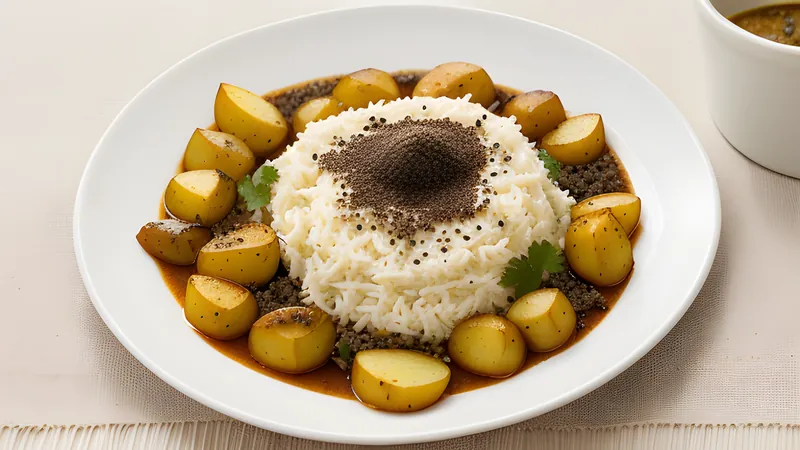
↓ Jump to recipeAloo posto does not try to impress anyone, and that is precisely the reason it has stayed on Bengali tables for generations. Potatoes fried gently in a pale, creamy paste of ground poppy seed, finished with nothing more than a little mustard oil, a couple of chillies and a pinch of sugar: it is the dish a Bengali household falls back on constantly, the equivalent of the plain pasta or the simple omelette that shows up when nobody has the energy or the time for anything more ambitious, except that this one carries a genuine regional identity that those comparisons undersell.
Aloo Posto: Potatoes in Poppy Seed Paste
Ingredients
- 600g potatoes, peeled and cut into 2cm cubes
- 60g white poppy seeds (posto)
- 3 green chillies, 2 for the paste and 1 slit for the pan
- 4 tbsp mustard oil
- 1/2 tsp nigella seeds (kalonji)
- 1 tsp ground turmeric
- 1 tsp fine salt, plus more to taste
- 1/2 tsp sugar
- 150ml water, plus more as needed
Method
- Soak the poppy seeds in warm water for 30 minutes, then drain.
- Blend the soaked poppy seeds with 2 green chillies and a splash of fresh water to a smooth, thick paste; a stick blender or small spice grinder works better than a large jug blender for this quantity.
- Toss the potato cubes with the turmeric and 1/2 tsp salt.
- Heat the mustard oil in a wide pan until it just stops smoking. Add the nigella seeds and let them sizzle for 10 seconds.
- Add the potatoes and fry over medium heat for 8–10 minutes, turning often, until the edges are golden and slightly crisp.
- Stir in the poppy seed paste, remaining 1/2 tsp salt and sugar, coating the potatoes evenly.
- Add 150ml water, the slit green chilli, cover, and simmer on low heat for 12–15 minutes, stirring occasionally and adding a splash more water if the pan looks dry, until the potatoes are tender.
- Uncover and cook a further 2–3 minutes to let any excess liquid reduce, until the paste clings to the potatoes rather than pooling. Adjust salt and serve hot with rice.
Posto: A West Bengal Habit the Rest of India Doesn’t Share
Poppy seed as a cooking ingredient, rather than a garnish scattered on bread, is a peculiarly Bengali habit within Indian cuisine more broadly. White poppy seed, known locally as posto, gets ground into a paste and used as a thickener and flavour base the way cashew paste or coconut might function elsewhere in the country, but with a distinct, faintly nutty, slightly bitter edge that no other seed quite replicates. Bengali households, particularly in rural West Bengal, historically used posto so heavily that it became something of an economic marker: posto dishes were, for a long stretch of the twentieth century, associated with a certain landed comfort, since poppy seed was never cheap and a household that could afford to cook with it regularly was making a small statement about its means. Prices have fluctuated wildly over the decades depending on international opium-poppy regulation, since the seed comes from the same plant, and Bengali cooks have watched the price of their everyday pantry staple rise and fall along with drug policy on the other side of the world, a strange quirk of supply chains that has nothing to do with the seed’s actual culinary use. India remains one of the few countries licensed to grow opium poppy legally for the pharmaceutical trade, concentrated in a handful of states including Madhya Pradesh, Rajasthan and Uttar Pradesh under strict government quota; the seed sold for cooking is a byproduct of that regulated crop, harvested after the plant has already been used for its licensed purpose, which is part of why supply and price can shift sharply when quotas or export rules change with little warning to home cooks.
Aloo posto specifically, potato cooked in this paste, is the most basic and most beloved expression of the ingredient. It turns up as a side dish at nearly every Bengali meal that is not built around a single showpiece, a quiet, dependable presence next to rice and dal, and it is often the first proper cooked dish a Bengali child learns to make, precisely because the technique is forgiving and the ingredient list is short. The traditional way to eat it is with the fingers, mashing a little of the potato and paste directly into a mound of rice with a dab of ghee, rather than eating it as a separate item off to the side of the plate — a small detail that changes how the dish reads on the tongue, since the ghee’s fat carries the poppy seed’s flavour further than it travels on its own. Bengali food writers have long pointed out that posto dishes occupy a strange dual identity: humble enough to be weekday food, yet specific enough to a single region that Bengalis living outside West Bengal will go to real lengths to source poppy seed, since it is genuinely difficult to find in general Indian grocers outside the east of the country, let alone further afield. A jar of posto in a diaspora kitchen often gets treated with something close to reverence, rationed out carefully rather than used freely, precisely because restocking it is never guaranteed to be quick or simple.
Getting the Paste Right
Soaking the poppy seeds in warm water for thirty minutes before blending softens them enough to grind smoothly; skip this step and you end up with a gritty, sandy paste no matter how powerful your blender is, since dry poppy seeds are small, hard and slippery and resist breaking down cleanly. A stick blender in a tall, narrow container, or a small dedicated spice grinder, handles this quantity far better than a wide blender jug, where the paste is too shallow for the blades to catch properly. If the paste still comes out slightly grainy after blending, pass it through a fine sieve, pressing with the back of a spoon; the small effort is worth it for the final texture, which should coat the potato in a smooth, almost velvety layer rather than sitting on top of it in gritty specks.
Choosing and Cutting the Potatoes
Waxy potatoes hold their shape better through the frying and simmering stages than floury varieties, which tend to break down at the edges and turn the dish starchy and thick rather than clean and coated. Cut the cubes to a consistent 2cm; smaller pieces overcook and turn mushy before the paste has had time to properly cling, and larger pieces need considerably longer to cook through, throwing off the timing given here. Frying the potatoes first, before the paste goes in, matters more than it might seem: those eight to ten minutes of dry frying develop a light golden crust on the outside of each cube that holds its structure through the subsequent simmer, giving you potatoes with a slight bite at the edge rather than something uniformly soft all the way through.
Do not crowd the pan during this frying stage. Potatoes need contact with the hot oiled surface of the pan to develop that edge, and a pan overloaded with cubes steams rather than fries, leaving you with pale, soft pieces that never develop the light crust the dish depends on. If you are doubling the recipe for a larger gathering, fry the potatoes in two batches rather than one crowded one, even though it costs a few extra minutes. The same logic applies to the pan size overall: a wide, shallow pan gives more surface contact than a narrow, deep pot, and is worth using here even if it means dirtying a bigger dish for what looks, on paper, like a small amount of food.
Mustard Oil, Again
As with most Bengali cooking, mustard oil is not a stylistic choice you can freely swap out for a neutral oil without losing something real. Its sharp, faintly pungent character threads through the whole dish, and because aloo posto has so few other ingredients to hide behind, the oil’s flavour is more exposed here than in a heavily spiced curry. Heat it properly, until it stops smoking, before the nigella seeds go in; raw mustard oil tastes acrid, and cooked mustard oil tastes rounded and warm, and the difference between those two states in a dish this simple is unusually noticeable.
Troubleshooting
A dish that tastes flat despite following the recipe is very often a mustard oil problem, either the oil was old and had lost its pungency, or it was not heated properly before the tempering spices went in. A paste that stays grainy after blending needs either a longer soak next time or a pass through a sieve this time; there is no fixing gritty poppy seed once it is already in the pan. If the potatoes are cooked through but the paste has not thickened to cling properly, uncover the pan and cook a few minutes longer over slightly higher heat rather than adding cornflour or any other thickener, which would dilute the poppy seed’s flavour and is not how the dish is traditionally corrected.
Storage and Substitutions
Aloo posto keeps for two days refrigerated, though the texture softens further on reheating since the potatoes continue absorbing moisture from the paste; reheat gently with a small splash of water rather than letting it dry out in a pan or microwave. It does not freeze well, since both the potato and the poppy seed paste change texture unpleasantly once thawed. The paste on its own, before the potatoes are added, keeps for a day in the fridge if you want to split the work across two sessions, though it thickens further overnight and may need a splash of water whisked back in before it goes into the pan. If poppy seed is genuinely unavailable where you live, some cooks substitute a mix of cashew and melon seed paste, which gives a related creaminess without the specific bitter edge; it is a reasonable stand-in but it is not the same dish, and any Bengali grandmother will tell you so without hesitation.
Variations and Pairing
Add a handful of shelled green peas or a few slices of aubergine to the pan alongside the potatoes for a version called posto with seasonal vegetables, common in winter when peas are at their best. Some households add a single whole green chilli slit down the middle rather than chopped into the paste, giving background heat without distributing capsaicin evenly through the dish, which suits diners who want the option to avoid the spiciest bite.
Serve aloo posto simply, with rice and a dal such as dal tadka or a bowl of rasam alongside, or as one component of a larger Bengali thali next to something richer like kosha mangsho. Aloo posto is built to be the dependable, comforting thing that makes everything else on the plate taste a little better by comparison, and it does that job as well today as it has for generations of Bengali cooks before this one.
There is a wider category of posto dishes worth knowing about once this one is comfortable: begun posto swaps in aubergine for potato and cooks faster since the vegetable softens more readily; kumro posto uses pumpkin and leans slightly sweeter; and dherosh posto, made with okra, needs the okra fried separately and hard first to avoid the sliminess that plagues badly handled okra dishes. Learning the base potato version first gives you the paste technique and the mustard-oil handling that every other posto dish in the family relies on, which is really the point of starting here rather than with something more elaborate.
Related Content