Almond, Olive Oil and Orange Blossom Cake
A fragrant, gluten-free crumb soaked in citrus and honey
Contents
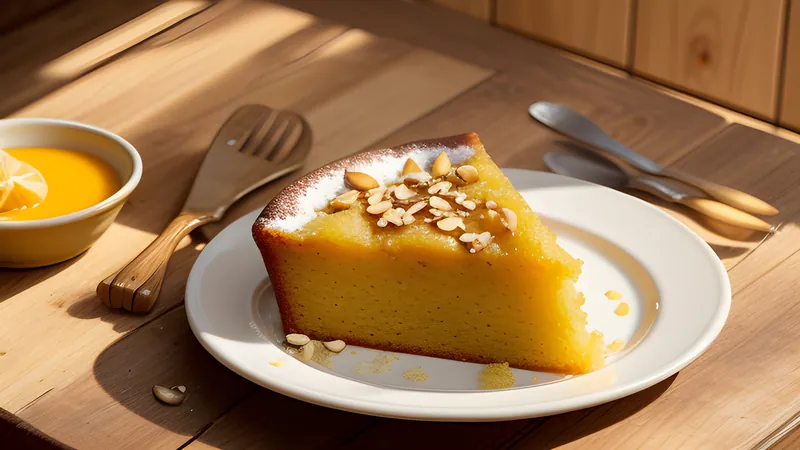
↓ Jump to recipeThis is the cake I reach for when I want something that feels grown-up and a little exotic but takes barely twenty minutes to throw together. There is no creaming of butter, no careful folding; you simply whisk everything in a bowl and pour it into a tin. What comes out is a dense, golden, almost marzipan-soft cake, scented with orange and made luxurious by a generous slug of good olive oil. The clever twist is orange blossom water, a single floral whisper that lifts the whole thing from a pleasant almond cake into something that tastes of a sun-baked Mediterranean afternoon. It happens to be gluten-free, but nobody who eats it ever seems to notice or care.
Almond, Olive Oil and Orange Blossom Cake
Ingredients
- 200g ground almonds
- 75g fine polenta or semolina
- 1.5 tsp baking powder
- 0.25 tsp fine salt
- 200g caster sugar
- 3 large eggs
- 150ml good extra-virgin olive oil
- Finely grated zest of 2 oranges
- Juice of 1 orange
- 1 tsp orange blossom water
- For the syrup: juice of 1 orange, 3 tbsp honey, 1 tsp orange blossom water
- 2 tbsp flaked almonds, lightly toasted
Method
- Heat the oven to 160C fan and line a 20cm round springform tin with baking paper.
- Stir together the ground almonds, polenta, baking powder and salt in a bowl.
- Whisk the sugar and eggs until thick and pale, then whisk in the olive oil in a steady stream.
- Whisk in the orange zest, juice and orange blossom water, then fold in the dry ingredients until smooth.
- Pour into the tin and bake for 40 to 45 minutes, until golden and a skewer comes out with just a few moist crumbs.
- Warm the orange juice, honey and orange blossom water for the syrup until the honey dissolves.
- Prick the hot cake all over and spoon the warm syrup slowly over the top.
- Leave the cake in its tin to cool completely so the syrup soaks right through.
- Scatter with toasted flaked almonds and serve in slim wedges with thick yoghurt or crème fraîche.
A cake of the Mediterranean
Whole almond cakes, bound with little or no flour, are an ancient tradition that stretches across the entire Mediterranean and Middle East. From the Spanish tarta de Santiago to the moist semolina cakes of Greece and the syrup-soaked almond cakes of the Levant, the same idea recurs again and again: ground nuts standing in for flour, eggs for structure, and a sweet syrup poured over the top to keep everything lush and moist. These are cakes born of climates where almonds, citrus and olive oil grow side by side, and they taste unmistakably of that landscape.
The use of olive oil instead of butter is the heart of the matter. In the dairy-poor, oil-rich cuisines of the southern Mediterranean, olive oil was always the natural fat for baking, and it brings something butter cannot: a fruity, faintly peppery depth and a crumb that stays moist for the best part of a week. There is chemistry behind that longevity. Olive oil is liquid at room temperature, unlike butter which sets firm, so an oil-based crumb feels tender and damp rather than dry days after baking. Oil also coats the flour and almond proteins more thoroughly than solid fat, inhibiting gluten development, which here means the small amount of structure comes almost entirely from the eggs and the cake stays soft and close-textured. Use a good extra-virgin oil you would be happy to dip bread into, because its flavour comes through clearly in the finished cake. A flat, cheap oil makes a flat, cheap cake.
Ground almonds do the work that flour usually does, and they are why the cake is gluten-free almost by accident rather than by design. Almonds are rich in fat and protein but contain no gluten-forming proteins at all, so they cannot build the elastic network that gives a wheat sponge its lift and spring. What you get instead is density and richness, a crumb closer to marzipan or a baked frangipane than to a Victoria sponge. The polenta or semolina is there for a little grit and bite, a subtle texture against the softness of the almonds, and for just enough structure to stop the cake collapsing under its own weight.
The orange blossom whisper
Orange blossom water is distilled from the flowers of the bitter orange tree, and it is one of those ingredients that demands restraint. Used with a light hand, it adds an almost indefinable floral lift, a perfume that makes people lean in and ask what the mysterious flavour is. Used with a heavy hand, it tastes like soap and ruins everything. A single teaspoon in the batter and another in the syrup is plenty for a cake of this size; resist the urge to add more, however tempting it is to glug.
It pairs naturally with orange because they come from the same tree, but it also has a wonderful affinity with almond and with honey, both of which appear here. That trio of almond, orange blossom and honey is one of the great flavour combinations of Mediterranean baking, each one rounding off the others into something greater than its parts. If you like this combination you will find it again in the semolina and coconut cake namoura with orange blossom syrup, a Levantine cousin of this cake that leans on the same floral syrup.
Why the syrup soak works
The syrup is not a glaze but a soak, and understanding why it works helps you get it right. A hot cake fresh from the oven is full of open, steaming cells; as it cools it contracts and those cells close up. Pour warm syrup over it while both cake and syrup are hot and the liquid is drawn deep into the crumb by capillary action, wicking through the whole cake rather than pooling on the surface. Wait until the cake is cold and the syrup simply sits on top and slides off the sides. The temperature contrast is the classic professional approach, hot syrup onto hot cake or cold onto cold, but for a home cook the reliable rule is warm syrup onto a hot cake, which is nearly foolproof. The honey in the syrup does more than sweeten; its sugars are hygroscopic, meaning they attract and hold water, which is a large part of why this cake improves and grows more moist over the days after baking.
Tips and variations
The syrup-soaking step is not optional, and timing matters. Pour the warm syrup over the hot cake while both are still warm, so the liquid is drawn deep into the open crumb rather than sitting on top. Pricking the cake thoroughly first gives the syrup channels to travel through. Be patient and add it in stages, letting each addition sink in before the next.
For variations, lemon works just as beautifully as orange if you prefer a sharper finish, and a handful of chopped pistachios scattered on top alongside the almonds looks gorgeous against the golden crumb. Blood oranges, when they are in season in late winter, give a deeper, almost raspberry-tinged citrus note and a faint blush to the syrup; if you love that flavour, the blood orange polenta cake is a close relative built around the same idea of ground nuts, polenta and citrus. If you want to make it dairy-free as well as gluten-free, simply serve it with a spoonful of coconut yoghurt instead of the usual crème fraîche. It keeps wonderfully in a tin for several days, growing denser and more fragrant as it sits, which makes it an ideal cake to bake ahead for guests.
Serving and troubleshooting
Serve this in slim wedges rather than generous slabs, because it is dense and rich and a little goes a long way. A spoonful of thick yoghurt, crème fraîche or lightly whipped cream on the side is almost obligatory, its coolness and slight sourness balancing the sweetness of the syrup-soaked crumb. A scattering of fresh raspberries or segments of blood orange turns it into a proper dessert. As for the pitfalls: the most common problem is a cake that sinks in the middle, which usually means it came out of the oven too soon, so trust the skewer over the clock and give it the full time if in doubt. If the top browns too fast, lay a loose sheet of foil over it for the last ten minutes. And if the syrup pools on top rather than sinking in, the cake had cooled too much before soaking; next time, pour it on the moment the cake emerges. For a lighter, brighter cake in the same family, the olive oil lemon drizzle cake uses the same fruity oil to keep a sponge moist for days.
Related Content